
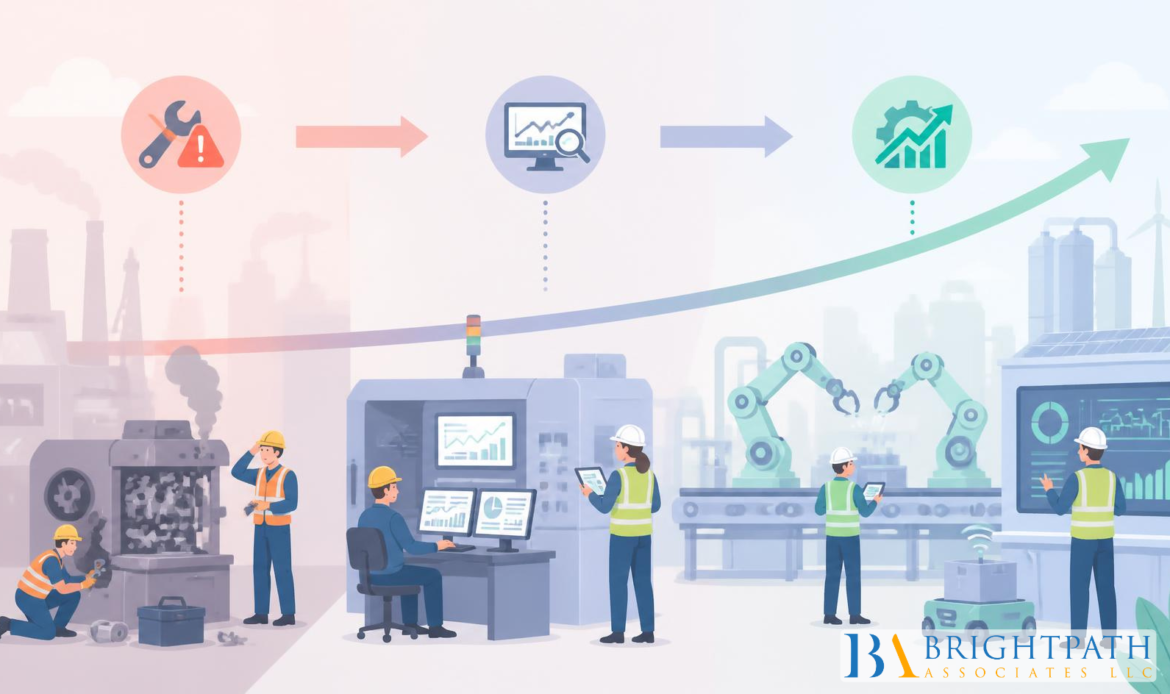
[Bethany, Connecticut – 18 September 2026] — BrightPath Associates has highlighted how manufacturers can move from reactive maintenance toward prescriptive maintenance to improve equipment reliability, production efficiency, and operational performance. The latest industry analysis examines how data, connected equipment, predictive technologies, and automated recommendations can help C-Suite executives in the Industrial automation sector address unplanned downtime while making better decisions about technology, talent, and long-term manufacturing strategy.
Moving Beyond Reactive Maintenance
Traditional reactive maintenance often means repairing equipment after a failure has already interrupted production. While this approach may appear straightforward, unexpected breakdowns can affect production schedules, labor utilization, product quality, customer commitments, and operating costs. As manufacturing environments become more connected, executives are increasingly examining maintenance strategies that identify problems earlier and provide actionable recommendations.
BrightPath Associates’ analysis, “Prescriptive Optimizing Maintenance for Peak Output,” explores how organizations can progress from reactive and preventive maintenance toward a more data-driven model. Predictive systems can identify developing equipment problems, while prescriptive maintenance goes further by helping teams determine what action should be taken, when it should happen, and how the decision could affect production.
For manufacturers operating complex equipment, this transition can connect maintenance directly with broader Manufacturing automation objectives. Instead of treating maintenance as an isolated engineering function, companies can integrate maintenance information with production planning, quality management, inventory decisions, and operational performance.
Connecting Data With Maintenance Decisions
Modern industrial facilities generate large amounts of operational information through sensors, machines, PLCs, control platforms, and monitoring systems. SCADA systems can provide visibility into equipment and production conditions, while Control systems help operators manage automated processes. When these sources are connected with analytics platforms, maintenance teams can gain a clearer view of equipment health.
The next step is turning that information into useful action. Prescriptive maintenance can evaluate equipment conditions and recommend appropriate responses, such as inspecting a component, adjusting a process, scheduling service, or replacing a part during a planned maintenance window. This can help reduce unnecessary interventions while limiting the disruption caused by unexpected failures.
The full analysis on Prescriptive Optimizing Maintenance for Peak Output examines how this approach can support manufacturers seeking greater reliability and production consistency. The strategy is particularly relevant for organizations investing in Automation solutions manufacturing, where connected technologies increasingly influence how plants operate and respond to changing production requirements.
Talent and Technology Shape Future Manufacturing Performance
As automation expands, the workforce requirements of manufacturing are also changing. Companies need engineers, programmers, technicians, data specialists, maintenance professionals, and operational leaders who can work across increasingly connected systems. The growth of Automation jobs reflects the expanding range of skills required to operate and improve modern automated facilities.
For C-Suite leaders, workforce planning therefore becomes closely connected to technology strategy. Investing in sophisticated equipment without developing the talent needed to operate, maintain, and improve it can limit the value of the investment. Organizations may need to combine recruitment, employee development, technical training, and leadership succession planning with their automation roadmaps.
BrightPath Associates’ perspective is that maintenance modernization should be considered as part of a wider operational strategy. Companies exploring the opportunities and challenges of the Industrial Automation Industry can evaluate how maintenance technology, automation infrastructure, workforce capabilities, and executive leadership fit together.
About BrightPath Associates
BrightPath Associates is an executive recruitment and talent solutions firm that helps organizations identify leadership and specialized professionals for critical business needs. The company supports organizations with executive search recruitment, workforce planning, leadership development, and specialized talent acquisition across multiple industries. Its mission is to connect businesses with qualified professionals and help organizations build strong teams capable of supporting sustainable growth.
Media Contact:
Name: Corporate Communications Team
Company: BrightPath Associates
Email: media@brightpathassociates.com
Website: https://brightpathassociates.com