
Introduction
#ConstructionProjects depend on the reliable movement of materials from suppliers to warehouses, staging areas, and eventually job sites. Yet material flow has historically been managed through purchase orders, spreadsheets, delivery schedules, manual inspections, and periodic updates. These methods can create information gaps, particularly when projects involve multiple contractors, suppliers, locations, and changing schedules.
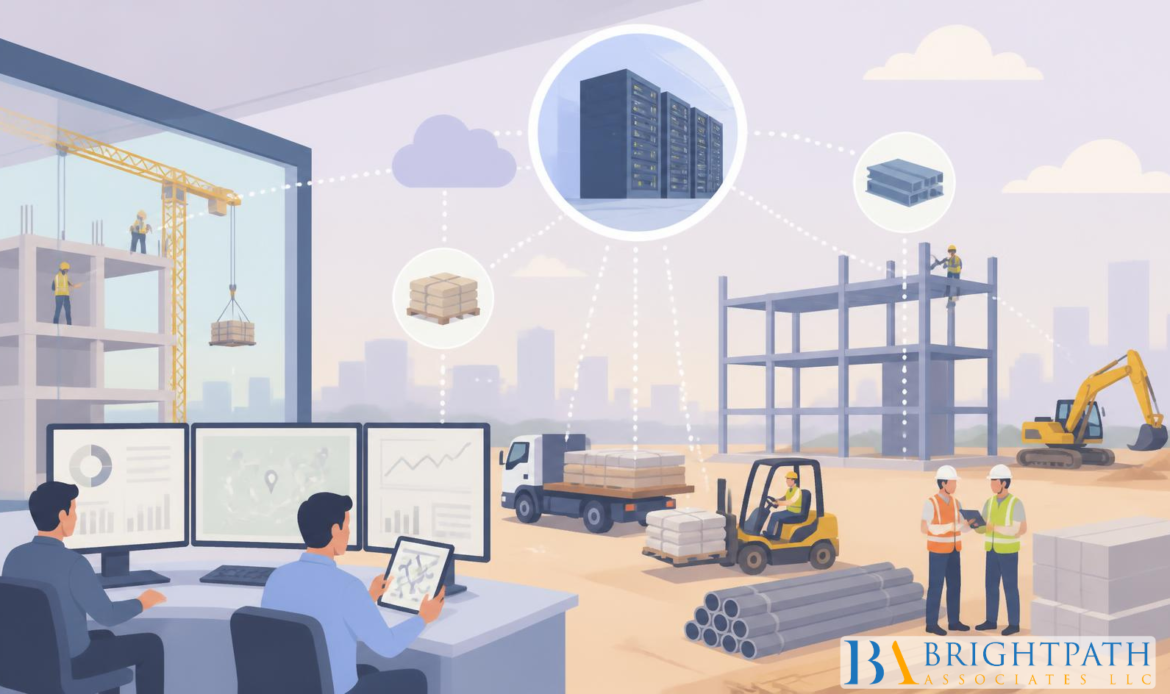
Real-time data centers are changing this model by creating a centralized environment where project teams can monitor material movement and inventory conditions as they happen. By connecting procurement systems, logistics platforms, sensors, project management software, and site-level information, contractors can develop a more accurate picture of where materials are located and when they will become available.
The impact extends beyond logistics. Better material visibility can influence project scheduling, cost control, sustainability, compliance, and workforce productivity. As construction becomes increasingly technology-driven, real-time material intelligence is becoming an important component of modern project management.
Why Material Flow Is Critical to Construction Performance
Construction materials represent a significant component of project costs and operational planning. Delays in the arrival of steel, concrete, timber, insulation, fixtures, or other materials can interrupt work and create cascading scheduling problems.
At the same time, excess materials can create storage costs, site congestion, damage risks, and unnecessary working capital requirements. Without reliable information, project managers may struggle to determine whether a material shortage is temporary or likely to affect the construction schedule.
Real-time monitoring provides greater visibility into these conditions. Instead of relying exclusively on planned delivery dates, teams can monitor actual shipment progress, inventory levels, consumption rates, and material availability.
This allows project decisions to be based on current information rather than outdated assumptions.
Building supplies move through complex networks before reaching a construction site. A typical project may involve manufacturers, distributors, transportation providers, subcontractors, warehouses, and site managers.
Real-time data centers can connect information from these different participants. Digital systems can track purchase orders, shipment status, delivery confirmations, inventory movements, and site consumption.
When this information is integrated, project teams gain a more complete understanding of material availability.
The value is particularly significant for large projects where hundreds or thousands of material transactions may occur simultaneously. Automated data collection can reduce the administrative burden associated with manually reconciling delivery and inventory records.
Building Technology Is Transforming Material Visibility
#BuildingTechnology is increasingly focused not only on construction methods but also on improving the flow of information throughout the project lifecycle.
Internet-connected sensors, RFID systems, GPS tracking, cloud platforms, digital twins, and construction management software can provide data about material location and condition.
For example, tracking technologies can identify when a shipment leaves a supplier, reaches a distribution facility, arrives at a job site, and moves into a designated storage or installation area.
This creates a digital chain of custody for materials and allows managers to identify delays more quickly.
Concrete production provides a strong example of why timing and material visibility matter. Concrete is highly time-sensitive, and project teams need coordination between batching facilities, transportation, and site operations.
Real-time data can help project managers monitor production schedules, delivery movements, and site readiness. This can reduce the risk of crews waiting for concrete or deliveries arriving before the site is prepared.
Data integration can also improve coordination between suppliers and contractors. When production information is connected with project schedules, teams can adjust plans more effectively when conditions change.
The same principles can apply to other time-sensitive construction materials.
Managing the Lumber Industry Supply Chain
The Lumber industry has its own set of material-flow challenges. Timber products can move through sawmills, distributors, warehouses, transportation networks, and construction sites before becoming part of a finished structure.
Real-time tracking can improve visibility into inventory levels, shipment status, and delivery schedules. This is particularly useful when projects depend on specific dimensions, grades, or quantities of lumber.
Better information can also support procurement decisions. Construction companies can compare expected consumption with available inventory and adjust purchasing before shortages affect the project.
For large developments, these capabilities can contribute significantly to supply-chain coordination.
Sustainable construction increasingly depends on understanding how materials are sourced, transported, used, reused, and eventually recovered.
Real-time material data can support sustainability goals by providing better information about material quantities and movement. When project teams know exactly how much material has been delivered and consumed, they can reduce unnecessary purchases and identify potential waste.
Digital tracking can also support the documentation of recycled or responsibly sourced materials.
This creates a stronger connection between sustainability objectives and everyday project management.
Material Recycling and Circular Construction
#MaterialRecycling is becoming increasingly important as the construction industry explores circular approaches to resource management. Concrete, steel, timber, glass, and other materials can potentially be recovered from construction and demolition activities.
Real-time data centers can help create digital records of materials throughout a project. These records may become valuable when materials need to be reused, relocated, or recycled.
For example, information about material type, quantity, location, and condition can help determine whether an item should be reused on another part of the project or directed toward recycling.
The more accurately materials are documented, the easier it becomes to move toward circular construction practices.
Building regulations influence how materials are selected, documented, stored, and installed. Construction organizations must often demonstrate that products meet relevant technical, safety, environmental, and performance requirements.
Real-time data platforms can support compliance by connecting material records with documentation such as specifications, certifications, inspection records, and delivery information.
This creates a more organized information trail. Instead of searching through disconnected paperwork, project teams can potentially retrieve material information through centralized digital systems.
Digital documentation can also make audits and inspections more efficient.
Construction Economics and the Cost of Material Delays
Construction economics are closely connected with material availability. Delayed materials can affect labor productivity, equipment utilization, project financing, and completion schedules.
When workers cannot perform planned tasks because required materials are unavailable, labor costs can continue without corresponding progress. Equipment may also remain idle.
Real-time material monitoring can help reduce these risks by providing earlier visibility into supply problems.
If a shipment is delayed, project managers can potentially adjust work sequencing, arrange alternative procurement, or redirect labor toward another activity.
The objective is not to eliminate every disruption but to provide enough information to respond before a disruption becomes a major project problem.
Technology is changing the nature of Construction jobs. As real-time data platforms become more common, construction professionals increasingly need digital literacy alongside traditional technical knowledge.
Project managers may need to interpret dashboards and analytics. Procurement professionals may work with automated inventory systems. Site supervisors may interact with mobile tracking applications and digital documentation.
This does not mean technology replaces construction expertise. Instead, digital tools can augment the experience of professionals who understand how construction projects operate.
The workforce of the future will increasingly combine practical construction knowledge with data-driven decision-making.
Integrating Data Across the Job Site
The effectiveness of real-time monitoring depends on integration. A data center is valuable only when it receives accurate information from relevant parts of the project.
#ConstructionCompanies therefore need to connect procurement, inventory, logistics, scheduling, subcontractor, and site-management systems.
Data standards are equally important. Different suppliers and contractors may use different naming conventions or measurement systems. Without consistent data structures, information can become difficult to compare.
Establishing common digital standards can improve the reliability of the entire material-flow system.
Once organizations have accumulated sufficient historical information, real-time systems can move beyond monitoring toward predictive analysis.
Data can reveal patterns in material consumption, supplier performance, transportation delays, and project scheduling. These patterns can help managers anticipate potential shortages or delivery problems.
Predictive capabilities can also improve procurement planning. Instead of ordering materials based solely on fixed schedules, companies can consider actual consumption rates and expected project progress.
This can reduce excess inventory while improving material availability.
Executive Search Recruitment for Data-Driven Construction Leadership
The shift toward real-time material management is creating new leadership requirements within the construction sector. Executives need to understand not only traditional project management but also digital transformation, supply-chain technology, analytics, sustainability, and operational strategy.
#ExecutiveSearchRecruitment can help construction organizations identify leaders capable of integrating these disciplines.
The right leadership approach is important because implementing real-time data systems involves more than purchasing software. Organizations must redesign workflows, establish data governance, train employees, and ensure that teams actually use the information in decision-making.
Leadership determines how effectively technology becomes part of the organization’s operating model.
The future construction site will increasingly function as a connected ecosystem. Materials, equipment, workers, suppliers, and project information can be linked through digital platforms.
Real-time data centers can serve as the information backbone of this ecosystem. They can provide project teams with visibility into material movement while connecting operational information with financial and sustainability objectives.
As Building technology continues to evolve, this connectivity may become an increasingly important factor in construction productivity.
Conclusion
Material management is no longer simply a logistics function. With real-time data centers, construction companies can transform material movement into a source of operational intelligence.
Better visibility across Building supplies and Construction materials can reduce uncertainty, improve scheduling, and strengthen cost management. Real-time information can support Concrete production coordination, improve visibility across the Lumber industry, and help organizations respond to supply-chain disruptions.
The benefits also extend to Sustainable construction and Material recycling by providing better information about material quantities, locations, and lifecycle status. Building regulations can be supported through stronger documentation, while Construction economics can benefit from reduced downtime and more efficient resource allocation.
At the same time, digital transformation is reshaping Construction jobs and creating demand for professionals who can combine industry knowledge with data capabilities.
For organizations, the next step is not simply collecting more information. It is building systems that transform real-time data into practical decisions. With appropriate technology, integrated processes, and strong leadership supported by Executive Search Recruitment, construction companies can create more transparent, responsive, and efficient material-flow networks.
The construction site of the future will depend not only on physical materials but also on the quality and speed of the information that moves alongside them.
Find your next leadership role in Building Material Industry today!
Stay informed with the latest insights on Building Material Industry!