
Introduction
#AgricultureIndustry is becoming one of the most connected industrial environments on the planet. Modern tractors, sprayers, harvesters, irrigation controllers, grain handling systems, and on-farm energy assets now exchange data continuously with satellites, cellular networks, Wi‑Fi, and cloud platforms. This shift has accelerated Agricultural technology and Agricultural innovation, and it has helped farms scale Digital Farming practices that raise yields, reduce inputs, and support Sustainable farming goals. Yet the same connectivity that powers productivity also expands the attack surface for ransomware operators who understand that downtime during planting or harvest is a uniquely painful lever.
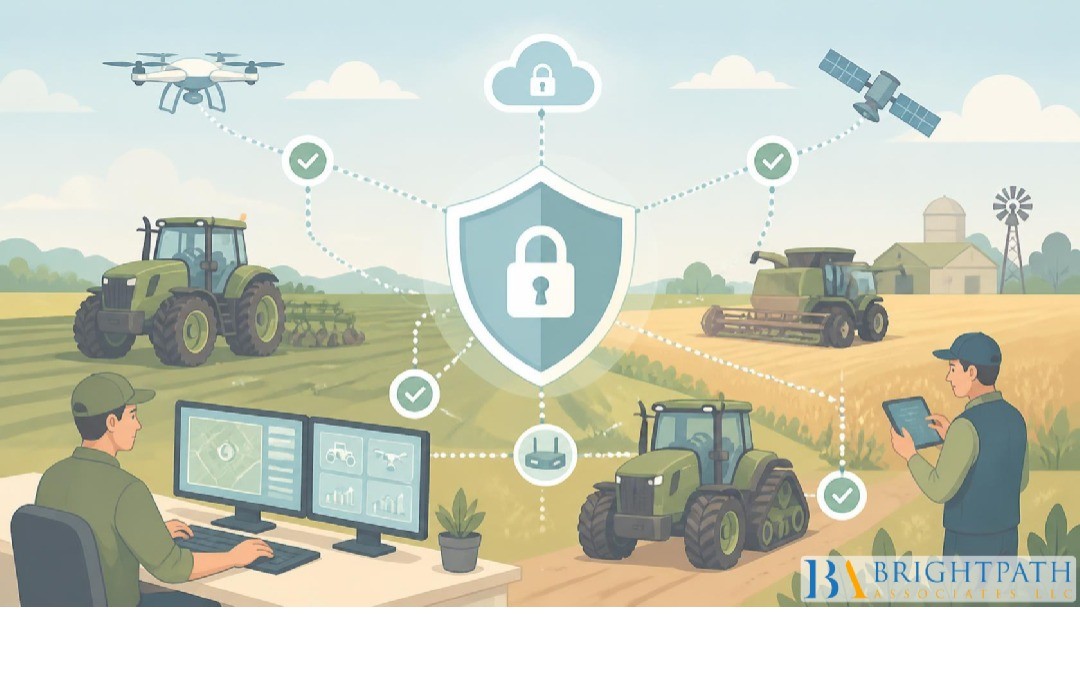
Zero-trust networking offers a practical security model for this new reality. Instead of assuming devices on the farm network are trustworthy once they are “inside,” zero trust treats every access request as potentially hostile and continuously verifies identity, device health, and authorization. In this article, you will learn why connected farm machinery is vulnerable to ransomware, how zero-trust networking works in agricultural operations, the role of farm management software in Digital Farming, and how to protect Precision agriculture systems without compromising Food production, Organic farming practices, or long-term Agricultural sustainability outcomes.
Why Connected Farm Machinery Is Increasingly Vulnerable to Ransomware
Farm equipment is no longer a set of isolated mechanical assets; it is a fleet of cyber-physical systems that blend sensors, controllers, and remote services. Telematics units stream engine data, GPS, and task logs. Implements receive prescription maps and automate variable-rate application. Service technicians connect remotely for diagnostics and firmware updates. These capabilities are foundational to Precision agriculture, but they also create pathways for adversaries to move from an email inbox or compromised vendor credential into the operational technology that keeps fields, barns, and storage facilities running.
Ransomware groups are drawn to agriculture for the same reasons they target manufacturing and logistics: the environment is time-sensitive, distributed, and full of legacy constraints. During key windows, a single day of disruption can cascade into missed planting dates, spoilage in cold storage, delayed hauling, or lost harvest quality. Attackers exploit that urgency to pressure fast payment. Many farms also run mixed networks where office systems, guest Wi‑Fi, IoT cameras, and machine connectivity coexist without strong segmentation, letting a compromise in one area spread laterally into farm operations.
The technology #SupplyChain introduces additional exposure. Agricultural technology relies on multiple vendors for guidance, mapping, parts, remote service portals, and data synchronization across tractors, combines, and Farm management software. If a contractor, dealership laptop, or third-party integration is compromised, the attacker may inherit trusted access into the farm environment. In a sector where uptime is paramount, default credentials, shared passwords, and “temporary” remote access often become permanent, creating ideal footholds for ransomware staging.
There is also a human factor. Farm teams are operationally focused and frequently understaffed, so cybersecurity tasks compete with agronomy, machinery repair, and compliance work. Seasonal labor and multi-generational operations can make consistent security training difficult. Even highly disciplined Organic farming operations that monitor inputs closely may have less visibility into digital risk, especially when new Digital Farming tools arrive quickly and security is treated as an IT concern rather than a core element of Food production resilience.
How Zero-Trust Networking Works in Agricultural Operations
Zero-trust networking is built on a simple industrial assumption: connectivity must not automatically equal trust. In practical terms, every device, user, application, and machine-to-machine interaction must prove it is allowed, every time it requests access. This approach is well suited to farms because agricultural operations are inherently distributed, with variable connectivity and devices that move between fields, barns, and service yards. A zero-trust design aims to keep the business functioning even when one component is compromised, limiting blast radius and preventing ransomware from spreading across the environment.
In a zero-trust model, identity becomes the new perimeter. Rather than relying on a flat network where any device “inside” can talk broadly, each access request is evaluated against identity, device posture, and policy. For example, a tractor’s telematics module might be permitted to send operational telemetry to a specific cloud endpoint, but not to reach file servers or other machines. A technician’s remote session might be allowed only during scheduled windows, from managed devices, and only to the systems required for diagnostics. This prevents stolen credentials or a compromised laptop from automatically becoming a master key to the entire farm network.
Micro-segmentation is the second core principle. Farms often need connectivity between barns, storage, workshops, and offices, but they do not need unrestricted lateral movement. Zero trust encourages designing zones around function and risk, then enforcing verified, minimal pathways between them. When ransomware hits a workstation, micro-segmentation can prevent it from reaching irrigation control systems, seed tender automation, or the data stores used by Precision agriculture workflows. For Food production operations, this reduces the chance that a single compromise becomes a facility-wide shutdown.
Continuous verification completes the loop. Traditional security may authenticate once and then assume trust for hours or days. Zero trust expects conditions to change and reevaluates access based on signals such as unusual login patterns, unexpected geolocation, a device missing updates, or abnormal traffic volume. In the context of #AgriculturalTechnology, this matters because equipment and staff may travel across large areas, connect through different networks, and operate in harsh environments that make device maintenance inconsistent. Continuous verification helps detect and contain anomalies before ransomware can encrypt high-value data or disrupt control systems.
Zero-trust networking is often misunderstood as a single tool, but it is better viewed as an operating model for access. A farm can adopt it incrementally, starting with the most critical assets and highest-risk connections. The industrial advantage is that it aligns with how farms already think about risk: isolate hazards, control access to dangerous systems, and design redundancy into essential processes. In the digital domain, zero trust applies the same logic to accounts, machines, and data that drive Sustainable farming outcomes and the economic viability of the operation.
The Role of Digital Farming and Farm Management Software in Security
#DigitalFarmingPlatforms and Farm management software sit at the center of modern agricultural decision-making. They consolidate field boundaries, input records, yield maps, equipment utilization, livestock performance, and supply chain documentation. This centralization supports compliance, traceability, and optimization, and it is increasingly linked to Sustainable farming targets and Agricultural sustainability reporting. However, it also makes these platforms prime ransomware targets because they contain operationally critical data and because downtime can stall dispatching, inventory planning, and field execution.
From a zero-trust perspective, Farm management software becomes both a protected asset and a policy anchor. Protecting it means enforcing strong identity controls for every user, limiting administrative privileges, and requiring device health checks for access. It also means controlling integrations so that only approved machinery, trusted APIs, and verified service accounts can push or pull data. When Digital Farming workflows synchronize files such as prescription maps, machine logs, or application records, those transfers must be tightly scoped so a compromised endpoint cannot be used to distribute malicious payloads across devices.
Data integrity is just as important as confidentiality. In agriculture, subtle manipulation can be as damaging as outright encryption. If a ransomware operator or affiliated extortion group alters seeding prescriptions, pesticide application rates, or irrigation schedules, the outcome can affect yield, quality, and regulatory compliance. For Organic farming operations, erroneous records can undermine certification and market access. Zero trust supports integrity by reducing implicit trust between systems and by making high-impact actions require higher assurance, such as step-up verification for changing application parameters or approving new device integrations.
As Agricultural technology shifts into the cloud, connectivity becomes essential to daily operations. Zero trust does not eliminate cloud dependency, but it changes how farms plan for disruption. A well-designed architecture assumes that a cloud account could be targeted, that a vendor credential could be stolen, or that a local device might be infected. Practical resilience includes separating backup identities from daily-use accounts, ensuring backups are isolated from routine access paths, and designing offline or degraded-mode workflows that keep critical Food production tasks moving when digital services are partially unavailable.
Protecting Precision Agriculture Systems Without Sacrificing Performance
Precision agriculture depends on accurate positioning, reliable sensors, and real-time decision support. Guidance displays, rate controllers, RTK base stations, drones, and weather stations all contribute to higher efficiency and reduced waste, supporting Sustainable farming and broader Agricultural sustainability goals. Yet these systems often bridge the physical and digital worlds, which makes ransomware threats more than an IT inconvenience. If malicious actors disrupt guidance during critical operations, lock controllers, or corrupt spatial datasets, the effects can be immediate in the field and expensive to recover from.
Zero trust helps by separating what must communicate from what merely can communicate. A guidance display may need to receive prescription maps from a trusted source and send task logs to Farm management software, but it does not need broad access to office file shares or general internet destinations. A sprayer controller may need a secure channel to authorized configuration tools, but not to unrelated devices on the same Wi‑Fi. When each system has narrowly defined, verified connections, attackers have fewer routes to propagate ransomware or harvest credentials for later extortion.
Machine identity is a critical detail in Agricultural technology security. Unlike office laptops, many equipment modules are embedded devices with long lifecycles and limited interfaces. Zero-trust networking encourages establishing strong device identities, so the farm can distinguish a legitimate controller from an imitation or compromised unit. That identity can then be bound to policy, limiting where the device can connect and what it can do. In a world of Agricultural innovation where new sensors and add-on modules appear frequently, this approach provides a scalable way to onboard devices without granting them excessive access.
#PatchManagement remains challenging in rugged environments, and ransomware operators exploit outdated firmware and unpatched gateways. Zero trust does not replace maintenance, but it reduces the risk that an unpatched component becomes a stepping stone to broader compromise. When a vulnerable device is constrained to only the minimal communications it needs, its exploitability is less likely to become farm-wide catastrophe. This containment principle is particularly valuable for distributed assets such as pump controllers, grain bin monitoring systems, and remote cameras that may be installed far from the main office and maintained infrequently.
Security monitoring on farms must be industrial and pragmatic. False alarms that interrupt operations erode trust quickly, especially during narrow weather windows. A zero-trust program should focus monitoring on high-value behaviors such as unusual remote access attempts, unexpected data transfers from machine networks, or abnormal authentication failures in Farm management software. The goal is not to overwhelm staff with alerts but to create early warnings that allow containment before ransomware encrypts core systems or triggers safety and quality risks in Food production environments.
Business and Sustainability Impacts on Food Production, Plus Practical Recommendations
Ransomware in agriculture is ultimately a business continuity threat with direct implications for Food production. When machinery is immobilized, data is inaccessible, or dispatching collapses, the farm’s ability to deliver consistent volume and quality is impaired. These impacts ripple outward to processors, transporters, and retailers, and they can destabilize contracts and cash flow. Because agriculture operates on biological timelines, recovery delays often cannot be “made up” later, turning what looks like an IT outage into a season-defining loss.
The sustainability dimension is equally significant. Sustainable farming and Organic farming initiatives depend on accurate measurement, traceability, and optimized use of inputs. Ransomware can force farms into manual workarounds that increase fuel use, raise the risk of over-application, or reduce confidence in compliance records. It can also undermine Agricultural sustainability reporting, which is increasingly tied to financing and procurement decisions. In this context, cybersecurity becomes part of Sustainable agriculture investment logic: resilience protects not only profitability but also long-term environmental and social outcomes linked to #AgriculturalInnovation.
Practical adoption of zero trust in agriculture should prioritize the systems whose failure would halt operations or create safety risk. Start by identifying critical pathways: how equipment receives prescriptions, how yield and application data flows into Farm management software, how service partners access machinery, and which accounts can change configurations. Then reduce implicit trust by tightening identity controls, isolating administrative access, and limiting each device or user to the least access needed. The purpose is to ensure that when a compromise occurs, it is contained to a small segment rather than becoming a farm-wide encryption event.
Ransomware preparedness also requires organizational clarity. Define who can authorize remote access, who manages credentials for vendors, and how incidents will be handled during peak seasons. Farms and agribusinesses should plan for the reality that skilled security talent is scarce in rural areas. Many will rely on managed services, but leadership also benefits from targeted hiring for roles that bridge operations and security. #ExecutiveSearchRecruitment can be a strategic tool here, helping larger producers, cooperatives, and Agricultural technology providers find leaders who understand both industrial networks and the realities of farm operations.
Finally, treat cybersecurity as a core capability of modern agribusiness, not an afterthought. As Digital Farming expands, resilience will differentiate operations that can sustain output under pressure from those that face repeated disruptions. Zero-trust networking supports this resilience by making access explicit, minimizing lateral movement, and continuously validating the identities behind every connection. In an era where Food production must be efficient, traceable, and sustainable, protecting connected machinery from ransomware is not merely an IT upgrade; it is a foundational investment in Agricultural technology, Agricultural innovation, and the stability of Sustainable farming at scale.
Find your next leadership role in Farming Industry today!