
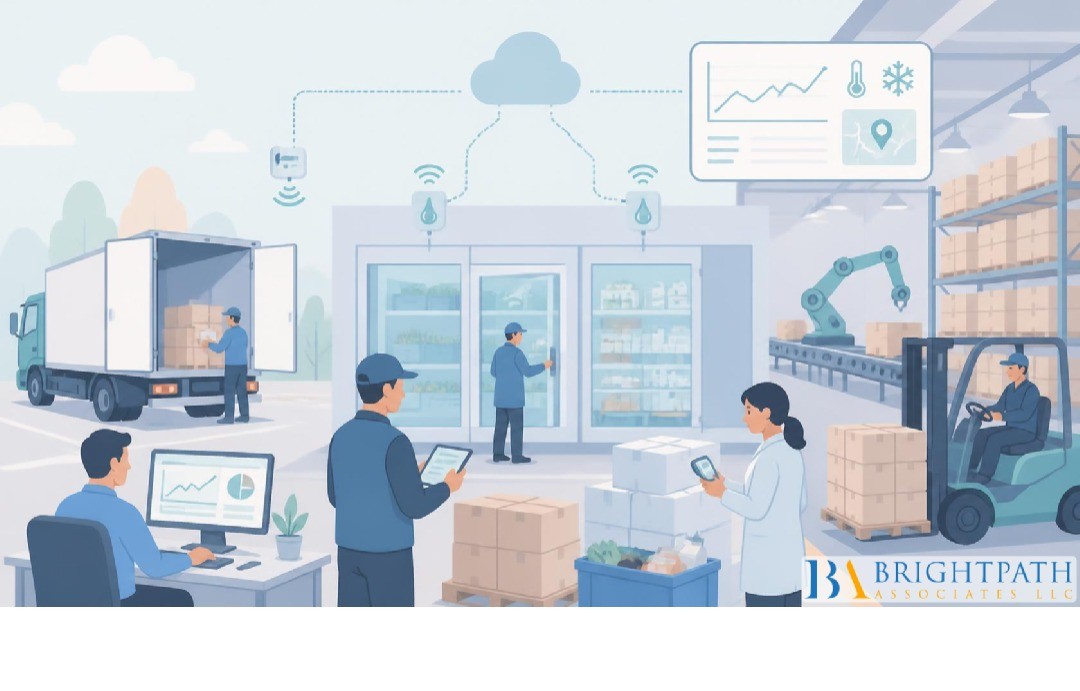
[Bethany, Connecticut – 30 July 2026] – BrightPath Associates has released a new industry insight examining how IoT Sensors can help organizations prevent costly inventory spoilage by turning cold chain operations into measurable, controlled processes. The analysis is aimed at C-suite executives across the Industrial automation sector who are investing in connected systems, Manufacturing automation, and operational intelligence. It explains how real-time monitoring, SCADA systems, Control systems, and automated responses can identify temperature and handling problems before they lead to product losses.
Moving Cold Chains From Reaction to Prevention
Cold chain failures are not always caused by major equipment breakdowns. Small operational changes, such as a loading door remaining open too long, an incorrect refrigeration setpoint, poor pallet positioning, or declining compressor performance, can gradually affect temperature-sensitive inventory. These issues can result in product write-offs, customer claims, lost revenue, and damage to brand reputation.
BrightPath Associates explains in its latest analysis of How IoT Sensors Prevent Costly Inventory Spoilage that continuous monitoring gives businesses a clearer view of actual product and equipment conditions. Temperature, humidity, vibration, GPS, door, and power sensors can provide information that periodic manual records may miss.
The article notes that “IoT sensors shift the discussion from blame to evidence.” Continuous data can help companies identify when and where a temperature excursion happened and connect it with equipment performance or operating conditions. For executives, this changes cold chain management from reactive claims handling into a more proactive approach focused on prevention and measurable improvement.
Connecting IoT Sensors With Industrial Automation
IoT Sensors create greater value when their data is connected with existing Industrial automation infrastructure. SCADA systems can already provide visibility into refrigeration equipment, evaporator fans, alarm states, defrost cycles, and operating setpoints. Combining this equipment information with product-level sensor data gives teams a broader picture of cold chain performance.
This integration can help operators determine whether an issue comes from product handling, airflow, refrigeration equipment, or another process. Control systems and a reliable PLC programming service can further standardize how equipment reports operating conditions and how alarms trigger responses. Instead of receiving a basic high-temperature warning, companies can build alerts around duration, rate of temperature change, product requirements, and location-specific conditions.
As the article states, “An IoT device in a box is not a system.” For C-suite leaders, this is an important distinction. Successful cold chain intelligence requires more than installing connected devices. Organizations need trusted data, consistent thresholds, defined response procedures, and integration between quality, maintenance, transportation, and operational teams.
Manufacturing automation principles can support this model because both manufacturing and cold chain management depend on controlling process variability. The objective is not simply to collect more information. Companies must turn sensor information into decisions that reduce the gap between expected operating conditions and what happens across warehouses, vehicles, loading areas, and partner facilities.
Automation Leadership Strengthens Cold Chain Intelligence
Advanced Automation solutions manufacturing can also reduce the handling variations that contribute to spoilage. Robotics integration, for example, can move temperature-sensitive products through controlled areas with more predictable timing. Industrial machine vision can support operations by checking door conditions, pallet placement, labels, wrapping, and airflow obstructions.
However, successful implementation also depends on leadership. Connected cold chains require executives and technical leaders who understand Industrial automation, OT/IT integration, SCADA systems, Control systems, Robotics integration, data governance, and operational change. As these capabilities become more important, demand for specialized Automation jobs and executive search industrial automation expertise is also increasing.
BrightPath Associates supports companies across the Industrial Automation Industry through executive search recruitment focused on leaders who can combine technical knowledge with strategic business thinking. The firm works with organizations seeking executives across automation, robotics, process control, smart manufacturing, IIoT, safety, operations, and digital transformation.
As connected technologies continue to expand, cold chain management is becoming an important application of Manufacturing automation. Companies that combine IoT Sensors with SCADA systems, Industrial machine vision, Robotics integration, and disciplined Control systems can move beyond simple monitoring toward active spoilage prevention. The result is a more resilient cold chain where quality risks can be identified earlier and corrective actions can be taken before inventory losses grow.
About BrightPath Associates
BrightPath Associates is an executive search recruitment firm helping organizations identify experienced executives and specialized professionals across industrial automation, manufacturing, technology, and other major industries. The company supports businesses seeking leadership talent for automation, robotics, engineering, operations, digital transformation, and other critical functions. Its mission is to connect organizations with professionals who can strengthen teams, support innovation, and drive sustainable business growth.
Media Contact:
Name: Corporate Communications Team
Company: BrightPath Associates
Email: media@brightpathassociates.com
Website: https://brightpathassociates.com