
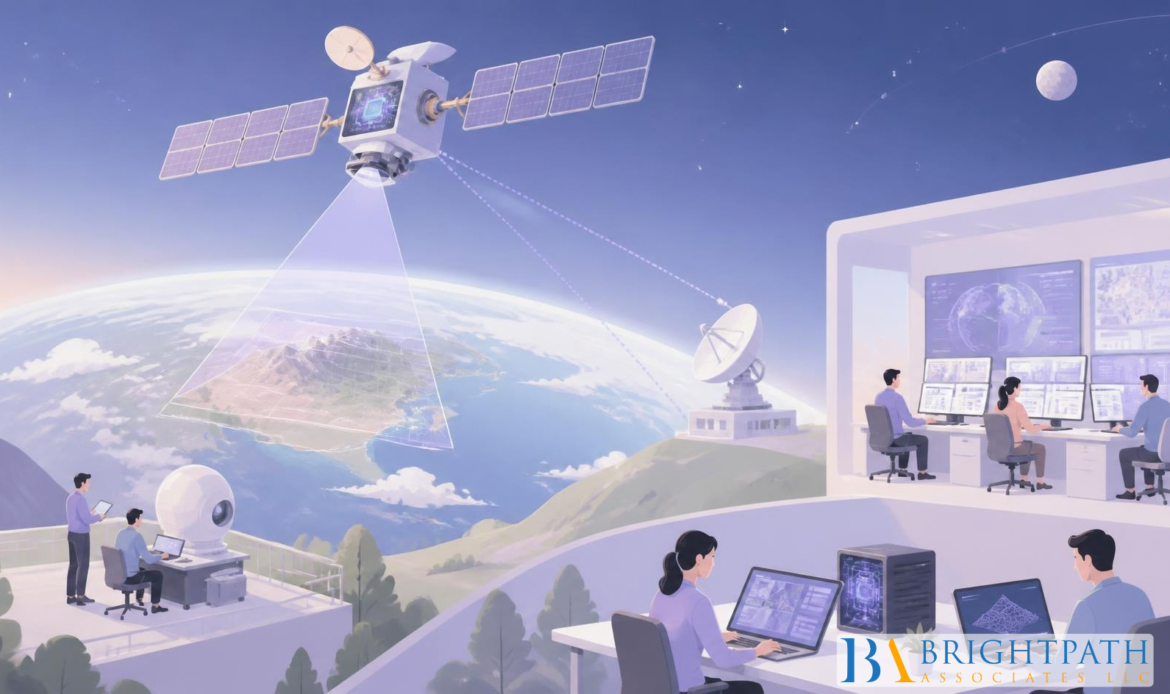
[Bethany, Connecticut – 23 September 2026] — BrightPath Associates has highlighted the growing role of edge computing in orbit as defense and aerospace organizations seek faster, more secure, and data-efficient intelligence, surveillance, and reconnaissance (ISR) capabilities. The company’s latest industry analysis examines how processing information closer to where it is collected can reduce data-transfer demands, improve mission responsiveness, and support next-generation Defense Space Systems. The development is particularly relevant to C-Suite leaders evaluating Aerospace industry trends, Space Cybersecurity requirements, Defense manufacturing capabilities, and long-term investments in space technology.
Edge Computing Brings Intelligence Closer to the Mission
Traditional satellite architectures often depend on transmitting large volumes of collected data to ground stations for processing and analysis. As satellite sensors become more capable, the volume of information generated in orbit can increase significantly. Sending every piece of raw data to Earth can create bandwidth constraints, latency challenges, and additional demands on ground infrastructure.
Edge computing offers a different approach by allowing satellites to process selected information in orbit before transmitting it. This can help systems identify relevant information, filter unnecessary data, and send actionable intelligence to mission operators more efficiently. BrightPath Associates’ analysis, “Edge-Compute in Orbit: The New Frontier for Data-Efficient ISR Missions,” explores how this transition could influence the development of future ISR architectures.
For defense executives, the significance extends beyond computing performance. Faster processing can support time-sensitive decision-making while reducing dependence on continuous high-bandwidth communications. The approach can also become an important component of resilient Defense Space Systems as organizations seek architectures capable of operating effectively across increasingly complex operational environments.
Investment and Regulatory Considerations for Executives
The shift toward processing data in orbit is part of broader Aerospace industry trends involving satellite miniaturization, artificial intelligence, autonomous operations, advanced sensors, and distributed space architectures. For C-Suite executives, these developments create both technology opportunities and investment decisions. Organizations may need to assess whether to develop capabilities internally, collaborate with technology providers, or pursue strategic partnerships with emerging space companies.
The role of Space Venture Capital is also becoming relevant as specialized companies develop technologies for onboard processing, satellite communications, artificial intelligence, sensors, and space-qualified computing. Strategic investment can help established aerospace and defense organizations gain access to emerging capabilities while supporting the wider innovation ecosystem.
At the same time, Space Regulatory requirements must remain central to technology planning. Organizations operating space-based systems must consider applicable regulations, spectrum requirements, cybersecurity expectations, export controls, mission authorization, and other compliance considerations. These factors can influence how new Defense Space Systems are designed, deployed, and operated.
Preparing the Defense Workforce for Space Innovation
As space missions become increasingly software-defined and data-driven, organizations require professionals who understand both traditional defense operations and emerging technologies. Expertise across engineering, cybersecurity, artificial intelligence, electronics, systems integration, manufacturing, and mission operations will become increasingly valuable.
Executive search recruitment can support defense and aerospace organizations as they seek senior leaders capable of connecting technology investments with business and mission objectives. Leadership teams must also understand how developments in Defense Simulation, Space Electronics, Space Robotics, and Defense manufacturing can influence workforce requirements and organizational strategy.
The full analysis, Edge-Compute in Orbit for ISR Missions, provides additional insight into the emerging role of orbital edge computing and its potential implications for data-intensive ISR operations. C-Suite leaders can also explore BrightPath Associates’ resources for the Defense & Space Industry to understand broader technology, talent, and leadership considerations affecting the sector.
About BrightPath Associates
BrightPath Associates is an executive recruitment and talent solutions firm serving organizations that require specialized leadership and professional expertise for sustainable growth. The company supports businesses with executive search recruitment, talent acquisition, workforce planning, leadership development, and specialized recruitment solutions. Its mission is to connect organizations with high-quality professionals while helping leadership teams build stronger capabilities for long-term success.
Media Contact:
Name: Corporate Communications Team
Company: BrightPath Associates
Email: media@brightpathassociates.com
Website: https://brightpathassociates.com