
Introduction
The #ConstructionIndustry has always been exposed to fluctuations in material prices, supply availability, transportation costs, labor conditions, and economic cycles. However, recent disruptions have demonstrated how quickly these challenges can affect construction projects. Changes in global trade, geopolitical tensions, extreme weather events, energy prices, transportation constraints, and shifting demand can create significant volatility across the supply chain.
Construction materials are particularly vulnerable because many projects depend on large quantities of specialized products that must arrive within tightly controlled schedules. A delay in steel, lumber, concrete inputs, insulation, glass, or other essential materials can affect project timelines and increase costs throughout the construction process.
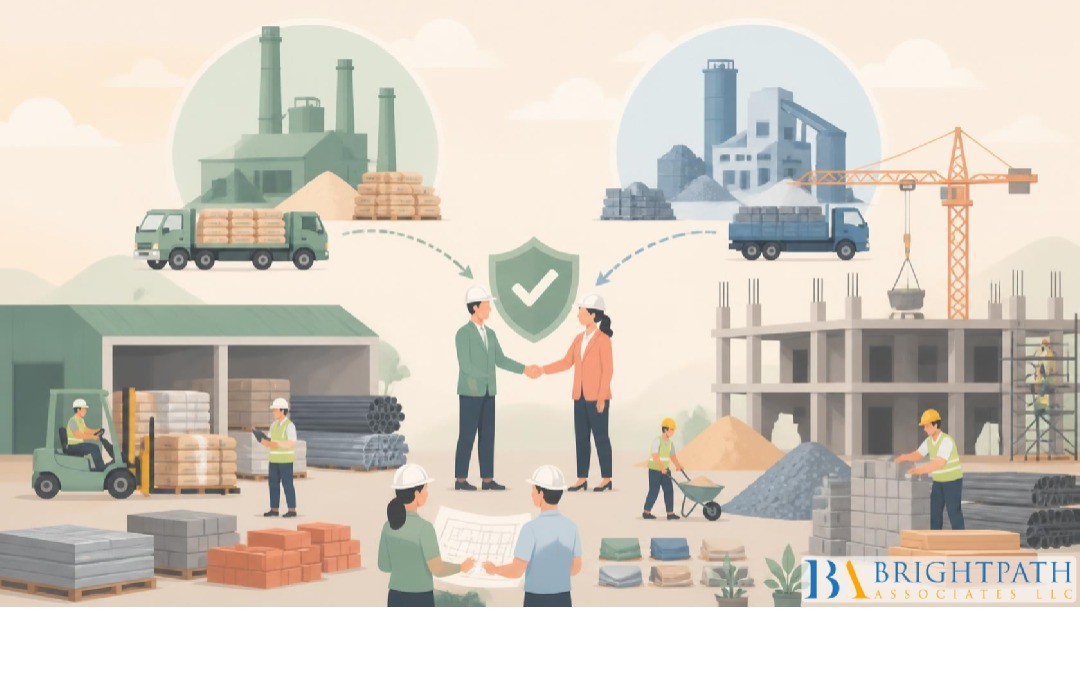
In this environment, dual-sourcing is becoming an increasingly important risk-management strategy. Rather than relying on a single supplier or geographic market, construction companies are developing relationships with multiple qualified suppliers. This approach can provide greater flexibility, improve supply continuity, and create a stronger safety net when unexpected disruptions occur.
Understanding Building Material Volatility
Building material volatility refers to rapid and sometimes unpredictable changes in the cost, availability, and delivery of materials required for construction. Several factors contribute to this instability.
Global commodity prices can influence the cost of raw materials, while transportation expenses affect the final price of Building supplies. Energy-intensive manufacturing processes can become more expensive when electricity or fuel prices increase. Weather events can disrupt forestry, mining, manufacturing, and transportation operations. At the same time, changes in housing demand, infrastructure investment, commercial development, and government spending can create sudden increases or decreases in material requirements.
For contractors and developers, these fluctuations can make budgeting more difficult. A project estimated months earlier may face substantially different input costs when procurement begins. Without effective supply-chain planning, companies may experience margin pressure, project delays, or the need to renegotiate contracts.
Single-sourcing can offer advantages. Purchasing from one supplier may simplify administration, create volume discounts, and make quality management easier. However, excessive dependence on one supplier can expose a company to significant operational risk.
If a supplier experiences a factory shutdown, transportation problem, labor shortage, financial difficulty, or sudden capacity constraint, the buyer may have limited alternatives. The problem becomes even more serious when the supplier operates in the same geographic region as the construction project or relies on a concentrated network of raw-material providers.
Construction projects operate according to interconnected schedules. A delay in one material can affect several trades and push back subsequent activities. This means that the financial consequences of supply disruption can extend far beyond the price of the delayed product.
Dual-sourcing addresses this vulnerability by creating an alternative supply route before a crisis occurs.
Dual-Sourcing as a Supply Chain Safety Net
Dual-sourcing involves maintaining relationships with at least two qualified suppliers for critical materials or product categories. The suppliers may operate in different geographic locations, use different production facilities, or have different upstream supply networks.
The objective is not necessarily to divide purchases equally between suppliers. A company may maintain a primary supplier for most of its requirements while keeping a secondary supplier qualified and operationally ready. If disruption affects the primary source, purchasing can be shifted toward the alternative.
This model creates flexibility without requiring organizations to abandon established supplier relationships. It also encourages suppliers to maintain competitive pricing and service levels.
For critical #ConstructionMaterials, dual-sourcing can therefore function as an insurance mechanism. The cost of maintaining an alternative supplier may be modest compared with the potential cost of project delays or emergency procurement.
Not every material requires the same level of sourcing protection. Companies should identify materials based on their criticality, availability, lead time, price volatility, and impact on project schedules.
Materials that are difficult to replace or have long production lead times may require particularly strong sourcing strategies. Specialized products with limited manufacturers can present greater risk than widely available commodities.
Companies should also consider whether alternative suppliers can meet required specifications. A secondary source is only useful if it can deliver materials that comply with project designs, quality requirements, Building regulations, safety standards, and contractual specifications.
Supplier qualification should therefore take place before a disruption occurs. Waiting until a shortage develops can make it difficult to identify, test, and approve an alternative supplier quickly.
The Lumber Industry and Commodity Exposure
The Lumber industry provides a clear example of how commodity volatility can affect construction. Lumber prices can respond rapidly to changes in housing demand, forestry conditions, transportation costs, production capacity, and broader economic trends.
For builders, sudden increases in lumber prices can significantly affect project budgets. When supply is constrained, companies that depend heavily on a single supplier or region may face greater exposure.
Dual-sourcing can help reduce this risk by allowing organizations to develop relationships with suppliers across different geographic areas. However, companies should also recognize that global commodity markets can affect multiple suppliers simultaneously. Dual-sourcing is therefore most effective when the alternative suppliers have genuinely diversified supply networks.
Concrete presents a different sourcing challenge because transportation distance and timing are critical. Concrete production is generally connected to local or regional supply networks, and fresh concrete must often reach construction sites within specific timeframes.
For this reason, companies may not always be able to create traditional dual-sourcing arrangements. Instead, they can develop relationships with multiple nearby producers, maintain approved alternative mix designs where appropriate, and establish contingency plans for production disruptions.
The broader lesson is that sourcing strategies must reflect the physical characteristics of individual materials. A strategy that works for lumber or manufactured components may not work for ready-mix concrete.
Technology Is Changing Material Procurement
Building technology is transforming how construction companies manage procurement and supply chains. Digital procurement platforms, predictive analytics, inventory-management systems, supplier databases, and real-time logistics tracking can provide greater visibility into material availability.
Advanced analytics can help companies identify patterns in pricing and demand. Organizations can use historical data and market intelligence to anticipate potential shortages and adjust procurement schedules accordingly.
Digital systems can also improve supplier performance monitoring. Companies can track delivery reliability, quality issues, lead times, pricing changes, and order fulfillment. This information makes it easier to determine which suppliers should be designated as primary or secondary sources.
As Building technology continues to evolve, procurement will become increasingly data-driven. Companies that integrate technology with strategic sourcing can respond faster to market changes.
Dual-sourcing can also support Sustainable construction when implemented strategically. Shorter supply routes may reduce transportation requirements, while regional sourcing can strengthen local manufacturing ecosystems.
#MaterialRecycling provides another opportunity to reduce dependence on volatile virgin-material markets. Recycled aggregates, reclaimed lumber, recycled metals, and other recovered materials can create alternative sources of construction inputs.
However, sustainability initiatives must remain aligned with technical and regulatory requirements. Recycled materials must meet applicable performance standards, project specifications, and Building regulations.
The combination of diversified sourcing, responsible procurement, and Material recycling can help construction companies build supply systems that are both more resilient and environmentally responsible.
Construction Economics and the Cost of Resilience
From a Construction economics perspective, dual-sourcing represents a trade-off between efficiency and resilience. Maintaining multiple suppliers can increase administrative complexity and may prevent companies from maximizing volume discounts.
However, focusing only on the lowest purchase price can be misleading. The real cost of a material includes procurement, transportation, storage, quality management, delays, project disruption, and potential financial penalties.
A slightly higher material price from a diversified supplier may be economically beneficial if it significantly reduces the probability of project interruption.
Companies should therefore evaluate suppliers using a total-cost perspective rather than focusing exclusively on unit price. Supply continuity should become part of procurement economics.
Regulatory compliance adds another layer of complexity. Construction materials must often satisfy national, regional, or local requirements concerning safety, structural performance, energy efficiency, fire resistance, environmental impact, and quality.
When introducing a secondary supplier, construction companies must verify that its products meet the same applicable requirements as those from the primary source. Documentation, certifications, testing, specifications, and quality-control procedures should be reviewed carefully.
This is especially important for materials that directly influence structural integrity or building safety. A supplier cannot be considered a reliable alternative simply because it can deliver similar-looking products.
Procurement teams should work closely with engineering, quality, compliance, and project management teams when qualifying alternative suppliers.
Workforce Capabilities and the Future of Procurement
The changing construction supply chain is also influencing Construction jobs. Modern procurement professionals need more than traditional purchasing skills. They increasingly require knowledge of data analysis, supplier risk management, logistics, sustainability, technology, and market forecasting.
Construction companies may also need leaders who can coordinate procurement, operations, finance, engineering, and project management. These cross-functional capabilities are becoming increasingly valuable as organizations develop more sophisticated supply-chain strategies.
#ExecutiveSearchRecruitment can support companies seeking senior professionals with specialized experience in construction materials, procurement, supply-chain management, manufacturing, and operations. Strong leadership can help organizations move from reactive purchasing toward strategic supply-chain resilience.
Successful dual-sourcing requires planning rather than simply adding another supplier to a purchasing database. Companies should first identify their most critical materials and evaluate current supplier concentration.
They should then assess alternative suppliers based on capacity, quality, geographic exposure, financial stability, delivery performance, certifications, production technology, and sustainability practices. Where appropriate, companies can begin with smaller orders to establish operational relationships before increasing the supplier’s role.
Contracts can also include provisions that support flexibility during periods of disruption. Procurement teams should establish clear communication channels and contingency procedures so that purchasing volumes can be shifted quickly when required.
The goal is to create a supply network that can adapt without compromising quality, compliance, or project schedules.
Conclusion
The construction industry’s experience with supply-chain disruptions has demonstrated that material availability can be just as important as material price. Companies that rely heavily on a single supplier may achieve short-term purchasing efficiency, but they can face significant risks when unexpected disruptions occur.
Dual-sourcing provides a practical mechanism for reducing this exposure. By developing qualified alternative suppliers, monitoring market conditions, investing in Building technology, strengthening procurement capabilities, and incorporating Material recycling and Sustainable construction principles, organizations can create more resilient supply chains.
The strategy is not about eliminating volatility. Construction materials will continue to experience price fluctuations, shortages, transportation challenges, and changing demand. Instead, the objective is to ensure that companies can respond effectively when volatility occurs.
As Construction economics become increasingly complex, resilience will become a defining characteristic of successful construction businesses. Organizations that treat sourcing as a strategic capability rather than a transactional purchasing function will be better positioned to protect margins, maintain project schedules, satisfy regulatory requirements, and respond to changing market conditions.
Ultimately, the new safety net for the construction industry is not simply having more suppliers. It is having the right suppliers, the right technology, the right talent, and the right contingency strategy to keep projects moving when the unexpected happens.
Find your next leadership role in Building Materials Industry today!
Stay informed with the latest insights on Building Materials Industry!