
Introduction
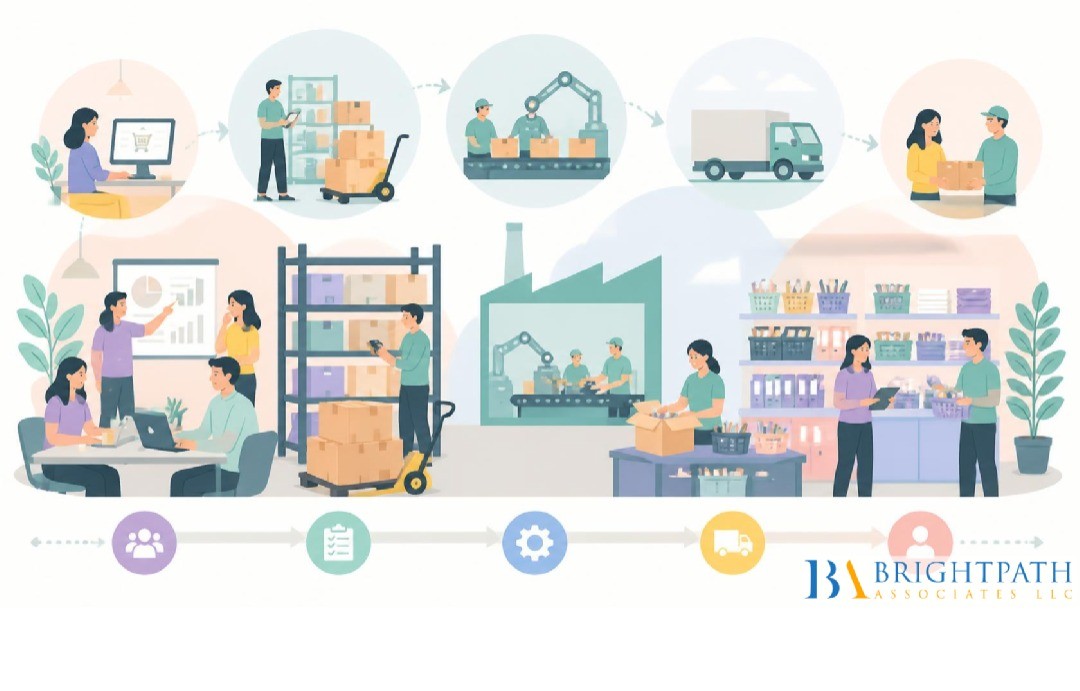
For small and mid-sized businesses, #SupplyChainManagement has traditionally focused on one central question: how can the company reduce purchasing costs? While controlling expenses remains important, an excessive focus on price can prevent organizations from recognizing the broader value that a strong supply chain can create. In an increasingly competitive business environment, SMBs need procurement strategies that improve efficiency, reliability, employee productivity, customer experience, and long-term business resilience.
The concept of a total value supply chain expands procurement beyond simple cost reduction. Instead of evaluating a supplier only by the price of a product, businesses consider quality, reliability, delivery performance, technology integration, maintenance requirements, employee productivity, sustainability, and long-term operational impact.
This approach is particularly relevant to the Office supplies industry, where businesses purchase everything from everyday stationery and workplace consumables to Business equipment, technology, and Commercial office furniture. By looking at the total value generated by these purchases, SMBs can make smarter decisions and build stronger supplier relationships.
From Lowest Price to Total Business Value
The lowest purchase price does not necessarily represent the lowest overall cost. A cheaper office printer, for example, may require expensive consumables, frequent repairs, or extensive employee downtime. Similarly, inexpensive Commercial office furniture may have a shorter useful life, creating replacement expenses and negatively affecting workplace comfort.
Total value considers the complete lifecycle of a purchase. This includes acquisition costs, installation, maintenance, energy consumption, employee productivity, replacement requirements, and disposal.
For SMBs operating with limited financial resources, this broader perspective can be especially valuable. Instead of attempting to reduce every individual purchasing expense, businesses can focus on maximizing the return generated by every dollar spent.
This shift also changes the role of procurement professionals. Procurement becomes a strategic business function capable of influencing operational efficiency rather than simply processing purchase orders.
The Office supplies industry has changed significantly as workplaces have become more digital and flexible. Traditional office supplies remain necessary, but businesses now purchase increasingly sophisticated products and services.
Business equipment can include printers, scanners, communication devices, computers, conference technology, security systems, and other workplace technologies. These products often require installation, software integration, technical support, and ongoing maintenance.
At the same time, organizations are redesigning physical workspaces. Commercial office furniture is increasingly expected to support collaboration, employee comfort, hybrid work, and flexible office arrangements.
This evolution means that businesses need Office supply vendors capable of providing more than products. They increasingly need suppliers that can deliver integrated solutions, technical expertise, maintenance support, and reliable service.
Building Strategic Relationships with Office Supply Vendors
The relationship between an SMB and its Office supply vendors can significantly influence supply chain performance. A transactional relationship focuses primarily on individual orders and price negotiations. A strategic relationship focuses on long-term business requirements. Strategic suppliers can help organizations identify opportunities to consolidate purchasing, improve inventory management, standardize equipment, and reduce operational inefficiencies. For example, a supplier may analyze an organization’s purchasing history and identify that multiple departments are buying similar products at different prices. Standardizing these purchases could simplify Office supply management while improving purchasing leverage.
#SupplierRelationships can also provide access to market intelligence. Vendors that closely monitor product innovation and Office technology trends can help businesses understand emerging solutions before making major investments. Office supply management is becoming more data-driven as organizations seek greater control over purchasing and inventory. Manual tracking can result in over-ordering, stock shortages, duplicate purchases, and unnecessary administrative work. Digital procurement systems can provide centralized visibility into purchasing activity. Employees can access approved product catalogs, managers can establish spending controls, and finance teams can analyze expenditure patterns. Automation can further simplify routine purchasing. Frequently used products can be reordered based on predefined thresholds, reducing the administrative burden on employees. For SMBs, these systems can deliver meaningful efficiency improvements without requiring large procurement departments. Cloud-based platforms and integrated purchasing systems make advanced supply-chain capabilities increasingly accessible to smaller organizations.
Digital Transformation in the Office
The Digital transformation in office environments is changing both purchasing requirements and supply-chain strategies. Businesses are increasingly adopting cloud-based applications, smart meeting rooms, collaboration platforms, connected devices, cybersecurity tools, and automated workplace systems. This transformation creates new challenges because technology purchases are rarely one-time expenses. Equipment often requires software updates, technical support, cybersecurity management, replacement planning, and integration with existing systems.
Businesses therefore need to evaluate technology based on its complete lifecycle. A device that appears inexpensive at purchase may become expensive if it is difficult to maintain or incompatible with other systems. The growing importance of technology also means procurement teams need closer collaboration with IT departments. Procurement decisions should consider security, compatibility, scalability, user experience, and long-term support rather than focusing solely on purchase price. Office technology trends are increasingly centered on automation, artificial intelligence, cloud computing, connected workplace systems, and hybrid collaboration. These developments are influencing the types of Business equipment organizations purchase and how employees interact with physical workspaces. Smart meeting technologies can improve communication between remote and in-office employees. Automated systems can reduce repetitive administrative activities. Connected devices can provide information about equipment utilization, energy consumption, and maintenance requirements. However, adopting every new technology is not necessarily a good strategy. SMBs need to distinguish between technologies that create measurable business value and products that simply add complexity. A total-value approach helps organizations evaluate technology investments based on productivity improvements, employee adoption, operational savings, scalability, and long-term business requirements.
Office Equipment Maintenance as a Value Driver
Office equipment maintenance is often overlooked during procurement decisions. Businesses may focus on the initial purchase price while ignoring the ongoing cost of keeping equipment operational. Unexpected equipment failures can interrupt employee productivity and create replacement expenses. For organizations that depend heavily on printers, communication systems, computers, networking equipment, or specialized Business equipment, downtime can have a significant economic impact. Preventive maintenance programs can extend equipment lifecycles and reduce unexpected failures. Supplier agreements that include maintenance, technical support, replacement services, and service-level commitments can provide greater predictability.
The total value of equipment should therefore include its reliability and support ecosystem. A slightly more expensive product with stronger durability and service support may generate greater long-term value than a cheaper alternative. Commercial office furniture is another area where price-based procurement can produce unintended consequences. Furniture affects employee comfort, workplace functionality, office aesthetics, and long-term usability. As hybrid and flexible working models continue to influence workplace design, organizations are looking for adaptable furniture that can support multiple work styles. Adjustable desks, ergonomic seating, modular meeting spaces, and flexible collaboration areas can help businesses make better use of office space. The value of furniture should therefore be evaluated in terms of durability, employee comfort, flexibility, maintenance requirements, and lifecycle cost. For SMBs, purchasing higher-quality furniture may appear more expensive initially but can reduce replacement frequency and improve the workplace environment over time.
Procurement as a Strategic Business Function
Procurement is evolving from a transactional function into a strategic discipline. Modern procurement teams are increasingly responsible for supplier risk, contract management, cost analysis, sustainability, technology adoption, and business continuity.
This transformation requires organizations to establish clear procurement policies. Employees should understand which products and suppliers are approved, how purchases should be authorized, and how suppliers are evaluated.
Data can help procurement teams identify spending patterns and negotiate better agreements. Businesses can also use supplier performance metrics to evaluate delivery reliability, quality, responsiveness, and service.
A mature procurement function therefore creates value beyond price negotiation. It helps the organization make informed decisions about where, when, and how resources should be invested.
Technology and changing procurement models are creating new requirements for talent. SMBs need professionals who understand purchasing, data analysis, supplier management, technology, finance, and business strategy.
Talent acquisition strategies should therefore focus on identifying professionals capable of operating across multiple functions. Procurement leaders increasingly need strong communication and analytical skills in addition to traditional purchasing expertise.
Companies may also need specialists who understand digital procurement platforms, supply-chain analytics, vendor management, and technology lifecycle planning.
Effective talent acquisition strategies can help SMBs build procurement teams capable of delivering strategic value rather than simply managing transactions.
The Role of Executive Leadership
Supply-chain transformation requires organizational commitment, particularly from senior leadership. Executives must recognize that procurement decisions influence productivity, technology adoption, employee experience, and financial performance.
#ExecutiveSearchRecruitment can help organizations identify leaders with the experience required to transform procurement and supply-chain operations. For SMBs, finding executives who understand resource constraints while still being capable of implementing sophisticated processes can be particularly important.
A strong supply-chain leader can connect procurement with finance, operations, technology, human resources, and strategic planning. This cross-functional approach allows the organization to evaluate purchases according to broader business objectives.
Moving beyond cost reduction requires businesses to establish a consistent framework for evaluating purchases. Instead of asking only how much a product costs, organizations should consider how the purchase affects productivity, reliability, maintenance, employee experience, scalability, and long-term operational performance.
Supplier quality should also be evaluated alongside price. A vendor that consistently delivers on time and provides strong technical support can generate more value than a low-cost supplier with unreliable service.
This framework can be applied across the entire workplace ecosystem, from everyday office supplies to technology infrastructure and Commercial office furniture.
Conclusion
For SMBs, the future of procurement is not simply about finding cheaper products. It is about creating maximum business value from every purchasing decision. The Office supplies industry is evolving rapidly, and organizations must consider how supplies, Business equipment, technology, furniture, and services influence broader operational performance.
Effective Office supply management can reduce waste and improve purchasing visibility, while strategic relationships with Office supply vendors can provide greater reliability and market intelligence. Office technology trends and Digital transformation in office environments are creating new opportunities to improve productivity, but these investments must be evaluated according to their total lifecycle value.
Office equipment maintenance, supplier performance, technology integration, and employee productivity should all form part of procurement decisions. At the same time, organizations need strong talent capable of managing increasingly sophisticated supply chains, making Talent acquisition strategies an important component of long-term transformation.
Ultimately, a total value supply chain allows SMBs to move from reactive purchasing toward strategic business management. By considering quality, reliability, technology, productivity, maintenance, employee experience, and long-term resilience alongside price, companies can build procurement systems that do more than reduce costs. They can create sustainable competitive advantage, improve operational performance, and strengthen the foundation for future growth.
Find your next leadership role in Business Supplies & Equipment Industry today!
Stay informed with the latest insights on Business Supplies & Equipment Industry!