
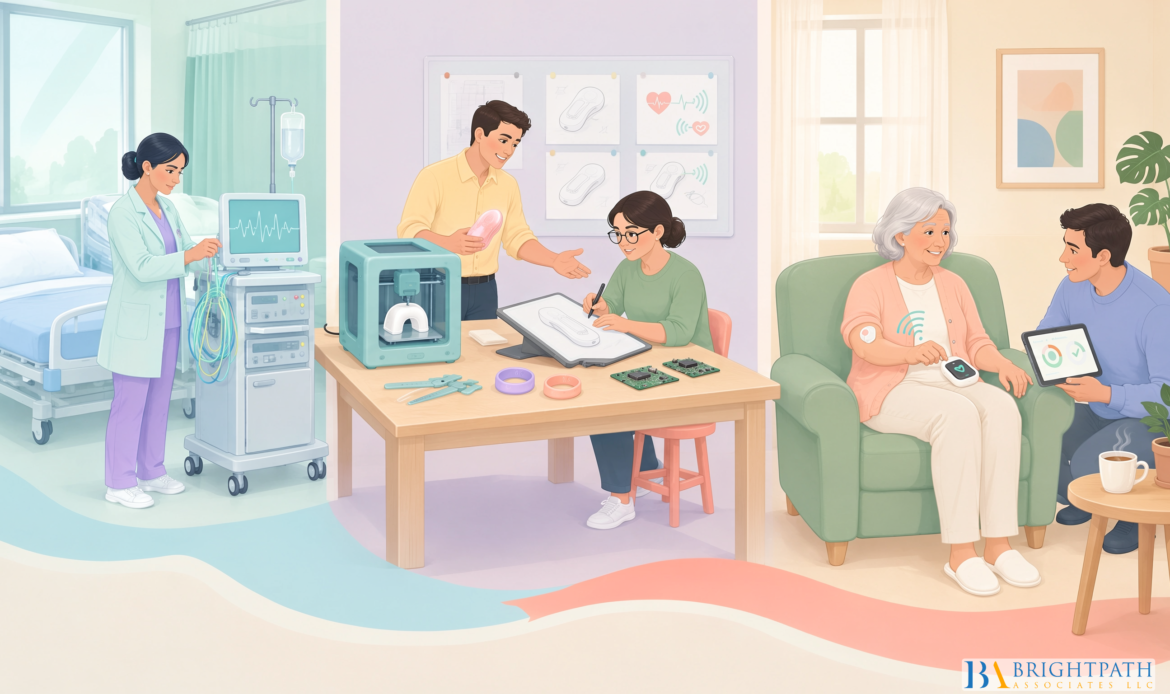
[Bethany, Connecticut – 03 November 2026] – BrightPath Associates has highlighted the growing importance of patient-centered medical device design as healthcare delivery increasingly shifts from hospitals to homes and ambulatory care settings. In its latest industry analysis, the company explores how medical device manufacturers can adapt product development, regulatory planning, digital connectivity, and commercialization strategies to support safe and effective home-based treatment. The shift is creating new opportunities for medical technology companies while requiring C-suite executives to rethink product innovation, operational readiness, and long-term business strategies.
The movement toward ambulatory care is changing how patients receive treatment, monitor their health, and manage recovery. Medical devices that were traditionally operated by trained healthcare professionals must now accommodate patients, family members, and caregivers with different levels of technical knowledge. For manufacturers, this transition involves more than reducing equipment size or adding digital features. It requires a complete approach to usability, accessibility, safety, connectivity, and ongoing support.
Designing Medical Devices for Real-World Home Environments
Traditional medical devices are often developed for controlled clinical environments where trained professionals manage installation, operation, maintenance, and emergency responses. However, home-based healthcare introduces different challenges, including limited space, inconsistent internet connectivity, household distractions, power interruptions, and varying levels of patient assistance.
BrightPath Associates emphasizes that manufacturers must understand these conditions before finalizing product requirements. As highlighted in its analysis, “We need to design for the full care transition, not just the device itself.” This perspective encourages companies to consider the entire patient experience, from unboxing and installation to daily operation, troubleshooting, cleaning, and eventual device replacement.
Medical Device Innovation will increasingly depend on practical features such as simplified controls, accessible displays, clear instructions, portable designs, and understandable alarm systems. Manufacturers must also consider how patients with limited mobility, reduced vision, hearing difficulties, or limited technical knowledge will interact with their products. These improvements can strengthen patient confidence while reducing the possibility of device misuse and avoidable operational problems.
Companies seeking a deeper understanding of these changing requirements can explore Designing Medical Devices for the Ambulatory Care Shift: Strategies for Safe Home-Based Healthcare, which examines the engineering and operational considerations behind successful home-use medical devices.
Strengthening Regulatory Compliance and Medical Device Risk Management
The transition toward home-based healthcare also creates new responsibilities for manufacturers under Medical Device Regulatory frameworks. Product developers must demonstrate that devices remain safe and effective when operated outside traditional healthcare facilities. This makes human factors engineering, usability testing, design validation, and risk assessment essential parts of product development.
Medical Device Risk Management should address potential problems involving incorrect setup, misunderstood alarms, interrupted power supplies, connectivity failures, and unclear responsibilities between patients, caregivers, and healthcare professionals. The U.S. Food and Drug Administration (FDA) provides guidance on home-use device design and human factors engineering, highlighting the importance of evaluating how intended users interact with medical technology in realistic environments.
For executive leaders, integrating these requirements early can reduce development risks and improve product readiness. Companies should establish measurable acceptance criteria for critical tasks and validate devices under realistic conditions before commercial release. This approach can also support Medical Device Commercialization by identifying usability and safety concerns before products reach broader markets.
Strategic Partnerships and International Expansion Shape Future Growth
As ambulatory care adoption expands, medical technology companies will need stronger collaboration across healthcare providers, technology developers, regulatory specialists, distributors, and service organizations. Medical Device Strategic Partnerships can help manufacturers understand patient requirements, improve product functionality, and develop reliable support networks for home-based healthcare.
International growth also requires careful planning. Medical Device International Expansion involves understanding different regulatory requirements, healthcare infrastructure, reimbursement systems, distribution networks, and patient expectations. A device designed for one healthcare market may require modifications before it can succeed in another.
Executives should therefore evaluate market readiness, clinical evidence, cybersecurity requirements, product servicing, and supply chain capabilities together. The broader Medical Device Industry is increasingly dependent on organizations that can combine engineering expertise, regulatory knowledge, digital capabilities, and commercial leadership.
Leadership and Workforce Readiness Will Drive Industry Transformation
The changing healthcare landscape is increasing demand for professionals who understand medical technology, product development, regulatory compliance, quality assurance, digital health, and commercialization. Manufacturers need leaders who can connect engineering decisions with patient safety, operational performance, and business growth.
Executive recruitment will play an important role in identifying talent capable of managing these evolving responsibilities. From regulatory affairs executives and product development leaders to cybersecurity specialists and commercial strategy professionals, the right workforce can help organizations navigate complex product requirements and emerging healthcare opportunities.
Ultimately, the shift from hospital to home represents a broader transformation in medical technology. Companies that prioritize patient-centered engineering, reliable connectivity, effective risk management, and strategic workforce planning will be better positioned to support the next generation of healthcare delivery.
About BrightPath Associates
BrightPath Associates is a U.S.-based executive search and recruitment firm helping organizations identify experienced leadership and specialized professionals across multiple industries, including medical device manufacturing. The company focuses on connecting businesses with the right talent to strengthen operations, support innovation, and achieve sustainable growth. Its mission is to help organizations build stronger teams while making the recruitment process more effective and strategic.
Media Contact:
Name: Corporate Communications Team
Company: BrightPath Associates
Email: media@brightpathassociates.com
Website: https://brightpathassociates.com