
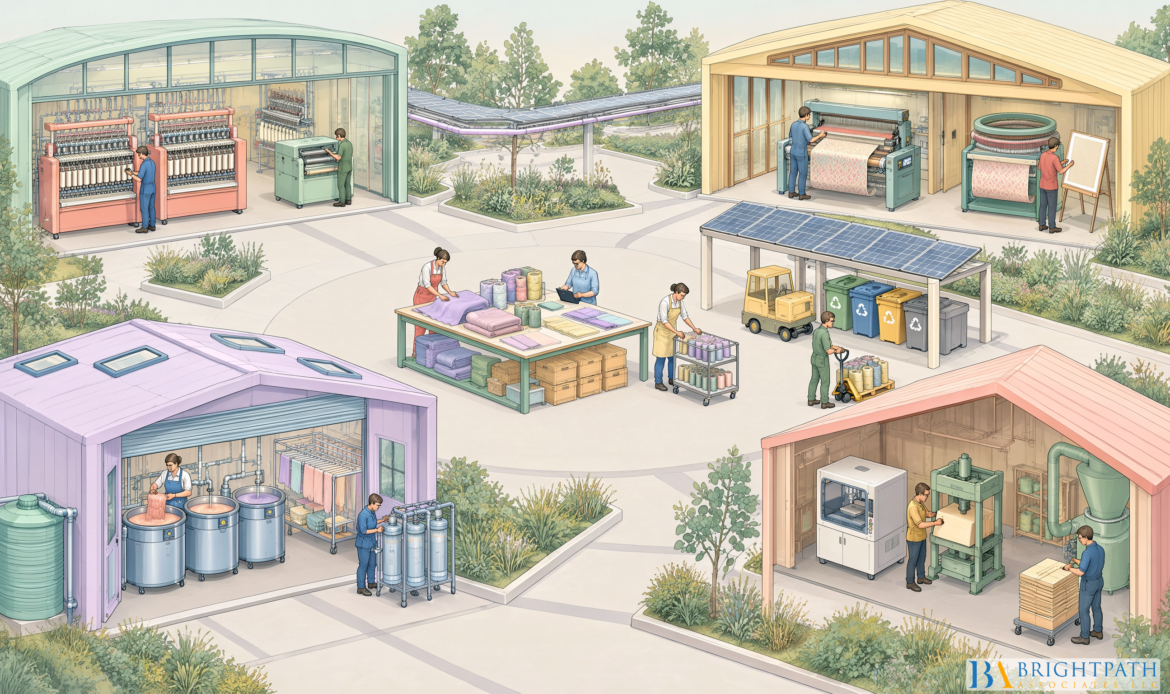
The Rise of Micro-Mills: Decentralized Production Models for Paper and Forest Industry is less about building miniature versions of large #PulpComplexes and more about redesigning where value is created. A micro-mill may process forest thinnings, sawmill residues, recycled fiber, or agricultural materials closer to where those resources are generated. That approach could reduce some transportation burdens, create local value-added products, and support forest management. But it also introduces difficult questions about fiber supply, process reliability, permits, capital discipline, and leadership.
For executives, the central issue is not whether decentralized production sounds sustainable. It is whether a smaller facility can secure dependable feedstock, make products customers will buy, and recruit leaders who can operate across forestry, manufacturing, environmental compliance, and commercial development.
Table Of Contents
- What A Micro-Mill Is And Is Not
- The Feedstock Economics Behind Decentralized Production
- Technology, Product Choices, And Environmental Trade-Offs
- Why Leadership Requirements Are Changing
- Key Takeaways
- Frequently Asked Questions
What A Micro-Mill Is And Is Not
A paper or forest-products micro-mill is best understood as a small, geographically distributed processing facility located near fiber sources, end markets, or both. There is no single standardized U.S. definition for a paper-industry micro-mill. Capacity, process design, and products can vary widely.
What unites these models is decentralization. Rather than shipping low-density residues or small-diameter timber long distances to a large centralized mill, a micro-mill attempts to process material closer to its origin. The output may be fiber furnish, molded packaging, specialty pulp, biomass-derived products, recycled paper products, engineered wood inputs, or other value-added materials.
A Different Economic Logic
Large integrated mills are designed around scale. They often depend on major wood baskets, extensive utility systems, continuous operations, and established distribution networks. Micro-mills operate under a different logic: reduce distance, focus on narrower product categories, and adapt production to local material availability.
That distinction matters because transportation can become a serious cost driver for bulky #ForestResidues. A load of clean, consistent chips is not the same as a load of branches, tops, wet material, bark-heavy residues, or mixed agricultural fibers. The first may move efficiently through a conventional supply chain. The second may require sorting, chipping, drying, screening, and contamination control before it is useful.
| Factor | Centralized Mill Model | Decentralized Micro-Mill Model |
|---|---|---|
| Feedstock strategy | Large, regional supply basin | Smaller, defined local supply area |
| Product strategy | Broad volume production | Specialty, regional, or value-added products |
| Logistics priority | Efficient long-haul flow | Lower-cost local collection and preprocessing |
| Operating challenge | Scale and asset utilization | Feedstock consistency and local market fit |
| Leadership need | Functional depth at scale | Cross-functional operating judgment |
The appeal is understandable. A well-designed micro-mill could connect sustainable forestry, local manufacturing, paper recycling solutions, and forest product innovation. Still, decentralization does not automatically make a project economical or lower-carbon. Those outcomes depend on the materials, equipment, energy source, water systems, product mix, and local transportation reality.
Where The Model May Fit
Micro-mills may be more plausible where a local feedstock problem intersects with a local product opportunity. Examples can include forest-thinning programs that need a market for small-diameter material, sawmills seeking better uses for specific residues, rural regions pursuing wood product manufacturing, or markets that need shorter supply chains for packaging and specialty materials.
The model is less compelling when a facility plans to compete directly with high-volume commodity pulp on cost alone. Large mills retain advantages in purchasing power, production scale, energy integration, and established customer channels. A smaller operation generally needs a sharper reason to exist.
For a broader view of innovation pressures shaping this sector, see Driving innovation in the pulp and paper sector.
The Feedstock Economics Behind Decentralized Production
A micro-mill should be sited around delivered fiber cost, not a regional estimate of available biomass. This is the practical discipline often missing from early feasibility discussions.
Technically available material includes wood, residue, or agricultural fiber that exists in a region. Economically available material is the smaller portion that can be collected, prepared, purchased, and delivered at an acceptable cost while meeting the facility’s fiber-quality specification.
Build The Supply Radius From Costs, Not Maps
A useful supply model begins with the full delivered-cost equation:
- Collection or harvest cost.
- Landowner payment or residue purchase price.
- Chipping, grinding, sorting, and screening cost.
- Moisture management and storage loss.
- Trucking and handling cost.
- Quality deductions for contamination, bark, ash, or inconsistent chip size.
- Competing-market pricing for the same material.
A regional inventory map may show substantial residue volumes. That does not mean the material can support a mill. For instance, residues located on difficult terrain, scattered across many ownerships, or needed for soil protection may be unavailable even if they appear abundant in a resource assessment.
A 2021 Michigan and Wisconsin study found that only 52% of studied forestland managers would allow logging-residue removal, illustrating how permission constraints can shrink usable supply below physical inventories. The same research found that excluding landowner decisions can materially overstate economic supply. The study of economic logging-residue supply is a useful warning against treating biomass availability as a simple tonnage calculation.
Residue Competition Is Not A Footnote
Sawmill chips, shavings, bark, and sawdust may already serve established markets. Clean chips can be sold into paper, engineered wood, energy, landscaping, animal bedding, or other applications. A micro-mill does not necessarily create a new feedstock market; it may enter an existing allocation problem.
That is why management should ask three questions before committing to a feedstock plan:
• Which suppliers have uncommitted material rather than merely visible material?
• Which buyers already bid for the same residue stream?
• What happens to the project’s margin if the supplier chooses a competing outlet?
The U.S. Forest Service notes that forest and milling residues have existing uses and that some residues may be retained on site for nutrient cycling and ecological reasons. The Forest Service overview of woody biomass supports a more careful view of residue procurement: removal limits can be both commercial and ecological.
Contracts Must Reflect Fiber Quality
Volume alone is not enough. A supply agreement should specify species mix, maximum moisture, chip dimensions, bark content, contamination thresholds, delivery timing, and rejection procedures. Without those details, a micro-mill can receive the tonnage it contracted for and still fail to produce consistent pulp or paper.
This is particularly relevant when the facility blends sawmill residues, thinning-derived wood, recycled fiber, and agricultural materials. A blended furnish can improve resilience, but it can also complicate refining, drainage, strength, brightness, odor, and #WastewaterControl.
The leadership team must therefore connect timber harvesting decisions to product specifications. That is not merely a procurement issue. It is an operating-model issue.
Technology, Product Choices, And Environmental Trade-Offs
Technology can make decentralized production more feasible, but it does not remove the underlying physical constraints. Small facilities still need dependable power, water, process controls, maintenance capacity, quality systems, environmental controls, and skilled operators.
Process The Material Before You Move It When Appropriate
Mobile preprocessing can sometimes make more sense than transporting raw, low-density residues. Chipping, grinding, and screening near the harvest site or sawmill can reduce wasted truck capacity and stabilize the feedstock before it reaches the facility.
The decision depends on material density, hauling distance, road access, equipment utilization, and the cost of maintaining mobile equipment. A remote collection point with low annual volume may not justify a mobile system. A cluster of thinning operations or sawmills with recurring material may.
Distributed biomass conversion provides a useful adjacent example, even though it is not paper production. In a U.S. Forest Service field study, a mobile pyrolysis system processed 21.2 metric tons of mill residues and produced 3.0 metric tons of biochar. The Forest Service mobile pyrolysis field study does not prove a paper micro-mill model, but it shows that distributed processing equipment can be evaluated with measurable feedstock and output data rather than broad assumptions.
Product Choice Should Follow Fiber Capability
A common error is choosing a high-value paper or packaging product before proving that local fiber can meet the required performance standard. Products with demanding strength, appearance, hygiene, food-contact, or print requirements may need very consistent furnish and extensive quality assurance.
Forest thinnings can be technically useful, but they should be assessed by pulp quality and refining energy, not just by their disposal value. The U.S. Forest Service tested chips from small-diameter logs, tops, reject logs, and sawmill residues for thermomechanical pulp production. The reported work also evaluated sawmill residue-chip substitution at levels up to about 50%. The Forest Service TMP demonstration is important because it focuses on handsheet properties and process performance, not simply tonnage.
For executives, the implication is direct: start with the product specification, then test the fiber against it. Do not reverse that sequence.
Sustainability Claims Need Boundaries
Micro-mills may reduce transportation distance, support local economies, and create a market for some underused material. They may also support forest restoration or wildfire-fuel reduction programs where those programs are appropriate.
Yet the environmental case is conditional. Removing too much residue can affect #SoilProtection and nutrient retention. Small facilities may have less ability to spread the cost of water treatment or emissions controls across large production volumes. Agricultural fibers can reduce dependence on wood in some applications, but collection and storage can be difficult because the material is often bulky and seasonal.
Paper manufacturing innovation and the circular economy offers useful context for executives evaluating how recycled fiber, circular design, and production technology can fit together. The key is to measure the system rather than rely on a single sustainability label.
Why Leadership Requirements Are Changing
The rise of micro-mills changes the executive job, even when the title remains familiar. A plant manager, operations leader, general manager, supply-chain executive, or technical director may need a wider operating range than in a traditional centralized facility.
The New Leadership Profile Is More Cross-Functional
A decentralized facility may require leaders who can connect fiber procurement, pulp and paper technology, automation in the paper industry, environmental compliance, workforce planning, and local stakeholder relationships.
The leadership challenge is not simply finding someone with a paper background. It is finding someone able to make trade-offs across a smaller, less buffered operation. When one supplier misses a shipment or a moisture problem disrupts production, the effects can reach sales commitments quickly.
| Role Area | Conventional Priority | Micro-Mill Priority |
|---|---|---|
| Operations | Throughput and reliability | Throughput, reliability, and variable-fiber adaptation |
| Procurement | Large-scale sourcing | Local contracts, quality control, and supplier development |
| Technical leadership | Process optimization | Product qualification and feedstock-to-product fit |
| Finance | Scale economics | Unit economics, capital discipline, and scenario planning |
| Commercial leadership | Large account management | Regional demand creation and product-market fit |
Why Executive Searches Can Be Difficult
#SpecializedLeadership searches may become difficult when employers describe the role too narrowly. A candidate with deep pulping expertise may not have local fiber-market experience. A forestry executive may understand timber supply but not wastewater systems or paper-grade quality demands. A strong manufacturing leader may not know forestry regulations or the commercial realities of residue competition.
We recommend defining the role around the few decisions that will determine success in the first 24 months. Those may include:
- Securing qualified feedstock contracts.
- Validating process performance at target quality levels.
- Building environmental and safety systems before production pressure rises.
- Developing customers willing to buy the chosen product.
- Recruiting and retaining technical operators in a rural or specialized labor market.
This framework helps boards and owners distinguish between a familiar resume and a genuinely relevant executive profile. It also clarifies when retained executive search may add value: particularly when the required candidate pool is narrow, confidential, geographically dispersed, or not actively applying to public job postings.
Vacancy Risk Is Operational Risk
A prolonged leadership vacancy can delay permitting, supplier negotiations, equipment commissioning, or quality qualification. In a micro-mill, there may be fewer layers of management to absorb the gap.
Still, hiring quickly is not the same as hiring well. A practical search process should test for evidence of decision-making under variable raw-material conditions, partnership skills with landowners and suppliers, familiarity with process safety, and the ability to explain technical trade-offs to lenders, boards, and community stakeholders.
For leaders assessing the full chain from fiber source to end customer, Value chain optimization in forest products provides a relevant strategic lens. The strongest micro-mill strategy is usually not a standalone plant plan. It is a coordinated value-chain plan.
Key Takeaways
What Executives Should Reconsider
• Treat feedstock as a contract and quality challenge, not a biomass-inventory exercise. Physical supply can be much larger than economic supply.
• Choose products after testing local fiber. Thinnings, residues, recycled fiber, and agricultural materials can behave differently in processing and final products.
• Model competing buyers for residues. Existing paper, panel, fuel, and landscaping markets can change what a supplier is willing to sell.
• Measure environmental performance across the full system. Shorter hauling distances do not automatically offset energy, water, treatment, and equipment impacts.
• Hire for operating range. Decentralized production needs leaders who can connect forestry, manufacturing, technology, commercial development, and compliance.
A Practical Decision Sequence
- Define the target product and customer requirements.
- Test available fiber against those requirements.
- Build a delivered-cost supply model with realistic permission, quality, and competition assumptions.
- Compare fixed and mobile preprocessing options.
- Assess water, energy, wastewater, permitting, and workforce needs.
- Build the leadership team around the project’s highest execution risks.
Frequently Asked Questions
What Is A Micro-Mill In The Paper And Forest Products Industry?
A micro-mill is a smaller, distributed processing facility that converts local wood fiber, residues, recycled paper, or other materials into pulp, paper, packaging, or forest-based products. It is not a standardized industry category, so each project must be evaluated on its own process, capacity, and market model.
How Is A Micro-Mill Different From A Conventional Paper Mill?
A conventional mill generally relies on scale, large supply basins, and established infrastructure. A micro-mill relies more heavily on local feedstock, narrower product choices, flexible processing, and regional customer demand. It may reduce some transport needs but often faces tighter constraints on supply consistency and utility costs.
Can Forest Thinnings Be Used For Paper Pulp?
Potentially, yes. The U.S. Forest Service has tested thinning-derived materials for thermomechanical pulp. The relevant question is whether the fiber meets required quality and refining-energy targets for the intended product, not simply whether thinning material is available.
How Far Can A Micro-Mill Collect Wood Residues?
There is no reliable national #MileageBenchmark. The workable radius depends on haul cost, material density, moisture, road access, preprocessing needs, competing buyers, and the value of the final product. A project should calculate its supply radius from delivered fiber cost rather than adopt a generic distance.
Are Sawmill Residues A Reliable Feedstock Source?
They can be relatively consistent compared with dispersed logging residues, but they may already be committed to other buyers. Contracts should define volume, quality, moisture, timing, and pricing terms rather than assume sawmill by-products are surplus material.
What Leadership Roles Matter Most In A Micro-Mill?
The critical roles usually include an operations leader, technical or process leader, fiber procurement leader, commercial leader, and finance or project-development executive. In small organizations, one executive may cover several areas, which makes cross-functional judgment especially important.
When Should A Company Consider Executive Search?
Executive search may be appropriate when the role demands rare combinations of pulp and paper technology, forestry knowledge, manufacturing leadership, environmental compliance, and commercial skill. It can also be useful when confidentiality, geographic reach, or the cost of a prolonged vacancy makes a broad public recruiting approach insufficient.
What Causes Small Biomass And Fiber Projects To Fail?
Common risks include overstated feedstock supply, weak fiber specifications, unmodeled competition for residues, poor product-market fit, underfunded utility and #WastewaterSystems, and leadership gaps during development or commissioning. A disciplined feasibility process can identify many of these issues before capital is committed.
Resources And Citations
- Agricultural and Applied Economics Association/Wiley — Why Biomass Residue Is Not as Plentiful as It Looks: Case Study on Economic Supply of Logging Residues
- U.S. Forest Service — Mill Demonstration of TMP Production from Forest Thinnings: Pulp Quality, Refining Energy, and Handsheet Properties
- U.S. Forest Service — Financial Performance of a Mobile Pyrolysis System Used to Produce Biochar and Electricity from Mill Residues
- U.S. Forest Service — Woody Biomass for Bioenergy and Biofuels in the United States
- BrightPath Associates: Driving innovation in the pulp and paper sector
Find your next leadership role in Paper & Forest Industry today!
Stay informed with the latest insights on Paper & Forest Industry!