
Introduction
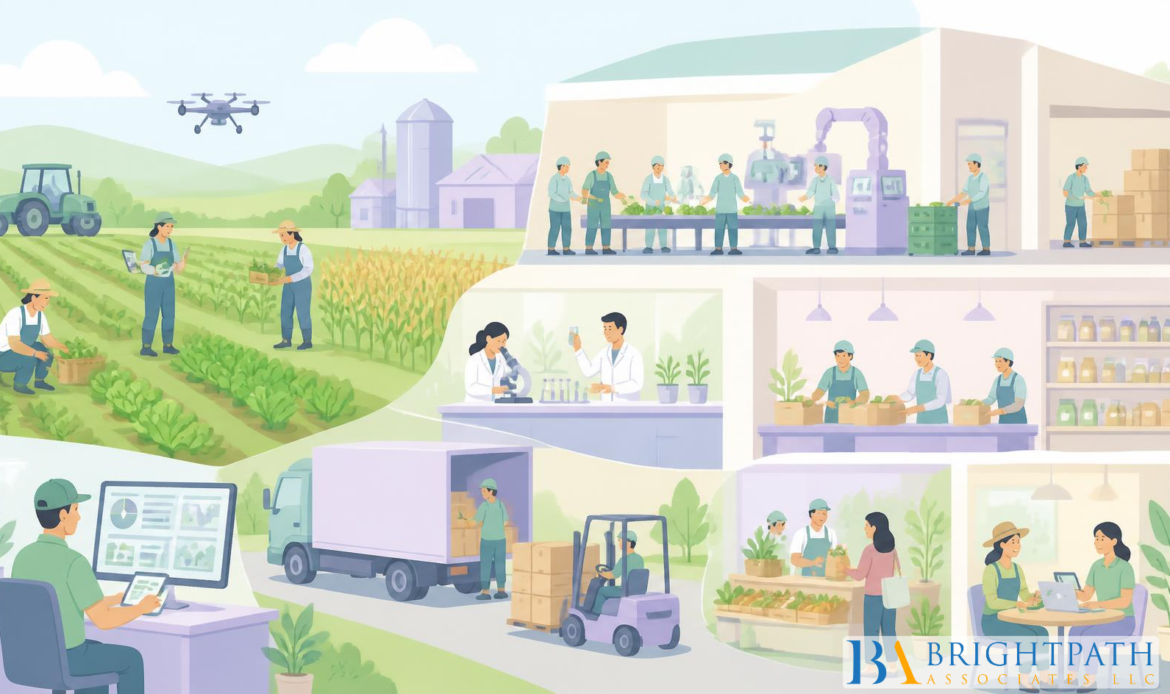
The #AgriculturalIndustry is undergoing a fundamental transformation as businesses move beyond traditional crop production toward integrated, value-added service delivery. Historically, agribusiness success has depended largely on land productivity, seasonal yields, input availability, and commodity prices. However, changing consumer expectations, climate uncertainty, rising operational costs, and technological advancements are creating opportunities for agricultural enterprises to deliver greater value throughout the farming and food supply chain.
Modern agribusinesses are increasingly expanding into advisory services, digital farm management, precision input application, post-harvest handling, processing, logistics, and market access solutions. This transition allows businesses to generate revenue through specialized expertise and services rather than relying exclusively on the sale of agricultural commodities. By combining Agricultural technology with customer-focused business models, companies can improve farmer productivity while creating more resilient and diversified revenue streams.
The shift also reflects a broader need to strengthen Food production systems, improve resource efficiency, and support long-term Agricultural sustainability. Farmers require practical solutions that help them manage costs, reduce risks, and achieve consistent returns. Agribusinesses that respond to these requirements through integrated service delivery can establish stronger relationships with farming communities and develop sustainable competitive advantages.
Traditional agribusiness models often focus on producing crops, purchasing agricultural commodities, or supplying essential farming inputs. Although these activities remain important, they can expose businesses to fluctuating prices, unpredictable weather conditions, seasonal demand, and changing input costs. Expanding into value-added services creates additional opportunities to improve profitability and strengthen customer relationships.
Service-oriented agribusinesses may provide soil testing, crop planning, irrigation management, machinery rental, pest monitoring, storage solutions, and post-harvest advisory services. Some businesses also help farmers access buyers, arrange transportation, improve product grading, and manage documentation for domestic or export markets.
These services address challenges that individual farmers may find difficult or expensive to manage independently. For example, a small farm may not be able to justify purchasing sophisticated agricultural machinery or specialized monitoring equipment. A service provider can make these resources available through shared access, subscription models, or pay-per-use arrangements.
The transition requires businesses to understand farmers’ operational priorities and develop services that deliver measurable benefits. Rather than selling technology for its own sake, successful agribusinesses demonstrate how their solutions can reduce input wastage, improve crop quality, increase market access, or support better financial decisions.
Agricultural Technology as the Foundation of Modern Service Delivery
Agricultural technology is becoming central to the development of value-added agribusiness services. Advances in remote sensing, connected devices, automated machinery, digital advisory platforms, and data analytics are enabling businesses to deliver more precise and timely support to farmers.
Technology-enabled service providers can monitor crop conditions, assess soil variability, identify irrigation requirements, and detect potential production problems. These capabilities allow agribusinesses to move from generalized recommendations toward solutions tailored to individual farms and specific growing conditions.
For instance, agricultural service companies can use satellite imagery and field observations to identify areas experiencing moisture stress or abnormal crop development. Specialists can then recommend targeted interventions, helping farmers avoid unnecessary applications of water, fertilizer, or crop protection products.
Technology can also improve the coordination of agricultural operations. Digital platforms can connect input suppliers, machinery providers, agronomists, warehouses, transport companies, and buyers within a more integrated service network.
However, technology adoption must reflect local infrastructure, affordability, digital literacy, and connectivity. Solutions designed for large commercial farms may not be appropriate for smallholders without adaptation. Agribusinesses must therefore combine technological capabilities with accessible pricing, practical training, and reliable customer support.
Precision agriculture enables farming decisions to be based on field-specific conditions rather than uniform treatment across an entire farm. By using sensors, geographic information systems, satellite imagery, and variable-rate equipment, service providers can help farmers understand differences in soil fertility, moisture availability, crop development, and production performance.
For agribusinesses, precision agriculture creates opportunities to offer specialized services such as soil mapping, nutrient management, irrigation scheduling, and crop health monitoring. These services can help farmers use resources more efficiently while improving the consistency of production outcomes.
Precision agriculture also supports more informed risk management. Early identification of crop stress, pest pressure, or irrigation problems gives farmers additional time to respond before losses become severe. Agribusiness advisors can combine field data with local agronomic knowledge to develop recommendations suited to specific crops and growing environments.
The commercial value of precision agriculture depends on translating technical information into practical decisions. Farmers need understandable recommendations, clear cost-benefit explanations, and follow-up support to evaluate results. Service providers should therefore focus on outcomes rather than simply delivering maps, reports, or sensor readings.
By connecting data collection with agronomic expertise, agribusinesses can build recurring service relationships and differentiate themselves from conventional input suppliers.
Digital Farming and the Role of Farm Management Software
#DigitalFarming is reshaping how agricultural enterprises plan, monitor, and evaluate their operations. Digital platforms can centralize information about planting schedules, input purchases, labor allocation, irrigation activities, crop health, harvesting, inventory, and sales.
Farm management software allows farmers and agribusiness service providers to organize these activities within a structured digital environment. Instead of relying exclusively on paper records or fragmented spreadsheets, users can maintain consistent operational information and review performance across growing seasons.
For service-based agribusinesses, these platforms can support subscription services, customized advisory packages, machinery scheduling, input recommendations, and production reporting. They can also improve coordination between farmers and external service providers by making relevant information easier to share.
Digital records may help businesses identify recurring inefficiencies, compare production costs, and understand which interventions deliver the greatest value. With appropriate data governance, they can also support traceability requirements and improve communication with processors, retailers, and institutional buyers.
Nevertheless, digital solutions must remain accessible and easy to use. Complex interfaces, high subscription fees, limited connectivity, and concerns about data ownership can discourage adoption. Successful providers invest in user training, local-language support where appropriate, and clear policies explaining how farm data is collected, protected, and used.
Sustainable farming is creating opportunities for agribusinesses to provide services that improve productivity while reducing pressure on natural resources. Farmers increasingly need support with soil health, water conservation, nutrient management, crop diversification, and adaptation to changing weather conditions.
Agribusiness service providers can develop advisory programs that assess soil conditions, optimize fertilizer use, introduce appropriate crop rotations, and improve irrigation efficiency. They can also support integrated pest management and the adoption of farming practices that reduce avoidable environmental impacts.
Organic farming offers another area for specialized service delivery. Producers may require assistance with organic production planning, soil fertility management, biological pest control, recordkeeping, and compliance with applicable certification requirements. Agribusinesses can help farmers understand these processes and connect them with suitable buyers.
However, organic production requires careful planning because changes in input practices, pest management, and nutrient availability can affect yields and operating costs. Businesses should provide realistic guidance rather than assuming that organic methods will automatically increase profitability.
The commercial opportunity lies in delivering credible, evidence-based support that helps farmers meet market requirements while maintaining economic viability. Through specialized advisory services, agribusinesses can support differentiated products, stronger market positioning, and more responsible production systems.
Agricultural Innovation and Post-Harvest Value Creation
Agricultural innovation extends beyond crop cultivation to include harvesting, storage, processing, packaging, transportation, and market development. In many agricultural supply chains, significant value is lost after harvest because of inadequate storage infrastructure, poor handling, delayed transportation, and limited access to processing facilities.
Agribusinesses can address these challenges by offering shared storage services, crop grading, cleaning, drying, packaging, cold-chain coordination, and processing support. These services can improve product quality, reduce spoilage, and help farmers access markets that require consistent specifications.
For example, a service provider working with horticultural producers may coordinate harvesting schedules, grading facilities, refrigerated transportation, and buyer requirements. This integrated approach can help maintain product quality while reducing the time between harvest and sale.
Processing services can create further opportunities by transforming agricultural raw materials into higher-value products. Depending on the commodity, this may involve milling, dehydration, oil extraction, food preparation, or the production of specialized ingredients.
These activities require appropriate quality controls, food safety procedures, equipment investment, and market research. Agribusinesses must evaluate customer demand and processing economics before expanding into new service areas.
By addressing post-harvest constraints, businesses can create value beyond the farm gate while improving supply chain efficiency and strengthening farmer relationships.
#SustainableAgricultureInvestment is becoming increasingly relevant as investors and agricultural enterprises evaluate opportunities that combine commercial returns with resource efficiency and long-term resilience. Service-based agribusiness models can attract investment by generating recurring revenues and addressing persistent operational challenges across the agricultural sector.
Potential models include machinery-as-a-service, subscription-based crop advisory, irrigation management, soil testing, digital farm monitoring, shared storage facilities, and organized market access services. These models allow customers to access capabilities without necessarily bearing the full cost of owning equipment or building infrastructure.
However, investment decisions must reflect local agricultural economics. Seasonal income patterns, crop selection, farm size, payment reliability, and weather-related risks influence the ability of farmers to purchase services. Businesses must establish pricing structures that reflect customer affordability while covering delivery costs and maintaining service quality.
Partnerships with financial institutions, equipment manufacturers, agricultural cooperatives, processors, and technology companies can support expansion. Financing arrangements may help customers access equipment or services, while partnerships can reduce infrastructure costs and broaden market reach.
Investors should also evaluate environmental performance, resource efficiency, and the long-term viability of the underlying business model. Commercial sustainability depends on delivering measurable customer benefits rather than relying exclusively on favorable market narratives.
Agricultural Sustainability and Climate Resilience
Agricultural sustainability involves maintaining productive farming systems while protecting soil, water, biodiversity, and the long-term viability of rural communities. Climate variability is increasing the importance of services that help farmers prepare for droughts, excessive rainfall, heat stress, and shifting pest patterns.
Agribusinesses can provide climate-informed crop planning, water management advisory, weather monitoring, resilient seed selection support, and risk assessment services. These offerings help farmers evaluate alternatives and make decisions based on changing local conditions.
Water management is particularly important in regions where irrigation availability and rainfall patterns create production uncertainty. Service providers can assess irrigation efficiency, recommend appropriate scheduling practices, and support the maintenance of water delivery systems.
Businesses can also help farmers evaluate crop diversification and soil conservation practices. Cover cropping, appropriate rotations, reduced soil disturbance, and improved organic matter management may contribute to soil resilience when adapted to local conditions.
These services require technical expertise and realistic performance expectations. Climate-related recommendations should account for regional conditions, crop requirements, available resources, and the financial capacity of individual farms.
By integrating environmental considerations into commercial service delivery, agribusinesses can help farmers manage production risks while supporting more resilient agricultural systems.
The shift toward service-based agribusiness requires closer coordination across the agricultural value chain. Farmers, input manufacturers, machinery providers, processors, logistics companies, financial institutions, and retailers must work together to improve efficiency and reduce uncertainty.
Integrated service providers can coordinate input availability, crop planning, production monitoring, harvesting, storage, transportation, and buyer relationships. This approach reduces fragmentation and helps farmers focus on core production activities while gaining access to specialized capabilities.
For example, an agribusiness may combine crop advisory with machinery rental, harvesting coordination, quality assessment, and market linkage services. Such an arrangement can improve scheduling and reduce the difficulties associated with managing multiple independent providers.
Supply chain integration also improves traceability and planning. Accurate information about production volumes, expected harvest dates, quality standards, and inventory availability allows buyers and processors to prepare more effectively.
Nevertheless, integrated models require clear responsibilities, transparent pricing, reliable service standards, and effective communication. Agribusinesses must also avoid creating excessive dependence on a single provider without adequate service guarantees.
Businesses that establish dependable relationships throughout the value chain can create differentiated service offerings and strengthen their position in competitive agricultural markets.
Leadership, Talent Development, and Executive Search Recruitment
The evolution of agribusiness from commodity production toward integrated service delivery requires new organizational capabilities. Businesses need professionals who understand agricultural science, digital technology, commercial strategy, customer engagement, supply chain management, and sustainability.
Agronomists and agricultural engineers remain essential, but modern service-based enterprises may also require data analysts, digital product managers, logistics specialists, business development professionals, and customer success teams. These roles help translate technical expertise into commercially viable solutions.
#ExecutiveSearchRecruitment can support organizations seeking experienced leaders who can manage agricultural transformation, develop partnerships, introduce new service models, and build multidisciplinary teams. Leadership candidates should possess a combination of operational understanding, commercial judgment, and the ability to work effectively with farmers and other supply chain participants.
Training and professional development are equally important. Employees must understand how digital tools function in practical farming environments and how recommendations influence crop performance, customer economics, and environmental outcomes.
Agribusinesses should also encourage collaboration between field teams, technology specialists, commercial departments, and operational managers. This cross-functional approach helps ensure that services remain technically sound, financially viable, and responsive to customer needs.
Strong leadership and workforce development provide the foundation for scaling service delivery while maintaining customer trust and consistent operational standards.
Conclusion
The transition from crop production to value-added service delivery represents a major opportunity for agribusinesses seeking stronger customer relationships, diversified revenues, and long-term resilience. By combining Agricultural technology, Precision agriculture, Digital Farming, and Farm management software with practical advisory and supply chain services, businesses can address farmers’ evolving needs more effectively.
At the same time, Sustainable farming, Organic farming, and Agricultural sustainability create opportunities to improve resource efficiency and support more resilient production systems. Investments in post-harvest infrastructure, processing, and integrated market access can further increase value throughout the agricultural supply chain.
Success depends on developing commercially viable services, understanding local farming conditions, investing in appropriate technologies, and building capable leadership teams. Agribusinesses must remain focused on measurable outcomes, customer affordability, and reliable service delivery.
Ultimately, the future of agribusiness will not be determined solely by how much food is produced, but also by how effectively businesses help farmers manage risks, access markets, use resources responsibly, and improve profitability. Organizations that embrace this broader role can position themselves as long-term agricultural partners rather than conventional suppliers, creating sustainable value for farmers, customers, investors, and the wider food system.
Find your next leadership role in Farming Industry today!