
Introduction
Recruitment is no longer determined solely by compensation, job titles, career progression, or the reputation of an employer. As expectations around #WorkplaceExperience continue to evolve, the physical environment has become an increasingly important part of how organizations attract and retain talent. The rise of hybrid work has made this transformation even more significant. Employees are no longer necessarily coming into an office simply because they are required to. They increasingly expect the workplace to provide experiences, resources, collaboration opportunities, and social connections that are difficult to replicate remotely.
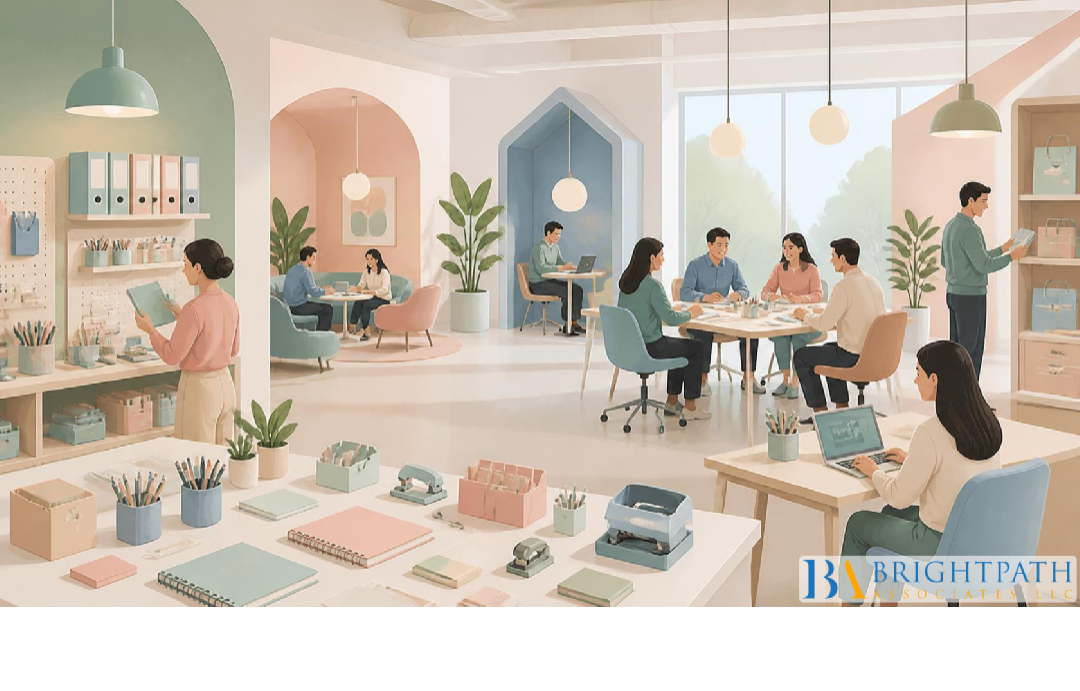
This is where the concept of third-space design is gaining relevance. A third space sits between the traditional desk-based office and the remote workplace. It can include collaborative lounges, informal meeting areas, innovation zones, cafés, wellness spaces, shared project environments, and social areas designed to encourage interaction. These environments are changing the role of the office from a place where employees simply complete assigned tasks into a destination that supports creativity, collaboration, learning, and community.
For businesses operating in the Office supplies industry, commercial real estate, technology, facilities management, and corporate services, this transformation represents a significant opportunity. Workplace design is becoming connected to Talent acquisition strategies, employer branding, employee experience, and ultimately organizational competitiveness.
From Traditional Office to Talent-Oriented Workplace
For many decades, office design focused primarily on efficiency. Desks were arranged to maximize available space, meeting rooms were designed for formal discussions, and Business equipment was positioned around standardized workflows. Office planning was often treated as a facilities decision rather than a strategic business issue.
That model is changing. Employees increasingly expect workplaces to accommodate different modes of working throughout the day. Someone may need a quiet environment for focused work in the morning, a collaborative setting for a project later, and an informal space for relationship building in the afternoon.
Third-space design responds to these changing expectations by creating environments that are flexible and human-centered. The objective is not simply to make an office more attractive. It is to make the workplace more useful, engaging, and aligned with how modern teams actually work.
This distinction matters for recruitment because candidates increasingly evaluate an organization based on the overall employee experience. The physical workplace can communicate how much an organization values collaboration, innovation, flexibility, and employee wellbeing.
Recruitment begins before a candidate submits an application. Potential employees form impressions through company websites, social media, interviews, office visits, conversations with existing employees, and increasingly through workplace photographs and virtual tours.
A thoughtfully designed office can reinforce the organization’s employer brand. When candidates see collaborative spaces, modern technology, comfortable meeting environments, and areas designed for interaction, they may perceive the organization as more progressive and adaptable.
The reverse can also be true. A workplace that appears outdated, inflexible, or disconnected from modern working practices may raise concerns among candidates, particularly professionals whose roles depend heavily on collaboration and technology.
This makes third-space design an important extension of employer branding. The office becomes a physical expression of organizational culture.
Commercial Office Furniture as a Recruitment Asset
Commercial office furniture plays a larger role in #WorkplaceStrategy than simply providing comfortable seating and functional workstations. Furniture can define how employees interact with the physical environment.
Modular tables, flexible seating, acoustic furniture, collaborative workstations, lounge arrangements, and movable partitions allow organizations to create multiple work settings within a single facility. This flexibility can make an office more adaptable to different teams and activities.
The quality and design of furniture can also influence candidate perceptions during interviews. A workplace that appears thoughtfully designed can communicate investment in employees and a commitment to creating an effective working environment.
For companies in the Office supplies industry, this creates an opportunity to move beyond transactional product sales. Businesses can increasingly position furniture and workplace products as components of broader workplace transformation strategies.
The Office supplies industry is also being influenced by the changing nature of the workplace. Traditional office supplies remain necessary, but organizations are increasingly purchasing products that support collaboration, mobility, organization, sustainability, and hybrid work.
Office supply management is therefore becoming more strategic. Companies need to understand not only how many supplies employees consume but also how workplace behavior is changing. Flexible work arrangements, shared desks, collaborative spaces, and reduced paper usage can significantly alter purchasing patterns.
Office supply vendors that understand these changes can become strategic partners rather than simple suppliers. They can help organizations evaluate workplace requirements, optimize purchasing, and identify products that support new ways of working.
This evolution demonstrates how physical workplace design is influencing industries that traditionally operated outside the talent-management conversation.
Business Equipment and the Modern Third Space
Technology is central to making third spaces functional. Business equipment must support employees who move between different environments rather than remaining permanently assigned to a single desk.
Wireless connectivity, collaborative displays, video conferencing systems, shared printers, charging infrastructure, smart access systems, and flexible presentation tools can transform informal spaces into productive work environments.
Office technology trends are increasingly focused on seamless integration. Employees expect to move between meeting rooms, desks, lounges, and remote locations without losing access to essential systems and information.
As a result, third-space design cannot be separated from technology planning. The physical environment and digital infrastructure must work together to create a consistent employee experience.
The Digital transformation in office environments is changing how organizations understand workplace utilization. Sensors, booking platforms, occupancy analytics, connected equipment, and workplace management systems can provide insight into how different spaces are being used.
This data can help companies determine whether meeting rooms are underused, whether collaborative areas are attracting employees, or whether certain office configurations are no longer appropriate.
The objective is not to monitor employees unnecessarily. Instead, workplace data can help organizations make better decisions about space allocation, facilities investment, and employee experience.
Digital transformation can also support sustainability. Organizations can use occupancy information to optimize lighting, heating, cooling, and equipment utilization. In this way, smarter workplace management can simultaneously support employee experience and operational efficiency.
Office Equipment Maintenance and Workplace Reliability
A sophisticated workplace design only creates value when the underlying infrastructure works reliably. Office equipment maintenance therefore becomes an important part of the #EmployeeExperience.
A malfunctioning printer, unreliable conference-room technology, broken charging equipment, or poorly maintained collaborative space can quickly undermine the value of an otherwise attractive workplace.
Organizations need proactive maintenance strategies that treat Business equipment and workplace technology as essential productivity infrastructure. Preventive maintenance, remote monitoring, rapid support, and equipment lifecycle planning can reduce disruptions and create a more dependable environment.
This is particularly important in third spaces because employees may have fewer alternative resources available than they would at a traditional assigned workstation.
The transformation of physical workplaces also has implications for the Office supply chain. As organizations adopt new furniture, technology, sustainability requirements, and flexible workspace models, they need suppliers capable of responding quickly to changing requirements.
Supply chain disruptions can delay office renovations, technology deployments, and workplace expansions. Companies therefore need greater visibility into supplier capabilities, lead times, inventory levels, and alternative sourcing options.
Office supply vendors that can provide reliable delivery, customization, technology integration, and lifecycle support may become increasingly valuable to organizations redesigning their workplaces.
The relationship between workplace design and supply chain management highlights a broader principle: creating a talent-oriented workplace requires coordination across procurement, facilities, technology, human resources, and business leadership.
Third Spaces as Centers of Collaboration and Innovation
One of the strongest arguments for third-space design is its potential to encourage interactions that do not happen naturally in remote environments. Informal conversations can lead to ideas, relationships, mentorship opportunities, and unexpected collaboration.
Organizations can intentionally design spaces that encourage employees from different functions to interact. Innovation areas, informal meeting spaces, project rooms, shared lounges, and social environments can create opportunities for knowledge exchange.
This can be particularly valuable for companies that depend on creativity and cross-functional problem-solving. A workplace designed around interaction can become an extension of the organization’s innovation strategy.
However, third-space design should not become a superficial exercise. Simply adding attractive furniture or lounge areas will not automatically create collaboration. The physical environment needs to reflect actual organizational culture and working patterns.
#TalentAcquisitionStrategies increasingly need to account for the complete candidate experience. A competitive salary may attract initial interest, but candidates may also evaluate workplace flexibility, organizational culture, technology infrastructure, leadership quality, and the environment in which they will spend their working time.
Third-space design can support this strategy by creating a workplace that candidates can experience directly during interviews and onboarding.
For employers competing for specialized professionals, the office can become a differentiating factor. Candidates who have multiple employment options may pay attention to whether a company has created an environment that supports how they want to work.
This does not mean every organization needs an expensive headquarters. Smaller businesses can also create effective third spaces by thoughtfully redesigning existing areas and prioritizing flexibility, functionality, and employee interaction.
Leadership, Workplace Strategy, and Executive Search Recruitment
Workplace transformation requires leadership capable of connecting physical infrastructure with business objectives. Executives must understand how facilities, technology, employee experience, culture, and recruitment interact.
This makes #ExecutiveSearchRecruitment increasingly relevant to organizations undergoing workplace transformation. Companies may need leaders who can manage cross-functional initiatives involving human resources, technology, operations, facilities, procurement, and corporate strategy.
The most effective leaders will understand that workplace design is not merely a facilities expense. It can influence productivity, employer reputation, employee engagement, collaboration, and talent attraction.
For organizations investing heavily in workplace transformation, leadership capability can determine whether the investment produces measurable business value.
The future workplace is likely to become less focused on assigning every employee a permanent desk and more focused on providing environments suited to different activities. This does not eliminate traditional workstations. Instead, it expands the range of available workplace experiences.
A successful third-space strategy should consider how employees actually work. Some teams may need collaborative project areas, while others require quiet environments. Some employees may value social spaces, while others prioritize technology-enabled meeting rooms.
The most effective designs therefore begin with employee behavior and business requirements rather than aesthetic trends. Workplace design should answer a fundamental question: what does the organization need its physical environment to help employees accomplish?
Conclusion
The workplace is becoming a strategic component of recruitment. As hybrid work changes employee expectations, organizations must provide reasons for people to value physical workplace experiences. Third-space design offers one approach by transforming offices into environments built around collaboration, flexibility, technology, and connection.
The transformation affects far more than facilities. Commercial office furniture, Business equipment, Office supply management, Office technology trends, and Office equipment maintenance are increasingly connected to employee experience. At the same time, the Office supply chain and Office supplies industry are evolving to support organizations that expect greater flexibility and personalization.
Ultimately, Talent acquisition strategies must reflect the reality that candidates evaluate employers through multiple dimensions. A well-designed workplace can reinforce culture, support collaboration, improve the employee experience, and communicate organizational priorities.
The future of office design will therefore not be defined simply by how many desks fit into a building. It will be defined by how effectively the environment helps people connect, collaborate, innovate, and perform. Organizations that recognize this shift can turn their workplaces into more than operational facilities. They can turn them into genuine talent magnets.
Find your next leadership role in Business Supplies & Equipment Industry today!
Stay informed with the latest insights on Business Supplies & Equipment Industry!