
Introduction
#WasteManagement is undergoing a significant structural shift. For decades, smaller businesses have largely depended on external contractors to collect, transport, process, and dispose of their waste. This model provided convenience and allowed companies to avoid investing in specialized infrastructure. However, rising transportation costs, increasingly complex Environmental compliance requirements, sustainability expectations, and advances in processing technology are encouraging more smaller firms to reconsider that approach.
On-site waste processing is emerging as a practical strategic option for businesses that generate consistent volumes of industrial, commercial, agricultural, manufacturing, or process-related waste. Instead of treating waste as something that must simply leave the facility, companies are beginning to view it as a material stream that can be processed, recovered, reused, or transformed closer to its point of generation.
This transition reflects a broader transformation across the Environmental industry. Improvements in Clean technology, automation, monitoring systems, and waste-processing equipment are making decentralized solutions more accessible. For smaller organizations, moving selected waste-processing activities in-house can potentially reduce costs, improve operational visibility, and support stronger Environmental sustainability goals.
Traditional waste management models often rely on multiple external service providers. A business generates waste, a contractor collects it, another facility may process or treat it, and the resulting material may travel again before reaching its final destination. While this model can be effective, transportation and handling costs can accumulate quickly.
Smaller companies are increasingly examining the economics of these arrangements. When waste volumes are predictable, frequent collection schedules can become expensive. Businesses may also face fluctuating disposal fees, fuel surcharges, regulatory requirements, and limited visibility into what happens to their waste after it leaves the facility.
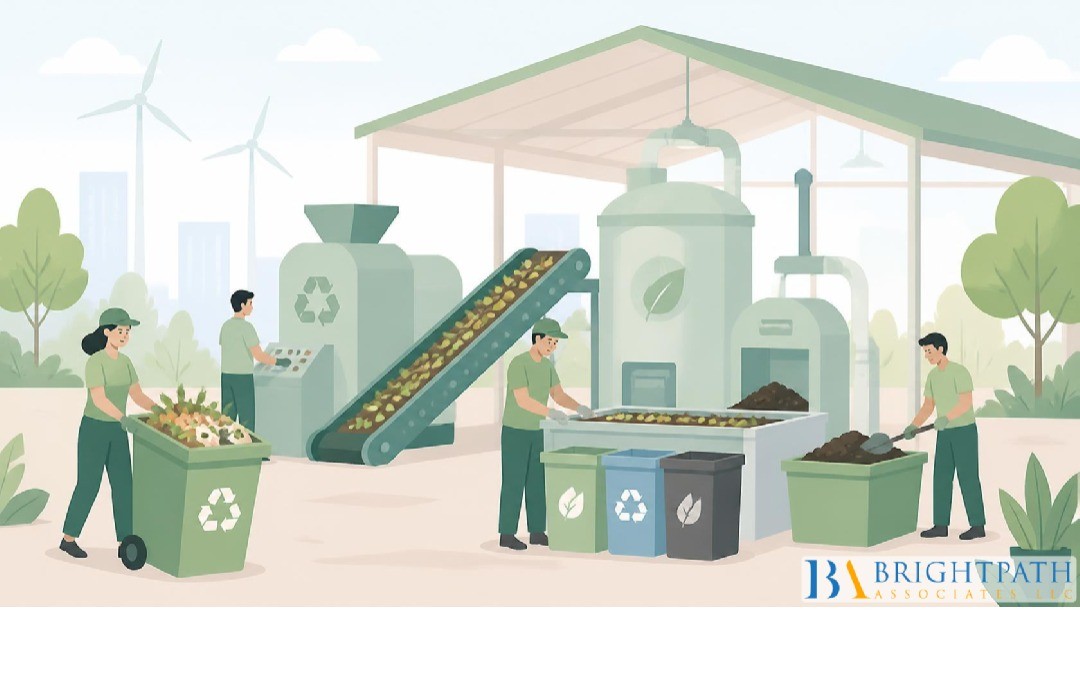
On-site processing changes the equation by bringing part of the waste-management process closer to the source. Depending on the type of waste, businesses may be able to compact, separate, dewater, recycle, treat, or otherwise process materials before they are transported elsewhere.
The objective is not necessarily to eliminate external waste contractors. Instead, many firms are looking to determine which stages of waste handling make economic and operational sense to control internally.
Environmental Services Are Becoming More Decentralized
The growth of decentralized processing is reshaping traditional Environmental services. Historically, environmental service providers have often operated through centralized infrastructure designed to serve large numbers of customers. That model remains important, particularly for hazardous and highly specialized waste streams, but smaller-scale processing technologies are creating additional options.
Compact treatment units, automated sorting systems, material recovery equipment, filtration systems, and monitoring technologies can allow businesses to manage selected waste streams on-site. This can reduce the frequency of transportation while giving companies greater control over material flows.
For Environmental services providers, this shift does not necessarily represent a decline in demand. Instead, it can create opportunities for new service models. Contractors may increasingly provide equipment leasing, technical maintenance, compliance support, monitoring, engineering services, and specialized treatment capabilities rather than simply transporting waste away.
Environmental innovation is one of the major factors accelerating this transition. Technologies that were previously economically viable only for large industrial facilities are becoming more accessible to smaller organizations.
Automation is improving sorting accuracy, while sensors can monitor waste composition, moisture levels, contamination, and equipment performance. Advanced treatment systems can process certain waste streams more efficiently, while digital monitoring platforms provide greater visibility into environmental performance.
The combination of physical equipment and digital systems is particularly important. A waste-processing system is no longer simply a machine installed at a facility. Modern solutions can generate operational data that helps companies understand volumes, processing rates, recovery levels, energy consumption, and maintenance requirements.
This information can support better decision-making and help businesses identify additional opportunities to reduce waste generation at the source.
Environmental Sustainability Moves from Policy to Operations
#EnvironmentalSustainability is increasingly becoming an operational priority rather than a statement confined to corporate reports. Customers, investors, employees, regulators, and supply-chain partners are placing greater emphasis on how businesses manage resources and environmental impacts.
On-site waste processing can contribute to these objectives by reducing unnecessary transportation, increasing material recovery, and improving visibility into waste streams. Businesses may also find opportunities to convert waste into secondary materials or recover resources that were previously treated solely as disposal costs.
The environmental benefits will vary significantly depending on the technology and waste stream. Nevertheless, the underlying principle is important: businesses can create stronger sustainability outcomes when they understand what materials they generate and what happens to those materials throughout their lifecycle.
The Environmental industry is moving toward greater integration between waste management, resource recovery, energy efficiency, water management, and industrial process optimization. This broader perspective is changing how companies evaluate waste infrastructure.
Instead of considering waste management as a standalone service, businesses are beginning to connect it with production efficiency. Waste may indicate excessive raw-material consumption, inefficient production processes, poor product quality, or opportunities for material recovery.
This creates a stronger business case for on-site processing. When waste-related data is connected with manufacturing or operational data, companies can potentially identify the source of waste rather than simply managing its consequences.
The result is a more integrated approach in which environmental performance and operational performance reinforce one another.
Clean Technology Is Reducing the Scale Barrier
One of the historic obstacles to in-house waste processing has been the scale of required infrastructure. Large treatment systems can demand substantial capital investment, specialized operators, significant space, and complex maintenance programs.
Clean technology is helping reduce some of these barriers. More compact and modular systems can be configured according to the needs of smaller facilities. Equipment can potentially be scaled as waste volumes increase, allowing businesses to avoid building oversized infrastructure at the beginning of their transformation.
Modular systems can also provide flexibility when production changes. This is particularly valuable for smaller companies whose waste volumes may fluctuate because of seasonal demand, new product introductions, or changes in manufacturing processes.
Moving waste processing in-house also introduces additional environmental responsibilities. Businesses must carefully evaluate emissions, odors, dust, wastewater, noise, and other potential impacts associated with processing equipment.
Air pollution control can become particularly important when waste treatment, combustion, drying, shredding, or other processes generate airborne contaminants. Installing equipment without understanding these requirements can create regulatory and operational risks.
Therefore, companies considering on-site processing need to evaluate environmental controls as part of the initial business case rather than treating them as an afterthought. Effective systems should be designed around applicable regulations, facility characteristics, waste composition, and potential environmental exposure.
The goal should be to create a controlled processing environment that improves waste management without introducing new environmental liabilities.
Environmental Compliance Must Remain Central
#EnvironmentalCompliance is one of the most important considerations in the transition toward in-house processing. Managing waste internally does not remove regulatory obligations. In many cases, it increases the importance of documentation, monitoring, employee training, equipment maintenance, and operational controls.
Businesses need to understand applicable waste classifications, treatment requirements, storage conditions, reporting obligations, emissions standards, and local environmental regulations. Depending on the waste stream and technology involved, permitting requirements can also become an important component of the investment decision.
For smaller firms without dedicated environmental departments, this can be challenging. Companies may need external consultants, technology providers, engineers, or specialized Environmental services partners to establish compliant operating procedures.
The most successful businesses will treat compliance as part of operational design rather than as a separate administrative function.
Waste processing is increasingly intersecting with water management. Industrial facilities that generate wastewater alongside solid or process waste may discover opportunities to integrate treatment systems and recover resources.
Water treatment technologies can help businesses reduce discharge volumes, reuse process water, and improve control over water quality. When combined with broader waste-management initiatives, these systems can contribute to a more circular operational model.
For water-intensive industries, the economic argument can be especially compelling. Reducing freshwater consumption and wastewater disposal costs can provide financial benefits while improving environmental performance.
This convergence between waste and water management demonstrates why companies should evaluate environmental infrastructure as an interconnected system rather than a collection of isolated functions.
Green Technology and the Circular Business Model
#GreenTechnology is increasingly supporting a shift from disposal-oriented models toward resource recovery. Instead of asking how cheaply a company can dispose of waste, management teams are beginning to ask whether waste can become an input for another process.
Materials such as plastics, metals, organics, packaging materials, process residues, and certain industrial by-products can potentially be recovered or repurposed depending on their characteristics.
On-site processing can make this approach more feasible because businesses gain greater control over material quality and separation. Cleaner and more consistent waste streams can have greater recovery value than mixed materials sent directly for disposal.
This creates an opportunity to connect environmental strategy with commercial strategy. Waste reduction can become a source of cost savings, recovered materials, operational efficiency, and potentially new revenue.
The decision to invest in on-site waste processing should ultimately be evaluated through a complete lifecycle cost analysis. Equipment purchase costs are only one part of the equation. Businesses should consider transportation expenses, disposal fees, labor, maintenance, energy consumption, compliance costs, facility modifications, and expected equipment life.
The economics become more attractive when a company has consistent waste volumes and high external processing costs. However, companies should avoid assuming that every waste stream should be processed internally.
A selective approach is often more practical. Businesses can identify high-volume or high-cost waste streams and evaluate whether internal processing creates measurable value. Other materials can continue to be managed through specialized external providers.
This hybrid model can provide flexibility while reducing unnecessary capital expenditure.
Leadership and Environmental Executive Search
Technology alone will not determine the success of decentralized waste processing. Businesses also need leaders who understand environmental regulation, industrial operations, sustainability, technology adoption, and financial management.
This is increasing demand for specialized Environmental executive search capabilities. Companies entering more technically complex environmental operations may require leaders with experience across environmental engineering, compliance, resource recovery, industrial sustainability, and technology implementation.
#ExecutiveSearchRecruitment can play an important role in identifying professionals who can bridge operational and environmental priorities. The ideal leader must understand that environmental performance is not separate from business performance. Instead, it can influence operating costs, risk exposure, customer relationships, capital allocation, and long-term competitiveness.
For smaller firms, hiring the right environmental and operational leadership may be as important as selecting the right processing equipment.
Successful implementation requires a phased approach. Companies should begin by understanding their current waste streams, costs, volumes, regulatory obligations, and potential recovery opportunities. This creates the baseline required to evaluate whether internal processing is economically justified.
Technology selection should then be based on actual operational requirements rather than industry trends alone. Equipment must match waste composition, facility capacity, workforce capabilities, environmental requirements, and expected future volumes.
Employee capabilities are equally important. Operators need appropriate training, maintenance teams need technical knowledge, and management needs reliable performance data. A system that is technologically advanced but poorly operated will not generate sustainable value.
The strongest in-house models therefore combine technology, people, processes, and compliance into a single operating framework.
Conclusion
The future of on-site waste processing is not simply about smaller companies purchasing their own equipment. It represents a broader shift in how businesses perceive waste, resources, environmental risk, and operational efficiency.
As Environmental innovation advances, smaller firms are gaining access to technologies that can make decentralized processing increasingly practical. Clean technology, Green technology, Water treatment systems, digital monitoring, and improved material recovery solutions are helping businesses rethink traditional waste-management models.
At the same time, Environmental sustainability and Environmental compliance are becoming central elements of business strategy. Companies that understand their waste streams can identify opportunities to reduce costs, recover resources, improve operational visibility, and strengthen environmental performance.
The transition will not be suitable for every organization or every waste stream. However, for businesses with predictable volumes, high disposal costs, and suitable operating conditions, bringing selected processing activities in-house can create a compelling strategic advantage.
Ultimately, the next generation of Environmental services will be defined by greater integration between technology, sustainability, compliance, and industrial operations. Smaller firms that make this transition thoughtfully can move beyond simply managing waste and begin treating resource recovery as an important part of their long-term business model.
Find your next leadership role in Environmental Services Industry today!
Stay informed with the latest insights on Environmental Services Industry!