
Introduction
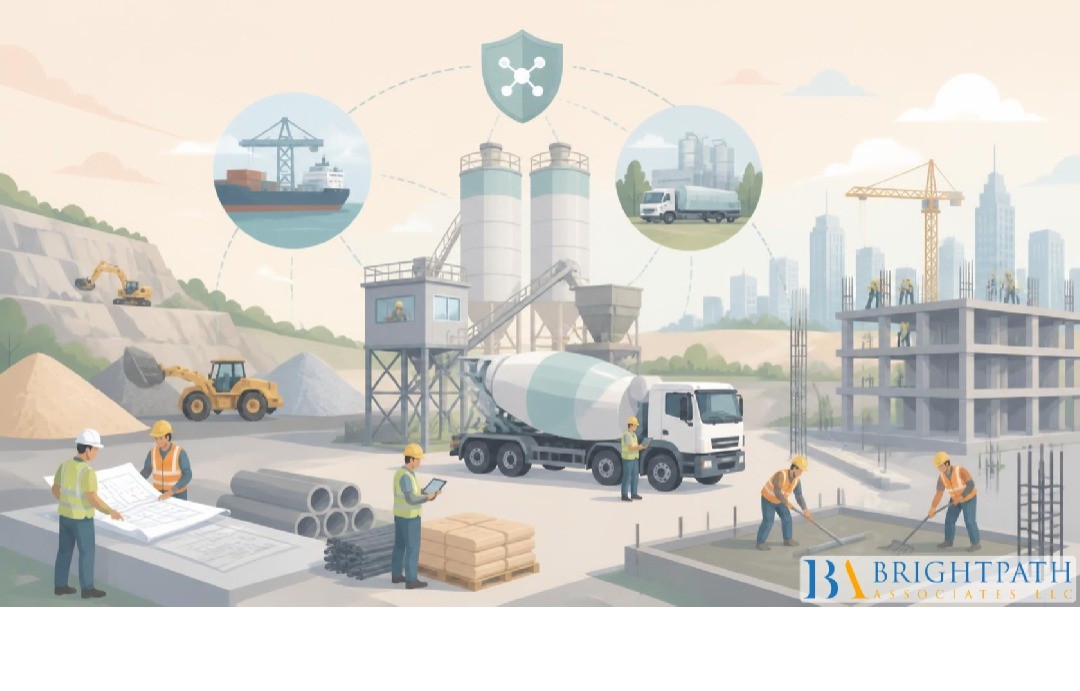
The #ConcreteIndustry operates at the foundation of modern construction, supporting infrastructure, commercial development, residential projects, transportation networks, and industrial facilities. Yet behind every concrete structure is a complex supply chain dependent on cement, aggregates, admixtures, equipment, energy, transportation, labor, and increasingly sophisticated production technologies. Disruptions in any one of these areas can affect project schedules, operating costs, profitability, and customer relationships. As market volatility and environmental pressures increase, supply chain resilience has become a strategic requirement rather than simply an operational consideration.
Recent Concrete industry trends demonstrate that producers are increasingly focused on strengthening procurement strategies, improving production visibility, diversifying suppliers, and adopting digital technologies. Weather disruptions, energy price fluctuations, transportation constraints, raw-material shortages, geopolitical uncertainty, and changing environmental regulations can all create vulnerabilities. Building a resilient supply chain therefore requires concrete manufacturers and construction companies to understand risk before it becomes disruption and establish systems capable of maintaining continuity under changing conditions.
Understanding Supply Chain Vulnerabilities in Concrete Production
Concrete production depends on a steady flow of raw materials. Cement, sand, gravel, crushed stone, water, chemical admixtures, supplementary cementitious materials, and other components must arrive at the right facility in the right quantities and at the right time. Because concrete is generally produced close to the point of use and has a limited usable timeframe after mixing, supply chain interruptions can have immediate consequences.
Aggregate availability represents one important risk. Although aggregates are abundant in many regions, transportation costs, quarry restrictions, environmental regulations, land-use limitations, and local shortages can affect supply. Cement presents another major vulnerability because production is energy intensive and dependent on large-scale industrial facilities. A disruption at a cement plant can create significant downstream consequences for ready-mix producers and construction projects.
Transportation is equally important. Concrete materials frequently move by truck, rail, or marine transportation, depending on regional infrastructure. Driver shortages, fuel-price volatility, road restrictions, extreme weather, equipment breakdowns, and congestion can delay deliveries. Resilient organizations must therefore look beyond individual suppliers and assess the complete network connecting raw materials to production facilities and construction sites.
One of the most effective strategies for mitigating supply chain risk is supplier diversification. Relying heavily on one cement supplier, aggregate quarry, transportation provider, or admixture manufacturer can create a single point of failure. If that supplier experiences operational problems, the concrete producer may have limited alternatives.
Diversification does not necessarily mean maintaining dozens of suppliers. Instead, companies should identify strategically important materials and establish qualified alternatives for the most critical inputs. Regional sourcing can also reduce exposure to long-distance transportation disruptions. Establishing relationships with suppliers across different geographic areas can provide additional flexibility when one region experiences severe weather, infrastructure problems, or production interruptions.
Supplier relationships should also extend beyond purchasing transactions. Collaborative forecasting, capacity discussions, quality monitoring, and contingency planning allow suppliers and concrete producers to respond more effectively when market conditions change. Long-term partnerships can create stronger communication channels while maintaining competitive sourcing arrangements.
Digital Technologies Strengthening Concrete Supply Chains
Technology is becoming increasingly important in improving supply chain visibility. Modern concrete operations generate significant amounts of information related to raw-material inventories, production schedules, fleet movement, equipment performance, customer orders, and delivery times. Integrating this information can help managers identify emerging problems before they disrupt operations.
#AdvancedConcreteTechnology is increasingly connected to digital production systems capable of monitoring material quantities, mix designs, equipment conditions, and production performance. Automated batching systems can improve consistency while reducing manual errors. Real-time inventory monitoring can provide early warnings when cement, aggregates, or admixtures approach critical levels.
Predictive analytics can further strengthen resilience by identifying patterns associated with demand fluctuations, equipment failures, delivery delays, or material shortages. Instead of responding only after disruption occurs, managers can use operational data to anticipate potential bottlenecks and make adjustments in advance.
Digital fleet management can also improve delivery reliability. Ready-mix operations depend heavily on precise coordination between batching plants, trucks, drivers, and construction sites. Better scheduling and real-time visibility can reduce idle time, improve truck utilization, and minimize the risk of concrete arriving outside the required placement window.
Improving Concrete Production Efficiency During Disruptions
Resilience and efficiency are closely connected. Companies that operate inefficiently have fewer resources available when disruptions occur. Improving Concrete production efficiency can therefore strengthen both profitability and operational continuity.
Efficient production begins with accurate demand forecasting. Concrete producers can analyze historical order patterns, construction activity, seasonal fluctuations, and customer schedules to anticipate demand. Better forecasting helps companies maintain appropriate inventory levels without unnecessarily increasing storage costs.
Production flexibility is equally important. Plants capable of switching between different mix designs, material sources, or production schedules can respond more effectively to changing conditions. Standardized operating procedures and trained employees allow production teams to make these adjustments without compromising quality.
Equipment reliability also plays a critical role. Preventive and predictive maintenance programs reduce unexpected failures involving batching equipment, conveyors, mixers, pumps, and material-handling systems. A well-maintained facility is better positioned to continue production during periods when replacement parts or external technical support may be difficult to obtain.
Sustainability is increasingly influencing how concrete companies design their supply chains. The growing demand for Sustainable building materials is encouraging producers to reconsider traditional material inputs and production processes. Supplementary cementitious materials, recycled aggregates, alternative binders, and lower-carbon technologies can reduce environmental impact while potentially creating additional sourcing opportunities.
Cement industry sustainability is particularly important because cement manufacturing contributes significantly to the carbon footprint associated with conventional concrete. Reducing clinker content, improving energy efficiency, increasing alternative fuel use, and developing lower-carbon cement technologies can support both environmental goals and long-term supply chain resilience.
Using locally available supplementary materials can also reduce dependence on specific conventional inputs. However, sustainability strategies must be carefully evaluated for quality, availability, transportation requirements, regulatory acceptance, and consistency. A sustainable material that is difficult to source reliably may create a different form of supply chain vulnerability.
The broader movement toward sustainable materials is also creating opportunities for innovation across adjacent sectors. Glass manufacturers, ceramic producers, and other materials companies are exploring ways to reuse industrial by-products and waste streams. Glass industry innovation, for example, can contribute to research around recycled glass materials and alternative applications, while developments in Advanced ceramic manufacturing demonstrate how material science can produce increasingly specialized and durable products for demanding industrial environments.
Cross-Industry Innovation and Material Substitution
Supply chain resilience increasingly depends on collaboration across industries. Concrete producers do not operate in isolation from the broader construction materials ecosystem. Cement, aggregates, glass, ceramics, steel, chemicals, and recycled materials can interact within increasingly interconnected supply networks.
#GlassMarketAnalysis provides an example of how changing demand, recycling systems, energy costs, and manufacturing capacity can influence the availability and economics of glass-based materials. Similarly, Ceramic industry growth is expanding applications for engineered materials with high thermal, chemical, and mechanical performance. Although these industries serve different markets, their technological developments can influence construction material innovation.
Research into alternative materials can provide concrete manufacturers with additional options during periods of conventional material scarcity. Industrial by-products from other manufacturing processes may become useful supplementary materials when technically and economically appropriate. This creates an opportunity to transform waste streams into valuable inputs while reducing dependency on virgin resources.
Managing Transportation and Logistics Risks
Transportation remains one of the most immediate threats to concrete supply continuity. Because ready-mix concrete must generally be delivered within a controlled timeframe, delays can directly affect construction operations. A resilient logistics strategy requires coordination between procurement, production, fleet management, and project scheduling.
Companies should evaluate transportation capacity as a strategic resource rather than simply an operating expense. Maintaining relationships with multiple carriers, monitoring vehicle availability, optimizing delivery routes, and maintaining internal fleets can provide greater flexibility. Geographic positioning of production facilities and aggregate sources should also be considered when developing long-term supply strategies.
Weather planning is increasingly important. Extreme heat, heavy rainfall, flooding, winter storms, and other environmental events can affect both material transportation and concrete placement. Companies that integrate weather intelligence into scheduling decisions can reduce avoidable disruptions and improve project coordination.
Technology alone cannot create a resilient supply chain. Skilled employees are required to operate digital systems, interpret data, manage suppliers, maintain equipment, ensure quality, and respond to unexpected disruptions. As concrete manufacturing becomes more technologically sophisticated, workforce requirements are changing.
Construction materials recruitment is therefore becoming increasingly focused on professionals who combine industrial experience with analytical and technological capabilities. Supply chain managers need stronger forecasting and risk-management skills, while plant managers must understand automation, quality systems, maintenance strategies, and production analytics.
Recruiting leaders who can connect operational priorities with strategic business objectives can provide a significant competitive advantage. Companies may increasingly need professionals with backgrounds spanning concrete production, logistics, sustainability, procurement, engineering, and digital transformation. The ability to build multidisciplinary teams will become particularly important as the industry continues adopting advanced manufacturing technologies.
Preparing for the Next Generation of Concrete Manufacturing
Future resilience will depend on how effectively concrete producers combine physical infrastructure with digital intelligence. Automated batching, connected equipment, predictive maintenance, digital inventory management, advanced material science, and data-driven logistics can create a more responsive production environment.
The next generation of Advanced concrete technology will likely place greater emphasis on material optimization, lower-carbon formulations, automation, quality prediction, and real-time production control. These developments can improve operational flexibility while helping producers respond to evolving customer expectations and environmental requirements.
At the same time, organizations must avoid becoming overly dependent on technology without establishing robust contingency procedures. #DigitalSystems themselves can experience cybersecurity incidents, network failures, software problems, or data-quality issues. Resilience therefore requires both technological sophistication and practical backup processes.
Supply chain resilience should ultimately become part of corporate strategy rather than remaining solely within procurement or operations. Senior leaders need visibility into critical suppliers, material dependencies, transportation exposure, production constraints, and workforce risks.
Scenario planning can help organizations understand how different disruptions might affect operations. Companies can model situations involving cement shortages, aggregate transportation failures, fuel-price increases, extreme weather, equipment breakdowns, or sudden demand increases. These scenarios can reveal weaknesses before they become costly real-world problems.
Performance measurement should also extend beyond purchasing price. Supplier reliability, delivery consistency, quality performance, geographic exposure, recovery time, and capacity flexibility should be considered when evaluating supply chain decisions. The cheapest supplier is not always the lowest-cost option if repeated disruptions generate project delays and emergency procurement expenses.
Conclusion: Resilience as a Competitive Advantage
The future of the concrete industry will depend not only on producing stronger and more sustainable materials but also on creating supply chains capable of absorbing disruption. Diversified sourcing, predictive planning, digital visibility, transportation flexibility, equipment reliability, sustainability initiatives, and skilled leadership can collectively strengthen operational continuity.
As Concrete industry trends continue to evolve, producers that invest in resilient systems will be better positioned to manage uncertainty while maintaining customer service and profitability. Developments across sustainable building materials, Advanced concrete technology, Glass industry innovation, Advanced ceramic manufacturing, and other material sectors will create new opportunities for substitution, recycling, and process improvement.
Ultimately, resilience is not simply about preparing for the next disruption. It is about designing an organization that can adapt continuously as markets, technologies, regulations, and customer expectations change. Companies that combine Concrete production efficiency with strategic sourcing, innovation, sustainability, and capable leadership can turn supply chain uncertainty into a long-term competitive advantage.
Building that capability requires the right people as much as the right technology. Strategic talent acquisition and #ExecutiveSearchRecruitment can help concrete and construction-material organizations identify leaders capable of managing complex supply networks, accelerating innovation, and building operational cultures prepared for the future. As the construction materials landscape becomes more interconnected, resilient leadership may become one of the most valuable assets in ensuring that concrete supply chains remain strong, flexible, and ready for what comes next.
Find your next leadership role in Glass, Ceramic, Concrete Industry today!
Stay informed with the latest insights on Glass, Ceramic, Concrete Industry!