
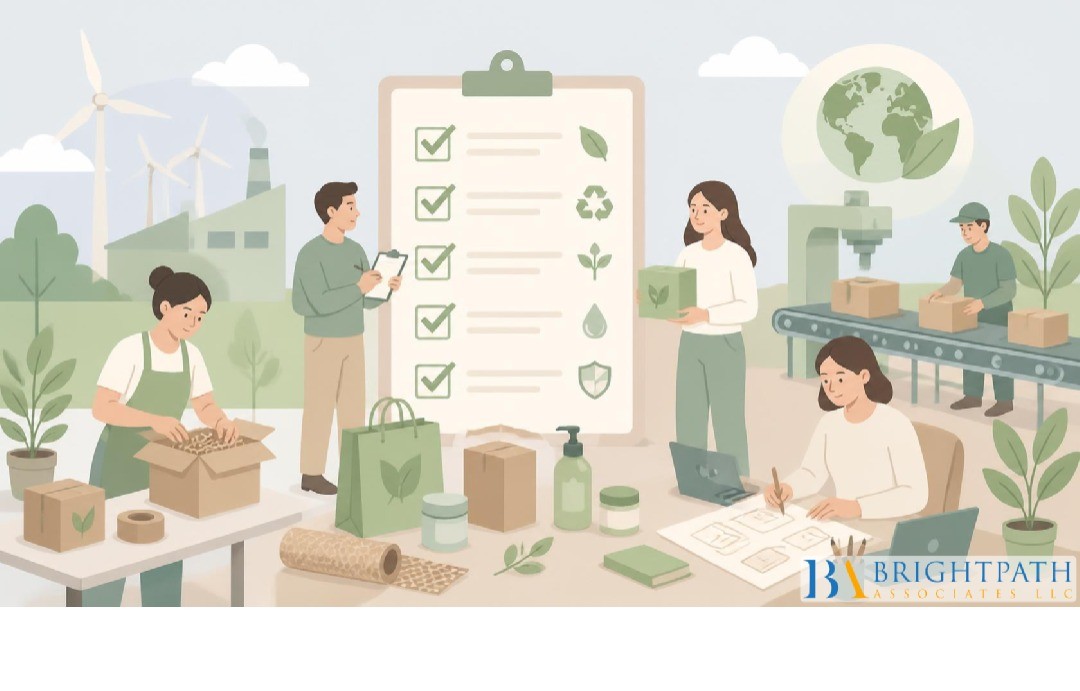
[Bethany, Connecticut – 10 September 2026] — BrightPath Associates has released new insights highlighting how small product brands can build stronger sustainable packaging compliance programs while preparing for evolving environmental regulations and growing sustainability expectations. The guidance outlines practical steps covering packaging materials, supplier documentation, environmental claims, packaging waste responsibilities, clean energy considerations, and compliance records. The approach is designed to help C-Suite leaders in Renewables & Environmental Services connect packaging decisions with wider sustainability, operational efficiency, and long-term business strategy.
Packaging Compliance Becomes a Strategic Business Priority
Sustainable packaging is no longer limited to environmental messaging. Product brands are increasingly expected to understand where packaging materials come from, how they are manufactured, how they are transported, and what happens after consumers use them. At the same time, regulatory requirements related to recycling, labeling, packaging waste, environmental claims, and producer responsibility continue to become more detailed across markets.
BrightPath Associates’ latest analysis, “Sustainable Packaging Compliance: Checklist for Small Product Brands,” explains why smaller businesses need a structured approach even when they have limited compliance resources. The article notes that packaging sustainability has moved “from being a niche environmental initiative to becoming a strategic business requirement,” reflecting the broader shift toward measurable environmental performance.
For executives, this shift creates both risk and opportunity. Packaging decisions can affect procurement costs, logistics, supplier relationships, customer trust, regulatory exposure, and brand reputation. A well-designed compliance framework can therefore become part of a wider Environmental management systems strategy rather than operating as a separate administrative task.
Material Assessment and Supplier Transparency
The first step is understanding exactly what packaging contains. Brands should document primary, secondary, and tertiary packaging, including containers, labels, closures, protective materials, shipping boxes, films, tapes, and other components. This information helps companies assess recyclability, material complexity, recycled content, waste responsibilities, and potential redesign opportunities.
Supplier transparency is equally important. Packaging suppliers should be able to provide reliable information about material composition, recycled content, certifications, and production practices. Executives can also examine manufacturing energy use, waste generation, transportation requirements, and environmental management practices when selecting strategic suppliers.
This broader approach connects packaging decisions with Renewable energy innovation and Renewable energy technology. Packaging manufacturers are increasingly exploring solar power, wind-generated electricity, efficient machinery, and improved production systems to reduce their environmental impact. For small brands, this does not necessarily mean investing directly in energy infrastructure. Instead, companies can incorporate supplier energy performance into procurement and sustainability criteria.
Talent and Innovation Support Sustainable Growth
The transition toward sustainable packaging also increases demand for professionals who understand environmental priorities, technology, regulation, and commercial operations. The broader growth of Renewable energy jobs demonstrates how sustainability is creating demand for specialized expertise across industries. Packaging, manufacturing, logistics, and consumer brands face similar requirements as environmental responsibilities become more technical.
For growing organizations, executive search recruitment can help identify leaders capable of connecting sustainability strategy with operations, compliance, supply chain management, and business growth. Strong leadership can also help companies evaluate emerging technologies and establish partnerships that support long-term environmental objectives.
The article concludes that sustainable packaging should not be treated solely as a regulatory burden. It can support innovation through lighter packaging, fewer materials, recycled inputs, improved recyclability, reduced transportation volume, and more efficient production. As the analysis states, “The strongest Sustainability Strategies therefore combine measurable environmental improvements with honest communication.”
Sustainable Packaging Compliance for Small Product BrandsCompanies operating across environmental, renewable energy, and sustainability markets can also explore BrightPath Associates’ resources for the Renewables & Environmental Services sector as they address evolving talent, technology, regulatory, and operational priorities.
About BrightPath Associates
BrightPath Associates is an executive recruitment and talent solutions firm focused on helping organizations build strong teams and identify specialized professionals for critical business needs. The company supports workforce planning, leadership development, retention strategies, workplace initiatives, and recruitment across multiple industries. Its mission is to connect organizations with the right talent while helping professionals find opportunities aligned with their skills and career goals.
Media Contact:
Name: Corporate Communications Team
Company: BrightPath Associates
Email: media@brightpathassociates.com
Website: https://brightpathassociates.com