
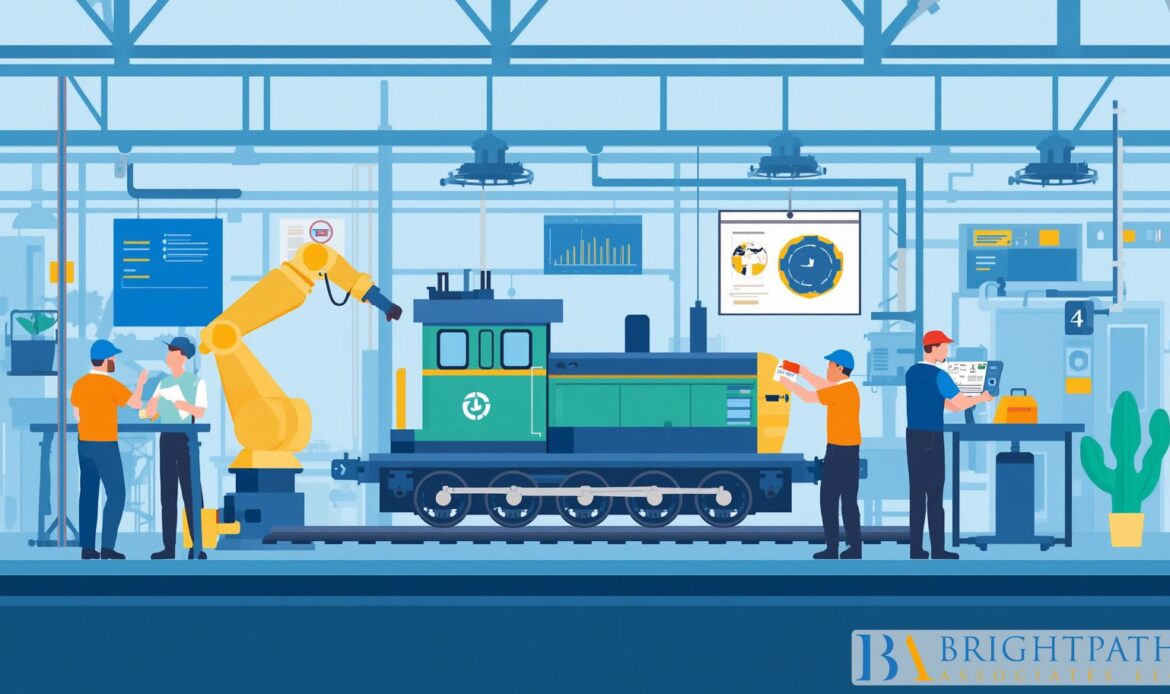
Small businesses in railroad manufacturing play an important role in keeping the #Railindustry moving. They build parts, equipment, and systems that support rail transportation across the country. However, these companies often face many production challenges that make it difficult to complete projects on time and within budget. Unlike large Railroad manufacturers, small companies have fewer resources, smaller teams, and limited budgets. They must handle changing customer needs, supply chain delays, labor shortages, and strict quality standards at the same time.
According to the Railroad manufacturing industry outlook, companies that improve planning, adopt better processes, and invest in their workforce are more likely to grow in today’s competitive market.
Common Production Challenges in Railroad Manufacturing
Small manufacturers deal with several production problems every day. One delayed shipment or missing material can stop an entire production schedule. Since many small companies keep limited inventory, they cannot always replace missing parts quickly. Many businesses also produce customized products. While custom work helps attract customers, it also makes production more complicated. Different designs require different tools, processes, and inspections, making scheduling much harder.
Compared to the Top railroad manufacturing companies US, smaller businesses have less flexibility when unexpected problems occur. Large companies usually have multiple suppliers and larger inventories, allowing them to continue production without major delays. Production planning should be reviewed regularly instead of being created only once. Small adjustments made early can prevent larger problems later.
Improving Processes Through Technology and Quality Control
Modern production depends on accurate information and efficient processes. Many small manufacturers still use manual paperwork, spreadsheets, or outdated scheduling methods. These systems often create delays, duplicate work, and communication problems. Simple technology upgrades can make a significant difference. Better production tracking helps managers identify problems before they become serious. Companies can improve operations by:
- Using digital production schedules
- Tracking inventory in real time
- Recording inspections electronically
- Scheduling preventive equipment maintenance
- Monitoring production performance regularly
Strong quality control should be part of every production stage instead of only inspecting finished products. Detecting problems early reduces waste, saves money, and improves customer satisfaction. Today’s Rail industry innovations focus on improving efficiency through better data, automation, and smarter manufacturing processes. Small businesses do not need expensive systems immediately. Even small improvements can increase productivity and reduce errors.
Building a Stronger Future for Small Railroad Manufacturers
Long-term success comes from solving the biggest production problems first. Instead of changing everything at once, companies should identify their largest bottlenecks and improve them step by step. This approach reduces risk while delivering steady improvements.
Strong supplier relationships help improve material availability. Better forecasting allows companies to order important materials before shortages occur. Cross-trained employees provide greater flexibility during busy production periods. Standardized production methods also improve consistency without limiting customization. This balance allows manufacturers to deliver high-quality products while maintaining efficient production.
The future of #Locomotivemanufacturing and the broader Rail industry will continue to depend on companies that can deliver reliable products, meet strict quality standards, and respond quickly to customer needs. Businesses that invest in planning, employee development, equipment maintenance, and continuous improvement will remain competitive regardless of company size.
Conclusion
Small companies in Railroad manufacturing face many production challenges, including supply chain disruptions, skilled labor shortages, equipment maintenance, and increasing customer expectations. Although these obstacles can be difficult, they can be managed with better planning and smarter processes. The latest Railroad manufacturing industry outlook shows that businesses focusing on efficiency, workforce development, and modern production methods are better positioned for long-term success.
While the Top railroad manufacturing companies US may have greater resources, smaller manufacturers can compete by remaining flexible, improving quality, and adopting practical railroad technology solutions. By embracing Rail industry innovations and investing in Rail technology advancements, small manufacturers can strengthen their operations and continue supporting the growth of the US manufacturing industry.
Find your next leadership role in Railroad manufacturing industry today!
Stay informed with the latest insights on Railroad manufacturing industry!