
Introduction
The paper, pulp, and #WoodProducts sector is undergoing a significant technological transformation as manufacturers look for ways to improve productivity, reduce operating costs, strengthen sustainability, and respond to increasingly complex market conditions. Modern mills are highly interconnected environments where raw material quality, equipment performance, energy consumption, production schedules, maintenance strategies, and environmental requirements all influence one another. As a result, upgrading a single process can create unexpected effects elsewhere in the operation.
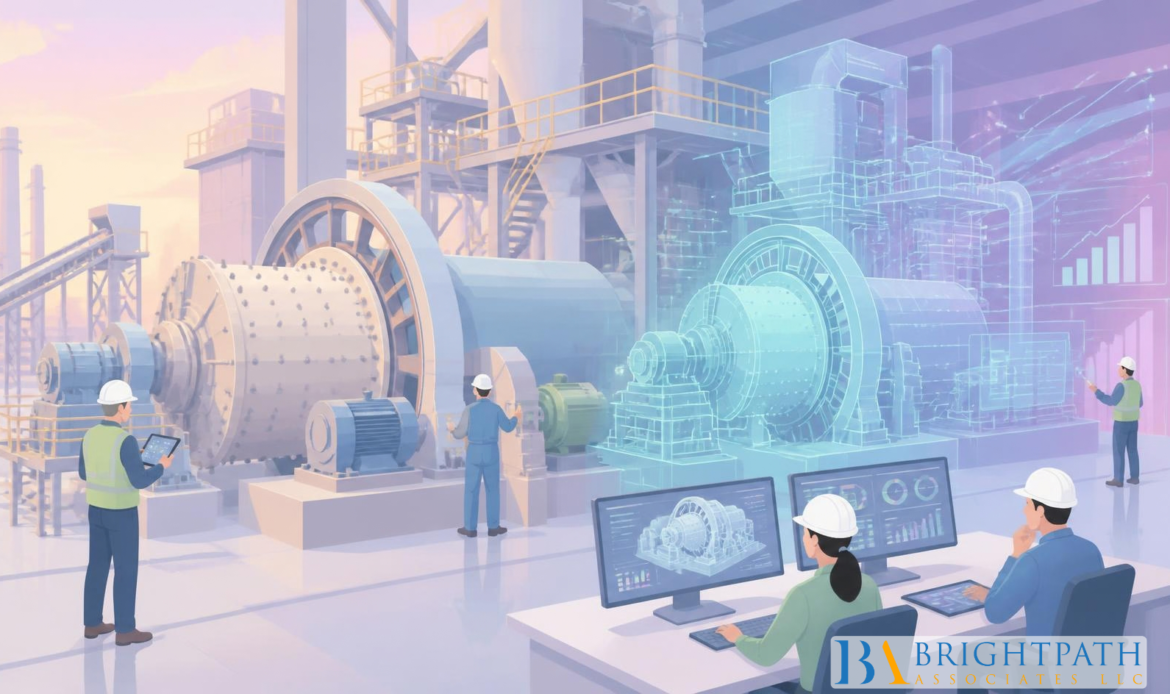
Digital twins are emerging as a powerful solution to this challenge. A digital twin is a virtual representation of a physical asset, production line, or entire mill that uses operational data, process models, sensors, and analytics to replicate real-world behavior. By allowing mill operators to test scenarios digitally before implementing them physically, digital twins can reduce uncertainty and provide a clearer understanding of how proposed upgrades may affect production.
For organizations focused on Forest product innovation, this technology offers a pathway toward smarter and more sustainable decision-making. It connects Paper recycling solutions, Paper and pulp technology, Timber harvesting, and Wood product manufacturing within a data-driven operational framework.
A digital twin goes beyond a conventional simulation model. Traditional simulations may examine how a machine or process should behave under predefined conditions. A digital twin, by contrast, can continuously incorporate information from the physical operation. Sensors, industrial control systems, production databases, maintenance platforms, and laboratory measurements can contribute data to the virtual model.
In a paper mill, the digital twin can represent equipment such as digesters, refiners, washers, dryers, recovery boilers, turbines, and paper machines. It can model variables including temperature, pressure, flow rates, moisture, energy consumption, production speed, and product quality.
This creates an interactive environment where operators and engineering teams can evaluate potential changes. They can examine what might happen if a dryer is upgraded, a production line is operated at a different speed, a new control strategy is introduced, or energy-intensive equipment is replaced. Instead of relying solely on historical experience, decision-makers can use simulated operational scenarios to understand potential outcomes.
Simulating Mill Performance Upgrades Before Implementation
One of the most valuable applications of digital twins is the ability to simulate upgrades before committing significant capital. Mill modernization can involve substantial investments, and shutting down equipment for modifications can create additional production losses.
A digital twin provides a virtual testing environment. Engineering teams can establish a baseline representing current mill performance and then introduce proposed changes into the model. The simulation can examine production capacity, bottlenecks, energy requirements, maintenance implications, and potential quality variations.
For example, a mill considering an upgraded drying system could use a digital twin to examine how the modification affects steam consumption, production speed, moisture control, and downstream operations. If the virtual model identifies a bottleneck elsewhere, the organization can address it before the physical installation begins.
This approach can also support phased modernization. Rather than treating an entire mill upgrade as one large project, organizations can evaluate individual improvements and understand how they interact with existing infrastructure.
The effectiveness of a digital twin depends heavily on the quality and availability of operational data. Modern Paper and pulp technology provides an increasingly strong foundation for this type of digital integration.
Industrial sensors can collect continuous information from production equipment, while distributed control systems and manufacturing execution systems provide additional operational context. Advanced analytics can then transform this information into actionable insights.
In pulp production, digital twins can model the relationship between raw material characteristics, chemical consumption, energy use, equipment performance, and pulp quality. In paper production, they can help analyze interactions between stock preparation, forming, pressing, drying, coating, finishing, and quality control.
The result is a more comprehensive view of mill performance. Instead of optimizing individual machines independently, managers can examine the production system as an interconnected network.
Improving Energy Efficiency and Sustainability
#EnergyManagement is increasingly important across the paper and forest products sector. Mills can consume significant amounts of electricity, steam, fuel, and water, making energy efficiency an important component of both cost management and environmental performance.
Digital twins can simulate energy flows across the mill and identify opportunities for improvement. Operators can test alternative operating conditions, equipment configurations, heat recovery systems, and production schedules without immediately changing physical operations.
This capability aligns closely with the industry’s growing interest in Sustainable materials and resource efficiency. If a simulation demonstrates that a particular upgrade could reduce energy consumption while maintaining production quality, the organization can use that information to support capital investment decisions.
Digital twins can also help evaluate trade-offs. A production increase, for example, may require additional energy. A model can help determine whether the additional output justifies the associated resource consumption under different operating conditions.
The expansion of recycled fiber use presents new operational challenges for paper manufacturers. Recovered fiber can vary in quality, composition, moisture content, contamination levels, and fiber strength. These variations can influence processing requirements and final product performance.
Digital twins can help mills simulate how changes in recycled fiber quality may affect production. Operators can evaluate different raw material combinations and processing strategies before introducing them into the physical system.
This can strengthen Paper recycling solutions by helping manufacturers understand the relationship between recovered materials, process conditions, energy requirements, and product quality. As recycled content becomes increasingly important, the ability to model these variables can support more consistent production.
Digital twins can also contribute to long-term Forest product innovation by helping companies evaluate alternative feedstocks and circular production strategies.
Optimizing Timber Harvesting and Raw Material Planning
Digital transformation does not stop at the mill gate. The performance of wood processing operations is closely connected to raw material availability and quality.
Timber harvesting decisions can influence transportation costs, wood quality, inventory levels, and mill productivity. Digital models can combine information about harvesting schedules, transportation, inventory, and mill demand to create a more integrated view of the supply chain.
For companies operating across forestry and manufacturing, this integration can help connect Timber harvesting decisions with downstream production requirements. A digital twin could simulate how changes in incoming wood characteristics affect processing performance and output.
Such capabilities are particularly valuable as companies respond to changing Forestry regulations, sustainability expectations, and resource constraints.
The lumber sector is also experiencing growing pressure to improve productivity, maximize material utilization, and respond quickly to market changes. Lumber mills can use digital twins to model sawmill operations, drying systems, sorting processes, equipment utilization, and maintenance requirements.
A virtual model can help determine how changes in cutting patterns or equipment settings could affect yield. It can also support predictive maintenance by identifying operating conditions associated with increased equipment stress.
These capabilities reflect broader Lumber industry trends toward automation, data-driven decision-making, predictive analytics, and connected manufacturing.
As the sector becomes more digitally integrated, organizations that can combine operational data with advanced modeling may gain greater visibility into production efficiency and resource utilization.
The Role of Automation in Paper Industry Operations
Automation in #PaperIndustry operations is increasingly moving beyond individual machine controls toward integrated production intelligence. Digital twins can serve as a bridge between automation systems and strategic decision-making.
Automated equipment can generate enormous quantities of operational data. A digital twin can organize that information into a model that helps engineers and managers understand what is happening across the production environment.
For instance, if production speed increases, the digital twin can evaluate the potential impact on energy use, equipment loading, product quality, and maintenance requirements. This creates a feedback loop in which operational data supports simulation, simulation supports decisions, and those decisions can inform future automation strategies.
The objective is not simply to automate more processes. It is to create a more intelligent manufacturing environment where automation contributes to measurable operational improvements.
Capital investment decisions are particularly important in an industry where equipment can operate for decades. Paper industry economics can be influenced by energy prices, raw material costs, labor availability, maintenance expenses, environmental requirements, and changing customer demand.
Digital twins can strengthen investment analysis by allowing organizations to examine different upgrade scenarios. Instead of evaluating a proposed project solely through estimated production gains, companies can consider multiple operational variables simultaneously.
A digital twin can help estimate how an upgrade could affect capacity, energy consumption, downtime, maintenance, and product quality. These insights can contribute to more informed capital planning.
The technology does not eliminate uncertainty, but it can make assumptions more transparent and allow decision-makers to test those assumptions before committing resources.
Supporting Wood Product Manufacturing
Wood product manufacturing involves complex interactions between raw materials, machinery, production settings, drying conditions, quality requirements, and customer specifications. Digital twins can help manufacturers visualize these relationships and identify potential production improvements.
For example, manufacturers can simulate equipment modifications and production changes to determine whether they could improve throughput or reduce material waste. The same model can be used to evaluate different operating conditions across multiple product types.
This flexibility can become particularly valuable as manufacturers seek greater customization while maintaining efficient production. A digital twin can help organizations understand how changes in product specifications may affect manufacturing requirements.
Technology investments require skilled people who understand both industrial operations and digital systems. As digital twins become more common, mills will need professionals capable of interpreting simulations, validating models, managing data, and translating insights into operational decisions.
This creates new workforce requirements across engineering, operations, maintenance, information technology, data analytics, and leadership. Organizations may increasingly need executives who understand how technology can be integrated with long-term manufacturing strategy.
For companies undertaking digital transformation, #ExecutiveSearchRecruitment can play an important role in identifying leaders with the combination of industrial expertise, technological understanding, and strategic experience needed to manage these initiatives.
The objective is not simply to hire technology specialists. Successful implementation requires leadership that can connect digital investments with operational objectives, workforce development, sustainability priorities, and financial performance.
Overcoming Implementation Challenges
Despite their potential, digital twins are not a simple plug-and-play technology. Developing an accurate model requires reliable data, appropriate sensors, process knowledge, software infrastructure, and ongoing validation.
Data quality is one of the most significant challenges. If sensors are inaccurate or operational records are incomplete, the resulting model may not accurately represent the physical process. Mills must therefore establish strong data governance and ensure that information is reliable.
Another challenge is organizational adoption. Engineers and operators must trust the model and understand how its recommendations relate to actual mill conditions. Digital twin projects should therefore involve operational teams from the beginning rather than being treated solely as information technology initiatives.
Cybersecurity is another important consideration. As digital twins connect #OperationalTechnology with digital platforms, organizations must protect systems against unauthorized access and disruption.
The future of digital twins in the forest products sector is likely to involve increasingly sophisticated models that combine artificial intelligence, machine learning, industrial automation, and real-time analytics.
Instead of simply showing what is happening, future systems may help identify why performance is changing and simulate possible responses. This could allow mills to move toward more proactive decision-making.
Digital twins may also become increasingly important for evaluating sustainability strategies. Companies could simulate alternative energy systems, recycled fiber mixes, production configurations, and resource-management approaches before implementing them.
As Forest product innovation accelerates, digital twins can provide a foundation for experimentation without exposing physical production systems to unnecessary risk.
Conclusion
Digital twins are changing how mills can approach modernization. By creating virtual representations of physical operations, they allow manufacturers to test upgrades, examine operational relationships, evaluate energy efficiency, and understand potential risks before implementing changes in the real world.
Their value extends across Paper and pulp technology, Paper recycling solutions, Timber harvesting, Lumber industry trends, Wood product manufacturing, and Automation in Paper industry operations. They can also support better responses to Forestry regulations, changing Paper industry economics, and growing demand for Sustainable materials.
The most important opportunity is not simply creating a digital copy of a mill. It is using that digital representation to make better-informed operational and investment decisions. As industrial organizations continue to modernize, the combination of accurate data, advanced simulation, automation, and capable leadership can help transform traditional mills into more responsive, efficient, and sustainable manufacturing environments.
Find your next leadership role in Paper & Forest Industry today!
Stay informed with the latest insights on Paper & Forest Industry!