
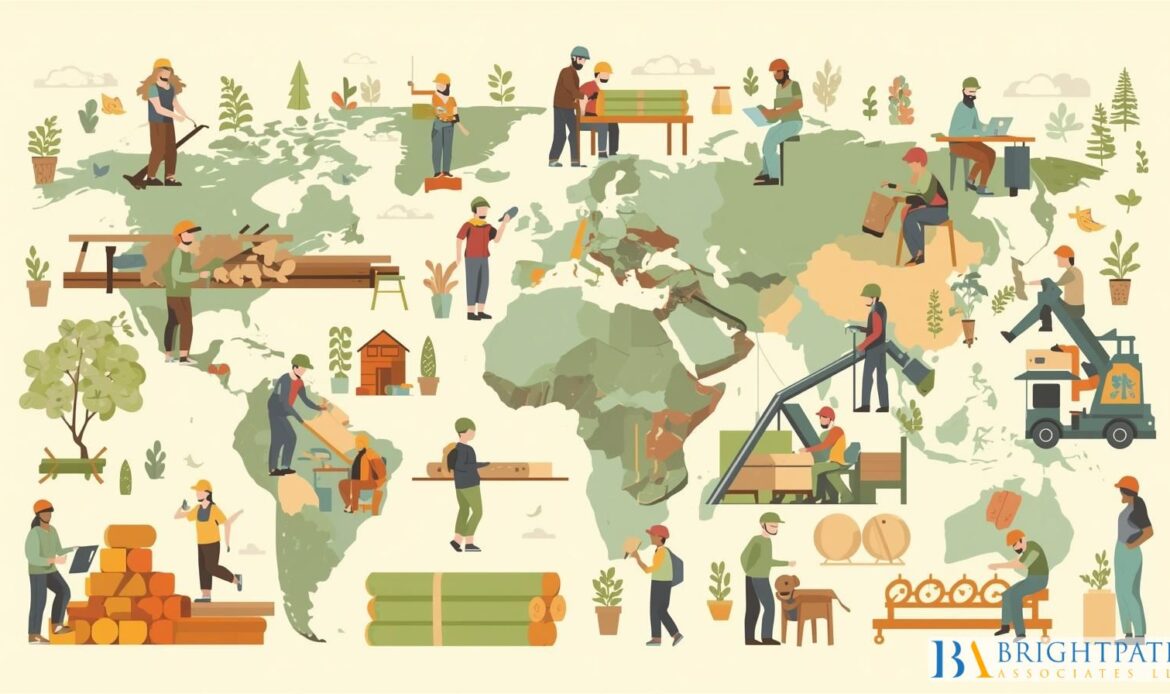
The global timber industry is a vital component of the world’s economy, contributing significantly to employment, trade, and economic growth. It encompasses a range of activities, from timber harvesting to wood product manufacturing, paper and pulp technology, and beyond. This industry is not only crucial for meeting the demands for wood and wood-based products but also plays a significant role in environmental sustainability and forest management.
Timber Harvesting and Lumber Industry Trends
#Timberharvesting is the foundational activity in the timber industry, involving the cutting and collection of trees for further processing. Recent trends in this area highlight an increased emphasis on sustainable materials and practices. As a response to environmental concerns, many companies are adopting selective logging practices, which help maintain the health of forests by only removing specific trees while leaving others to grow and mature.
The lumber industry has seen significant changes due to technological advancements and shifting consumer preferences. There is a growing demand for engineered wood products, which offer enhanced strength and versatility compared to traditional lumber. These products, manufactured through innovative processes, are becoming increasingly popular in construction and other industries due to their sustainability and efficiency.
Forest Product Innovation and Sustainable Materials
Innovation in forest products is driving the #Timberindustry forward. Companies are investing in research and development to create new materials that are not only sustainable but also innovative in their applications. This includes the development of composite materials and bio-based products that reduce reliance on non-renewable resources.
Sustainable materials are at the forefront of this innovation, with a focus on reducing the environmental impact of timber production. This trend is driven by consumer demand for eco-friendly products and the tightening of forestry regulations aimed at preserving natural resources. The shift towards sustainable materials is not only beneficial for the environment but also provides a competitive edge to companies that can offer greener products.
Paper Industry Economics and Paper Recycling Solutions
The paper industry is a significant segment of the global timber industry, and its economics are influenced by varying factors such as demand for paper products, cost of raw materials, and technological advancements. With the rise of digital media, traditional paper demand has experienced fluctuations. However, the industry remains robust, particularly in the segments of packaging and hygiene products.
Paper recycling solutions have become increasingly important in the paper industry. These solutions not only help in reducing waste but also lower production costs by reusing materials. Technological advancements in recycling processes are enabling higher quality recycled paper products, which are gaining acceptance in the market. This shift towards recycling is crucial for enhancing the sustainability of the paper industry and meeting environmental regulations.
Advances in Paper and Pulp Technology
Paper and pulp technology has seen remarkable advancements in recent years, contributing to increased efficiency and reduced environmental impact. Innovations in this field include the development of new pulping processes that reduce chemical usage and energy consumption. These technologies are essential for ensuring the competitiveness of the paper industry in a market that increasingly values sustainable practices.
Additionally, advancements in digital printing technology have expanded the capabilities of paper products, allowing for more customized and high-quality outputs. This has opened new opportunities for the paper industry to cater to niche markets and meet the evolving demands of consumers.
Forestry Regulations and Their Impact
Forestry regulations play a critical role in shaping the operations and strategies of the timber industry. These regulations are designed to promote sustainable forest management, protect biodiversity, and reduce environmental impact. Compliance with these regulations can be challenging, but it is essential for maintaining a company’s license to operate and securing its reputation in the market.
The impact of forestry regulations extends beyond environmental considerations; it also affects economic aspects of the industry. Regulations can influence the cost of compliance, the availability of raw materials, and the ability to access international markets. Companies that proactively engage with regulatory bodies and adopt best practices in sustainability are better positioned to navigate these challenges and capitalize on opportunities.
Wood Product Manufacturing and Market Dynamics
Wood product manufacturing is a diverse sector within the timber industry, encompassing a wide range of products from furniture to construction materials. The market dynamics in this sector are influenced by factors such as consumer preferences, technological innovations, and global economic conditions.
There is a growing trend towards customization and value-added products, driven by consumer demand for unique and high-quality offerings. This trend is supported by advancements in manufacturing technologies, which enable greater flexibility and efficiency in production processes. Companies that can leverage these technologies and respond to market demands are likely to succeed in the competitive landscape of #woodproduct manufacturing.
The Role of Executive Search Recruitment in the Timber Industry
Executive search recruitment plays a pivotal role in the timber industry, particularly in sourcing leadership talent capable of navigating complex challenges and driving growth. The industry’s reliance on specialized skills and knowledge makes it essential to have leaders who understand the intricacies of forestry regulations, paper industry economics, and sustainable practices.
Recruitment firms that specialize in the timber industry are invaluable in identifying and attracting top talent. They help companies build leadership teams that can innovate, adapt to changing market conditions, and maintain competitiveness. As the industry evolves, the demand for skilled executives who can spearhead strategic initiatives and foster innovation will continue to grow.
Future Opportunities and Challenges
The global timber industry is poised for growth, with numerous opportunities on the horizon. The increasing emphasis on sustainability and innovation presents opportunities for companies to differentiate themselves in the market. By investing in forest product innovation and adopting paper recycling solutions, companies can enhance their environmental credentials and appeal to eco-conscious consumers.
However, the industry also faces challenges, including fluctuating demand, regulatory pressures, and competition from alternative materials. Companies must remain agile and responsive to these challenges, leveraging technology and strategic partnerships to thrive in a dynamic environment.
In conclusion, the global timber industry is at a crossroads, with significant trends and opportunities shaping its future. By embracing sustainable materials, advancing paper and pulp technology, and navigating forestry regulations, companies can position themselves for success. The role of #Executivesearcrecruitment will be crucial in ensuring that the industry has the leadership talent needed to seize these opportunities and overcome challenges.
Find your next leadership role in Paper & Forest Products Industry today!
Stay informed with the latest insights on Paper & Forest Products Industry!