
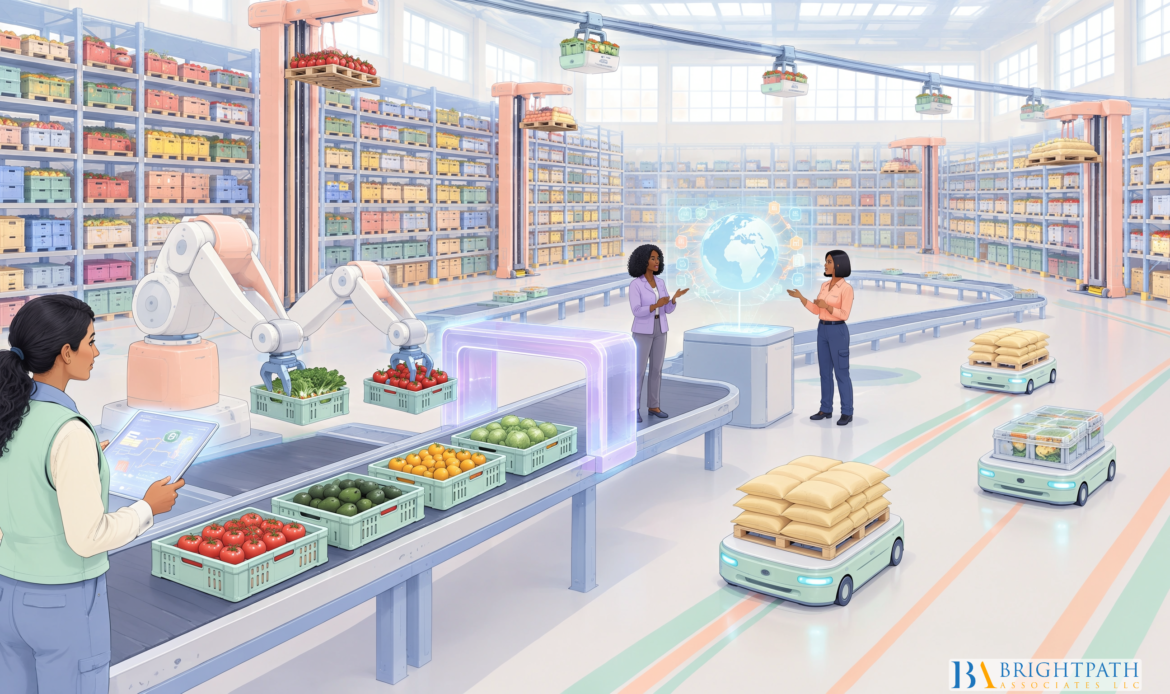
[Bethany, Connecticut – 05 November 2026] – BrightPath Associates has highlighted how changing food procurement practices are influencing industrial automation strategies in 2026. According to its latest industry analysis, food manufacturers must connect procurement, inventory management, warehouse operations, production planning, and automation systems to manage supply chain disruptions, improve manufacturing efficiency, and maintain consistent production. The analysis explains how artificial intelligence, robotics integration, and connected control systems can help businesses respond to supplier changes, material shortages, packaging variations, and increasing demand uncertainty.
For C-suite executives in the Industrial Automation Industry, procurement is becoming more than a purchasing responsibility. Decisions about suppliers, raw materials, packaging formats, delivery schedules, and product specifications can directly affect automated production lines. A change in ingredient packaging or material characteristics may require adjustments to robotic equipment, machine vision systems, and production settings. As a result, manufacturers need stronger coordination between procurement, engineering, operations, and technology leadership.
Food Procurement Is Becoming an Automation Priority
Traditional procurement strategies often focus on supplier pricing, purchasing costs, and material availability. However, supply chain shifts in 2026 have demonstrated that purchasing decisions can influence the performance of entire manufacturing facilities. Supplier delays, changing packaging dimensions, ingredient substitutions, and cold chain challenges can interrupt production even when companies have invested heavily in automation.
BrightPath’s analysis explains that “Food procurement is no longer a back office process that ends when a purchase order is issued.” This highlights the growing relationship between procurement decisions and factory operations. For example, a change in packaging size from an alternate supplier may affect robotic palletizing, automated material handling, and machine vision inspection. Manufacturers must consider these operational requirements before approving supplier changes.
Companies investing in Automation solutions manufacturing should therefore evaluate whether their systems can handle variations in raw materials, packaging, and supplier specifications. Flexible equipment, configurable automation software, and reliable data exchange can help production facilities respond to unexpected changes without requiring extensive modifications.
Robotics Integration and Smart Control Systems Improve Flexibility
Modern manufacturing facilities increasingly depend on Robotics integration, PLC programming service, and advanced control technologies to improve production consistency. However, automated equipment must be capable of responding to changing operating conditions. Supplier variations, material substitutions, and packaging changes can require adjustments to robotic movements, machine settings, and inspection parameters.
Industrial machine vision can help identify packaging differences, incorrect labels, damaged materials, and product variations. Meanwhile, SCADA systems provide operational visibility by collecting and displaying information from equipment and production processes. When connected with appropriate Control systems, these technologies can help production teams identify problems earlier and respond more effectively.
For C-suite executives, the priority should be selecting automation technologies that support both productivity and supply chain resilience. Manufacturers should evaluate equipment flexibility, system compatibility, traceability capabilities, and the ability to manage unexpected production conditions. These considerations are becoming increasingly important across the Industrial Automation Industry.
Industrial Automation Executive Search Supports Connected Operations
Technology investments alone cannot deliver successful transformation. Manufacturers also need experienced professionals who understand procurement, engineering, production systems, supply chain management, and digital operations. The growing complexity of connected manufacturing is increasing demand for leaders who can coordinate different business functions and make informed decisions during supply chain disruptions.
Industrial automation executive search can help organizations identify senior professionals with the technical knowledge and leadership experience required to manage automation strategies. Important positions may include automation directors, engineering leaders, manufacturing systems managers, robotics specialists, and supply chain executives.
The demand for specialized talent is also influencing Automation jobs across the manufacturing sector. Professionals with experience in PLC programming, robotics integration, SCADA systems, industrial machine vision, and manufacturing automation can play an important role in modernizing production facilities. Businesses should focus on hiring candidates who can connect technical capabilities with measurable business objectives rather than evaluating experience through software knowledge alone.
Building Resilient Manufacturing Operations for the Future
The future of food procurement will depend on stronger coordination between suppliers, procurement teams, warehouses, production facilities, and automation leaders. Manufacturers must develop systems that can respond to material shortages, supplier changes, quality concerns, and changing customer demand without creating unnecessary production delays.
BrightPath’s analysis emphasizes that successful automation should not focus exclusively on reducing labor costs. Supply chain resilience, product traceability, inventory accuracy, production continuity, and faster exception management are equally important measures of success. For C-suite leaders, connecting procurement strategies with industrial automation investments can create more flexible and reliable manufacturing operations.
About BrightPath Associates
BrightPath Associates is an executive search and recruitment firm serving businesses across multiple industries in the United States. The company helps organizations identify experienced executives, specialized professionals, and leadership talent to support business growth, operational improvements, and long-term workforce development. Its mission is to connect companies with the right people who can strengthen teams and drive organizational success.
Media Contact:
Name: Corporate Communications Team
Company: BrightPath Associates
Email: media@brightpathassociates.com
Website: https://brightpathassociates.com