
Introduction
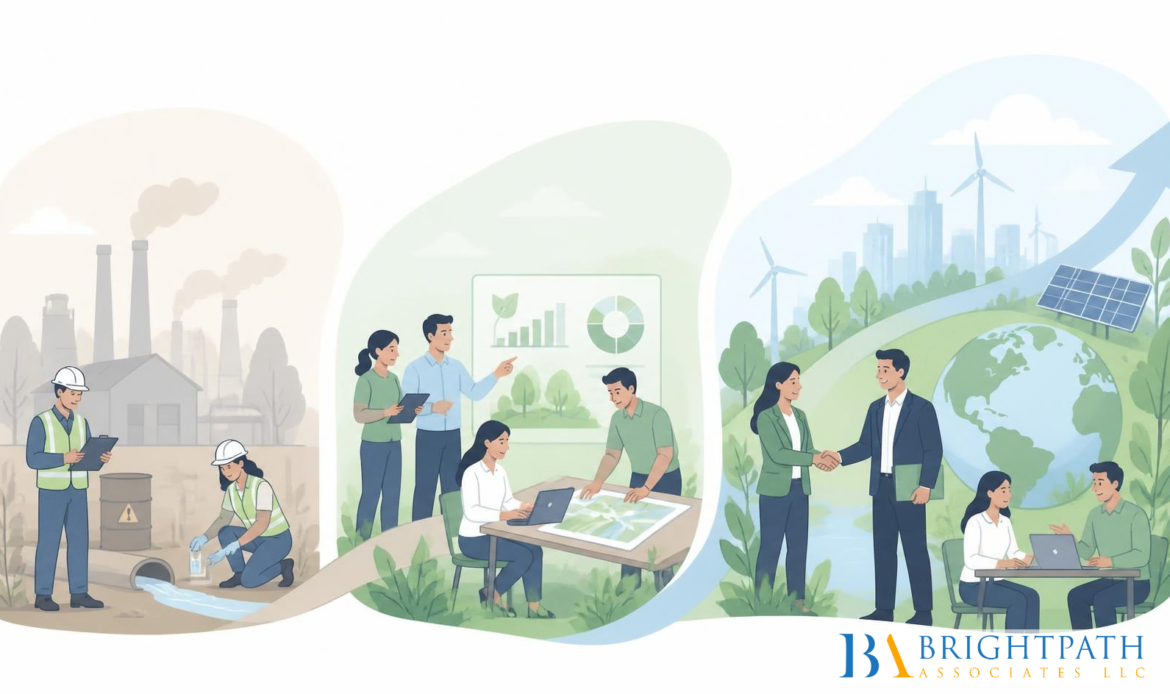
#EnvironmentalConsulting has undergone a significant transformation over the past several decades. Traditionally, companies relied on consultants primarily to help them meet regulatory requirements, prepare environmental reports, conduct assessments, and address compliance issues. While these responsibilities remain important, the role of environmental consultants has expanded considerably.
Today, organizations increasingly view environmental consulting as a strategic business function rather than simply a compliance requirement. Environmental risks can influence operational continuity, capital investment, supply chains, brand reputation, resource availability, and long-term competitiveness. As businesses respond to changing regulations, climate-related risks, resource constraints, and stakeholder expectations, consultants are becoming strategic partners that help organizations integrate environmental considerations into broader business decisions.
This evolution has created new opportunities across the Environmental services sector. From Environmental innovation and clean technology to air pollution control, water treatment, sustainability strategy, and environmental risk management, modern consulting firms are helping businesses move from reactive compliance toward proactive environmental performance.
The earliest stages of modern environmental consulting were strongly influenced by regulatory development. Businesses needed specialized knowledge to understand environmental regulations, obtain permits, conduct assessments, monitor emissions, and demonstrate compliance.
Environmental compliance remains a fundamental responsibility. Companies operating manufacturing plants, processing facilities, infrastructure projects, and industrial sites must understand the environmental requirements applicable to their activities. Consultants provide technical expertise that helps organizations interpret regulations and establish appropriate monitoring and reporting systems.
However, compliance alone is no longer sufficient for many organizations. Businesses increasingly recognize that environmental decisions can affect costs, productivity, investment planning, and market opportunities. This has encouraged consulting firms to expand their capabilities beyond regulatory interpretation and toward strategic environmental management.
The modern consultant may therefore work with senior executives, operations teams, engineers, finance departments, and supply-chain leaders to identify environmental risks and opportunities before they become major business challenges.
The Rise of Environmental Sustainability
Environmental sustainability has become an increasingly important consideration for companies across industrial sectors. Organizations are evaluating how their operations affect natural resources, emissions, waste generation, energy consumption, and surrounding communities.
Consultants are helping businesses develop sustainability strategies that align environmental objectives with operational and financial priorities. Rather than treating sustainability as a separate corporate initiative, companies are increasingly integrating it into facility planning, product development, procurement, energy management, and operational decision-making.
This shift has also changed the nature of environmental consulting engagements. Instead of completing a single assessment or regulatory filing, consultants may work with clients over multiple years to establish environmental targets, measure performance, identify improvement opportunities, and develop long-term strategies.
Technology has become one of the major forces reshaping environmental consulting. Advanced sensors, data analytics, remote monitoring, geographic information systems, artificial intelligence, and digital reporting platforms are providing organizations with more detailed information about environmental performance.
Environmental innovation allows companies to identify problems earlier and make more informed decisions. Real-time monitoring can help organizations detect changes in emissions, water quality, energy consumption, or industrial processes before they develop into significant issues.
Digital tools are also improving the way environmental consultants collect and analyze information. Instead of relying entirely on periodic inspections and manually prepared reports, consultants can increasingly work with continuous data streams.
This development is particularly relevant to industrial companies where environmental conditions can change rapidly. Technology enables environmental professionals to move from periodic evaluation toward continuous environmental performance management.
Clean Technology and the New Consulting Landscape
The growth of clean technology has expanded the scope of environmental consulting. Businesses are exploring technologies that can reduce emissions, improve resource efficiency, minimize waste, and lower environmental impacts.
Consultants increasingly help organizations evaluate the technical, environmental, and economic implications of clean technology investments. This can include renewable energy systems, energy-efficient equipment, industrial electrification, waste-reduction technologies, advanced filtration systems, and resource-recovery solutions.
The consultant’s role is not simply to recommend a technology. Effective advisory work requires understanding how the technology fits into existing infrastructure, production processes, financial plans, regulatory requirements, and long-term business objectives.
As a result, environmental consulting is becoming more multidisciplinary. Professionals need to understand environmental science while also considering engineering, economics, operations, technology, and #BusinessStrategy.
Air pollution control has historically been closely associated with regulatory requirements. Industrial facilities have had to monitor emissions and install appropriate control systems to meet applicable standards.
Today, companies are increasingly examining air emissions from a broader operational perspective. Improved pollution-control technologies can potentially support regulatory compliance while also improving process efficiency and reducing environmental risk.
Consultants may evaluate emission sources, monitoring systems, control equipment, maintenance practices, and operational processes to identify opportunities for improvement. Advanced monitoring technologies can further improve visibility into emissions and help organizations understand how operational changes influence environmental performance.
This approach illustrates the broader evolution of environmental consulting: environmental controls are increasingly viewed as part of operational performance rather than as isolated compliance infrastructure.
Water Treatment and Resource Management
Water management represents another area where environmental consulting has evolved significantly. Industrial organizations may face challenges involving wastewater generation, water availability, treatment costs, discharge requirements, and resource conservation.
Modern consulting approaches increasingly focus on the complete water cycle within an organization. Instead of considering wastewater only at the end of a production process, consultants can examine where water enters the operation, how it is used, where losses occur, and how water can potentially be treated and reused.
Advances in Water treatment technologies are creating additional opportunities for industrial facilities to improve resource efficiency. Consultants can help organizations evaluate treatment systems, assess water quality, identify operational improvements, and develop long-term water-management strategies.
As water availability becomes an increasingly important business consideration in many regions, water management is moving from a technical environmental issue toward a strategic operational concern.
Environmental risks can have consequences far beyond regulatory penalties. Environmental incidents can interrupt production, delay projects, increase remediation costs, affect insurance considerations, and create reputational challenges.
As a result, organizations are increasingly incorporating environmental risk into enterprise risk management. Consultants can help identify potential environmental liabilities associated with facilities, acquisitions, infrastructure projects, supply chains, and operational changes.
This strategic approach can be particularly valuable during mergers, acquisitions, property transactions, and major capital investments. Understanding environmental conditions before a transaction can help organizations make more informed decisions and anticipate potential future obligations.
The Importance of Data and Environmental Reporting
Data has become central to modern environmental management. Organizations need reliable information to understand their environmental performance and communicate relevant results to internal and external stakeholders.
Consultants are increasingly helping companies establish systems for collecting, validating, analyzing, and reporting environmental data. This requires more than simply producing annual reports. Companies need consistent methodologies and reliable processes that can support decision-making throughout the year.
Environmental data can also help organizations identify trends. For example, repeated increases in waste generation, energy consumption, emissions, or water usage may reveal operational inefficiencies that were previously difficult to detect.
The result is a shift from environmental reporting as a documentation exercise toward environmental data as a #StrategicManagementResource.
The relationship between consultants and clients is also changing. Traditional consulting engagements were often project-specific, with consultants brought in to solve a particular regulatory or technical problem.
Strategic partnerships tend to involve longer-term collaboration. Consultants may become familiar with a client’s operations, environmental objectives, facilities, risks, and investment plans. This deeper understanding allows them to provide more integrated recommendations.
A long-term consultant can also help organizations anticipate emerging environmental requirements rather than reacting after regulations or market expectations have changed.
This partnership model requires consultants to understand the client’s business rather than focusing exclusively on environmental science. Communication, commercial awareness, project management, and strategic thinking are becoming increasingly valuable consulting capabilities.
Talent Transformation in the Environmental Industry
The changing role of environmental consulting is creating new demands for talent. The Environmental industry now requires professionals with combinations of technical expertise and business knowledge.
Environmental scientists and engineers remain essential, but organizations also need professionals who understand data analytics, sustainability strategy, technology implementation, risk management, regulatory affairs, and corporate operations.
This evolution is influencing Environmental executive search as companies compete for leaders who can connect environmental objectives with business performance. Senior environmental professionals increasingly need to communicate effectively with executive teams and demonstrate how environmental programs contribute to organizational resilience and long-term value.
#ExecutiveSearchRecruitment can therefore play an important role in helping organizations identify leaders capable of managing increasingly complex environmental responsibilities.
One of the clearest signs of environmental consulting’s evolution is the movement from reactive management toward proactive planning.
In a reactive model, a company may respond after receiving a regulatory notice, experiencing an environmental incident, or discovering a compliance problem. In a proactive model, organizations continuously assess risks, monitor performance, evaluate emerging technologies, and prepare for future requirements.
This shift can improve organizational preparedness. By identifying environmental challenges before they become urgent problems, businesses may have more time to evaluate solutions, allocate capital, train employees, and implement operational changes.
Environmental consulting therefore increasingly operates at the intersection of risk management, innovation, technology, and corporate strategy.
Building a More Resilient Industrial Future
The future of environmental consulting will likely be shaped by continued technological development, changing environmental expectations, resource constraints, and increasingly complex industrial operations.
Companies will continue to require expertise in Environmental services, but their expectations will extend beyond traditional compliance support. They will increasingly seek partners capable of connecting environmental performance with operational resilience, cost management, innovation, and long-term growth.
Environmental sustainability will remain an important consideration, while Green technology and clean technology will continue to influence investment decisions. Air pollution control and Water treatment will remain essential technical disciplines, but they will increasingly be integrated into broader resource and operational strategies.
For consulting firms, this means developing multidisciplinary teams that can combine scientific knowledge with technology, data, engineering, and business expertise.
Conclusion
The evolution of environmental consulting reflects a broader transformation in how businesses understand environmental responsibility. What once focused primarily on regulatory compliance has expanded into a strategic discipline encompassing sustainability, risk management, technology, resource efficiency, innovation, and long-term business planning.
Environmental compliance remains an essential foundation, but modern organizations increasingly expect consultants to help them anticipate challenges and identify opportunities. Environmental innovation, clean technology, air pollution control, and water management are no longer isolated technical subjects. They are becoming connected components of broader operational and corporate strategies.
The #EnvironmentalIndustry will continue to evolve as businesses seek stronger environmental performance while managing costs, operational risks, and changing stakeholder expectations. This evolution will also increase demand for specialized expertise and leadership, making Environmental executive search and Executive Search Recruitment increasingly relevant to organizations building capable environmental teams.
Ultimately, the most significant change is the relationship itself. Environmental consultants are moving from being external specialists brought in to address individual compliance requirements toward becoming long-term strategic partners. Their role is increasingly about helping organizations understand environmental risks, use technology effectively, improve resource management, and create resilient operations prepared for a changing industrial landscape.
Find your next leadership role in Environmental Services Industry today!
Stay informed with the latest insights on Environmental Services Industry!