
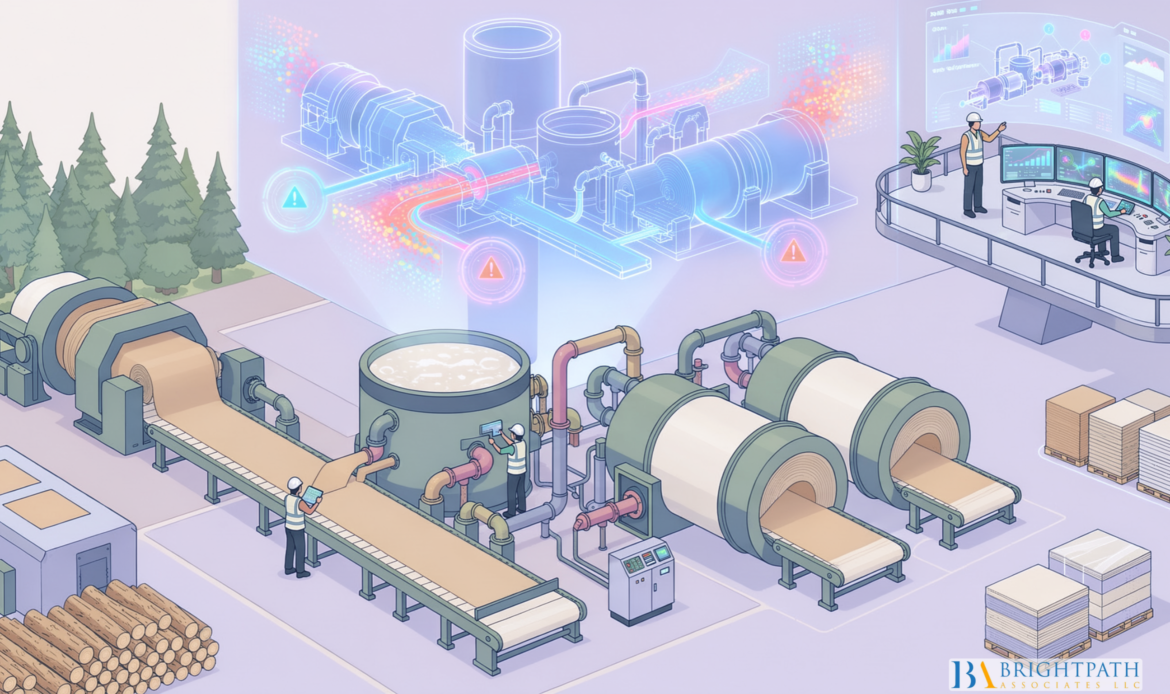
[Bethany, Connecticut – 19 November 2026] – BrightPath Associates has highlighted the growing importance of digital twin technology in strengthening food safety across the industrial automation sector. Its latest industry analysis, Digital Twins in Food Safety: Simulating Risks Before They Happen, explores how virtual models, real-time production data, and predictive analytics can help food manufacturers identify potential safety risks before they develop into serious operational problems. For C-suite executives, the technology offers opportunities to improve risk management, strengthen regulatory compliance, and create more reliable manufacturing operations through advanced automation.
As food manufacturers face increasing regulatory expectations, supply chain uncertainty, equipment challenges, and pressure to maintain consistent product quality, traditional monitoring methods may not provide enough predictive insight. Digital twins allow organizations to simulate different production conditions, evaluate possible disruptions, and make informed decisions before implementing changes on the factory floor.
Digital Twins Bring Predictive Capabilities to Food Safety
A digital twin is a virtual representation of a physical asset, production process, or manufacturing environment. By combining sensor information, historical records, and operational data, these models help manufacturers understand existing conditions and evaluate what could happen under different circumstances.
The BrightPath analysis explains that “A well designed digital twin can help teams test what may happen next” when conditions such as temperature, sanitation cycles, supplier materials, or equipment performance change. This predictive capability can help food manufacturers identify potential problems earlier and take corrective action before product quality or safety is affected.
For example, a food processing facility can simulate temperature changes in refrigerated storage areas and evaluate how extended exposure might affect specific production batches. Management teams can use these insights to prioritize inspections, review affected products, and improve preventive measures. Read more about Digital Twins in Food Safety and Simulating Risks Before They Happen to understand how predictive simulation can support safer manufacturing environments.
Integrating Digital Twins With Industrial Automation Systems
Digital twins become more valuable when connected with existing automation infrastructure. Modern food manufacturing facilities already use SCADA systems, programmable logic controllers, industrial machine vision, and manufacturing execution systems to monitor production activities. Integrating these technologies with digital models can provide a broader understanding of equipment performance and potential operational risks.
Advanced PLC programming service capabilities can help establish communication between machinery, sensors, and digital platforms. Similarly, Robotics integration can improve automated material handling, packaging, and processing operations. When supported by reliable data, these systems can help manufacturers identify unusual operating conditions and evaluate process improvements.
For organizations investing in Automation solutions manufacturing, digital twins offer a practical way to test production changes virtually before making expensive physical modifications. The wider Industrial Automation Industry is increasingly focused on combining connected equipment, intelligent monitoring, and predictive technologies to improve manufacturing performance.
Improving Risk Management and Manufacturing Efficiency
One of the most important advantages of digital twins is their ability to support better operational decisions. Manufacturers can simulate refrigeration failures, sanitation delays, equipment breakdowns, and changes in production conditions to understand how these events might affect food safety and delivery schedules.
Combining SCADA systems with digital twin technology can provide greater visibility into temperature readings, equipment conditions, production speed, and process variations. Industrial machine vision can further support automated inspection by identifying visible product defects and inconsistencies. However, predictive models should complement established food safety procedures, laboratory testing, and human verification rather than replace them.
For C-suite executives, these capabilities can support better resource allocation, reduced production interruptions, improved traceability, and stronger manufacturing efficiency. A phased implementation strategy, beginning with one critical production process, can help organizations evaluate the technology’s value before expanding it across multiple facilities.
About BrightPath Associates
BrightPath Associates is an executive search and recruitment firm serving businesses across multiple industries in the United States. The company helps organizations identify experienced executives and specialized professionals who support business growth, operational excellence, and workforce development. Its mission is to connect businesses with the right leadership talent to address industry challenges and achieve long-term success.
Media Contact:
Name: Corporate Communications Team
Company: BrightPath Associates
Email: media@brightpathassociates.com
Website: https://brightpathassociates.com