
Introduction
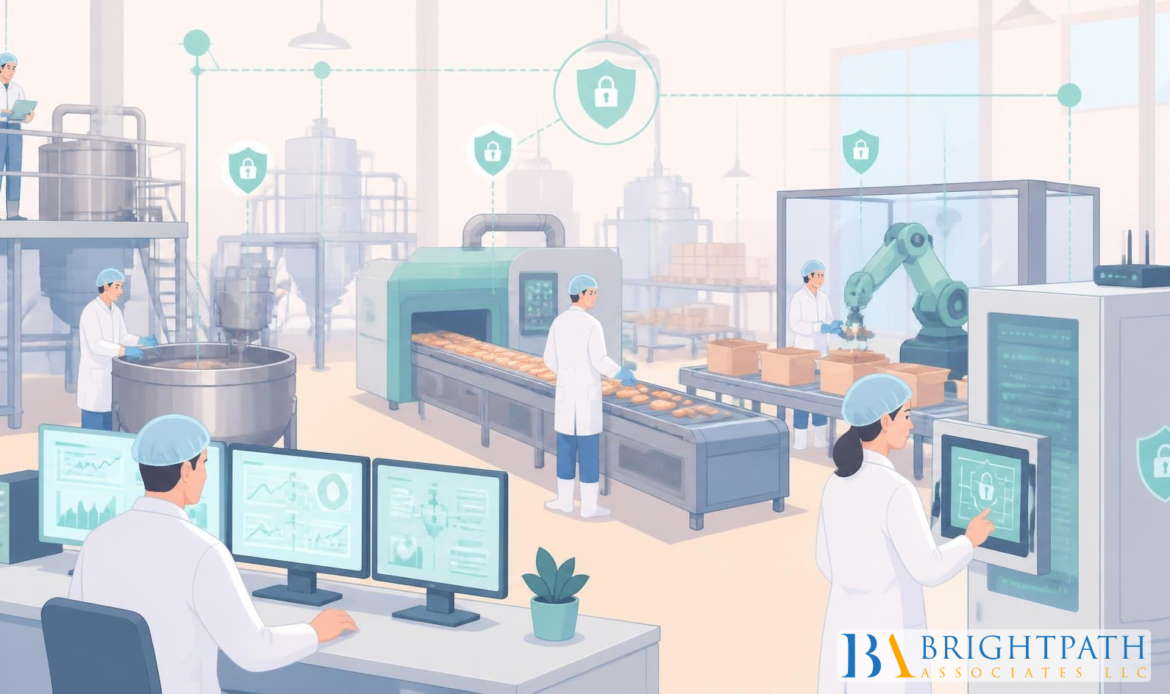
#FoodManufacturing has become increasingly dependent on connected industrial technologies. Production lines that once operated as isolated mechanical systems now rely on programmable logic controllers, supervisory control platforms, industrial networks, sensors, robotics, machine vision, and enterprise software. These technologies have improved productivity, product consistency, traceability, and operational visibility. However, greater connectivity also creates new cybersecurity risks.
Cyber-hygiene is the foundation of protecting these connected manufacturing environments. It refers to the routine practices, controls, and behaviors used to keep digital systems secure, resilient, and properly maintained. For food manufacturers, cyber-hygiene is particularly important because a cyber incident can affect more than data. It can interrupt production, compromise quality-control systems, disrupt refrigeration or packaging operations, delay distribution, and potentially create food-safety concerns.
As Manufacturing automation continues to expand, cybersecurity must become part of everyday operational discipline. Food manufacturers need to protect information technology (IT) systems as well as operational technology (OT), including Control systems, SCADA systems, PLCs, robotics, sensors, and industrial equipment.
Food manufacturing environments are different from conventional office networks. Production equipment may operate continuously, and some industrial systems are expected to remain functional for many years. A manufacturing facility can contain equipment from multiple generations, with different operating systems, communication protocols, and security capabilities.
Older industrial equipment can present particular challenges. A PLC installed years ago may still control an important production process even though it was not designed for today’s connected environment. Replacing such equipment immediately may be financially impractical or operationally disruptive.
Connectivity creates another layer of complexity. Modern factories often connect production systems with enterprise resource planning platforms, quality-management applications, maintenance systems, cloud services, and remote support tools. This integration provides valuable operational visibility but can also create additional pathways into industrial networks if access is not properly controlled.
Cyber-hygiene therefore begins with understanding exactly what is connected and why.
Establishing Complete Asset Visibility
The first step toward securing an industrial network is knowing what assets exist within it. Food manufacturers should maintain an accurate inventory of computers, PLCs, HMIs, network devices, SCADA servers, sensors, robotics, cameras, engineering workstations, and other connected equipment.
Asset visibility is especially important in environments that have evolved gradually. A production facility may contain equipment installed by different vendors at different times. Without a centralized inventory, security teams may not know which devices are connected, which software versions they use, or who has administrative access.
Industrial automation projects should therefore include cybersecurity documentation from the beginning. When new Automation solutions manufacturing systems are introduced, their network architecture, communication requirements, credentials, remote-access methods, and software dependencies should be recorded.
A reliable asset inventory also supports maintenance planning. Manufacturers can identify obsolete equipment, unsupported software, unnecessary network connections, and systems that require additional protection.
Network segmentation is one of the most important principles of industrial cybersecurity. A manufacturing plant should not operate as though every computer, production machine, and office device belongs to one unrestricted network.
Separating business IT networks from production OT networks can limit the potential impact of a security incident. Additional segmentation can be applied between production areas, critical control systems, engineering workstations, and other operational zones.
Firewalls and access-control mechanisms can regulate communication between these environments. Only necessary traffic should be permitted, while unnecessary connections should be blocked.
This principle is particularly relevant to SCADA systems and Control systems because unauthorized access to these platforms could potentially affect physical production processes. Segmentation creates additional barriers between an attacker and critical industrial equipment.
Securing PLCs and Industrial Controllers
PLCs are fundamental components of many food production lines. They control equipment such as conveyors, filling machines, mixers, pumps, packaging systems, and other automated processes. Because PLCs can directly influence physical operations, protecting them should be a core cybersecurity priority.
Manufacturers should restrict access to PLC programming environments and ensure that only authorized personnel can modify control logic. Strong authentication, controlled engineering workstations, secure backups, and documented change-management procedures can reduce the risk of unauthorized modifications.
Organizations working with external engineering firms or contractors should also carefully manage access to PLC programming systems. A PLC programming service may require remote connectivity for diagnostics or maintenance, but remote access should be temporary, authenticated, monitored, and limited to the systems required for the task.
PLC logic backups are equally important. If a controller is damaged, compromised, or accidentally reprogrammed, a verified backup can significantly reduce recovery time.
#SCADASystems provide centralized visibility and control across industrial operations. In food manufacturing, SCADA platforms can monitor temperatures, pressures, production rates, equipment status, alarms, and other process variables.
Because SCADA systems often provide broad visibility into production environments, they should receive strong security controls. Access should be based on job responsibilities rather than convenience. User accounts should be reviewed regularly, and former employees or contractors should have their access removed promptly.
SCADA servers and operator workstations should also be maintained according to a controlled patching strategy. However, industrial patching requires greater planning than ordinary office systems because an unexpected software change can affect production availability.
Manufacturers should therefore test patches where practical and coordinate cybersecurity maintenance with production schedules.
Managing Remote Access
Remote access has become an important part of industrial maintenance. Equipment manufacturers, system integrators, automation engineers, and maintenance specialists may need remote connectivity to diagnose problems or update systems.
Uncontrolled remote access can become a significant security weakness. Permanent remote connections, shared passwords, and unmanaged remote-access software can make it difficult to determine who accessed a system and what actions were performed.
A stronger approach is to use controlled access mechanisms with individual identities, multifactor authentication where technically feasible, time-limited permissions, and activity monitoring. Remote sessions should be disabled when they are no longer necessary.
Food manufacturers should also establish clear procedures for third-party vendors. Every external organization with access to an industrial network should have defined responsibilities, approved access methods, and documented security requirements.
Robotics integration is becoming increasingly common in food manufacturing. Robots can perform packaging, palletizing, material handling, sorting, and other repetitive operations. Industrial machine vision systems can inspect products, packaging, labels, dimensions, and quality characteristics.
These systems introduce additional digital components into production environments. Robots may connect to controllers, engineering computers, network infrastructure, and production databases. Machine vision systems may communicate inspection results to PLCs or manufacturing software.
Security should therefore extend beyond traditional computers. Robot controllers, vision systems, cameras, software platforms, and communication interfaces should be included in the facility’s cybersecurity inventory.
Manufacturers should also control who can change robot programs or machine-vision inspection parameters. Unauthorized modifications could affect production quality even if no conventional malware is involved.
Managing Passwords and User Access
Basic account security remains one of the most important aspects of cyber-hygiene. Industrial environments sometimes contain shared accounts because multiple operators need access to the same system. However, excessive account sharing makes accountability difficult.
Where technically feasible, manufacturers should use individual user accounts and role-based permissions. Administrative privileges should be limited to personnel who genuinely require them.
Default passwords should be changed, particularly on network-connected industrial equipment. Passwords and authentication credentials should never be documented openly near machinery or stored in easily accessible files.
Regular access reviews can identify unnecessary accounts and excessive permissions. This is particularly important when employees move between departments or when contractors complete projects.
Backups and Incident Recovery
Cybersecurity cannot rely entirely on prevention. Manufacturers also need a recovery strategy.
Critical PLC programs, SCADA configurations, HMI settings, recipe information, network configurations, and other essential industrial data should be backed up according to a defined schedule. Backups should be protected from unauthorized modification and tested periodically.
Recovery procedures should identify which systems must be restored first. For a #FoodManufacturer, this may include production control systems, refrigeration monitoring, quality systems, packaging equipment, and other operational platforms.
Incident-response plans should also identify responsibilities. Production managers, IT teams, OT engineers, cybersecurity specialists, maintenance personnel, and senior management should understand how they will coordinate during a significant cyber event.
Cybersecurity should not be treated as a separate activity added after an automation project is complete. It should be incorporated into the design of Manufacturing automation systems from the beginning.
When manufacturers evaluate Automation solutions manufacturing providers, cybersecurity capabilities should form part of the technical assessment. Network architecture, authentication, remote access, patch management, logging, backup capabilities, and vendor support should be considered alongside productivity and cost.
New automation systems should be designed with appropriate security zones and communication boundaries. This approach can reduce the need for expensive retrofits later.
Cybersecurity requirements should also be included in procurement and commissioning processes. Vendors should provide documentation describing system architecture, software dependencies, credentials, update procedures, and remote-support mechanisms.
Building Cybersecurity Skills Within the Workforce
Technology alone cannot create strong cyber-hygiene. Employees and technical teams need the skills required to operate securely.
Automation engineers should understand basic cybersecurity principles, while IT professionals working in manufacturing environments should understand the operational consequences of changing industrial systems. This combination of IT and OT knowledge is becoming increasingly valuable.
The growing demand for these capabilities is influencing Automation jobs across the manufacturing sector. Organizations increasingly require professionals who can work across PLC programming, SCADA infrastructure, industrial networking, robotics, machine vision, and cybersecurity.
Executive search industrial automation specialists can help organizations identify leadership talent capable of managing these increasingly interconnected requirements. At senior levels, manufacturers need leaders who understand both operational performance and the risks associated with digital transformation.
#ExecutiveSearchRecruitment can therefore play a role in developing the organizational capabilities required for secure industrial modernization.
Cyber-hygiene should be treated as an ongoing operational practice rather than a one-time cybersecurity project. Networks change, equipment is replaced, employees join and leave organizations, software is updated, and vendors introduce new remote-support requirements.
Regular security reviews can identify changes that have created new risks. Employees should receive practical training on phishing, credential protection, unauthorized software, removable media, and reporting suspicious activity.
Physical security is also important. Unauthorized access to engineering workstations, network cabinets, control rooms, or industrial equipment can undermine digital protections. Cybersecurity and physical security should therefore be considered together.
Manufacturers should establish measurable procedures for asset inventory, account reviews, backup testing, vulnerability management, remote access, and incident response.
Conclusion
Food manufacturing is entering an increasingly connected industrial era in which Industrial automation, robotics, SCADA systems, machine vision, and advanced Control systems are becoming integral to production. These technologies can improve efficiency and quality, but they also expand the digital environment that manufacturers must protect.
Effective cyber-hygiene begins with visibility. Manufacturers need to understand what is connected, who can access it, how systems communicate, and which assets are most critical to production. Network segmentation, secure PLC management, controlled remote access, strong authentication, reliable backups, and disciplined vendor management can provide important layers of protection.
Cybersecurity should also be integrated into every stage of automation investment, from equipment selection and PLC programming service requirements to Robotics integration and system commissioning. At the same time, manufacturers need professionals capable of connecting industrial engineering with cybersecurity principles.
As food production becomes more automated and digitally connected, protecting the industrial network becomes part of protecting operational continuity itself. A disciplined cyber-hygiene program allows manufacturers to gain the benefits of Manufacturing automation while building a more resilient, secure, and dependable production environment.
Find your next leadership role in Industrial Automation Industry today!
Stay informed with the latest insights on Industrial Automation Industry!