
Introduction
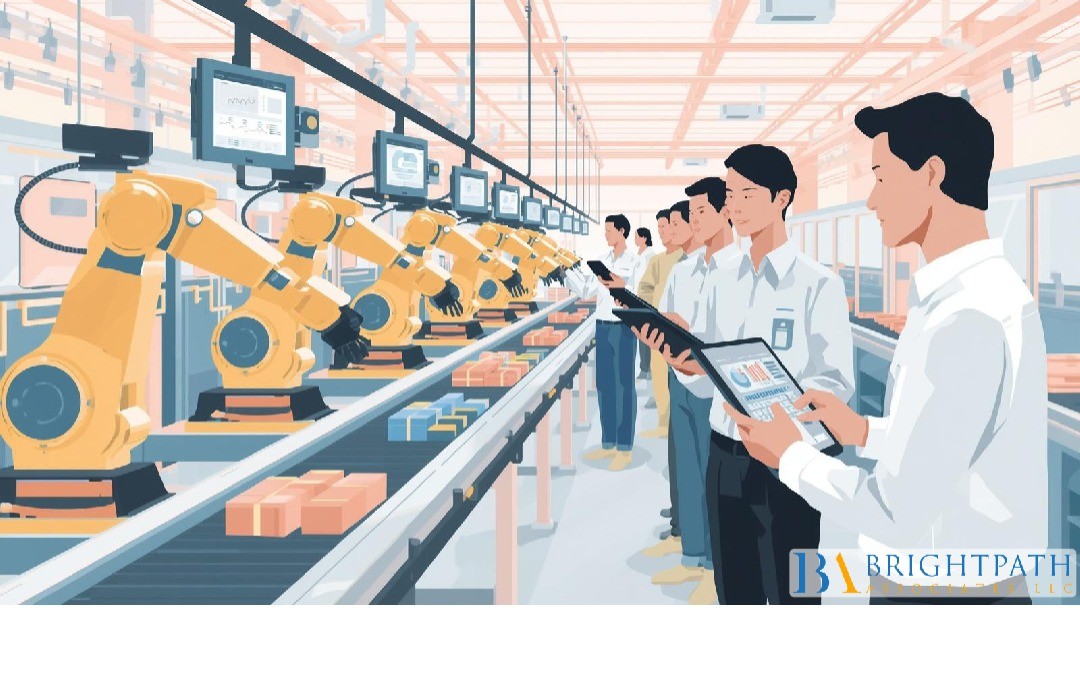
#IndustrialAutomation is reshaping the manufacturing landscape, providing machinery companies with unprecedented opportunities to enhance productivity, quality, and profitability. For small to mid-sized machinery manufacturers, adopting automation is no longer a matter of competitive advantage—it is a strategic necessity. Modern industrial operations are increasingly complex, combining robotics, CNC machining, IoT-enabled systems, and AI-driven analytics to streamline production while maintaining high standards of precision.
The successful implementation of industrial automation depends not only on technology investment but also on effective leadership. Executives must align operational strategy with technological innovation, manage workforce transformation, and ensure sustainable financial returns. In this context, leadership capability is a critical determinant of whether automation initiatives deliver their intended impact.
Industrial Automation Industry Trends
The industrial automation industry is witnessing significant growth, driven by global demand for efficient, high-quality manufacturing. Robotics integration, advanced CNC machining, and smart manufacturing systems are becoming standard practice in machinery manufacturing. Connected devices, predictive analytics, and artificial intelligence enable real-time monitoring, preventive maintenance, and optimized production planning.
These trends are reshaping workforce expectations and manufacturing jobs. Automation reduces reliance on manual labor for repetitive or high-precision tasks, requiring workers to develop advanced technical skills. Similarly, executives must possess cross-functional expertise to manage digitally driven operations, integrate new technologies, and navigate the financial implications of automation investments.
Productivity Gains Through Automation
One of the most tangible benefits of industrial automation is enhanced productivity. Automated systems streamline repetitive tasks, reduce cycle times, and minimize operational bottlenecks. For machinery manufacturers, robotics and CNC machining technologies facilitate rapid production without compromising precision.
By #AutomatingMaterialHandling, assembly, and quality checks, companies achieve higher throughput with consistent output. Predictive maintenance platforms reduce unplanned downtime by identifying potential equipment failures before they disrupt production. Case examples across machinery manufacturing show that firms implementing industrial automation can reduce production cycle times by significant margins while increasing overall equipment efficiency.
Automation also enables flexible production scheduling, allowing manufacturers to respond rapidly to changing client demands. Leaders who understand the integration of industrial automation with workflow optimization create an environment where productivity gains translate into measurable business outcomes.
Enhancing Quality and Consistency
Industrial automation directly contributes to superior product quality. Precision machining technologies eliminate human error, ensuring components meet exacting specifications. Standardized processes reduce variability across production lines, minimizing defects and rework.
Automated quality monitoring systems enable real-time inspection and error detection. For machinery manufacturers, this ensures compliance with industry standards and customer requirements while reducing warranty claims and operational losses. As products become more complex and customer expectations rise, consistent quality is essential to maintaining brand reputation and market competitiveness.
Leadership plays a pivotal role in embedding quality into automated processes. Executives must establish performance metrics, oversee process validation, and ensure that technology adoption aligns with long-term quality objectives. In doing so, they foster a culture of operational excellence that sustains productivity and profitability gains.
Financial Impact and Profitability
The adoption of #IndustrialAutomation drives measurable financial benefits. While initial investment in robotics, smart machinery, and digital platforms may be significant, the long-term return on investment is substantial. Automation reduces labor costs, improves throughput, minimizes material waste, and lowers energy consumption, all contributing to enhanced profitability.
Maintenance optimization is another critical advantage. Predictive analytics and IoT-enabled machinery allow proactive servicing, extending equipment lifecycle and avoiding costly downtime. By tracking machinery performance and usage patterns, manufacturers can schedule maintenance efficiently and manage replacement cycles effectively.
Furthermore, automation enables companies to scale operations without proportionally increasing overhead. With consistent output and quality assurance, machinery manufacturers can expand their customer base and enter new markets confidently, reinforcing both top-line growth and operational efficiency.
Workforce Transformation and Leadership Challenges
While industrial automation enhances productivity, it introduces workforce challenges. The sector is experiencing talent shortages in both technical and executive roles. Skilled operators, maintenance technicians, and engineers with automation expertise are in high demand. Similarly, leaders must possess digital fluency, strategic vision, and operational insight to manage technology-driven processes effectively.
Executive expectations have evolved significantly. C-suite executives and operations managers are tasked with overseeing advanced automation projects, integrating data analytics into decision-making, and managing cross-functional teams. The convergence of operational, technical, and strategic responsibilities demands leadership agility and multifaceted expertise.
Without capable executives, automation initiatives risk underperformance. Leadership gaps can slow adoption, increase operational inefficiencies, and reduce ROI. Proactively addressing talent needs is therefore critical to maximizing the benefits of industrial automation.
Executive Hiring Strategies for Industrial Automation Success
In response to talent challenges, machinery manufacturers are evolving their executive hiring practices. Traditional reactive recruitment methods are insufficient in a market characterized by technological complexity and leadership scarcity. Forward-looking organizations are implementing proactive talent mapping, succession planning, and structured assessment processes to identify executives capable of managing automation initiatives.
#ExecutiveSearchRecruitment plays a central role in this transformation. Specialized recruitment partners provide access to industry-specific talent pools, evaluate technical and leadership competencies, and ensure cultural alignment. They help companies identify leaders who can drive automation projects, optimize operational workflows, and deliver sustainable financial performance.
Brightpath Associates assists machinery companies in building high-performance leadership teams through tailored Executive Search Recruitment solutions. By connecting firms with executives experienced in industrial automation, precision machining, and smart manufacturing systems, the firm strengthens organizational capability and positions companies for long-term success. More information about their services can be found at brightpathassociates.com.
Building a Future-Ready Leadership Pipeline
To sustain the advantages of industrial automation, machinery companies must cultivate a future-ready leadership pipeline. Succession planning, executive development programs, and proactive recruitment strategies ensure that critical positions are never left vacant. Leaders equipped to manage technological change foster innovation, operational discipline, and strategic growth.
By integrating Executive Search Recruitment into long-term workforce planning, companies mitigate leadership risk and secure executive talent aligned with automation objectives. Strong leadership enables manufacturers to fully leverage technological investments, enhance productivity, maintain quality, and improve profitability.
In an era where industrial automation defines competitiveness, leadership is the critical enabler. Small to mid-sized machinery companies that combine technological adoption with visionary #ExecutiveManagement are well-positioned to thrive in a rapidly evolving manufacturing landscape, achieving operational efficiency, consistent product quality, and sustained financial growth.
Find your next leadership role in Machinery Industry today!
Stay informed with the latest insights on Machinery Industry!