
Introduction
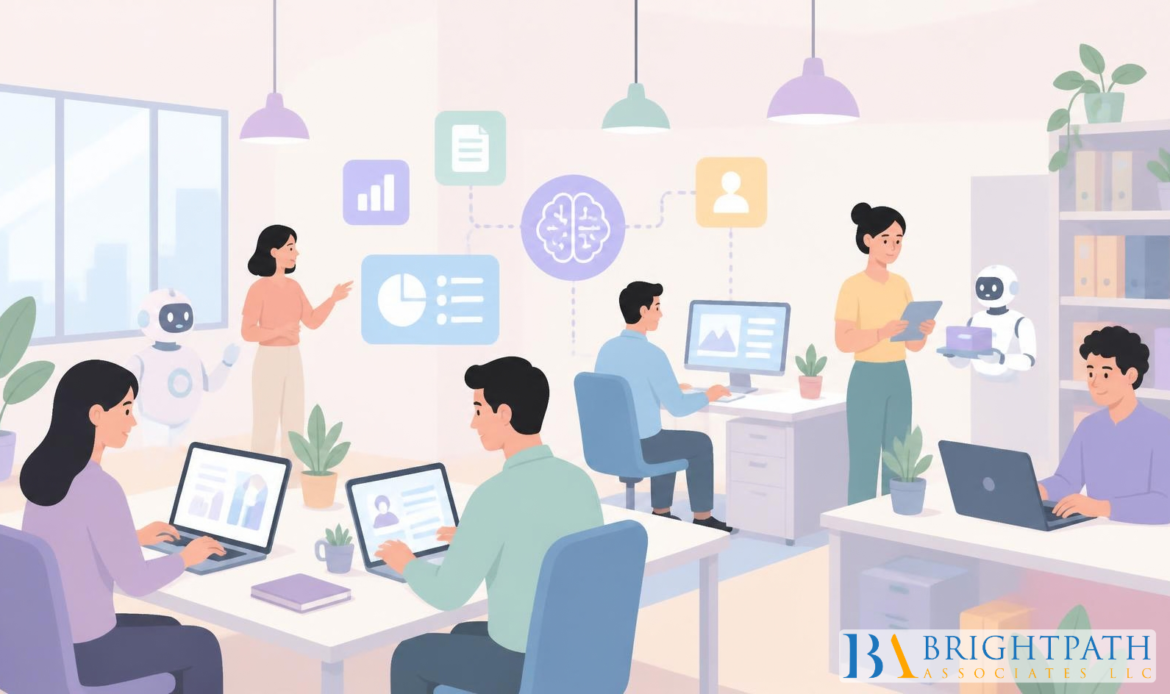
Small and medium-sized businesses are entering a new stage of #DigitalTransformation as artificial intelligence moves beyond simple chatbots and productivity assistants. Agentic AI systems are designed to perform tasks, make decisions within defined parameters, interact with software applications, monitor workflows, and take actions with limited human intervention. This evolution is changing how businesses think about productivity, administration, procurement, customer service, and workplace management.
For SMBs, the appeal is particularly strong. Smaller organizations often operate with lean teams, limited administrative resources, and employees who perform multiple functions. Autonomous AI tools can potentially reduce repetitive workloads and allow employees to focus on activities requiring judgment, creativity, relationship management, and strategic thinking.
The impact extends beyond traditional office software. Agentic systems can influence procurement, business equipment management, office supply management, facilities operations, scheduling, inventory monitoring, and supplier relationships. As the #OfficeSupplies industry becomes increasingly digital, autonomous technologies are creating new possibilities for how businesses manage everyday workplace requirements.
Understanding Agentic AI in Office Operations
Traditional automation follows predefined instructions. Agentic AI introduces a more adaptive approach. Instead of simply performing one programmed task, an AI agent can interpret a goal, evaluate information, determine a sequence of actions, and interact with different systems to complete the objective.
For example, an AI agent responsible for office inventory could monitor supply levels, identify unusual consumption patterns, check approved suppliers, compare available options, prepare an order, and request human approval before purchasing.
This creates a more proactive approach to office administration. Instead of employees discovering that supplies are running low, the system can identify potential shortages in advance.
The evolution of #OfficeAutomation is therefore moving from simple task execution toward intelligent workflow management.
The office supplies industry has traditionally relied on catalogs, sales representatives, procurement teams, and distribution networks. Digital commerce has already transformed how businesses purchase everyday office products, but agentic AI could change the purchasing process even further.
Rather than requiring employees to search manually for products, autonomous systems can understand organizational requirements and recommend or initiate purchases based on established policies.
For example, an AI system could monitor printer usage, identify expected toner requirements, verify inventory, and coordinate replenishment. It could also recognize changes in employee numbers and adjust supply forecasts accordingly.
The emergence of #OfficeSuppliesTech is therefore creating new opportunities for vendors to move from transactional selling toward intelligent procurement services.
Business Equipment and Autonomous Management
Business equipment represents a significant investment for SMBs. Printers, scanners, computers, conferencing systems, networking devices, and other equipment require purchasing decisions, maintenance, upgrades, and eventual replacement.
Agentic AI can help businesses manage these assets throughout their lifecycle. Systems can monitor equipment usage, detect unusual performance, predict maintenance requirements, and recommend replacement schedules.
Instead of waiting for a device to fail, an autonomous system can identify warning signals and initiate a maintenance workflow.
The integration of #BusinessEquipment with AI-powered monitoring can therefore improve reliability while reducing unexpected operational disruptions.
Office supply management often appears simple but can become surprisingly inefficient as organizations grow. Businesses may have multiple departments purchasing similar products independently, inconsistent inventory records, and limited visibility into consumption.
Agentic AI can centralize information and automate many routine decisions. The system can monitor inventory, identify frequently purchased products, recognize seasonal patterns, and recommend appropriate stock levels.
AI can also identify duplicate purchasing or unusual spending patterns. This can help SMBs reduce unnecessary expenses without creating excessive administrative work.
The development of #OfficeSupplyManagement platforms can therefore transform procurement from a reactive process into a predictive business function.
Creating Smarter Relationships With Office Supply Vendors
Office supply vendors are also being affected by the rise of autonomous procurement. Traditional vendor relationships often depend on recurring orders, sales representatives, pricing agreements, and manual communication.
AI-powered procurement systems can compare vendor performance using factors such as price, delivery reliability, product availability, service quality, and historical purchasing patterns.
This does not necessarily eliminate human relationships. Instead, it can allow procurement professionals to focus on strategic supplier management while AI handles repetitive purchasing analysis.
The future of #OfficeSupplyVendors may therefore involve deeper integration with customer procurement platforms, inventory systems, and AI-powered purchasing workflows.
Commercial office furniture is another area where AI can influence business decisions. As SMBs adopt hybrid work models, office space requirements can change frequently.
Agentic systems can analyze workplace utilization, employee schedules, seating requirements, and organizational growth projections. These insights can help businesses determine whether they need additional desks, meeting spaces, storage, ergonomic equipment, or collaborative areas.
AI can also support procurement planning by comparing furniture requirements with available budgets and approved suppliers.
The future of #CommercialFurniture may increasingly involve data-driven workplace planning rather than purchasing decisions based solely on historical requirements.
Office Technology Trends and Autonomous Workflows
Office technology trends are increasingly centered on connected devices, cloud platforms, collaboration systems, cybersecurity, automation, and artificial intelligence.
The growing availability of APIs and integrated business platforms makes it easier for AI agents to interact with multiple applications. An autonomous system may eventually coordinate information across procurement software, accounting platforms, inventory databases, calendars, communication systems, and facilities management tools.
This creates a more connected workplace where administrative processes can operate across organizational boundaries.
The evolution of #OfficeTechnology is therefore closely linked to the broader movement toward autonomous business operations.
Digital transformation in office environments has traditionally focused on moving paper-based processes into digital systems. The next stage is about making those systems intelligent and interconnected.
For SMBs, this can mean automating expense processing, procurement approvals, meeting coordination, customer communication, document management, and workplace administration.
Agentic AI can connect these activities into broader workflows. For example, a new employee’s onboarding process could potentially trigger equipment provisioning, software access requests, workspace allocation, supply requirements, and administrative notifications.
The expansion of #DigitalOffice capabilities can reduce repetitive work while improving consistency across business processes.
Office Equipment Maintenance Becomes Predictive
Equipment maintenance is often reactive. A device fails, an employee reports the problem, and the organization contacts a technician or supplier.
Agentic AI creates the possibility of predictive maintenance. Connected equipment can provide performance data that allows AI systems to identify potential problems before they become failures.
For example, a printer might show declining performance, a network device may demonstrate unusual activity, or an office HVAC system could display signs of reduced efficiency.
The integration of #EquipmentMaintenance with AI can help businesses schedule interventions at appropriate times rather than responding only after disruptions occur.
The office supply chain includes manufacturers, distributors, vendors, logistics providers, procurement teams, and end users. Disruptions at any point can affect product availability.
Agentic AI can monitor supply chain information and identify potential risks. If a frequently used product becomes unavailable, an AI system could identify approved alternatives, evaluate supplier availability, and recommend an appropriate response.
This creates greater resilience for SMBs that may not have dedicated supply chain teams.
The development of #OfficeSupplyChain intelligence can therefore help businesses respond more quickly to shortages, delivery delays, and price changes.
AI and Cost Optimization for SMBs
Cost control is one of the strongest reasons SMBs are exploring autonomous tools. Small savings across thousands of routine transactions can accumulate into significant financial benefits.
Agentic AI can identify unnecessary subscriptions, duplicate purchases, unused equipment, inefficient delivery patterns, and excessive inventory. It can also compare purchasing behavior against organizational policies.
However, cost optimization should not focus solely on the lowest price. Businesses need to consider quality, reliability, employee productivity, service levels, and long-term value.
The combination of #AIOptimization and human oversight can help organizations make more balanced decisions.
Autonomous systems should not be given unlimited authority. Office procurement can involve financial commitments, confidential information, vendor contracts, and business-critical equipment.
Organizations should establish clear boundaries around what AI agents can do independently and which actions require human approval.
For example, an AI system might be allowed to reorder routine supplies within an approved budget but require management approval for major equipment purchases.
The development of #ResponsibleAI practices is therefore essential for SMBs adopting autonomous office technologies.
Data Security and Autonomous Office Systems
Agentic AI requires access to business data to operate effectively. This can create security concerns if systems are connected to sensitive financial, employee, procurement, or operational information.
Businesses need appropriate access controls, authentication, monitoring, and data governance. AI agents should receive only the permissions required to perform their assigned responsibilities.
Organizations should also maintain clear records of automated actions so that employees can review decisions and investigate unusual activity.
Strong #OfficeAI security practices can help businesses benefit from automation without creating unnecessary exposure.
Agentic AI will not simply eliminate repetitive tasks. It is likely to change the skills employees need to perform effectively.
Administrative professionals may increasingly supervise AI systems, evaluate recommendations, manage exceptions, and focus on higher-value activities. Procurement professionals may spend less time processing orders and more time negotiating supplier relationships and analyzing strategic spending.
Employees will also need the ability to understand AI limitations and recognize when human judgment is required.
This creates new opportunities for organizations to rethink workforce planning and development.
Talent Acquisition Strategies for the AI-Enabled Office
As office operations become more automated, talent acquisition strategies will need to evolve. Businesses may require employees who combine functional knowledge with digital capabilities.
For example, procurement professionals may need experience with analytics and automation. Facilities managers may need familiarity with connected workplace technologies. Operations leaders may need to understand AI-driven workflow management.
The future of #TalentAcquisition will therefore increasingly involve identifying candidates who can work effectively alongside autonomous systems rather than simply replacing traditional roles with technology.
Leadership will be critical to successful adoption of agentic AI. SMBs need executives who understand technology while also recognizing the financial, operational, cultural, and strategic implications of automation.
Executive Search Recruitment can help organizations identify leaders with experience in digital transformation, business operations, procurement, technology strategy, and organizational change.
Strong leaders can determine where autonomous systems create genuine value and where human involvement remains essential. They can also establish responsible governance frameworks that allow employees to adopt AI confidently.
The growing importance of Executive Search reflects the increasing demand for leaders who can manage businesses through technology-driven transformation.
Building the Autonomous SMB Office
The autonomous office will not emerge from one AI application. It will develop through the integration of multiple intelligent systems across procurement, equipment management, workplace planning, administration, and supply chain operations.
The most successful SMBs will likely adopt a gradual approach. They can begin with repetitive, low-risk processes before expanding AI authority as systems demonstrate reliability.
This approach allows organizations to build employee confidence while establishing appropriate governance and security controls.
The emergence of the #AutonomousOffice represents a shift toward workplaces where employees and intelligent systems collaborate continuously.
Conclusion
Agentic AI is changing the concept of workplace productivity. Instead of simply helping employees complete individual tasks, autonomous systems can coordinate processes, monitor business conditions, identify problems, and take predefined actions.
For the office supplies industry, this transformation can improve procurement and inventory management. For businesses managing equipment and facilities, AI can support predictive maintenance and workplace planning. For vendors and supply chains, intelligent systems can improve forecasting, communication, and resilience.
The broader #DigitalTransformation of the office will require more than technology investment. Businesses will need responsible governance, secure data infrastructure, employee development, and strong leadership.
SMBs that approach agentic AI strategically can reduce administrative friction while allowing employees to concentrate on higher-value work. As Office technology trends continue to evolve, the competitive advantage may increasingly belong to organizations that know how to combine autonomous tools with human judgment.
With thoughtful talent acquisition strategies and effective #ExecutiveSearchRecruitment, businesses can build leadership and workforce capabilities suited to an increasingly autonomous workplace. The office of the future will not simply be automated. It will be intelligently coordinated, continuously optimized, and increasingly capable of acting on behalf of the business within carefully defined boundaries.
Find your next leadership role in Business Supplies & Equipment Industry today!
Stay informed with the latest insights on Business Supplies & Equipment Industry!