
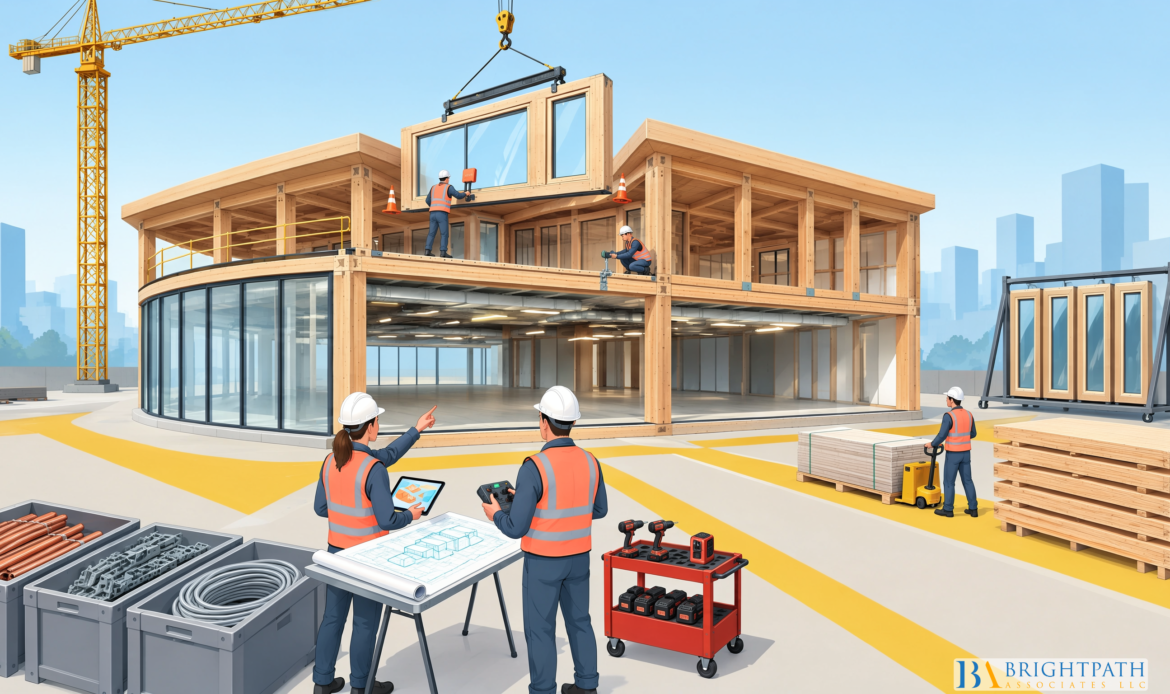
[Bethany, Connecticut – 10 November 2026] – BrightPath Associates has highlighted the growing importance of standardization in improving operational efficiency across the building material industry. Its latest industry analysis explores how manufacturers can combine standardized production systems with customized architectural designs to reduce manufacturing costs, improve project delivery, and strengthen profitability. The approach focuses on standardizing structural connections, production processes, and digital data while allowing flexibility in the visible design elements of custom construction projects.
For C-suite executives, operational efficiency has become an important competitive advantage as construction companies face rising material costs, labor shortages, supply chain challenges, and changing customer expectations. Manufacturers must deliver customized solutions without increasing production complexity or compromising quality. The latest analysis, “Standardization as Strategy: Driving Efficiency in Custom Construction Projects,” explains how building product manufacturers can achieve this balance through smarter engineering, digital integration, and controlled customization.
Standardization Creates New Opportunities for Building Material Manufacturers
Traditional custom construction often requires manufacturers to develop new engineering calculations, shop drawings, material specifications, and production plans for individual projects. These repeated activities increase engineering expenses, extend delivery schedules, and create additional pressure on factory operations. Standardization offers a practical solution by establishing repeatable components, connection systems, and production methods that can be applied across multiple projects.
The BrightPath analysis explains that “Standardization introduces predictable manufacturing logic into custom building products.” Rather than limiting architectural creativity, manufacturers can standardize internal structures, connection points, fasteners, and supporting systems while keeping exterior finishes, dimensions, and design features customizable. This approach helps companies manage complex orders while maintaining consistent manufacturing processes.
For a deeper understanding of this strategy, the report on Standardization as a Strategy for Driving Efficiency in Custom Construction Projects examines how building product manufacturers can reduce repeated engineering work, simplify procurement, and improve project execution without sacrificing customer flexibility.
Supporting Sustainable Construction and Better Cost Management
Standardization can also contribute to sustainable construction by reducing unnecessary material consumption, production waste, and repeated manufacturing activities. When manufacturers establish consistent component dimensions and production requirements, they can improve material planning and reduce errors during fabrication and installation. Better planning can also create opportunities for material recycling by making construction waste easier to identify, separate, and reuse.
The article highlights that product platforms can protect approximately 70% to 80% of the overall production sequence from design disruption by separating stable core components from customizable elements and project-specific exceptions. This approach can help manufacturers maintain predictable factory operations while responding to different customer requirements. However, executives must avoid over-standardization, particularly when dealing with regional building regulations, specialized architectural designs, and materials with unique performance requirements.
From a construction economics perspective, these improvements can support better cost control, more accurate project estimates, and stronger resource utilization. Building supplies manufacturers can also improve purchasing efficiency by using common components across multiple projects, creating opportunities for better supplier relationships and more predictable inventory management.
Leadership and Skilled Talent Will Drive Industry Transformation
Successful standardization requires more than new technology or updated manufacturing processes. Companies must bring together engineering, procurement, sales, production, and supply chain teams under a common operational strategy. Senior leaders must understand how digital engineering, industrialized construction, and manufacturing efficiency can work together to support long-term business growth.
This transformation is also influencing the demand for skilled professionals across construction jobs and manufacturing operations. Companies increasingly need experienced plant directors, engineering executives, supply chain leaders, and digital transformation specialists who understand modern building materials production. Executive recruitment can help organizations identify leadership talent capable of implementing standardization strategies and managing complex operational changes.
The wider Building Material Industry is evolving as manufacturers invest in automation, prefabrication, digital manufacturing, and sustainable production practices. Businesses that combine operational discipline with the right leadership capabilities will be better positioned to manage changing customer expectations and competitive pressures.
About BrightPath Associates
BrightPath Associates is an executive recruitment and talent solutions firm serving businesses across multiple industries in the United States. The company helps organizations identify experienced executives and specialized professionals who support business growth, operational improvements, and workforce development. Its mission is to connect companies with the right talent to build stronger teams and achieve long-term business success.
Media Contact:
Name: Corporate Communications Team
Company: BrightPath Associates
Email: media@brightpathassociates.com
Website: https://brightpathassociates.com