
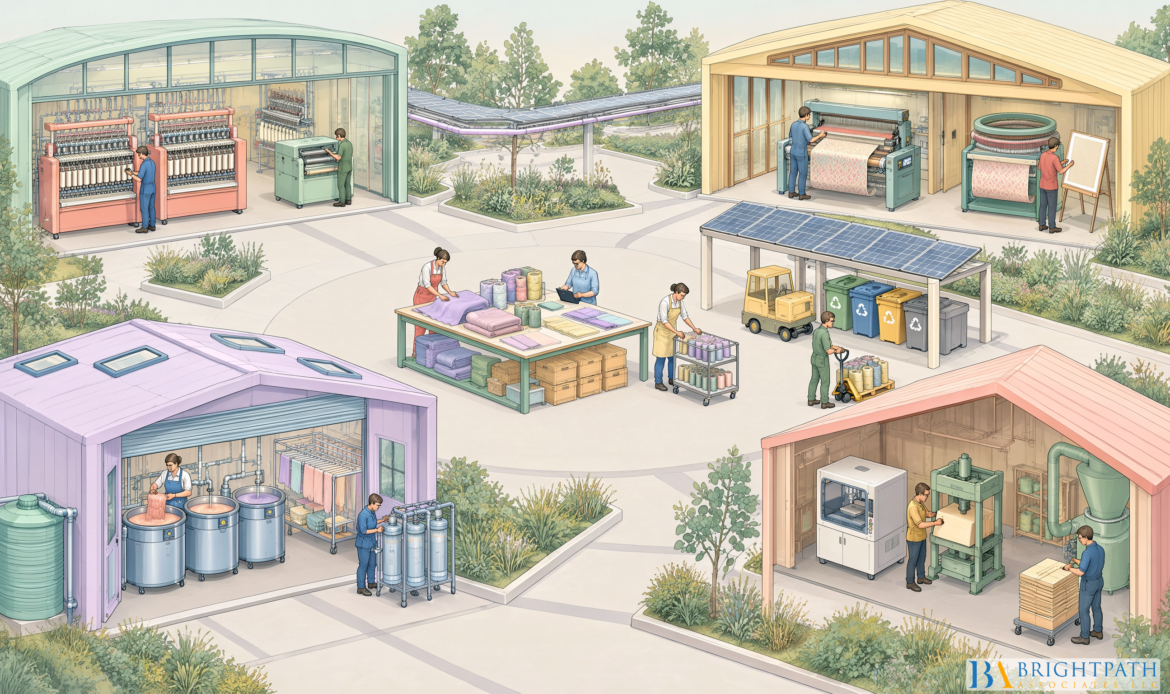
[Bethany, Connecticut – 03 November 2026] – BrightPath Associates has highlighted the growing importance of micro-mills and decentralized production models in transforming the U.S. Paper and Forest Industry. Its latest industry analysis explores how smaller, strategically located processing facilities can help manufacturers improve resource utilization, strengthen regional supply chains, reduce transportation costs, and develop sustainable value-added products. By combining modern Paper and Pulp Technology, advanced processing equipment, and locally available raw materials, micro-mills are creating new opportunities for manufacturers seeking greater operational flexibility and long-term competitiveness.
As the industry faces changing customer expectations, rising logistics expenses, evolving Forestry Regulations, and increasing demand for Sustainable Materials, traditional large-scale production models are facing new strategic considerations. Micro-mills offer an alternative by processing forest thinnings, sawmill residues, recycled fibers, and agricultural materials closer to their sources. For C-suite executives, the development represents an opportunity to rethink production locations, capital investments, and supply chain strategies while balancing profitability with environmental responsibility.
Micro-Mills Introduce a New Approach to Forest Product Manufacturing
Traditional paper mills generally depend on large production capacities, extensive infrastructure, and established regional supply networks. Micro-mills follow a different approach by focusing on smaller production facilities positioned near available fiber sources or regional customers. These facilities can manufacture specialty pulp, recycled paper products, molded packaging, engineered wood inputs, and other value-added materials.
According to the BrightPath analysis, the concept is about “redesigning where value is created.” Instead of transporting bulky forest residues and small-diameter timber over long distances, manufacturers can explore local processing opportunities. This approach may reduce certain transportation expenses while creating additional commercial opportunities for rural communities and regional suppliers.
The detailed analysis, Rise of Micro-Mills and Decentralized Production Models for the Paper and Forest Industry, examines how businesses can evaluate local resources, production requirements, and market opportunities before investing in smaller manufacturing facilities.
Feedstock Economics and Sustainable Material Sourcing
One of the biggest challenges for micro-mill development is securing a consistent and economically viable supply of raw materials. Although many regions contain substantial forest residues, not all available materials can be collected, processed, and delivered at a competitive cost. Timber harvesting expenses, transportation distances, moisture levels, material quality, and existing buyer relationships can significantly influence project profitability.
The article highlights an important consideration: “Build the supply radius from costs, not maps.” This principle encourages executives to evaluate the complete cost of collecting, preparing, storing, and transporting fiber instead of relying only on regional biomass estimates.
A 2021 study involving Michigan and Wisconsin found that only 52% of surveyed forestland managers would allow logging-residue removal. This illustrates how landowner decisions and environmental considerations can influence the actual availability of raw materials. For businesses exploring Paper Recycling Solutions and alternative fiber sources, developing reliable supplier agreements and understanding local resource limitations are essential steps.
Technology and Automation Strengthen Decentralized Production
Advancements in Automation in Paper Industry operations are creating opportunities to improve the efficiency and reliability of smaller manufacturing facilities. Modern processing systems, automated material handling, digital monitoring, and advanced quality-control technologies can help micro-mills manage production with greater consistency.
However, technology alone cannot guarantee commercial success. Smaller facilities still require dependable electricity, water systems, process controls, maintenance capabilities, and environmental management infrastructure. Manufacturers must also evaluate whether locally available fiber meets the quality requirements of their intended products.
Forest thinnings, agricultural fibers, and recycled materials can support Forest Product Innovation, but their processing characteristics may vary. Businesses must consider product strength, refining energy, moisture management, wastewater treatment, and production costs before selecting their manufacturing approach.
For C-suite executives, the broader Paper & Forest Industry is entering an important period of transformation, where technology investments and sustainable sourcing strategies must deliver measurable business outcomes.
Changing Lumber Industry Trends and Leadership Requirements
The expansion of decentralized manufacturing is also changing the leadership capabilities required across the sector. Micro-mills need executives who can connect forestry operations, procurement, manufacturing, environmental compliance, financial planning, and commercial development.
Traditional experience in large-scale paper production may not be sufficient for every leadership position. Companies increasingly need professionals who understand local fiber markets, Paper and Pulp Technology, supply chain management, production optimization, and regional customer requirements.
Executive recruitment can help organizations identify leaders with the cross-functional experience required to manage these challenges. Operations executives, technical directors, procurement leaders, and general managers must be capable of making decisions across multiple business functions while maintaining production reliability and financial discipline.
About BrightPath Associates
BrightPath Associates is a U.S.-based executive recruitment and talent solutions firm helping organizations identify skilled professionals and experienced leaders across multiple industries. The company supports businesses through executive search, workforce planning, leadership development, and strategic recruitment solutions. Its mission is to connect organizations with the right talent to strengthen teams, improve business performance, and support sustainable growth.
Media Contact:
Name: Corporate Communications Team
Company: BrightPath Associates
Email: media@brightpathassociates.com
Website: https://brightpathassociates.com