
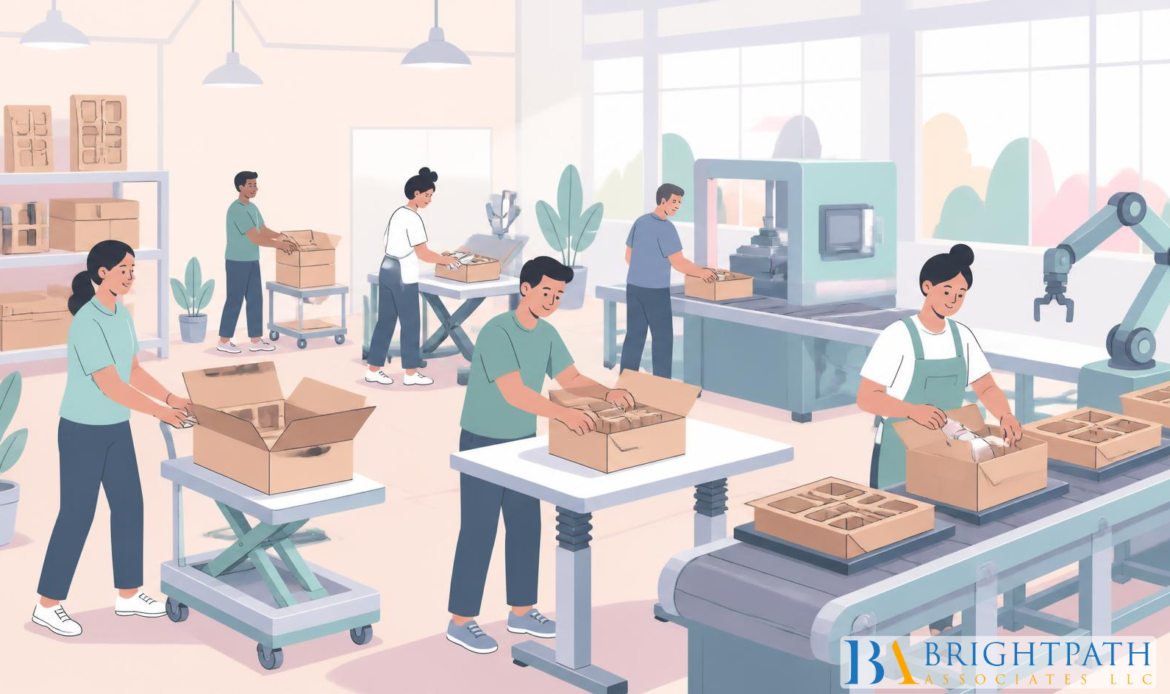
[Bethany, Connecticut – 15 October 2026] – BrightPath Associates has highlighted the growing importance of ergonomic packaging design in addressing workforce challenges across the packaging and containers sector. The company’s latest industry insights examine how businesses can redesign packaging materials, workstations, and handling processes to reduce physical strain, improve employee satisfaction, and strengthen workforce retention. The analysis is intended for C-suite executives, operations leaders, and human resources professionals seeking practical ways to address the packaging industry labor shortage while maintaining productivity and supporting long-term business growth.
As packaging operations face pressure from labor availability, rising operating costs, and changing sustainability requirements, companies are increasingly recognizing that employee well-being is closely connected to business performance. Packaging tasks involving repetitive movements, awkward lifting, excessive reaching, and prolonged standing can contribute to fatigue and workplace injuries. By integrating ergonomic principles into packaging design and production workflows, organizations can create safer working environments while improving efficiency and reducing employee turnover.
Ergonomic Design Addresses the Packaging Workforce Challenge
The packaging industry depends on employees across manufacturing, filling, labeling, inspection, warehousing, and distribution. When these roles involve physically demanding tasks, discomfort and fatigue can affect attendance, morale, productivity, and retention. Replacing experienced workers also creates recruitment expenses, training requirements, and temporary disruptions to production schedules.
Ergonomic packaging design focuses on making products, materials, equipment, and workstations easier and safer to handle. Examples include lighter packaging materials, improved grip surfaces, easier-to-open containers, adjustable workstations, and packaging formats that reduce unnecessary lifting or repetitive movements. Automated lifting equipment and properly designed conveyors can further limit physical strain in demanding production environments.
BrightPath Associates’ analysis, How Ergonomic Packaging Design Improves Workforce Retention and Addresses Labor Gaps, explores why worker-centered design should be part of a broader workforce strategy. For executives, the central opportunity is to treat ergonomics as a business investment that can support employee well-being, consistent production, and a more stable workforce.
Connecting Packaging Innovation With Operational Performance
Ergonomics can deliver greater value when it is integrated with packaging machinery optimization and broader manufacturing improvements. Equipment that reduces manual handling, simplifies changeovers, and supports consistent production can help employees complete tasks with less physical effort. However, successful implementation requires more than purchasing new machinery. Companies must evaluate existing workflows, involve employees in equipment testing, provide appropriate training, and regularly review workplace safety.
The same approach can support packaging industry digital transformation. Digital monitoring tools and predictive analytics packaging systems can help businesses identify recurring production bottlenecks, track equipment performance, and plan maintenance before failures interrupt operations. When operational data is combined with employee feedback, managers can better understand where production processes create unnecessary physical demands or inefficiencies.
These improvements also matter for supply chain resilience packaging. A workforce that can perform tasks safely and consistently helps businesses maintain production schedules, respond to changing customer requirements, and reduce disruption. Executives should assess ergonomic improvements alongside productivity, quality, employee turnover, absenteeism, and safety indicators to determine whether investments are producing measurable results.
Sustainability and Ergonomics Can Work Together
Packaging businesses must increasingly balance employee needs with environmental responsibilities. Sustainable packaging certifications, recyclable materials, and circular economy packaging strategies are influencing product development and operational decisions. Meanwhile, bioplastic packaging development is creating additional opportunities for material innovation, although new materials must still meet performance, safety, cost, and handling requirements.
Considering ergonomics early in packaging development can help companies avoid designs that are difficult to lift, open, stack, or process. Lightweight packaging may reduce handling effort and transportation weight, while reusable packaging systems may require careful assessment of container weight, grip, cleaning, and repeated handling. These considerations help businesses evaluate sustainability and worker safety together rather than treating them as separate objectives.
For C-suite leaders, the goal is to build packaging systems that meet customer expectations without placing unnecessary demands on employees. The broader Packaging and Containers Industry must continue adapting to changing material requirements, evolving technologies, workforce constraints, and growing expectations for responsible production.
About BrightPath Associates
BrightPath Associates is an executive search and talent solutions firm that helps small and mid-sized businesses across the United States identify and recruit qualified professionals and leadership talent. The company aims to connect organizations with the people they need to support business growth, strengthen operations, and achieve long-term success. Through industry-focused recruitment and talent strategies, BrightPath Associates helps businesses respond to changing workforce requirements and evolving market conditions.
Media Contact:
Name: Corporate Communications Team
Company: BrightPath Associates
Email: media@brightpathassociates.com
Website: https://brightpathassociates.com