
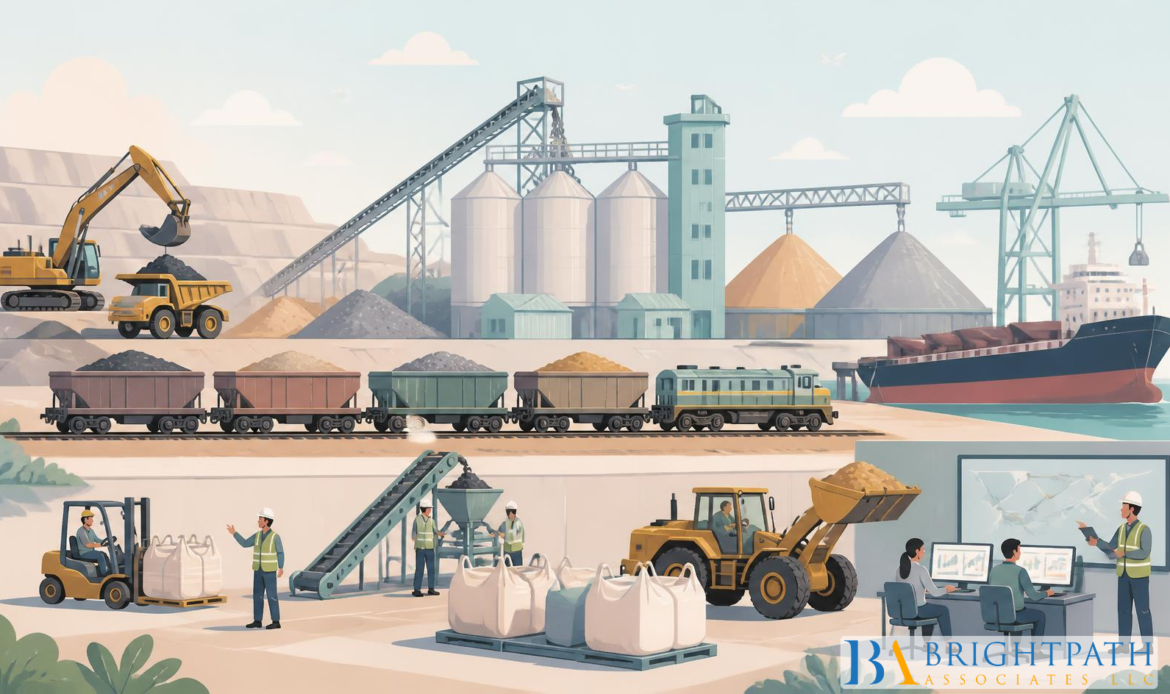
[Bethany, Connecticut – 15 October 2026] – BrightPath Associates is highlighting strategies to address logistics bottlenecks in bulk commodity supply chains, helping mining and metals companies improve operational continuity, manage transportation risks, and strengthen supply chain resilience. The latest industry analysis explores how mining executives can respond to transportation delays, port congestion, infrastructure limitations, and fluctuating demand through improved logistics planning, technology adoption, and stronger coordination across the supply chain.
For C-suite leaders, logistics performance directly affects production schedules, operating costs, customer commitments, and profitability. Ore extraction and metal processing depend on the reliable movement of raw materials, equipment, fuel, and finished products. When transportation networks experience disruptions, even well-managed mining operations can face production delays and increased costs. Addressing these challenges requires a coordinated approach that connects logistics planning with procurement, production management, risk assessment, and long-term business strategy.
Understanding Logistics Bottlenecks in Bulk Commodities
Bulk commodities such as iron ore, copper, coal, aluminum-related materials, and other industrial minerals often move through complex networks of mines, processing facilities, railways, ports, and shipping routes. Limited rail capacity, equipment shortages, weather disruptions, port congestion, and changing trade requirements can interrupt these movements. Because bulk commodities frequently travel in large volumes, even a short disruption can create significant scheduling and storage challenges.
The analysis, Logistics Bottlenecks in Bulk Commodities: Strategies for Operational Continuity, examines how companies can identify supply chain vulnerabilities and prepare for disruptions before they affect production. By mapping transportation routes, evaluating supplier dependencies, and monitoring inventory levels, mining businesses can identify potential weak points and develop contingency plans.
For senior executives, the objective is not simply to move materials faster. It is to create a dependable logistics network that supports production targets, protects margins, and responds effectively to changing market conditions. Alternative transportation routes, diversified suppliers, flexible inventory policies, and stronger coordination with logistics partners can help reduce the impact of unexpected interruptions.
Sustainable Mining and Changing Industry Requirements
Sustainable mining increasingly requires companies to consider environmental performance alongside productivity and cost control. Inefficient transportation can increase fuel consumption, emissions, idle time, and material handling. Better route planning, improved shipment consolidation, energy-efficient transport options, and optimized inventory management can help reduce waste while supporting operational continuity.
Mining companies must also consider how mining policy, trade requirements, environmental regulations, and infrastructure investment affect logistics decisions. Changes in permitting, transportation rules, customs procedures, or cross-border requirements can create new constraints for organizations operating across multiple markets. Regular risk assessments and communication with suppliers and logistics partners can help executives prepare for these developments.
For leaders across the Mining & Metals Industry, resilience increasingly depends on balancing cost efficiency, regulatory compliance, and reliable delivery. Understanding metallurgy, processing requirements, and the timing of production activities can help organizations determine which materials need priority handling and where disruptions could create the greatest operational impact.
Leadership and Talent Are Essential to Operational Continuity
Supply chain resilience requires more than infrastructure and technology. Companies also need experienced leaders who can manage complex logistics networks, evaluate commercial risks, coordinate suppliers, and align operational decisions with business objectives. Leadership teams must be able to respond to disruption while maintaining safety, production efficiency, and customer confidence.
Executive search recruitment can help mining businesses identify professionals with expertise in supply chain management, operations, procurement, logistics, and digital transformation. Specialized Mining executive search services can be particularly valuable when organizations require leaders who understand commodity markets, transportation challenges, operational risk, and the commercial realities of resource extraction. Experienced mining and metals recruiters can help connect businesses with talent suited to these requirements.
As logistics networks become more complex, leadership teams must also consider workforce development and succession planning. Recruiting professionals who can combine industry knowledge with analytical and strategic capabilities can strengthen decision-making and support long-term performance. By aligning talent strategies with operational priorities, mining companies can improve their ability to respond to supply chain challenges and pursue sustainable growth.
About BrightPath Associates
BrightPath Associates is an executive search and recruitment firm that helps organizations identify leadership and specialized talent across multiple industries in the United States. The company supports businesses in strengthening their leadership teams, addressing workforce challenges, and achieving long-term growth objectives. Through industry-focused recruitment solutions, BrightPath Associates aims to connect organizations with professionals who can drive operational performance, innovation, and strategic development.
Media Contact:
Name: Corporate Communications Team
Company: BrightPath Associates
Email: media@brightpathassociates.com
Website: https://brightpathassociates.com