
Introduction
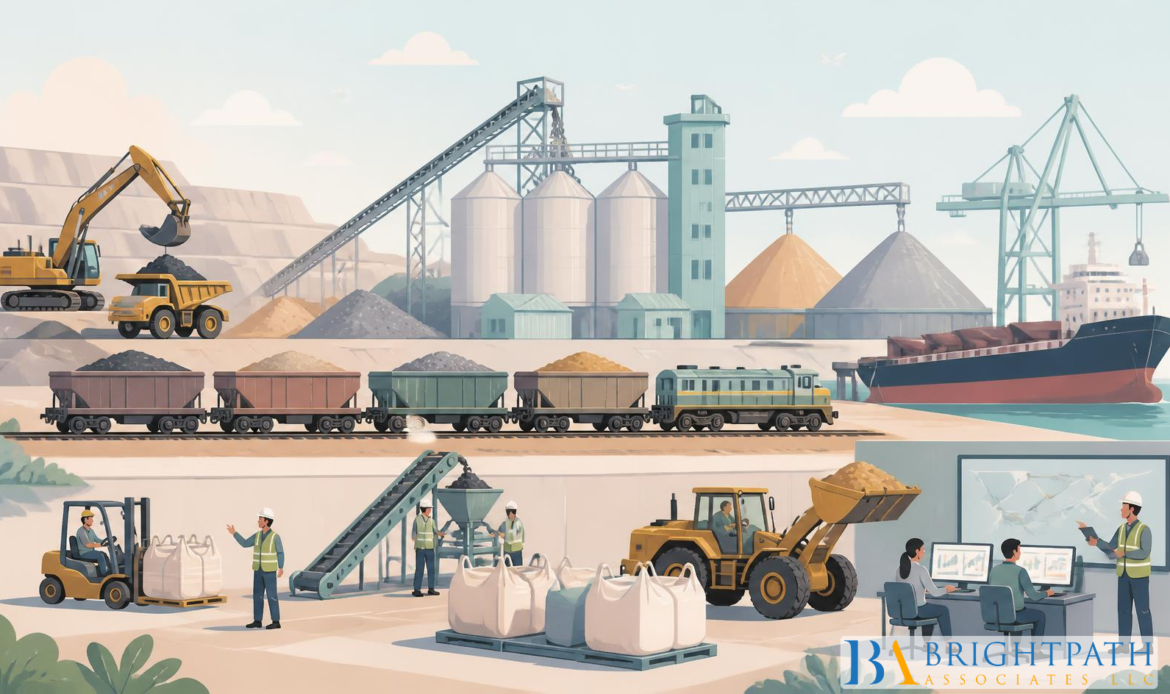
#BulkCommodities play a fundamental role in global industrial development, supplying essential raw materials to construction, infrastructure, energy, manufacturing, and transportation sectors. Materials such as iron ore, coal, copper concentrates, steel, and other mineral products move through complex logistics networks connecting extraction sites, processing facilities, storage terminals, railways, ports, and end customers. However, disruptions across these networks can create significant bottlenecks, increasing operating costs, delaying deliveries, and affecting production schedules.
Logistics bottlenecks in bulk commodity operations frequently arise from inadequate transportation capacity, port congestion, equipment failures, inconsistent material quality, regulatory delays, and fluctuations in market demand. These challenges become particularly serious when mining and processing facilities depend on continuous material movement to maintain operational efficiency. A delay in ore transportation, for example, can disrupt downstream Metal processing activities, increase storage requirements, and reduce overall plant utilization.
Maintaining operational continuity requires an integrated approach that combines infrastructure planning, digital monitoring, workforce development, risk management, and strategic coordination across the supply chain. Companies must also respond to evolving Metals industry trends, including sustainability requirements, technological advancements, and changing international trade patterns. By strengthening logistics resilience, mining and metals organizations can improve productivity, reduce disruption risks, and maintain dependable material flows in increasingly complex industrial environments.
Bulk commodity logistics systems face challenges that differ from those associated with conventional packaged goods. Large material volumes, specialized handling requirements, variable product characteristics, and dependence on transportation infrastructure make these supply chains particularly sensitive to operational interruptions.
Transportation constraints represent one of the most significant bottlenecks. Mining operations may depend on dedicated rail corridors, heavy-haul trucks, conveyor systems, or port facilities to move materials from remote extraction locations to processing plants and customers. Limited rail capacity, road deterioration, vehicle shortages, and shipping delays can restrict throughput even when production operations are functioning efficiently.
Storage limitations can create additional complications. When transportation capacity becomes insufficient, stockpiles may reach their maximum capacity, forcing mining operations to reduce production or temporarily suspend material extraction. Conversely, processing facilities may experience shortages when incoming deliveries fail to meet planned requirements.
Equipment reliability is another critical factor. Failures involving loading systems, crushers, conveyors, weighbridges, ship loaders, and material-handling machinery can interrupt the movement of thousands of tonnes of commodities. Inadequate maintenance planning and limited access to replacement components can extend downtime.
Administrative processes also influence logistics performance. Customs procedures, environmental approvals, transport permits, documentation errors, and changing Mining policy requirements may delay shipments or restrict access to transportation routes. Identifying these interconnected challenges is essential for developing strategies that protect operational continuity.
Improving Ore Extraction and Transportation Coordination
Efficient Ore extraction depends on more than the availability of mining equipment and suitable geological conditions. Production schedules must align with transportation capacity, stockpile availability, processing requirements, and customer demand. When extraction rates exceed the capacity of downstream logistics systems, material accumulates at mine sites and creates operational inefficiencies.
Mining companies should coordinate mine planning with transportation schedules and processing requirements. Forecasting production volumes, expected material grades, equipment availability, and delivery commitments helps identify potential constraints before they affect operations.
For example, a mine producing multiple ore grades may need separate stockpiles to preserve material characteristics and maintain blending requirements. If transportation planning does not account for these distinctions, the wrong material may arrive at a processing facility or shipments may be delayed while suitable stockpiles are assembled.
Integrated scheduling can help synchronize extraction, crushing, conveying, loading, and transportation activities. Where practical, conveyor systems and dedicated rail infrastructure can reduce dependence on road transport and support consistent high-volume material movement.
However, infrastructure decisions must reflect site conditions, capital availability, environmental requirements, and long-term production forecasts. Companies should evaluate transportation investments according to their ability to reduce bottlenecks across the complete supply chain rather than optimizing individual operations in isolation.
Mining technology is transforming how companies monitor material movement, manage equipment, and coordinate supply chain activities. Digital platforms can integrate information from mining operations, processing plants, transportation providers, warehouses, and port facilities to create a more comprehensive view of logistics performance.
Real-time tracking technologies help organizations monitor shipment locations, vehicle utilization, stockpile levels, and delivery progress. When combined with production planning systems, this information enables managers to identify delays and adjust schedules before disruptions escalate.
For example, if a railway experiences congestion or a port reports reduced loading capacity, logistics teams can revise dispatch schedules, redirect eligible shipments, or adjust production plans. These responses are more effective when operational data is available across departments and shared with relevant supply chain partners.
Predictive maintenance is another valuable application of Mining technology. Sensors and equipment-monitoring systems can identify abnormal vibration, temperature changes, and other indicators of potential machinery failure. Maintenance teams can then investigate developing problems before they cause major interruptions to conveyor systems, loading equipment, or processing machinery.
Digital systems also improve inventory accuracy and demand forecasting. By comparing planned deliveries with actual consumption, companies can establish more reliable stock levels and reduce the likelihood of material shortages.
Nevertheless, digital transformation requires reliable data, compatible systems, employee training, and cybersecurity controls. Technology creates the greatest value when it supports informed decisions and coordinated action rather than generating information that remains isolated within individual departments.
Strengthening Metal Processing Through Reliable Material Flows
#MetalProcessingFacilities depend on predictable supplies of raw materials to maintain production schedules, energy efficiency, and product quality. Interruptions in the delivery of iron ore, coal, concentrates, fluxes, or other essential inputs can disrupt processing operations and increase costs.
Metallurgy introduces additional complexity because the composition and physical characteristics of incoming materials influence processing requirements. Variations in ore grade, moisture content, particle size, and impurities can affect equipment performance, recovery rates, energy consumption, and final product specifications.
Logistics planning must therefore consider material quality alongside transportation volume and delivery timing. Accurate sampling, stockpile identification, traceability, and quality documentation help ensure that processing plants receive materials suitable for their operational requirements.
Strategic inventory management can provide a buffer against transportation disruptions. Critical raw materials may require additional safety stock when supply routes are vulnerable to weather events, infrastructure failures, or geopolitical uncertainty. However, excessive inventory increases storage costs, ties up working capital, and may create environmental or material degradation concerns.
The most effective approach combines demand forecasting, production scheduling, supplier coordination, and inventory optimization. By maintaining the right materials in appropriate quantities, metal producers can reduce the impact of logistics interruptions without creating unnecessary storage burdens.
Operational continuity depends on the ability to maintain material movement when individual transportation routes or service providers become unavailable. Companies that rely exclusively on a single railway, port, shipping company, or road corridor may face substantial exposure when that route experiences disruption.
Supply chain resilience requires evaluating alternative transportation options and understanding the practical limitations of each. Depending on geography and infrastructure, businesses may consider alternative ports, secondary rail connections, different trucking providers, or temporary stockpiling arrangements.
These alternatives must be assessed carefully because not every commodity can be transferred easily between transportation modes. Heavy bulk materials may require specialized loading equipment, compatible storage facilities, and appropriate handling procedures. Alternative routes may also involve higher costs, longer transit times, or additional environmental impacts.
Mining and metals companies should establish contingency plans that define responsibilities, communication procedures, and decision-making authority during major disruptions. Scenario planning can help evaluate how transportation delays, extreme weather, labor shortages, or equipment failures could affect production and customer commitments.
Strong coordination with logistics providers, infrastructure operators, suppliers, and customers further improves response capabilities. Shared forecasts and early warnings allow stakeholders to adjust their schedules before bottlenecks become critical.
By combining diversified transportation arrangements with realistic contingency planning, companies can improve their ability to sustain operations under changing market and infrastructure conditions.
Sustainable Mining and Environmentally Responsible Logistics
Sustainable mining increasingly requires companies to examine the environmental impact of transportation, material handling, energy consumption, and waste management alongside extraction practices. Logistics bottlenecks can undermine sustainability objectives when delays increase fuel consumption, create unnecessary equipment idling, or require repeated material handling.
Improving transportation efficiency can reduce these impacts. Better route planning, coordinated dispatch schedules, optimized vehicle loading, and reduced empty journeys help lower fuel consumption per tonne transported. Where suitable infrastructure exists, railways and conveyors may provide more efficient alternatives to long-distance truck transportation.
Stockpile management also contributes to environmental performance. Poorly controlled material storage can increase dust generation, runoff risks, and the likelihood of material loss. Appropriate stockpile design, drainage systems, dust suppression, and monitoring help reduce these impacts while supporting operational reliability.
Companies should also consider the environmental implications of alternative logistics arrangements. Diverting shipments to a distant port may preserve delivery schedules but increase transportation emissions and costs. Decisions should therefore balance continuity requirements with environmental performance and regulatory obligations.
Sustainable mining strategies are most effective when environmental considerations are incorporated into logistics planning from the beginning. This approach helps organizations protect natural resources, improve operating efficiency, and respond to increasingly demanding sustainability expectations from customers, regulators, and investors.
Mining innovation is expanding beyond extraction equipment to include intelligent logistics planning, automated material handling, advanced analytics, and integrated operational control. These developments enable companies to anticipate potential constraints and respond more effectively to changing production and transportation conditions.
Predictive analytics can combine historical shipment records, weather forecasts, equipment performance, inventory levels, and demand projections to identify patterns associated with logistics disruption. A company may discover that particular transport routes experience recurring seasonal delays or that specific loading systems frequently become bottlenecks during production peaks.
Armed with these insights, planners can adjust maintenance schedules, increase inventory buffers when justified, revise shipment windows, and arrange additional transportation capacity. Predictive models can also support scenario analysis by estimating the potential consequences of different disruption events.
Automation may further improve loading accuracy, conveyor control, vehicle coordination, and terminal productivity. However, automated systems must be supported by robust maintenance procedures, reliable communications, and trained personnel capable of handling abnormal operating conditions.
Innovation should be implemented according to clearly defined operational priorities. Companies need to evaluate whether new technologies reduce actual bottlenecks, improve safety, or strengthen decision-making. A carefully targeted technology investment can deliver greater value than a broad digital deployment that does not address the underlying causes of logistics inefficiency.
Responding to Metals Industry Trends and Mining Policy Changes
#GlobalCommodity markets are influenced by infrastructure investment, industrial demand, energy transitions, geopolitical developments, and international trade conditions. These Metals industry trends affect shipment volumes, transportation requirements, pricing, and the availability of logistics services.
For example, increasing demand for metals used in electrification and renewable energy infrastructure can intensify pressure on mining, processing, and transportation networks. At the same time, fluctuations in steel production, construction activity, and industrial demand can change shipping patterns and create periods of congestion or underutilized capacity.
Mining policy also influences logistics planning through environmental regulations, export requirements, transportation standards, land-use approvals, and infrastructure development decisions. Changes in these requirements may affect operating permissions, shipment documentation, or the availability of particular transportation routes.
Companies should establish processes for monitoring regulatory developments and assessing their operational implications. Compliance teams, logistics managers, and commercial departments need to communicate effectively so that regulatory changes are reflected in shipment schedules, contracts, and contingency plans.
Market intelligence can help businesses anticipate changing demand, while regulatory monitoring helps reduce the risk of administrative delays. Together, these capabilities support more informed planning and improve the organization’s ability to respond to external uncertainty.
Technology, infrastructure, and contingency planning are essential to logistics resilience, but their effectiveness ultimately depends on the people responsible for implementation. Mining and metals organizations require experienced professionals who understand transportation systems, production planning, procurement, maintenance, supply chain coordination, and operational risk.
Mining executive search helps companies identify senior leaders capable of managing complex industrial operations and improving logistics performance. These professionals must be able to evaluate infrastructure constraints, allocate resources, coordinate cross-functional teams, and make decisions under changing market conditions.
The role of mining and metals recruiters is also important when organizations need specialized expertise in logistics optimization, mine planning, process engineering, digital transformation, and supply chain management. Recruitment decisions should consider both technical qualifications and the candidate’s ability to lead teams through operational disruption.
#ExecutiveSearchRecruitment can support succession planning by identifying future leaders before critical positions become vacant. It can also help businesses recruit professionals with experience in integrated planning, sustainability, risk management, and technology adoption.
Organizations should complement recruitment with continuous professional development, cross-functional training, and clear accountability for logistics performance. A capable leadership team can turn operational data and contingency plans into coordinated actions that protect productivity and strengthen customer relationships.
Measuring Operational Continuity and Logistics Performance
Effective logistics strategies require measurable performance indicators that reveal where delays occur and whether corrective actions are working. Mining and metals companies should monitor transportation lead times, shipment reliability, equipment availability, inventory accuracy, loading productivity, and the frequency of unplanned interruptions.
Additional measures can include the cost per tonne transported, stockpile utilization, material losses, delivery schedule adherence, and the time required to recover from major disruptions. These indicators help management identify recurring bottlenecks and compare performance across routes, facilities, and transportation providers.
Performance reviews should distinguish between internal operational issues and external constraints. A delay caused by equipment maintenance requires a different response from one caused by port congestion or regulatory restrictions. Accurate classification improves root-cause analysis and prevents organizations from repeatedly applying ineffective solutions.
Regular scenario exercises and contingency-plan reviews are equally valuable. Companies should verify that alternative transportation arrangements remain available, communication channels function correctly, and responsible employees understand their roles during disruptions.
Continuous improvement ensures that logistics resilience evolves alongside production requirements, market conditions, and technological capabilities. By linking performance measurement with practical corrective action, organizations can improve efficiency while reducing exposure to recurring interruptions.
Conclusion
Logistics bottlenecks remain a major challenge for bulk commodity industries because transportation infrastructure, extraction activities, material processing, and global demand are closely interconnected. Disruptions in one part of the supply chain can quickly affect production schedules, operating costs, and customer commitments.
Maintaining operational continuity requires coordinated planning across Ore extraction, Metal processing, transportation, inventory management, and distribution. Mining technology, predictive logistics, resilient transportation networks, and effective maintenance strategies can help organizations identify constraints earlier and respond more efficiently.
At the same time, Sustainable mining practices, regulatory awareness, and careful evaluation of Metals industry trends ensure that operational improvements remain commercially and environmentally responsible. #ExperiencedLeadership and targeted recruitment further strengthen the capabilities needed to manage complex logistics systems.
Ultimately, resilient bulk commodity operations depend on integrating infrastructure, technology, people, and planning into a unified strategy. Companies that continuously evaluate risks, strengthen collaboration, and invest in practical innovation will be better positioned to maintain reliable material flows, manage uncertainty, and achieve long-term industrial competitiveness.
Find your next leadership role in Mining & Metals Industry today!
Stay informed with the latest insights on Mining & Metals Industry!