
Introduction
The forestry, paper, pulp, and #WoodProductsIndustries are experiencing significant changes driven by technological advancement, sustainability requirements, evolving customer expectations, and workforce transformation. Alongside these developments, organizations are navigating an increasingly diverse workforce in which multiple generations bring different professional values, communication preferences, expectations, and approaches to innovation. This generational diversity can create friction, but it also presents an opportunity to strengthen organizational resilience and long-term competitiveness.
From traditional timber harvesting operations to advanced wood product manufacturing facilities, businesses depend on experienced professionals, skilled technicians, digital specialists, and emerging leaders. However, differences in attitudes toward automation, workplace flexibility, career progression, and environmental responsibility can complicate collaboration. Companies that fail to address these differences risk losing institutional knowledge, slowing innovation, and weakening employee engagement.
Adapting a workforce roadmap to manage these generational challenges requires a strategic approach that connects people, technology, and business objectives. By investing in communication, leadership development, digital skills, and inclusive workplace practices, organizations can transform generational differences into a competitive advantage.
The modern industrial workforce often includes Baby Boomers, Generation X, Millennials, and Generation Z. Each group has developed its professional expectations within different economic, technological, and social environments. Although generational labels cannot predict individual behavior, they can help organizations understand common workplace differences and identify opportunities for better collaboration.
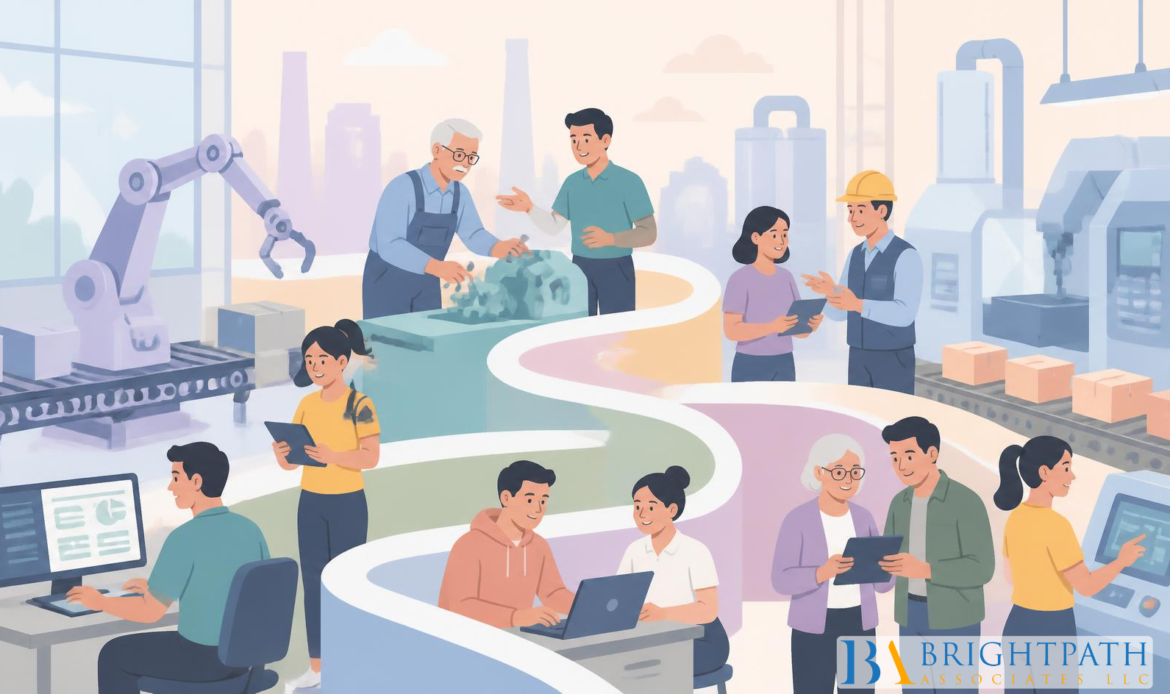
Experienced employees in forestry and paper manufacturing may possess decades of operational knowledge, practical problem-solving abilities, and an understanding of equipment, production processes, and safety requirements. Younger employees may bring stronger familiarity with digital systems, data analytics, automation, and emerging sustainability practices. When these capabilities operate independently, organizations risk creating divisions between traditional expertise and modern innovation.
For example, a senior production supervisor may prefer established maintenance procedures that have consistently delivered reliable results, while a younger engineer may advocate predictive maintenance supported by sensors and machine-learning systems. Both perspectives can contribute to better performance when supported by evidence, open communication, and shared objectives.
Organizations must therefore avoid treating generational differences as unavoidable conflicts. Instead, they should develop workforce strategies that recognize individual strengths, encourage mutual respect, and establish clear expectations for collaboration.
The Impact of Generational Conflict on Industrial Performance
Generational conflict can influence productivity, employee retention, operational safety, and organizational culture. In industries where production continuity and technical expertise are essential, even small communication problems can affect business outcomes.
Within paper mills, disagreements about technology adoption may delay improvements in production efficiency. In timber harvesting operations, differences in attitudes toward digital monitoring or updated safety procedures may complicate training and implementation. In lumber processing facilities, employees who feel excluded from decision-making may resist operational changes, particularly when those changes threaten familiar responsibilities or established working methods.
These challenges become more significant when businesses are already dealing with labor shortages, rising operating expenses, and increasing regulatory expectations. Poor collaboration can lead to duplicated work, inconsistent procedures, and the loss of valuable employees.
Leaders should evaluate these problems through measurable indicators such as employee turnover, training completion, production downtime, safety performance, and engagement levels. Understanding the underlying causes makes it easier to develop practical workforce interventions rather than relying on assumptions about age or experience.
Technology is reshaping how forestry, pulp, and paper organizations operate. Automation, connected machinery, digital production monitoring, and advanced analytics are changing the skills required across the value chain. A successful workforce roadmap must prepare employees of every generation to work effectively within this changing environment.
Automation in the paper industry illustrates the importance of combining technical investment with workforce development. Automated quality inspection, intelligent process controls, and predictive maintenance can improve consistency and reduce unplanned downtime. However, these systems deliver their full value only when employees understand how to operate, monitor, troubleshoot, and maintain them.
Organizations should introduce technology through structured training programs that accommodate different learning preferences. Practical demonstrations, supervised equipment operation, digital learning platforms, and collaborative workshops can help employees build confidence while maintaining operational standards.
Leaders should also explain why technological changes are being introduced. Employees are more likely to support transformation when they understand its purpose, the skills they will need, and how their responsibilities may evolve. Rather than presenting automation as a replacement for human expertise, companies should position it as a tool that allows employees to concentrate on higher-value activities, complex decisions, and continuous improvement.
Preserving Institutional Knowledge Through Cross-Generational Mentoring
One of the most significant workforce challenges facing the forestry and wood products sectors is the potential loss of experienced employees through retirement. Their knowledge of machinery behavior, timber quality, production constraints, supplier relationships, and operational risks may be difficult to replace through formal documentation alone.
Cross-generational mentoring provides a practical way to preserve this knowledge while encouraging collaboration. Experienced professionals can guide younger employees through complex operational decisions, demonstrate safe working practices, and explain lessons learned from previous production challenges. Younger employees can contribute digital capabilities, introduce new analytical methods, and help colleagues become comfortable with emerging technologies.
For example, a senior #TimberHarvesting specialist could teach a younger colleague how to recognize site-specific harvesting risks, evaluate timber characteristics, and respond to changing field conditions. In return, the younger professional could introduce digital mapping tools and data-driven methods for monitoring productivity and resource utilization.
Reverse mentoring can be equally valuable in paper and pulp technology. Employees with strong digital skills can help experienced operators understand new software, sensor dashboards, and automated reporting systems. These relationships should be structured around shared goals rather than assumptions that one generation must always teach the other.
By making knowledge transfer a formal part of workforce planning, companies can reduce dependency on individual employees and strengthen operational continuity.
Sustainability has become a major consideration for forestry, paper, pulp, and wood product manufacturers. Organizations are under pressure to improve resource efficiency, reduce waste, strengthen traceability, and develop products that meet evolving environmental expectations. Meeting these objectives requires both technical capabilities and a workforce willing to collaborate across disciplines.
Forest product innovation increasingly depends on the integration of material science, manufacturing expertise, digital technology, and environmental management. Employees must understand how raw materials are sourced, processed, recovered, and converted into commercially viable products.
Younger professionals may bring fresh perspectives on circular economy models and environmental performance, while experienced employees can provide practical insight into production constraints, equipment limitations, and product quality. Bringing these perspectives together can help organizations identify realistic opportunities for improvement.
Paper recycling solutions provide a useful example. Improving recycled fiber recovery, maintaining product strength, and controlling contamination require coordination between production teams, quality specialists, equipment operators, and research professionals. A multigenerational team can combine established process knowledge with modern analytical techniques to improve results.
Similarly, sustainable materials and alternative fiber sources may create opportunities for product development, but successful implementation requires careful evaluation of performance, cost, supply availability, and customer requirements. Workforce development should therefore connect sustainability training with practical manufacturing objectives instead of treating environmental responsibility as a separate corporate initiative.
Adapting to Lumber Industry Trends and Changing Skills Requirements
The lumber industry is being influenced by evolving construction methods, changing demand patterns, resource availability, digital manufacturing, and sustainability expectations. These developments are changing the capabilities companies need to remain competitive.
Wood product manufacturing increasingly relies on advanced cutting systems, automated grading, production optimization, and integrated quality management. Employees must understand both the physical characteristics of wood and the digital systems used to improve processing accuracy and reduce material waste.
A workforce roadmap should identify emerging skill gaps and establish clear development pathways for production operators, maintenance technicians, quality specialists, and operational managers. Training should address equipment operation, data interpretation, process improvement, and safety while allowing employees to progress toward more specialized responsibilities.
Timber harvesting operations also require an appropriate balance between experience and technological capability. Digital forest mapping, remote monitoring, and improved equipment controls can support better planning, but they do not eliminate the need for sound judgment, environmental awareness, and practical field experience.
Companies should regularly review lumber industry trends and assess how they influence recruitment, employee development, and long-term staffing requirements. This forward-looking approach helps prevent skills shortages from becoming barriers to growth.
Regulatory compliance is another important element of workforce planning. Forestry and wood products organizations must navigate requirements that may involve sustainable forest management, workplace safety, environmental protection, emissions, waste handling, and product traceability. Applicable obligations vary by jurisdiction, operational activity, and product category.
Employees across generations must understand the standards relevant to their responsibilities. Experienced workers may be familiar with longstanding operating procedures, while newer employees may be more comfortable using digital compliance systems. Combining these capabilities can improve documentation, reporting, and accountability.
Organizations should provide regular training whenever regulations, certification requirements, equipment standards, or internal procedures change. Practical scenarios can help employees understand how compliance decisions affect operational risks and business performance.
Digital tools can simplify documentation and improve access to updated procedures, but technology cannot replace accountability or informed decision-making. Supervisors should ensure that all employees understand their responsibilities and have opportunities to ask questions without fear of criticism.
A consistent compliance culture reduces the likelihood that generational misunderstandings will lead to inconsistent practices or avoidable operational incidents.
Aligning Workforce Planning With Paper Industry Economics
Paper industry economics directly influences workforce decisions. Companies must manage raw material costs, energy expenses, transportation, equipment investment, customer demand, and pricing pressures while maintaining production quality and profitability. Workforce strategies must reflect these financial realities.
Organizations that invest in training, employee engagement, and modern technology should evaluate the expected business benefits alongside implementation costs. Improved employee retention can reduce recruitment and onboarding expenses, while effective knowledge transfer can minimize production disruptions. Better digital skills can also help teams identify inefficiencies and use resources more effectively.
However, #WorkforceTransformation should not become a cost-cutting exercise that overlooks employee well-being. Excessive workloads, inadequate training, and unclear career pathways can increase turnover and weaken performance over time.
A balanced roadmap connects workforce investment to measurable outcomes, including productivity, equipment reliability, material utilization, safety, and employee retention. Managers should review these indicators regularly and adjust development priorities as market conditions change.
By integrating workforce planning with financial strategy, organizations can make more informed decisions about staffing, technology adoption, and future capability requirements.
Managing generational differences requires leaders who understand industrial operations, workforce development, digital transformation, and organizational change. Finding these leaders can be particularly challenging for businesses operating across forestry, paper manufacturing, pulp processing, and wood products.
#ExecutiveSearchRecruitment can help organizations identify senior professionals with the experience and capabilities needed to guide complex workforce transitions. Relevant leadership positions may include plant managers, operations executives, human resources leaders, supply chain directors, sustainability executives, and technology transformation specialists.
The most effective leaders combine technical understanding with emotional intelligence, communication skills, and the ability to build trust across teams. They recognize that workforce transformation involves more than introducing new systems or changing reporting structures. It requires employees to understand the organization’s direction and see how their contributions support its goals.
Recruitment strategies should therefore evaluate candidates against clearly defined leadership competencies, including succession planning, change management, talent development, and cross-functional collaboration. Companies should also develop internal employees for future leadership opportunities rather than relying exclusively on external hiring.
A strong leadership pipeline creates continuity, preserves organizational knowledge, and helps businesses respond to changing market conditions with confidence.
A sustainable workforce roadmap must address the everyday experiences that influence employee motivation and retention. Communication styles, feedback preferences, career expectations, and attitudes toward flexibility can differ among individuals and age groups.
Organizations should establish transparent performance expectations, consistent promotion criteria, and accessible channels for employee feedback. Managers should focus on demonstrated capabilities and results rather than assumptions about how different generations prefer to work.
Where operational requirements permit, companies can consider flexible scheduling, job rotation, phased retirement arrangements, and opportunities for specialized career development. Manufacturing facilities and field operations will still require appropriate staffing coverage, but greater flexibility may be possible in planning, administration, engineering, and selected supervisory functions.
Recognition also matters. Some employees value public acknowledgment, while others prefer private feedback, professional autonomy, or opportunities to lead projects. Managers who understand individual motivations can create a more supportive environment without applying rigid generational stereotypes.
An inclusive culture encourages employees to share ideas, challenge inefficient practices constructively, and participate in continuous improvement. This strengthens collaboration while helping organizations attract and retain talent in competitive labor markets.
Measuring Progress and Preparing for Future Workforce Needs
A workforce roadmap should be treated as an evolving business strategy rather than a one-time human resources initiative. Organizations need regular reviews to determine whether their investments are producing meaningful improvements.
Useful measures include employee retention, internal promotion rates, training participation, succession coverage, safety performance, productivity, and adoption of new technologies. Employee feedback can reveal whether communication has improved and whether workers feel prepared for changing responsibilities.
Companies should also conduct periodic skills assessments to identify capabilities that may become critical over the next three to five years. These assessments can guide recruitment, technical training, leadership development, and investment in digital infrastructure.
Scenario planning can further strengthen workforce resilience. For example, a company may evaluate how retirements, increased automation, changing forestry regulations, or shifts in demand for recycled paper could affect staffing requirements. Preparing for multiple possibilities helps leadership teams make better-informed decisions before shortages or disruptions occur.
The goal is not to eliminate every workplace disagreement. It is to build an organization that can manage differences constructively and respond effectively to change.
Conclusion
Adapting a workforce roadmap to generational differences is essential for organizations seeking long-term success in forestry, pulp, paper, and wood product manufacturing. As automation advances, sustainability expectations increase, and experienced professionals approach retirement, businesses must develop a workforce strategy that combines technical knowledge, digital capability, and effective leadership.
Cross-generational mentoring, targeted training, inclusive management, regulatory awareness, and strategic recruitment can help organizations preserve institutional knowledge while preparing employees for emerging industry demands. Integrating these initiatives with business objectives ensures that workforce development supports productivity, innovation, and financial resilience.
Ultimately, #GenerationalDiversity should be viewed as a source of organizational strength rather than a barrier to progress. Companies that create opportunities for employees to learn from one another will be better positioned to advance forest product innovation, improve manufacturing performance, adopt sustainable materials, and respond to changing market conditions. By investing in people alongside technology, industry leaders can build a more adaptable workforce and a stronger foundation for future growth.
Find your next leadership role in Paper & Forest Industry today!
Stay informed with the latest insights on Paper & Forest Industry!