
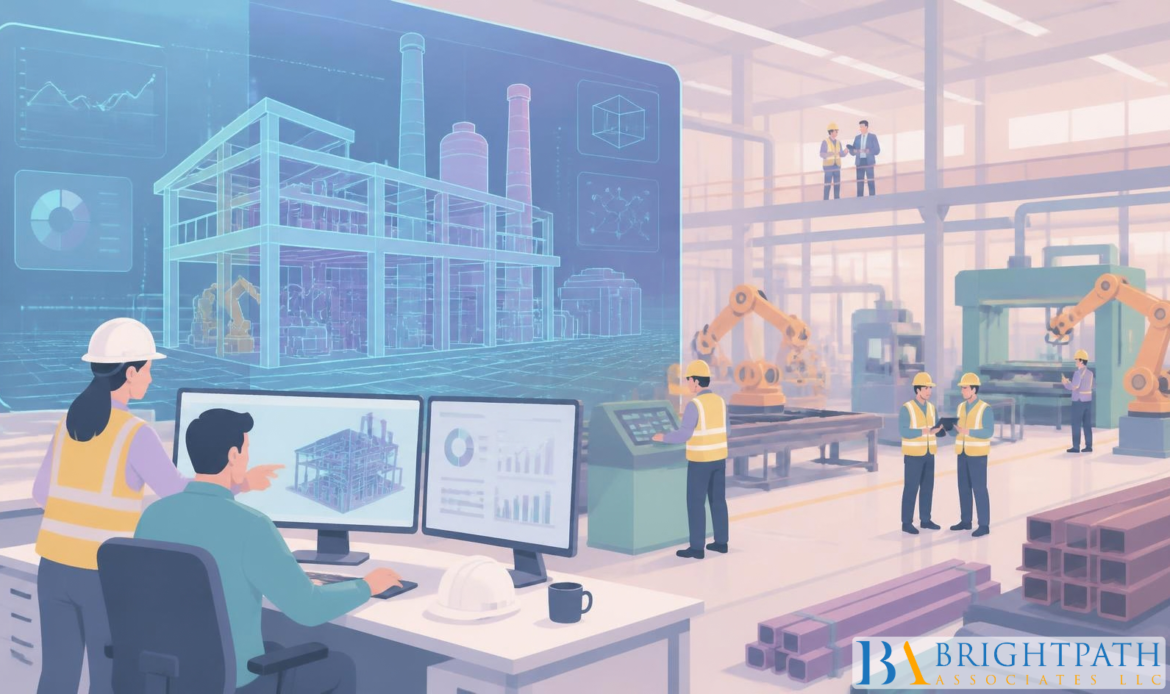
[Bethany, Connecticut – 08 October 2026] – BrightPath Associates highlights the growing importance of digital twin technology in helping plastics manufacturers improve production planning, evaluate investments, and reduce operational risks before making costly physical changes. Its latest industry analysis, Digital Twin Mandate: Simulating Results Before Cutting Steel, explores how virtual models of products, equipment, and manufacturing processes can help business leaders test potential outcomes before committing resources. For C-suite executives across the plastics industry, this approach offers opportunities to improve decision-making, strengthen competitiveness, and support long-term business growth.
As manufacturers face changing customer expectations, rising production costs, supply chain uncertainty, and increasing pressure to modernize, traditional trial-and-error methods can be expensive. Digital twins allow companies to model manufacturing environments, examine different operating conditions, and identify potential problems before implementing changes on the factory floor. By connecting real-world operational data with virtual simulations, businesses can make more informed decisions about equipment, production processes, capacity, and technology investments.
Digital Twins Transform Manufacturing Decisions
A digital twin is a virtual representation of a physical asset, product, or process that can be updated using relevant operational data. In plastics manufacturing, digital twins can help simulate injection molding, extrusion, cooling cycles, material flow, equipment performance, and production-line behavior. These simulations allow engineering and operations teams to evaluate possible adjustments without immediately disrupting existing production.
The benefits can extend beyond equipment design. Manufacturers can use simulation results to investigate production bottlenecks, improve resource utilization, evaluate maintenance requirements, and identify opportunities to reduce material waste. By testing alternative scenarios before making physical changes, organizations can better understand the potential costs, benefits, and operational consequences of different decisions.
The analysis, Digital Twin Mandate: Simulating Results Before Cutting Steel for Smarter Manufacturing, examines the value of evaluating outcomes virtually before committing to expensive manufacturing changes. For executives, this approach can help connect engineering decisions with measurable business objectives.
Strengthening Risk Management and Supply Chain Planning
Digital twin technology can also support plastics industry risk management by helping manufacturers examine how production systems may respond to equipment failures, changing demand, material shortages, or unexpected operating conditions. Scenario testing can reveal vulnerabilities and help leadership teams prepare practical contingency plans before disruptions affect customers or revenue.
In plastics industry supply chain management, digital models can support production scheduling, inventory planning, capacity analysis, and supplier coordination. For example, manufacturers can simulate the potential effects of a delayed raw material shipment or a sudden increase in orders. These insights can help operations leaders compare alternatives and develop more resilient production plans.
However, the quality of these insights depends on accurate data, suitable modeling assumptions, and regular validation against actual operating results. Companies should establish clear performance measures, integrate relevant systems where practical, and train employees to interpret simulation outputs. Digital twins are decision-support tools, not guarantees of future performance.
Supporting Strategic Investment and Market Expansion
For C-suite leaders evaluating plastics manufacturing technology investment, digital twins offer a structured way to compare modernization options before approving major capital expenditure. Companies can assess potential production-line changes, equipment upgrades, facility layouts, and process improvements under different operating scenarios. This can improve investment planning by revealing implementation challenges and highlighting areas that require further investigation.
These capabilities are particularly valuable as plastics economic trends influence energy costs, raw material prices, customer demand, and sustainability expectations. Digital simulations can help companies explore operational responses to these pressures and assess whether proposed changes align with their financial and strategic objectives.
Digital twins may also contribute to plastics market expansion strategies by helping businesses evaluate production capacity, new product requirements, and manufacturing readiness before entering additional markets. Through plastics industry competitive analysis, executives can assess whether existing operations can support changing product specifications, shorter lead times, or increased volumes. The results can inform investment priorities, although market demand and commercial success still require independent evaluation.
The broader Plastics Industry can benefit when manufacturers combine digital capabilities with sound financial planning, operational expertise, and clear growth strategies.
Building Leadership for a Digital Manufacturing Future
Technology alone cannot deliver lasting transformation. Successful digital twin initiatives require collaboration among engineering, operations, information technology, finance, and executive leadership. Organizations must also develop a culture that supports data-driven decisions, continuous learning, and collaboration between technical and commercial teams.
This shift increases the importance of executive search recruitment and specialized plastics industry recruiters who understand the leadership capabilities needed for advanced manufacturing. Businesses may need executives with experience in digital transformation, industrial technology, operational excellence, and strategic investment. Effective recruitment can help organizations identify leaders who can translate technical opportunities into practical business outcomes.
At the same time, plastics industry global leadership, an active plastics industry innovation ecosystem, and strong plastics industry strategic partnerships can help businesses exchange expertise and accelerate the adoption of emerging technologies. Partnerships among equipment suppliers, software providers, material specialists, and manufacturers can support more effective implementation and knowledge sharing.
About BrightPath Associates
BrightPath Associates is an executive search and recruitment firm serving businesses across multiple industries in the United States. The company helps organizations identify experienced executives and specialized professionals who can support business growth, operational improvement, and long-term strategic objectives. Its mission is to connect businesses with the leadership talent needed to navigate changing markets and build stronger organizations.
Media Contact:
Name: Corporate Communications Team
Company: BrightPath Associates
Email: media@brightpathassociates.com
Website: https://brightpathassociates.com