
Introduction
Sustainability has become an increasingly important factor in B2B #PaperProcurement. Paper buyers are no longer evaluating suppliers solely on price, quality, availability, and delivery schedules. They are also examining how raw materials are sourced, how products are manufactured, how much energy and water are consumed, what happens to waste, and whether suppliers can demonstrate responsible environmental practices.
This shift is creating a significant challenge across the paper and forest products sector. Sustainability information is often collected using different methodologies, reporting formats, measurement boundaries, and terminology. One supplier may report carbon emissions per metric ton of paper, while another may report emissions across an entire manufacturing facility. Similarly, recycled content, fiber sourcing, water consumption, and waste data may be calculated differently from one organization to another.
Standardizing sustainability data can help procurement teams make more meaningful comparisons between suppliers. It can also help paper manufacturers communicate their environmental performance more effectively. As sustainability requirements become increasingly integrated into purchasing decisions, standardized information is becoming an operational necessity rather than simply a corporate reporting exercise.
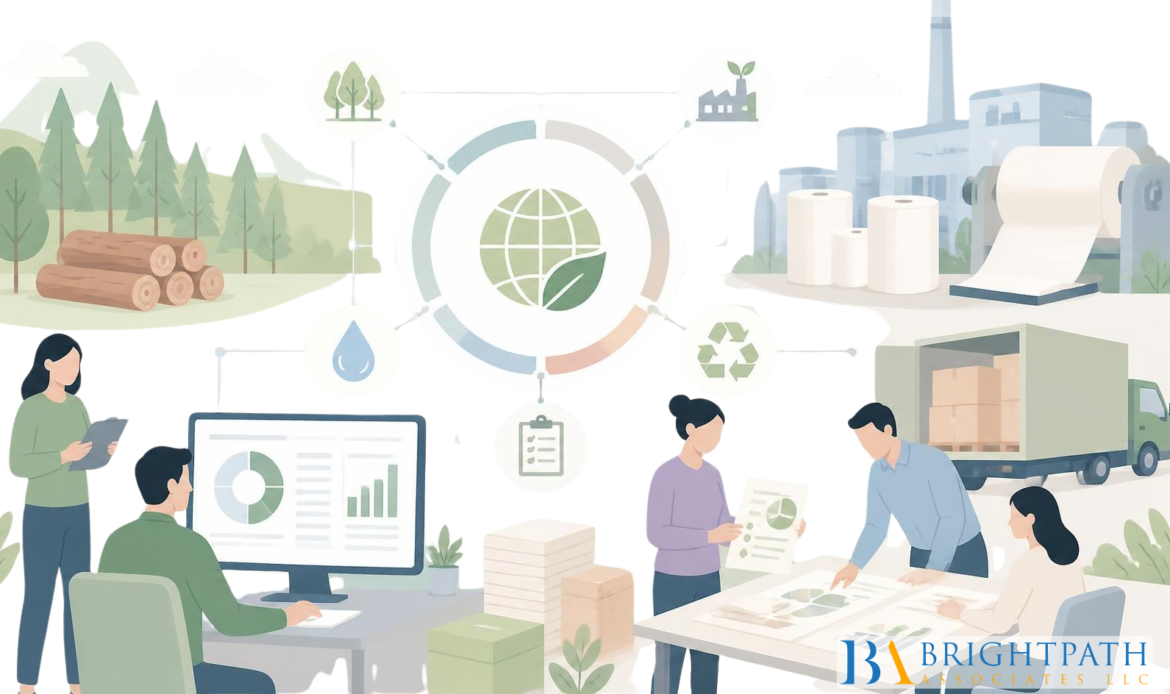
The paper industry operates across a complex value chain that begins with forests and timber harvesting and extends through pulp production, papermaking, converting, transportation, distribution, and recycling. Each stage can generate environmental data, but the information may be stored in separate systems and managed by different teams.
For procurement professionals, this creates difficulties when attempting to compare suppliers. A company may have excellent sustainability performance but struggle to demonstrate it because its data is fragmented or measured differently from competitors. At the same time, buyers may unintentionally select suppliers based on incomplete or inconsistent information.
The growing importance of sustainable materials makes this challenge even more significant. Buyers increasingly want evidence that paper products contain responsibly sourced or recycled fibers, have appropriate environmental certifications, and are manufactured using efficient processes.
Standardized sustainability data provides a common language that allows buyers and suppliers to evaluate performance using consistent criteria.
Connecting Forest Product Innovation With Procurement Decisions
#ForestProduct innovation is helping reshape how organizations approach sustainable paper procurement. New technologies, manufacturing processes, fiber alternatives, and digital monitoring systems are creating opportunities to improve resource efficiency while maintaining product quality.
However, innovation becomes more valuable when its environmental benefits can be measured consistently. For example, a manufacturer introducing a more efficient pulping process should be able to demonstrate reductions in energy consumption, water use, waste generation, or greenhouse gas emissions.
Procurement teams can incorporate these measurements into supplier evaluation frameworks. Instead of simply asking whether a supplier has introduced an innovative technology, buyers can evaluate measurable outcomes associated with that innovation.
This approach encourages manufacturers to invest in meaningful improvements while giving B2B buyers stronger evidence for purchasing decisions.
Raw material sourcing is one of the most important areas of sustainability data in the paper industry. Timber harvesting and forest management practices influence biodiversity, carbon storage, land use, and long-term forest productivity.
Paper buyers therefore need reliable information about where fiber originates and how forests are managed. However, sourcing information can become difficult to compare when suppliers use different definitions and reporting practices.
A standardized data framework should capture information such as fiber origin, recycled content, virgin fiber content, sourcing regions, certification status, and chain-of-custody information. Establishing consistent definitions can help procurement teams distinguish between different sustainability claims.
Forestry regulations also play an important role. Requirements governing forest management, harvesting practices, biodiversity protection, and responsible sourcing can vary across jurisdictions. Standardized reporting can help companies demonstrate compliance while allowing buyers to understand the regulatory context associated with their supply chains.
Measuring Paper Recycling Solutions More Effectively
Recycling is another major component of sustainable paper procurement. Paper recycling solutions can reduce demand for virgin fiber and help extend the useful life of materials. However, recycling performance cannot be evaluated effectively without consistent data.
Procurement teams should consider metrics such as recycled fiber percentage, post-consumer recycled content, manufacturing waste recovery, recycling rates, and the proportion of production materials diverted from landfill.
Standardizing these measurements allows buyers to compare suppliers more accurately. It also encourages manufacturers to improve recovery systems and develop more efficient circular production models.
The quality of recycled fiber is equally important. Higher recycled content may not automatically indicate better environmental performance if additional processing requirements significantly increase energy or water consumption. Sustainability data should therefore consider multiple environmental indicators rather than relying on a single metric.
Advancements in paper and pulp technology are changing the environmental profile of paper manufacturing. Modern mills are increasingly using advanced process controls, energy-efficient equipment, wastewater treatment systems, biomass energy, and digital monitoring technologies.
These technologies generate significant amounts of operational data. The challenge is turning that data into information that procurement teams can understand and compare.
Manufacturers can improve transparency by establishing standardized measurements for energy consumption, water withdrawal, wastewater discharge, emissions, chemical usage, waste generation, and production efficiency.
When these metrics are consistently defined, buyers can evaluate suppliers based on measurable performance rather than broad sustainability statements.
Incorporating Lumber Industry Trends Into Paper Procurement
Although paper procurement focuses primarily on pulp and paper products, developments across the broader forest products sector can influence supply chains. Lumber industry trends can provide valuable insights into timber availability, forest management practices, transportation costs, construction demand, and changing expectations around wood utilization.
Fluctuations in timber markets can affect the cost and availability of raw materials. At the same time, increasing demand for wood-based products can influence forest management decisions and supply chain priorities.
#ProcurementProfessionals who monitor broader lumber industry trends can therefore develop a more comprehensive understanding of the factors influencing paper supply chains.
Standardized sustainability data can complement these market insights by showing how changes in sourcing and manufacturing practices affect environmental performance.
Sustainability cannot be separated from economics. Paper manufacturers operate in highly competitive markets where energy, fiber, transportation, labor, technology, and regulatory compliance can significantly affect production costs.
Paper industry economics therefore plays an important role in sustainability investment decisions. Energy-efficient equipment, recycling infrastructure, automation, and wastewater treatment systems often require significant upfront investment. However, these investments can generate long-term savings while reducing environmental impact.
B2B buyers should avoid evaluating sustainability solely through the lens of additional cost. Instead, procurement teams can consider total value, including operational efficiency, supply continuity, regulatory resilience, resource consumption, and environmental performance.
Standardized sustainability data makes these evaluations more practical because procurement teams can incorporate environmental indicators into broader supplier performance assessments.
Wood Product Manufacturing and Supply Chain Transparency
Wood product manufacturing is closely connected to the paper and pulp value chain. Manufacturing facilities often depend on complex networks of forestry companies, timber suppliers, pulp producers, chemical providers, logistics companies, and downstream customers.
Transparency across this network is essential for credible sustainability reporting. If a company cannot trace important materials through its supply chain, it becomes difficult to verify environmental claims.
Digital traceability systems can help connect information from forests to manufacturing facilities and ultimately to finished products. Standardized data fields can make information easier to exchange between suppliers, manufacturers, distributors, and procurement teams.
This creates a more transparent ecosystem where sustainability information can move alongside conventional commercial data.
Automation in Paper industry operations is creating new opportunities to improve sustainability measurement. Sensors, industrial control systems, artificial intelligence, and connected manufacturing platforms can collect real-time information about energy consumption, production rates, equipment performance, water usage, and material losses.
Instead of relying entirely on periodic manual reporting, manufacturers can use automated systems to generate continuous operational data.
This can improve both accuracy and responsiveness. If a production line begins consuming excessive energy or generating higher-than-normal waste, management can identify the problem quickly and take corrective action.
For procurement teams, automated data collection can also increase confidence in supplier reporting. Consistent digital records can provide stronger evidence than manually prepared sustainability statements.
Creating a Common Sustainability Data Framework
A successful sustainability data framework should establish common definitions, measurement boundaries, reporting periods, units of measurement, and verification requirements.
For example, companies should clearly define whether carbon emissions are reported at the #FacilityLevel, product level, or across the entire supply chain. Similarly, water consumption should have clearly established boundaries so that buyers can compare information consistently.
The framework should cover environmental indicators as well as relevant social and governance factors. However, companies should avoid collecting excessive amounts of data that do not contribute to procurement decisions.
The objective should be to create a practical system that provides reliable information without placing unnecessary reporting burdens on suppliers.
Once standardized information is available, procurement teams can integrate it into supplier evaluation models. Sustainability performance can be considered alongside traditional criteria such as price, product quality, capacity, delivery reliability, and financial stability.
This does not necessarily mean selecting the supplier with the lowest environmental impact in every situation. Instead, companies can establish minimum sustainability requirements and evaluate suppliers based on measurable performance and improvement trajectories.
This approach can also encourage suppliers to continuously improve. A manufacturer that currently performs moderately well but demonstrates consistent progress may become a stronger long-term partner than a supplier that has strong claims but limited evidence of improvement.
The Importance of Leadership and Executive Search Recruitment
Implementing standardized sustainability data requires more than technology. Organizations need leaders who understand procurement, manufacturing, sustainability, data management, and supply chain strategy.
This is where #ExecutiveSearchRecruitment can play an important role in the paper and forest products industry. Companies increasingly need executives who can connect environmental objectives with commercial performance.
Effective leadership can help organizations move sustainability from a reporting function into a core component of business strategy. Executives who understand both operational realities and sustainability expectations can create systems that deliver measurable improvements while protecting profitability.
As sustainability requirements become more sophisticated, demand for experienced leaders with cross-functional expertise is likely to increase.
Standardizing sustainability data can transform the way companies purchase paper and forest products. By establishing consistent definitions and reliable measurement systems, organizations can move away from vague environmental claims toward evidence-based procurement decisions.
The future of sustainable paper procurement will depend on collaboration between manufacturers, forest managers, technology providers, logistics companies, procurement professionals, and business leaders. Common data standards can help these stakeholders communicate more effectively and build greater trust throughout the supply chain.
Forest product innovation, paper recycling solutions, advanced paper and pulp technology, responsible timber harvesting, and automation can all contribute to a more sustainable industry. Yet their impact becomes significantly more valuable when organizations can measure and compare results consistently.
As forestry regulations evolve, lumber industry trends shift, and paper industry economics become increasingly connected to resource efficiency, standardized sustainability data will become an important competitive advantage.
Conclusion
Sustainability is becoming an integral part of B2B paper procurement. Companies want more than assurances that products are environmentally responsible; they increasingly need measurable, comparable, and credible information.
A standardized approach to sustainability data can help procurement teams evaluate suppliers more effectively, improve supply chain transparency, identify operational opportunities, and support long-term sustainability objectives.
For paper manufacturers, better data can demonstrate the value of investments in recycling, technology, automation, efficient manufacturing, and responsible sourcing. For buyers, it provides a stronger foundation for making informed procurement decisions.
Ultimately, the organizations that combine reliable sustainability data with strong operational leadership will be better positioned to navigate changing market expectations. By connecting sustainable materials, responsible forestry, technology, manufacturing efficiency, and strategic leadership, the paper industry can build procurement systems that are not only more transparent but also more resilient and competitive.
Find your next leadership role in Paper & Forest Industry today!
Stay informed with the latest insights on Paper & Forest Industry!