
Introduction
Modern manufacturing environments are becoming increasingly connected. #ProductionEquipment, enterprise applications, industrial control systems, engineering platforms, warehouse technologies, and supply chain networks now exchange information continuously. This digital transformation creates substantial opportunities for efficiency, but it also introduces a critical operational challenge: ensuring that the right people and systems have the right access at the right time.
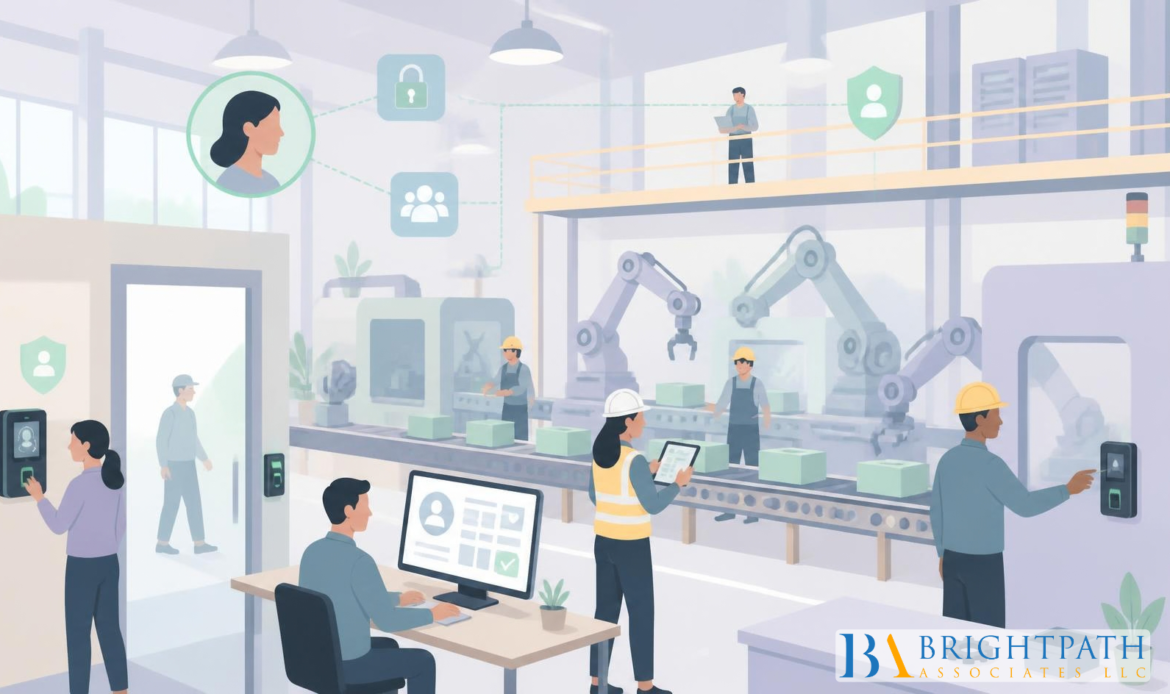
Identity and access management is no longer simply an IT security function. In advanced manufacturing environments, it has become part of everyday operational management. Employees, contractors, engineers, suppliers, automated machines, software applications, and connected devices may all require access to different resources. Managing these identities effectively can protect production systems while allowing authorized personnel to work efficiently.
The importance of this approach is particularly evident in industries connected to aerospace, defense, and advanced technology. Organizations involved in Defense manufacturing must protect sensitive information while maintaining operational continuity. Integrating identity and access controls directly into daily manufacturing processes can create a stronger balance between security, productivity, and resilience.
Traditional manufacturing environments often relied on physical security, isolated networks, and limited digital connectivity. Today’s facilities are considerably more complex. Operators may use connected terminals, engineers may remotely access production data, and maintenance teams may require temporary access to industrial equipment.
Every access request represents a potential operational and security decision. If permissions are too restrictive, employees may struggle to complete legitimate tasks. If permissions are too broad, sensitive systems may become unnecessarily exposed.
An effective identity strategy therefore needs to understand the manufacturing context. Access should reflect an employee’s role, responsibilities, location, shift, equipment requirements, and current operational needs.
This approach allows organizations to move beyond simple username-and-password systems toward identity-based operational security.
Connecting Identity With Defense Manufacturing
Defense manufacturing environments have particularly demanding security requirements because production activities can involve sensitive designs, proprietary technologies, controlled information, and complex supplier relationships.
Identity controls can help organizations establish clear boundaries around who can access engineering systems, manufacturing applications, production equipment, and sensitive documentation. Access policies can also be adapted according to specific projects and responsibilities.
For example, an engineer working on one production program may not require access to information associated with another program. Similarly, a temporary contractor may need access to a specific manufacturing system for a limited period without receiving broader organizational permissions.
Integrating these controls into daily workflows reduces unnecessary access while allowing authorized employees to remain productive.
The relationship between manufacturing and aerospace operations is becoming increasingly interconnected. Defense Space Systems depend on highly specialized components, electronics, software, communications technologies, and precision manufacturing processes.
Identity management must therefore extend beyond traditional corporate applications. Engineers, technicians, suppliers, and automated systems may interact with specialized platforms throughout the product lifecycle.
Access policies should account for the sensitivity of different environments. Engineering systems, production systems, testing platforms, and research environments may require different levels of authorization.
As space programs become more digitally connected, organizations need identity architectures capable of supporting both human and machine identities.
Strengthening Space Cybersecurity Through Identity
#SpaceCybersecurity is becoming a strategic concern as space systems increasingly depend on interconnected digital infrastructure. Ground stations, satellite communications, engineering systems, manufacturing environments, and software platforms can all become potential targets for unauthorized access.
Identity is one of the most important control points in this environment. Strong authentication and authorization mechanisms can help prevent unauthorized users from reaching sensitive systems.
However, identity security should not operate independently from manufacturing operations. The systems used to design and produce space hardware may contain sensitive information that could affect downstream space missions.
By integrating identity controls across engineering, manufacturing, testing, and operational environments, organizations can establish stronger continuity between cybersecurity and production security.
Space Electronics manufacturing requires precision, traceability, and strict quality controls. Components used in aerospace and defense applications can involve specialized designs, sensitive technical information, and rigorous testing requirements.
Access management can help protect the digital infrastructure supporting these processes. Employees may require different levels of access depending on whether they are involved in design, manufacturing, testing, quality assurance, or maintenance.
A well-designed identity framework ensures that permissions correspond to actual job responsibilities. It can also create auditable records showing who accessed particular systems and when.
This level of visibility can support investigations, compliance requirements, and operational accountability.
Supporting Space Robotics With Secure Access
Space Robotics represents another area where identity management is becoming increasingly relevant. Robotic systems may be used in manufacturing, testing, research, inspection, and eventually space operations.
These systems should be treated as digital identities rather than simply machines. Each robotic platform may communicate with software applications, databases, sensors, and control systems.
Organizations need to establish clear rules governing which systems can communicate with each other and which users can control or modify robotic equipment.
A compromised robotic identity could potentially create operational consequences. Strong authentication, authorization, monitoring, and credential management can therefore become important components of robotics security.
Aerospace industry trends increasingly point toward digital manufacturing, connected production environments, automation, artificial intelligence, cloud-based collaboration, and greater supply chain integration.
These trends are changing the identity landscape. Manufacturing facilities now contain more connected devices, applications, external users, and automated processes than ever before.
The challenge is not simply adding more security controls. Organizations need controls that fit naturally into operational workflows.
Identity systems should ideally operate in the background, providing appropriate protection without forcing employees to repeatedly navigate complicated processes. When identity becomes integrated into existing workflows, security becomes easier to maintain consistently.
Identity Challenges Created by Space Venture Capital
The growing interest of Space Venture Capital in emerging aerospace technologies is contributing to the expansion of the space ecosystem. New companies are developing propulsion technologies, spacecraft components, robotics, electronics, software, communications systems, and manufacturing technologies.
Startups often prioritize speed and innovation. However, rapid growth can create identity management challenges. Employees join quickly, contractors change frequently, and external partnerships can expand rapidly.
Establishing scalable identity systems early can help emerging companies maintain control as they grow. Rather than building access processes around informal arrangements, companies can establish role-based permissions, automated onboarding, controlled offboarding, and clear access reviews.
This creates a stronger foundation for scaling without unnecessarily increasing security risks.
#SpaceRegulatory requirements can influence how organizations manage data, technology, personnel, and operational systems. Companies working across aerospace and defense markets may need to address multiple regulatory and contractual expectations.
Identity management can support these requirements by providing evidence of authorization, access history, and security controls.
However, compliance should not be treated as the only reason to implement strong identity practices. Effective access management also supports business continuity and operational efficiency.
Organizations that integrate compliance requirements into everyday identity workflows can reduce the risk of creating separate processes that employees find difficult to follow.
Identity and Defense Simulation Environments
Defense Simulation systems are used for training, testing, mission planning, engineering analysis, and operational preparation. These environments can contain sensitive scenarios, technical information, and proprietary models.
Access to simulation environments should therefore be managed according to role and mission requirements. Engineers may require access to simulation models, while operators may need access to specific training environments.
Temporary users should receive appropriate permissions without gaining unnecessary access to unrelated systems.
Identity-based controls can also help organizations maintain audit trails, allowing security teams to determine which users interacted with specific simulation environments.
Successful identity integration begins by understanding how employees actually work. Manufacturing processes often involve multiple shifts, specialized equipment, maintenance activities, quality inspections, and emergency procedures.
Identity systems should reflect these realities. Employees may require different access permissions during normal production compared with maintenance or troubleshooting activities.
Organizations can use role-based access controls to establish standard permissions while incorporating additional authentication requirements for particularly sensitive activities.
For example, an operator may have routine access to production systems, while changing critical machine configurations could require additional authorization.
This approach creates security controls that align with operational risk rather than applying identical restrictions to every activity.
Securing Machine and Application Identities
Manufacturing identity management is not limited to employees. Machines, applications, sensors, robots, databases, and automated workflows may also require digital identities.
#MachineIdentities are becoming particularly important as factories become more automated. Connected equipment may communicate automatically with manufacturing execution systems, enterprise resource planning platforms, quality systems, and analytics applications.
Without proper identity controls, organizations may struggle to determine which systems are communicating with each other or whether those connections remain necessary.
Assigning unique identities to machines and applications allows organizations to monitor activity, manage permissions, and revoke access when systems are retired or replaced.
One of the biggest challenges in identity management is avoiding excessive friction. Manufacturing employees need reliable access to tools and systems to keep production moving.
If authentication processes are unnecessarily complicated, employees may attempt to bypass controls or create informal workarounds. This can undermine the security objectives of the identity program.
The most effective systems therefore balance protection with usability. Single sign-on, strong authentication, automated provisioning, role-based permissions, and context-aware access can help reduce unnecessary friction.
The goal should be to make secure behavior the easiest behavior for employees to follow.
The Role of Leadership and Executive Search Recruitment
Technology alone cannot create a successful identity strategy. Organizations need leaders who understand manufacturing operations, cybersecurity, technology, compliance, and business objectives.
This is where #ExecutiveSearchRecruitment becomes particularly relevant. As aerospace and defense manufacturers become more digitally connected, demand is increasing for executives who can bridge technical and operational functions.
Leadership teams need professionals capable of understanding identity security while also recognizing the practical realities of production environments. The strongest leaders can connect cybersecurity investments with operational resilience, regulatory requirements, productivity, and long-term business strategy.
Recruiting such leadership can become an important competitive advantage for organizations operating in highly regulated and technology-intensive manufacturing markets.
The future of manufacturing will increasingly depend on interconnected systems. Defense Space Systems, Space Robotics, Space Electronics, advanced production technologies, and digital engineering environments will require secure and reliable access models.
Organizations that treat identity as an isolated IT responsibility may struggle to keep pace with this transformation. Instead, identity should become embedded within daily manufacturing operations.
This means connecting employee access, machine identities, application permissions, supplier relationships, engineering environments, production systems, and cybersecurity monitoring into a coordinated framework.
Such an approach can improve visibility while reducing unnecessary privileges and supporting faster responses to security incidents.
Conclusion
Integrating identity and access into daily manufacturing operations is becoming essential as production environments become more connected and sophisticated. For organizations operating across aerospace and defense, the stakes are particularly high because manufacturing systems can be connected to sensitive technologies, intellectual property, regulated information, and mission-critical programs.
Strong identity practices can help organizations protect Defense manufacturing operations while supporting productivity and collaboration. They can strengthen Space Cybersecurity, protect Space Electronics environments, support Space Robotics, and improve access control across Defense Space Systems.
At the same time, evolving Aerospace industry trends, Space Venture Capital investment, Space Regulatory requirements, and Defense Simulation technologies are expanding the digital ecosystem that manufacturers must secure.
The organizations best positioned for the future will be those that integrate identity into the way manufacturing actually works. By combining technology, operational discipline, cybersecurity, regulatory awareness, and strong leadership, manufacturers can create environments where secure access becomes a natural part of everyday production rather than an obstacle to it.
Find your next leadership role in Defense and Space Industry today!
Stay informed with the latest insights on Defense and Space Industry!