
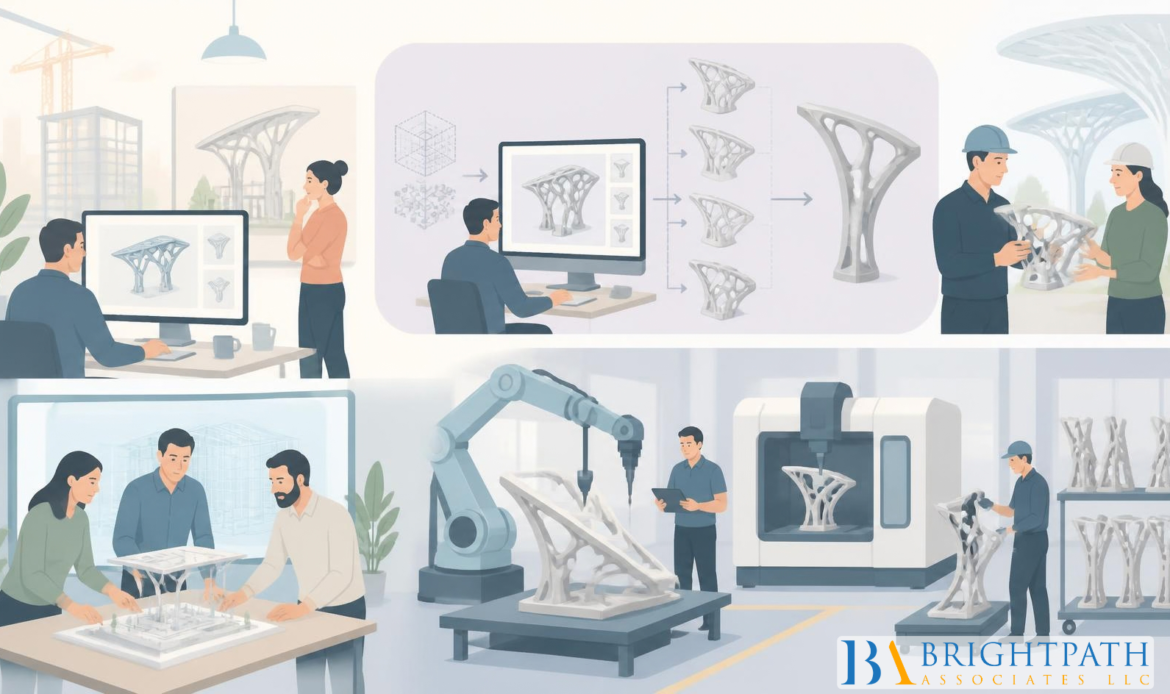
[Bethany, Connecticut – 29 September 2026] — BrightPath Associates has highlighted the growing role of generative design in custom building component production, showing how advanced digital design tools can help manufacturers improve efficiency, reduce material waste, and respond to increasingly complex construction requirements. The latest industry insight examines how C-Suite leaders can use generative design alongside modern Building technology to create customized components while balancing cost, performance, sustainability, and changing Building regulations.
Generative Design Changes Custom Component Production
Traditional component design often requires engineers and manufacturers to work through multiple design iterations before reaching a practical solution. Generative design changes this process by allowing software to evaluate numerous possible configurations based on defined requirements such as strength, weight, material use, manufacturing limitations, and cost. This can help manufacturers explore solutions that may be difficult to develop through conventional design methods.
For companies working with Construction materials, Building supplies, and specialized components, the technology can create opportunities to improve both product development and production planning. Instead of designing only around familiar forms, teams can use performance requirements as the starting point and allow software to identify alternative structures. The result can be components that meet required specifications while using materials more efficiently.
BrightPath Associates’ analysis, “The Role of Generative Design in Custom Building Component Production,” examines how this technology is becoming relevant across a construction environment where customization, efficiency, and sustainability are increasingly important. The approach can support manufacturers serving projects that require components adapted to specific dimensions, structural conditions, installation requirements, or architectural designs.
Supporting Efficiency and Sustainable Construction
Material efficiency is a major consideration for manufacturers and construction companies. Reducing unnecessary material use can lower production costs while supporting sustainability objectives. Generative design can contribute to this effort by testing different geometries and identifying designs that meet performance requirements with potentially less material.
This opportunity extends across several areas of the construction sector. In Concrete production, for example, optimized component designs can help manufacturers examine material requirements before production begins. Similar opportunities exist in the Lumber industry, where digital design and optimization can help teams evaluate dimensions and material utilization for customized applications. Such applications can support broader Sustainable construction goals while improving manufacturing precision.
The technology also has potential implications for Material recycling. When manufacturers understand exactly what a component requires and how it is designed, they can make more informed decisions about material selection, production processes, and end-of-life considerations. As construction companies and manufacturers respond to evolving environmental expectations, integrating digital design into production planning can become part of a broader strategy for resource efficiency.
Talent and the Future of Construction Manufacturing
Technology adoption also increases demand for professionals who understand both manufacturing and digital tools. Organizations implementing advanced Building technology may require engineers, production leaders, designers, technology specialists, and executives who can connect digital capabilities with commercial objectives. Executive search recruitment can therefore play an important role in identifying leadership talent capable of managing technology-driven transformation.
The impact may also extend to Construction jobs as new technologies change the skills required across the industry. Rather than eliminating the need for specialized professionals, advanced design systems can create demand for employees who can interpret digital outputs, manage automated workflows, validate designs, and connect engineering decisions with production requirements. Organizations that invest in both technology and workforce capabilities can position themselves to respond more effectively to changing market expectations.
For executives evaluating the next stage of manufacturing modernization, BrightPath Associates provides further insight through its analysis of Generative Design in Building Component Production. The broader implications of digital transformation can also be explored through resources focused on the Building Materials Industry, including technology, talent, and operational trends affecting manufacturers.
About BrightPath Associates
BrightPath Associates is an executive recruitment and talent solutions firm that helps organizations identify leadership and specialized professionals for their evolving business needs. The company supports businesses with executive search recruitment, talent acquisition, and workforce solutions across multiple industries. Its mission is to connect organizations with qualified talent while helping businesses build capable teams for sustainable growth.
Media Contact:
Name: Corporate Communications Team
Company: BrightPath Associates
Email: media@brightpathassociates.com
Website: https://brightpathassociates.com