
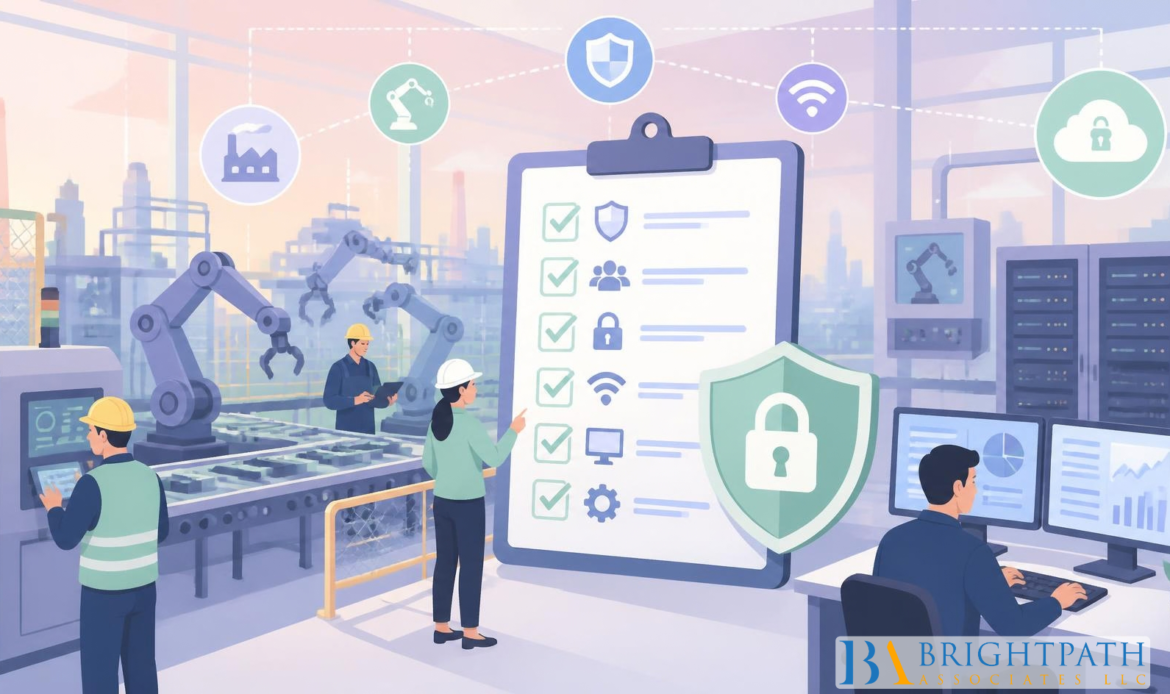
[Bethany, Connecticut – 28 September 2026] — BrightPath Associates has highlighted a practical cybersecurity framework for mid-sized manufacturers managing increasingly connected factory environments. The latest industry insight focuses on protecting industrial machinery, connected production systems, industrial automation solutions, and sensitive operational data from growing cyber risks. As manufacturers adopt digital technologies to improve manufacturing efficiency, the guidance encourages C-Suite executives to make cybersecurity a core part of technology investment, operational planning, risk management, and long-term business continuity.
Connected Factories Create New Cybersecurity Priorities
Modern manufacturing facilities increasingly depend on connected machines, industrial control systems, sensors, cloud platforms, enterprise software, and remote monitoring tools. These technologies can improve visibility and productivity, but they can also expand the number of systems that organizations must secure. For mid-sized manufacturers, where technology and cybersecurity resources may be limited, establishing clear security priorities can be especially important.
BrightPath Associates’ analysis, “Securing the Connected Factory: Cybersecurity Checklist for Mid-Sized Manufacturers,” emphasizes that cybersecurity should not be treated only as an IT responsibility. Production, engineering, maintenance, operations, and executive teams all play important roles in protecting connected manufacturing environments. A security incident affecting one machine or production network can potentially interrupt operations, delay customer orders, expose business information, or create costly downtime.
The guidance encourages manufacturers to begin with an inventory of connected assets. Companies need to understand what equipment is connected to their networks, which systems communicate with one another, what software is installed, and who has access. This is particularly relevant for organizations operating older Industrial machinery, Used machinery, and newer digitally enabled equipment within the same facility.
Cybersecurity and Machinery Maintenance
Cybersecurity planning should also be connected with Machinery maintenance. Maintenance teams often require access to industrial equipment, diagnostic systems, and remote-support platforms. If these access points are not properly managed, they can create additional security risks.
Manufacturers can strengthen their approach by reviewing vendor access, using secure authentication, monitoring remote connections, and maintaining records of authorized users. These steps can help companies balance maintenance requirements with cybersecurity needs. They can also provide executives with greater visibility into which third parties have access to production environments.
The business case extends beyond preventing cyber incidents. Strong cybersecurity practices can support Manufacturing efficiency by reducing unexpected interruptions and helping companies maintain more reliable digital production systems. When cybersecurity, maintenance, and operations teams work from shared procedures, manufacturers can respond more consistently when unusual activity or system problems appear.
Building Cybersecurity Into Executive Strategy
For C-Suite leaders, connected-factory security is closely linked with investment decisions, workforce planning, supply chain continuity, and operational resilience. Cybersecurity requirements should be considered when companies purchase new equipment, expand automation, integrate cloud systems, or evaluate Machinery financing for major technology investments.
Talent is another important consideration. As manufacturers adopt more connected technologies, they need professionals who understand both industrial operations and digital systems. Executive search recruitment can help organizations identify leaders with experience in manufacturing technology, cybersecurity, engineering, operations, and transformation. At the workforce level, demand for specialized Manufacturing jobs continues to intersect with the changing technical requirements of modern production environments.
BrightPath Associates’ guidance also highlights the importance of establishing an incident response plan before an attack occurs. Manufacturers should know who is responsible for responding to a cyber event, how production systems will be isolated when necessary, how critical operations will be restored, and how employees and external partners will communicate during an incident. Preparing these procedures in advance can reduce confusion when an unexpected event affects factory operations.
Securing the Future of Manufacturing
The Industrial machinery industry is undergoing continued digital transformation as manufacturers pursue automation, connected equipment, predictive maintenance, data-driven production, and improved efficiency. Cybersecurity therefore needs to evolve alongside these technologies rather than being addressed only after systems have been deployed.
The full Cybersecurity Checklist for Mid-Sized Manufacturers provides additional guidance for organizations reviewing connected-factory security. C-Suite leaders can also explore BrightPath Associates’ industry resources for the Machinery Industry when evaluating leadership, workforce, technology, and operational priorities.
About BrightPath Associates
BrightPath Associates is an executive recruitment and talent solutions firm that helps organizations identify leadership and specialized professionals for critical business needs. The company works with businesses across industries to support executive search recruitment, workforce planning, leadership development, and specialized talent acquisition. Its mission is to connect organizations with qualified professionals while helping businesses build stronger teams and support sustainable growth.
Media Contact:
Name: Corporate Communications Team
Company: BrightPath Associates
Email: media@brightpathassociates.com
Website: https://brightpathassociates.com