
Introduction
The #RenewableEnergySector is entering a new phase in which generating clean electricity is no longer the only priority. Businesses, utilities, industrial operators, and communities increasingly need energy systems that can remain reliable when the grid is under pressure. Extreme weather, aging infrastructure, electricity price volatility, transmission constraints, and rising power demand are forcing organizations to reconsider how renewable energy is generated, stored, and delivered.
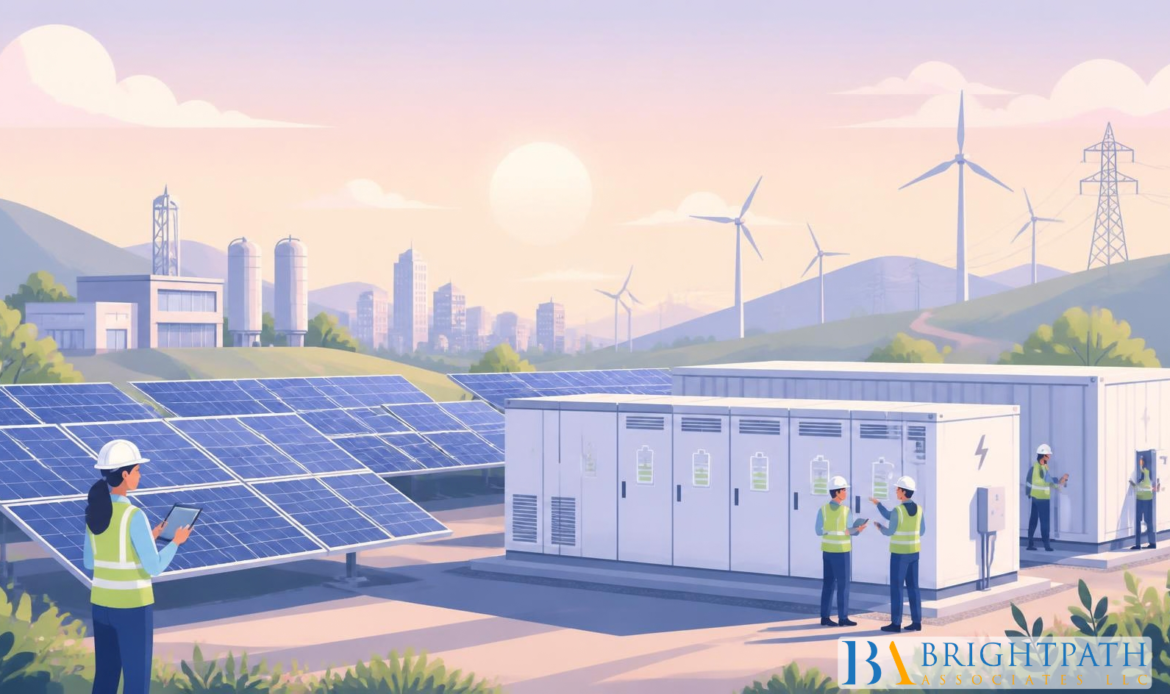
This is where the combination of solar power and energy storage is becoming increasingly important. Rather than treating generation and storage as separate assets, developers are increasingly co-locating solar photovoltaic systems with battery energy storage systems at the same site. This creates what can be described as a renewable energy “power couple,” where two technologies work together to provide greater flexibility and resilience than either can provide independently.
The concept reflects a broader movement toward Renewable energy innovation, where infrastructure is designed around reliability, flexibility, efficiency, and long-term sustainability. As renewable projects become more sophisticated, the ability to integrate generation, storage, digital controls, and grid services will increasingly determine their commercial and operational value.
Solar generation has a fundamental limitation: it produces electricity primarily when sunlight is available. Energy demand, however, does not necessarily follow the solar production curve. Electricity consumption can remain high during evening hours after solar generation declines, creating a mismatch between production and demand.
Battery storage addresses this challenge by capturing electricity when generation exceeds immediate demand and releasing it when electricity is more valuable or when the grid requires additional support. When batteries are physically co-located with solar facilities, the two assets can be managed as an integrated energy system.
This approach can reduce the need to build entirely separate infrastructure for generation and storage. Shared interconnection capacity, land, electrical equipment, controls, and operational systems can improve project coordination and potentially reduce development complexity.
The result is not simply a solar project with batteries attached. It is a more flexible energy asset capable of responding to changing market conditions, grid requirements, and operational needs.
Resilience Is Becoming a Core Energy Requirement
Energy resilience has moved beyond being a concern limited to emergency planning. Industrial facilities, data centers, healthcare organizations, manufacturers, and critical infrastructure operators increasingly view reliable electricity as essential to business continuity.
Power interruptions can disrupt production schedules, damage sensitive equipment, affect supply chains, and create substantial financial losses. In regions experiencing increasingly severe storms, wildfires, heat waves, or other disruptions, organizations are looking for #SustainableEnergySolutions that can strengthen their ability to maintain essential operations.
Co-located solar and storage can contribute to this resilience strategy. Solar provides renewable generation, while batteries can provide dispatchable electricity during periods when solar production is unavailable or grid supply becomes constrained.
When combined with appropriate controls and microgrid capabilities, these systems can potentially support selected critical loads during grid disruptions. The exact resilience benefits depend on system design, battery capacity, electrical architecture, regulations, and operating strategy.
The growth of solar-plus-storage projects is closely connected to advances in Renewable energy technology. Modern battery systems increasingly incorporate sophisticated monitoring, thermal management, power electronics, and software-based controls.
Artificial intelligence and predictive analytics can also improve operational decision-making. Energy management systems can evaluate weather forecasts, electricity prices, solar production expectations, battery state of charge, and grid conditions to determine when electricity should be stored or discharged.
This digital layer is becoming just as important as the physical infrastructure. A large battery without intelligent controls may not achieve its full economic or resilience potential. Conversely, sophisticated software can help operators optimize how storage resources respond to changing conditions.
As renewable systems become more digitally connected, cybersecurity and data management will also become increasingly important components of energy infrastructure.
Connecting Solar and Storage With Environmental Management
Renewable energy projects are generally associated with environmental benefits, but large-scale infrastructure still has environmental considerations. Land use, construction impacts, equipment manufacturing, resource consumption, waste management, and end-of-life handling all require attention.
This makes Environmental management systems increasingly relevant to renewable energy developers and operators. Organizations need processes that allow them to identify environmental risks, establish measurable objectives, monitor performance, and maintain compliance throughout the project lifecycle.
Battery storage introduces additional considerations around material sourcing, transportation, safety, recycling, and end-of-life management. Responsible operators therefore need to look beyond the emissions benefits of renewable electricity and consider the broader environmental footprint of the infrastructure supporting it.
A mature sustainability strategy connects energy generation with responsible procurement, environmental monitoring, recycling, and compliance practices.
The renewable energy sector operates within an increasingly complex regulatory environment. Developers must consider land-use requirements, environmental permitting, electrical standards, interconnection rules, safety requirements, and other regional regulations.
Changing Environmental regulations can influence where projects are developed, how facilities are constructed, and what operational practices are required. Battery installations can also face additional safety and permitting requirements because of their energy density and chemical composition.
Companies operating in this environment need leadership teams capable of understanding both technical requirements and regulatory developments. Regulatory knowledge is no longer simply a compliance function. It can influence project timelines, investment decisions, operating costs, and long-term asset performance.
Organizations that integrate environmental and regulatory considerations early in project planning can reduce the likelihood of costly redesigns and delays.
Renewable Energy Economics and the Business Case
The economics of solar-plus-storage are becoming more sophisticated. Solar generation can produce low-cost electricity during periods of strong sunlight, while storage provides the ability to shift that electricity to other periods.
This creates opportunities for organizations to manage peak demand, participate in electricity markets, provide grid services, and reduce exposure to certain forms of electricity price volatility, depending on market structure.
The economics of storage therefore cannot be evaluated simply by comparing battery costs with electricity prices. Developers must consider utilization rates, degradation, financing costs, interconnection expenses, market revenues, maintenance requirements, and replacement strategies.
This broader perspective is central to #RenewableEnergyEconomics. The most commercially valuable projects may be those capable of delivering multiple services rather than relying on a single revenue stream.
For industrial companies, the calculation can also include the financial value of resilience. Preventing production downtime may be economically significant even when that benefit does not appear directly in a traditional electricity cost comparison.
Solar and storage are attracting significant attention, but the same principle applies to the Wind energy industry. Wind generation can produce electricity during periods when solar generation is unavailable, while storage can help balance fluctuations in wind output.
Future renewable energy portfolios may therefore increasingly combine solar, wind, and storage into coordinated systems. Such hybrid facilities can potentially create a more diversified generation profile, reducing dependence on a single renewable resource.
The broader shift is toward integrated renewable portfolios rather than isolated technologies. Solar, wind, batteries, digital controls, transmission infrastructure, and demand management can work together as components of a larger energy ecosystem.
Green Technology and Industrial Transformation
The expansion of solar-plus-storage is part of a larger transition toward Green technology across industrial sectors. Manufacturers are exploring electrification, energy efficiency, low-carbon production, and renewable electricity procurement as part of their sustainability strategies.
For energy-intensive businesses, renewable generation combined with storage can potentially support decarbonization while improving energy management. Manufacturing facilities can use renewable electricity to support production while strategically managing when stored energy is deployed.
This creates an important connection between clean energy development and industrial competitiveness. Companies are increasingly evaluating energy infrastructure not only through an environmental lens but also through operational efficiency, cost management, and resilience.
The growth of Clean energy is therefore influencing strategic decisions across industries far beyond traditional utilities.
Technology alone cannot deliver a successful energy transition. The renewable sector requires executives, engineers, project managers, environmental specialists, financial professionals, operations leaders, and technology experts capable of managing increasingly complex energy assets.
The growth of Renewable energy jobs reflects this expanding ecosystem. However, the industry faces an important challenge: many organizations require combinations of skills that are not easily found in conventional talent pools.
A renewable energy executive may need knowledge of project finance, energy markets, regulatory compliance, technology deployment, sustainability, and stakeholder management. Similarly, technical leaders may need to understand both traditional power infrastructure and emerging digital technologies.
This changing talent landscape makes #ExecutiveSearchRecruitment particularly relevant to renewable energy companies. Identifying senior professionals who can connect technical expertise with commercial strategy can become critical as projects grow larger and energy systems become more integrated.
Leadership Will Shape the Next Generation of Energy Systems
The rise of co-located solar and storage is ultimately more than a technology story. It is a leadership challenge.
Executives must determine how renewable assets fit into broader corporate strategies, how resilience should be valued, how environmental responsibilities should be managed, and how investments should be evaluated over decades rather than quarters.
Leadership teams must also decide how to balance innovation with reliability. Emerging technologies can create opportunities, but energy infrastructure requires disciplined risk management because failures can have significant operational and financial consequences.
Companies that successfully navigate this transition will need leaders who understand the interaction between technology, markets, regulation, sustainability, infrastructure, and workforce development.
The “power couple” relationship between solar and storage represents a broader transformation in how electricity systems are designed. Renewable generation is increasingly being paired with technologies that can improve flexibility and reliability rather than being treated as standalone resources.
As battery technology develops, grid-management software becomes more sophisticated, and electricity markets evolve, the potential applications for integrated renewable systems will continue to expand.
The future energy system is likely to be more distributed, digital, flexible, and interconnected. Solar and storage can play a central role in that transition, particularly when projects are designed around real operational requirements rather than simply generation capacity.
Conclusion
The rise of co-located solar and storage demonstrates how the renewable energy sector is moving from a focus on clean electricity generation toward a broader concept of energy resilience.
Solar provides renewable power, while storage adds flexibility, allowing energy to be shifted across time and supporting more responsive energy management. Together, they can contribute to a more adaptable infrastructure strategy for utilities, industries, and communities.
However, realizing the full potential of these systems requires more than installing panels and batteries. It requires thoughtful environmental management, regulatory awareness, sophisticated technology, sound #RenewableEnergyEconomics, and experienced leadership.
For organizations operating in this rapidly evolving sector, talent will remain a critical differentiator. The leaders capable of connecting renewable energy innovation with commercial strategy and operational execution will play an important role in shaping the next generation of energy infrastructure.
ind your next leadership role in Renewable Energy and Environment Industry today!
Stay informed with the latest insights on Renewable Energy Environment Industry!