
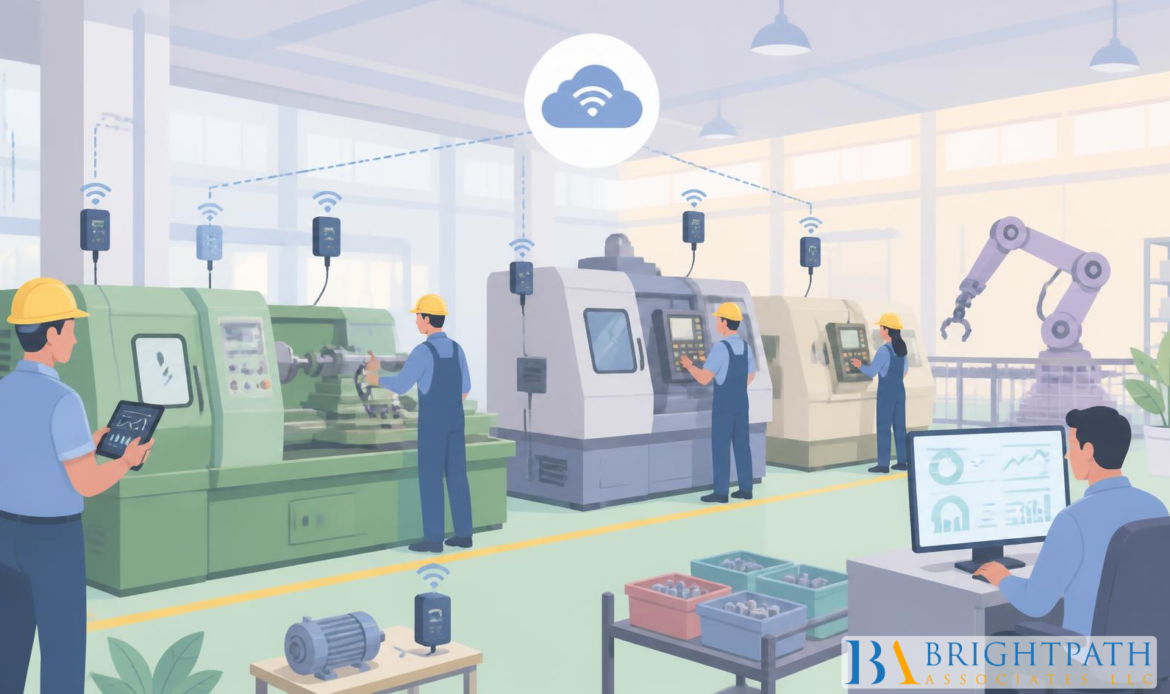
[Bethany, Connecticut – 17 September 2026] — BrightPath Associates has highlighted how manufacturers can integrate Industrial Internet of Things (IIoT) sensors into existing production environments without undertaking costly and disruptive machinery replacements. The latest industry insight examines a practical approach to connecting legacy equipment, collecting real-time production data, and improving decision-making. For C-Suite executives in the Plastics Industry, the strategy offers a way to advance digital transformation while protecting existing capital investments and strengthening operational performance.
Digitizing the Production Floor Without Major Disruption
Many plastics manufacturers continue to operate machinery that remains productive and reliable despite being designed before today’s connected manufacturing systems became common. Replacing these machines simply to introduce digital capabilities can require significant capital, extended installation periods, employee retraining, and production downtime. IIoT sensors provide another path by allowing companies to collect useful information from existing equipment.
BrightPath Associates’ analysis, “Integrating IIoT Sensors Without Overhauling Legacy Machines,” explores how manufacturers can add sensors to older machines and connect their operational data with modern monitoring systems. Sensors can capture information related to machine performance, temperature, vibration, energy consumption, cycle times, downtime, and other production conditions. This information can give plant leaders greater visibility without requiring a complete equipment overhaul.
The approach is particularly relevant as manufacturers consider Plastics manufacturing technology investment. Rather than treating digital transformation as a single large project, executives can introduce connected technology in stages. A focused pilot on selected machines or production lines can demonstrate operational value before broader implementation. This measured strategy can also help leadership align technology spending with business priorities.
Supporting Supply Chain and Business Growth
Connected production environments can also influence Plastics industry supply chain management. More accurate production information can improve communication between manufacturing, inventory, procurement, and logistics teams. When organizations have better visibility into production capacity and potential disruptions, they can make more informed decisions about materials, schedules, customer commitments, and inventory.
This visibility becomes increasingly important as companies respond to changing Plastics economic trends. Fluctuating material costs, energy expenses, customer expectations, regulatory requirements, and international competition can place pressure on operating margins. IIoT technology can provide the information executives need to identify inefficiencies and respond more quickly to changes in operating conditions.
The technology can also contribute to Plastics market expansion strategies. When manufacturers improve production visibility and consistency, they can build stronger operational foundations for new products, customers, facilities, or markets. Connected equipment can provide evidence that supports decisions about capacity expansion and future Plastics manufacturing technology investment.
Building an Innovation-Focused Manufacturing Strategy
The adoption of IIoT technology is not solely an IT initiative. Successful implementation requires collaboration between operations, engineering, maintenance, quality, IT, and executive leadership. This makes talent an important part of digital transformation. Executive search recruitment can help organizations identify leaders who understand manufacturing operations while also recognizing the strategic value of digital technologies.
Specialized hiring can become particularly important as manufacturers expand connected operations. Plastics industry recruiters can help companies identify professionals with experience in industrial automation, engineering, data systems, maintenance, quality management, and digital transformation. Building this combination of technical and business expertise can help organizations turn connected-machine data into sustained operational improvements.
The broader opportunity is to strengthen the Plastics industry innovation ecosystem through collaboration among technology providers, equipment manufacturers, suppliers, consultants, and internal teams. Plastics industry strategic partnerships can provide access to specialized expertise while helping manufacturers develop practical technology roadmaps. Over time, these collaborations can contribute to stronger Plastics industry global leadership by helping companies modernize their operations without abandoning valuable legacy assets.
Executives interested in the practical steps behind this approach can explore BrightPath Associates’ detailed analysis, Integrating IIoT Sensors Without Overhauling Legacy Machines. Organizations evaluating digital transformation, leadership requirements, and operational priorities can also learn more about opportunities and workforce considerations across the Plastics Industry.
About BrightPath Associates
BrightPath Associates is an executive recruitment and talent solutions firm helping organizations identify the leadership and specialized professionals needed to support growth and long-term business performance. The company works with businesses across multiple industries and focuses on connecting organizations with qualified talent while supporting strategic workforce needs. Its mission is to help companies build stronger teams and develop leadership capabilities that support sustainable growth.
Media Contact:
Name: Corporate Communications Team
Company: BrightPath Associates
Email: media@brightpathassociates.com
Website: https://brightpathassociates.com