
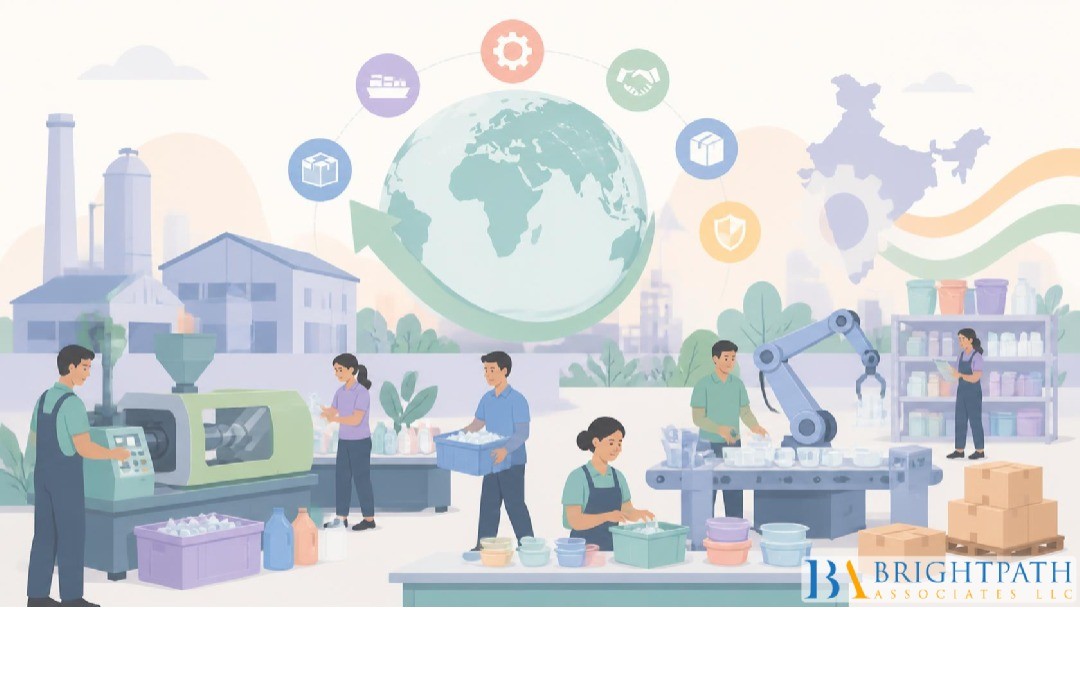
[Bethany, Connecticut – 03 September 2026] — BrightPath Associates has highlighted how small manufacturers are taking greater control of critical supply decisions as global supply networks face transportation disruptions, geopolitical uncertainty, material shortages, trade restrictions, energy-price volatility, and supplier failures. The latest industry analysis explains how manufacturers, particularly in the plastics sector, can build greater supply chain sovereignty through diversified sourcing, digital visibility, regional supplier networks, technology investment, recycling initiatives, and strategic partnerships. For C-Suite executives, the approach offers a practical way to reduce dependency while maintaining access to global markets and growth opportunities.
Supply Chain Sovereignty Becomes a Strategic Priority
For decades, small manufacturers have relied on global sourcing to access competitive prices, materials, components, machinery, packaging, and specialized services. However, smaller companies often have less purchasing power, fewer procurement resources, and tighter working capital than large corporations. This can make dependence on a single supplier, transportation route, geographic region, or critical material a serious business risk.
The BrightPath Associates analysis, How Small Manufacturers Are Reclaiming Supply Chain Sovereignty, explains that sovereignty does not mean eliminating international suppliers. Instead, it means creating greater control, visibility, and flexibility across critical supply decisions. The article states that “sovereignty is becoming less about isolation and more about strategic flexibility,” a shift that is particularly important for manufacturers operating in complex global markets.
For plastics manufacturers, this issue reaches across resin procurement, additives, machinery, molds, packaging, recycling inputs, and logistics. A disruption at any point can affect production schedules, customer commitments, and profitability. As a result, Plastics industry supply chain management is increasingly moving toward supplier diversification, dependency mapping, strategic inventory, and technology-enabled visibility.
Competitive Advantage Through Better Risk Management
Supply chain resilience is increasingly becoming part of Plastics industry competitive analysis. Manufacturers are no longer evaluating competitors only by price, market share, product quality, or customer positioning. They are also examining how competitors manage suppliers, production capacity, recycling inputs, technology, and sourcing networks.
A manufacturer with diversified suppliers and flexible production may be able to maintain deliveries when another company faces a material shortage. This turns resilience from a defensive exercise into a potential competitive advantage. The analysis notes that supply chain sovereignty can become “a competitive advantage rather than merely a risk-management exercise.”
This perspective also makes Plastics industry risk management more proactive. Companies must consider geopolitical developments, trade restrictions, transportation delays, energy costs, extreme weather, cyber threats, labor shortages, and environmental requirements. Scenario planning can help executives understand how disruptions could affect production and determine where contingency investments will provide the greatest value.
Global Leadership Requires Strategic Flexibility
Supply chain sovereignty does not mean withdrawing from international markets. Manufacturers with resilient networks can potentially become better positioned for Plastics industry global leadership because they can continue serving international customers while reducing excessive dependence on any single geography.
Understanding Plastics economic trends is central to this strategy. Resin prices, energy costs, transportation expenses, interest rates, demand cycles, and industrial production levels can influence procurement and investment decisions. Executives that monitor these conditions can adjust sourcing, negotiate contracts, improve material efficiency, and prepare for changes before they become major operational problems.
The broader message is clear: small manufacturers are not abandoning global supply chains; they are redesigning their relationship with them. Greater visibility, diversified sourcing, technology, circular supply networks, skilled leadership, and strategic partnerships can give companies more choices when conditions change.
For C-Suite executives seeking to strengthen resilience while supporting growth, the transformation represents an opportunity to make supply chain strategy a source of competitive strength. As the BrightPath analysis concludes, supply chain sovereignty is ultimately about “creating choices.” For manufacturers, those choices can determine whether a disruption becomes a crisis or simply another challenge that can be managed.
About BrightPath Associates
BrightPath Associates is an executive recruitment and talent solutions firm dedicated to helping organizations find the leadership and specialized professionals they need to build stronger teams and achieve sustainable growth. The company provides recruitment and workforce solutions across multiple industries, with services covering workforce planning and strategy, design and optimization, workplace safety, retention strategies, and leadership development. BrightPath Associates’ mission is to connect organizations with the right talent while helping professionals find meaningful career opportunities.
Media Contact:
Name: Corporate Communications Team
Company: BrightPath Associates
Email: media@brightpathassociates.com
Website: https://brightpathassociates.com