
Introduction
The metals and #MiningSector is undergoing a significant transformation as refiners and processors face increasing pressure to improve efficiency, reduce waste, control costs, and meet evolving environmental expectations. For independent refiners, these challenges can be particularly significant. Unlike large multinational producers with extensive capital reserves and vertically integrated operations, independent refiners often need to generate measurable returns from every tonne of material they process.
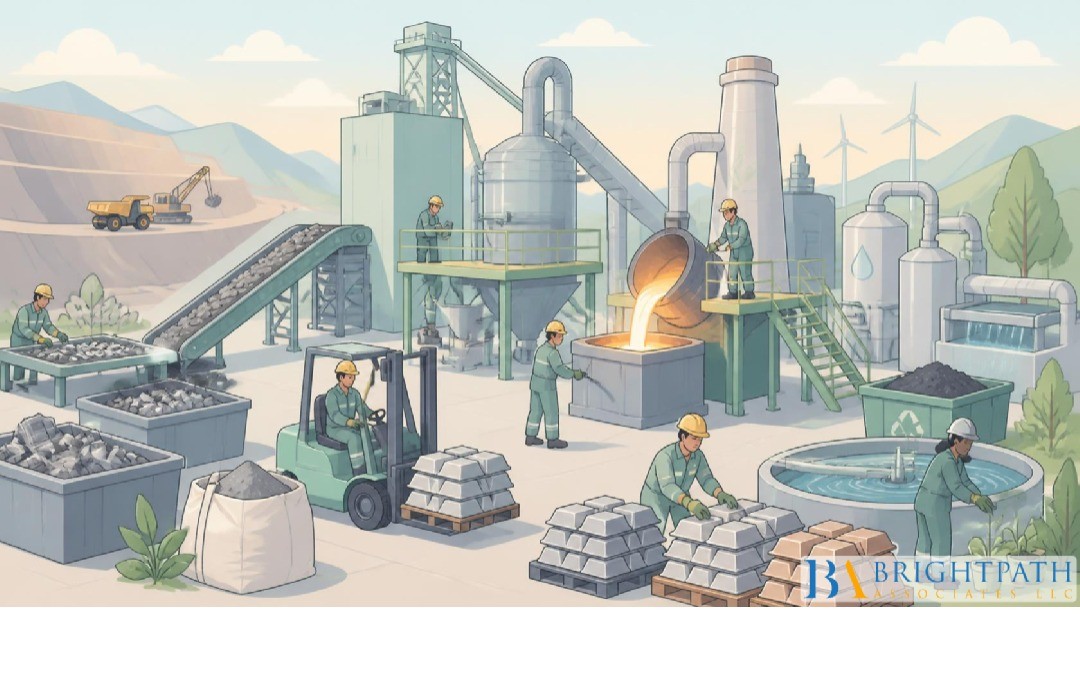
Zero-waste metallurgical processing is emerging as a potential strategy for addressing these pressures. Rather than viewing waste as an unavoidable consequence of refining, modern approaches seek to recover additional value from residues, by-products, process water, energy streams, and secondary materials.
The concept does not necessarily mean that a facility will produce literally zero waste. Instead, it represents a shift toward maximizing resource recovery and minimizing material that leaves the production system without economic or environmental value.
For independent refiners, this approach can create a connection between sustainability and profitability. Better resource utilization can reduce disposal costs, improve material recovery, strengthen regulatory performance, and create additional revenue opportunities.
Understanding Zero-Waste Metallurgical Processing
Metallurgy involves the extraction, processing, and transformation of metals from ores, concentrates, recycled materials, and other feedstocks. Traditional processing methods often generate residues that may contain valuable metals or materials that can be recovered through additional treatment.
Zero-waste processing seeks to redesign these systems so that fewer materials are discarded. This can involve improving recovery rates, recycling process water, recovering useful chemicals, capturing energy, and converting certain by-products into commercially valuable materials.
The approach requires a systems-level perspective. Instead of analyzing individual processing stages independently, refiners evaluate how materials move through the entire operation.
A residue generated at one stage may become a feedstock for another process. Heat produced during one operation may be captured and reused elsewhere. Process water may be treated and returned to production rather than continuously discharged.
This changes waste management from a compliance function into a potential source of operational value.
Independent refiners operate in an environment where margins can be influenced by raw-material prices, energy costs, transportation expenses, processing fees, regulatory requirements, and metal-market volatility.
Improving material recovery can provide a degree of protection against these pressures. Recovering even small quantities of valuable metals from residues can become commercially meaningful when processed at scale.
Waste reduction can also lower disposal costs. Hazardous or chemically complex residues can be expensive to transport, treat, and dispose of appropriately.
By recovering additional value before disposal, refiners can potentially reduce both environmental liabilities and operating expenses.
The economic case is therefore becoming increasingly important. Sustainability is no longer simply a reputational objective; it can directly influence operating performance.
The Role of Metallurgy in Resource Efficiency
#AdvancedMetallurgy provides the technical foundation for zero-waste processing. Metallurgists analyze how metals behave under different physical and chemical conditions and determine how they can be separated, concentrated, purified, and transformed.
Modern metallurgical approaches increasingly focus on improving selectivity and recovery. Better understanding of material characteristics can help processors identify opportunities to recover metals that might previously have remained in waste streams.
Process optimization can also reduce the amount of energy, chemicals, and water required for production.
For independent refiners, metallurgical expertise is particularly valuable because relatively small process improvements can have significant effects on production economics.
Recovering Value During Ore Extraction
Ore extraction is traditionally associated with moving large quantities of material to recover comparatively small concentrations of valuable metals. This creates an inherent efficiency challenge.
Improving recovery begins with understanding the characteristics of the ore and designing appropriate processing methods. Better characterization can help operators determine which materials should receive additional treatment and which should be handled differently.
Technological improvements can also help reduce unnecessary movement and processing of low-value material.
While independent refiners may not control upstream mining operations, they can influence how concentrates and secondary materials are processed. Strong relationships with suppliers can improve feedstock consistency and provide better information about material composition.
Metal processing can generate a wide range of secondary streams. Depending on the material being processed, these may include slags, sludges, dusts, tailings, spent solutions, gases, and other residues.
Some of these materials may contain recoverable metals or compounds.
Modern processing technologies can make it economically feasible to extract value from residues that were previously considered waste. Hydrometallurgical, pyrometallurgical, electrochemical, and mechanical approaches can be combined depending on feedstock characteristics.
The most appropriate method depends on the material, concentration, energy requirements, chemical inputs, equipment availability, and market value of recovered products.
The central objective is to evaluate every major waste stream as a potential resource before deciding that disposal is the best option.
Sustainable Mining and Circular Resource Management
#SustainableMining increasingly emphasizes resource efficiency, environmental protection, and long-term economic viability. Zero-waste processing complements these objectives by extending the productive value of extracted resources.
The connection between Sustainable mining and refining is particularly important because resource efficiency does not stop when material leaves a mine. Significant opportunities for recovery can exist throughout the processing and refining lifecycle.
Secondary recovery can also support circular resource models. Metals recovered from industrial residues, scrap, discarded products, and processing waste can reduce the need for additional primary material extraction in suitable applications.
For refiners, this can create a more diversified feedstock strategy while supporting broader sustainability objectives.
Mining Technology and the Digital Refinery
Mining technology is increasingly transforming the way material is characterized, monitored, and processed. Sensors, automation, artificial intelligence, advanced process controls, and industrial analytics can provide real-time information about production conditions.
For independent refiners, digital tools can help identify process variations that may otherwise remain unnoticed.
Real-time monitoring can reveal changes in temperature, pressure, chemical composition, flow rates, equipment performance, and recovery efficiency. Operators can use this information to adjust processes before inefficiencies become significant.
Digital systems can also improve traceability. Knowing the characteristics and origin of different feedstocks can help refiners select appropriate processing methods and evaluate recovery opportunities.
Automation is becoming increasingly important in modern refining environments. Automated control systems can maintain process conditions more consistently than manual intervention alone.
Consistency can improve recovery rates and reduce variability in final products.
Automation can also improve worker safety by reducing exposure to hazardous environments and repetitive industrial tasks.
For independent refiners, automation investments should be evaluated carefully. The objective is not to automate every process regardless of cost. Instead, companies should prioritize areas where automation can improve recovery, reduce waste, increase safety, or lower operating expenses.
Energy Recovery as Part of Zero-Waste Processing
Energy efficiency is another important dimension of zero-waste operations. #MetallurgicalProcesses can require substantial amounts of heat and electricity.
Waste heat generated during processing can sometimes be captured and reused for other production requirements. Improving insulation, optimizing furnace operation, and integrating energy-management systems can further reduce consumption.
For independent refiners, energy recovery can have a direct financial impact because energy costs can represent a significant portion of operating expenses.
A facility that uses waste heat productively is effectively recovering value from a resource that would otherwise be lost.
Water Management and Process Efficiency
Water is essential to many mining and metallurgical processes. However, excessive consumption and wastewater generation can create environmental and economic challenges.
Closed-loop water systems can reduce fresh-water requirements by treating and reusing process water.
Advanced treatment technologies can help remove contaminants and allow water to return to production.
Water recycling can therefore support both Sustainable mining objectives and operating efficiency. It may also reduce exposure to water shortages or regulatory restrictions in regions where water resources are under pressure.
Mining innovation is increasingly focused on finding new ways to extract value from existing resources. Independent refiners can participate in this innovation by developing specialized recovery processes for complex materials.
Materials previously considered uneconomic may become attractive when technology improves or metal prices change.
This creates opportunities for refiners with flexible processing capabilities. A facility capable of handling different feedstocks may be able to adapt more quickly to changing market conditions than a highly specialized operation.
Innovation can therefore support both sustainability and commercial resilience.
Metals Industry Trends Driving Zero-Waste Strategies
Several #MetalsIndustry trends are increasing interest in resource recovery. Growing demand for metals used in energy infrastructure, electronics, transportation, and advanced manufacturing is increasing pressure to improve resource efficiency.
At the same time, customers and regulators are paying greater attention to environmental performance.
These trends are encouraging processors to demonstrate responsible resource use and improve transparency across their operations.
The combination of material demand, environmental expectations, and technological progress creates a favorable environment for zero-waste processing strategies.
Mining Policy and Regulatory Considerations
Mining policy increasingly addresses environmental performance, resource efficiency, waste management, emissions, water use, and land impacts.
Independent refiners must understand how regulatory requirements affect processing methods and waste-management decisions.
A proactive approach can reduce compliance risk. Instead of treating environmental requirements as external constraints, companies can integrate them into process-development strategies.
Recovering valuable materials, reducing hazardous waste, and improving water management can support compliance while potentially generating economic benefits.
However, refiners should ensure that recovery processes themselves meet applicable environmental and safety requirements. A waste-reduction strategy is only effective when it remains technically and legally sound.
Zero-waste processing requires specialized expertise. Metallurgists, chemical engineers, process engineers, automation specialists, environmental professionals, maintenance teams, and operational leaders must work together.
The workforce challenge is becoming more complex as mining and refining operations adopt advanced technologies.
Companies need professionals who can combine traditional metallurgical knowledge with digital capabilities and sustainability thinking.
This creates a competitive talent environment across the sector. Mining and metals recruiters increasingly need to identify candidates with interdisciplinary experience rather than narrow technical backgrounds.
The transition toward zero-waste processing requires senior leaders who can connect operational efficiency with environmental strategy and capital allocation.
Executives must determine which technologies deserve investment, how new processes should be integrated, and how operational changes will affect profitability.
Mining executive search can help organizations identify leaders with experience in metallurgy, refining, technology transformation, sustainability, and commercial strategy.
Strong leadership is particularly important for independent refiners because capital resources may be limited. Every major technology investment must have a clear strategic rationale.
The Role of Executive Search Recruitment
As the industry becomes more technology-driven, the competition for specialized leadership will increase.
#ExecutiveSearchRecruitment can help mining and refining organizations identify professionals capable of leading digital transformation, process optimization, sustainability initiatives, and operational modernization.
The ideal executive may combine experience in traditional metal processing with knowledge of automation, environmental management, data-driven decision-making, and strategic planning.
Such leadership can help independent refiners turn sustainability from a compliance obligation into a source of competitive advantage.
Building a Profitable Zero-Waste Future
Zero-waste metallurgical processing represents a fundamental shift in how refiners think about material efficiency. Instead of viewing residues as unavoidable costs, companies can examine whether those materials contain recoverable value.
The transition requires investment in technology, process development, workforce capabilities, and operational data. It also requires careful economic analysis because not every waste stream will justify recovery.
The most successful refiners will likely focus on opportunities where environmental improvements and commercial returns reinforce one another.
Conclusion
Zero-waste processing is becoming increasingly relevant for independent refiners seeking to improve profitability while responding to changing environmental expectations.
Advanced Metallurgy, improved Metal processing techniques, Mining technology, automation, energy recovery, water recycling, and better material characterization can all contribute to more efficient operations.
At the same time, Sustainable mining principles, evolving Mining policy, and changing Metals industry trends are encouraging companies to reconsider how resources are managed throughout the production lifecycle.
For independent refiners, the opportunity is particularly compelling because resource recovery can create additional value while reducing disposal and compliance costs. Mining innovation can transform residues into feedstocks, process improvements can increase recovery, and digital technologies can make operations more transparent and responsive.
The transformation will ultimately depend on people as much as technology. Skilled professionals and capable leaders are required to redesign processes, evaluate investments, manage risk, and implement change. Strategic support from mining and metals recruiters and Executive Search Recruitment can help organizations build the leadership capabilities necessary for this transition.
The future of refining will not simply be measured by how much metal a facility produces. Increasingly, it will be measured by how efficiently it uses every resource entering the operation. For independent refiners willing to embrace this principle, zero-waste metallurgical processing can become more than an environmental objective. It can become a practical strategy for stronger margins, greater resilience, and long-term competitiveness.
Find your next leadership role in Mining & Metals Industry today!
Stay informed with the latest insights on Mining & Metals Industry!