
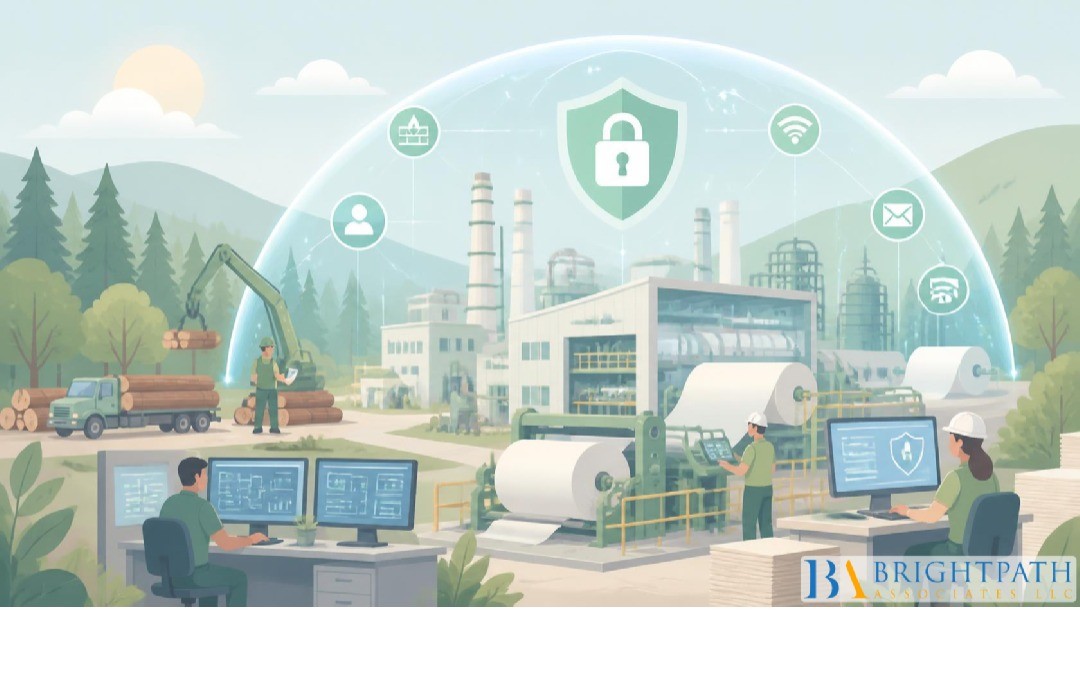
The modern paper, pulp, timber, and #WoodProductsIndustry is becoming increasingly connected. Mills that once depended primarily on mechanical equipment and manual processes now operate sophisticated networks of industrial controls, enterprise software, sensors, automated machinery, production-monitoring platforms, and digital supply-chain systems. This connectivity has created significant opportunities to improve productivity and efficiency, but it has also introduced a new category of operational risk: cybersecurity.
For mill owners and manufacturing executives, cybersecurity is no longer an issue reserved for the IT department. A cyberattack can potentially interrupt production, affect quality controls, expose sensitive business information, disrupt logistics, or compromise industrial control systems. In an industry where production facilities may operate continuously and depend on tightly synchronized processes, even a relatively short interruption can have serious financial consequences.
The growing adoption of Paper and pulp technology, connected machinery, digital monitoring, and Automation in Paper industry operations makes protecting the mill’s digital perimeter increasingly important. Cybersecurity must therefore become part of the broader operational strategy rather than an isolated technical initiative.
Understanding the Modern Mill’s Digital Perimeter
A mill’s digital perimeter extends far beyond computers located inside an administrative office. It can include production equipment, programmable logic controllers, sensors, industrial networks, remote-access systems, cloud applications, supplier portals, employee devices, warehouse systems, and connected maintenance platforms.
Each connection can potentially create an entry point that requires protection. A supplier’s remote-access account, an outdated machine controller, an employee’s compromised credentials, or an unsecured connected device could become part of a broader attack pathway.
This complexity means that simply installing antivirus software or a conventional firewall is not enough. Mill operators need to understand what systems are connected, how those systems communicate, who has access to them, and what would happen if a particular system became unavailable.
The first step toward cybersecurity is therefore visibility.
Paper and pulp manufacturing relies on highly integrated processes. Raw materials move through multiple stages before becoming finished products, and automated controls help maintain consistency in areas such as temperature, pressure, moisture, chemical management, drying, cutting, and packaging.
A cyber incident affecting one component of this environment can potentially create consequences elsewhere in the process.
The financial impact may include lost production, delayed shipments, emergency repairs, overtime costs, damaged equipment, or dissatisfied customers. In addition, businesses may face reputational consequences if sensitive information is stolen or operations are repeatedly disrupted.
The increasing importance of Paper industry economics makes this risk particularly significant. Margins can be influenced by energy costs, raw-material prices, transportation expenses, market demand, and production efficiency. An unexpected shutdown can therefore affect profitability at exactly the moment when companies are already managing cost pressures.
Industrial Control Systems Require Special Attention
Traditional IT systems and industrial control systems are not identical. Office computers can often be disconnected or restarted with relatively limited operational consequences. Production-control systems may operate machinery that cannot simply be switched off without following specific procedures.
This difference creates a unique cybersecurity challenge for mills.
Industrial control environments may contain older systems that were designed primarily for reliability and operational performance rather than modern cybersecurity requirements. Replacing such systems can also be expensive and disruptive.
#MillOperators therefore need to balance security improvements with operational realities. Network segmentation, controlled remote access, system monitoring, strong authentication, and carefully managed software updates can provide layers of protection without unnecessarily interfering with production.
The Growing Role of Automation
Automation in Paper industry operations has increased the amount of technology embedded within production facilities. Automated material handling, quality inspection, process control, packaging, and equipment monitoring can improve consistency and reduce manual intervention.
However, automation also increases the number of connected systems that need to be protected.
A highly automated facility should therefore consider cybersecurity during equipment selection, installation, and integration rather than attempting to add security after the technology has already been deployed.
Manufacturers should ask whether new equipment can be securely updated, whether remote access can be controlled, how user permissions are managed, and what happens if the system becomes disconnected from the network.
Cybersecurity should become part of the equipment specification rather than an afterthought.
Modern industrial machinery often generates valuable operational information. Sensors can monitor temperature, vibration, energy consumption, equipment utilization, and production conditions. This information can improve maintenance and manufacturing efficiency.
However, connected machinery can also introduce additional vulnerabilities.
Mill operators should maintain an accurate inventory of connected equipment and understand how each machine communicates with other systems. Devices that no longer receive security updates may require additional controls or eventual replacement.
Remote maintenance deserves particular attention. Vendors may need remote access to diagnose or repair equipment, but unrestricted remote connectivity can create unnecessary exposure.
The objective should be to provide access when it is needed while limiting the duration, permissions, and systems that external users can reach.
Cybersecurity and Timber Harvesting
Cybersecurity risks begin before raw materials reach the mill. Modern Timber harvesting operations increasingly depend on GPS systems, digital planning platforms, connected machinery, fleet-management software, communications technologies, and data-driven resource management.
These systems can provide valuable operational advantages, but they also create digital dependencies.
A disruption in forestry technology could affect harvesting schedules, transportation coordination, equipment utilization, or production planning. As mills become more dependent on digital information from upstream operations, cybersecurity needs to extend throughout the supply network.
This illustrates an important principle: cybersecurity cannot be limited to the walls of the mill.
Supply Chain Connections Create Additional Exposure
Mills often depend on external suppliers for chemicals, equipment, spare parts, packaging materials, transportation, maintenance, software, and technical services. #DigitalConnections with these partners can improve efficiency while creating additional cybersecurity considerations.
A compromised supplier account could potentially provide access to systems or information that the supplier is authorized to use.
Businesses should therefore evaluate the cybersecurity practices of important vendors, particularly those with access to production networks or sensitive data. Contracts can establish requirements for access controls, incident reporting, authentication, and data protection.
Supplier cybersecurity should become part of broader supply-chain risk management.
Sustainable Materials and Digital Transparency
The growing demand for Sustainable materials is encouraging companies to improve traceability and transparency. Customers may increasingly want information about sourcing, environmental performance, recycling, certification, and responsible forestry practices.
Digital systems can help companies collect and communicate this information. However, increased data collection also creates additional responsibilities.
If sustainability information is manipulated, lost, or exposed, customer confidence can suffer. Companies therefore need to protect the integrity of environmental and sourcing data just as carefully as they protect financial or production information.
Cybersecurity can support sustainability by helping ensure that digital records remain accurate, accessible, and trustworthy.
Paper recycling operations are also becoming increasingly technology-driven. Automated sorting, material tracking, process monitoring, quality control, and logistics systems can improve the efficiency of recycling operations.
Paper recycling solutions may involve multiple connected systems operating across collection, sorting, processing, and manufacturing environments. Each additional connection creates potential points of vulnerability.
Companies should therefore consider cybersecurity when implementing recycling technologies. Protecting these systems can help ensure that operational improvements are not undermined by preventable digital disruptions.
Forestry Regulations and Data Security
#ForestryRegulations and environmental requirements can influence sourcing, production, reporting, and documentation. As regulatory expectations become increasingly data-driven, companies may rely on digital systems to maintain records and demonstrate compliance.
Protecting this information is important for more than cybersecurity. It can also support regulatory credibility.
Organizations should establish appropriate controls over who can modify compliance-related information and maintain reliable records of important changes. Strong access management and data integrity controls can reduce the risk of accidental or malicious manipulation.
Preparing for Cyber Incidents
No cybersecurity program can guarantee that an organization will never experience an incident. The more realistic objective is to reduce the likelihood of an attack and improve the organization’s ability to respond when something goes wrong.
A mill should know what systems are critical to production and establish procedures for responding to different types of incidents. Employees should understand how to report suspicious activity, while technical teams should know how to isolate affected systems.
Business continuity planning is particularly important for manufacturing organizations. If a production network becomes unavailable, leadership needs to understand which operations can continue manually, which systems must be restored first, and how customers will be informed about potential delays.
Preparation can significantly reduce confusion during a crisis.
Technology cannot solve every cybersecurity problem. Employees remain one of the most important components of a mill’s security environment.
Phishing emails, stolen credentials, social engineering, unauthorized software, and accidental data exposure can create serious vulnerabilities. Employees should therefore receive practical cybersecurity training that reflects the realities of their roles.
Training should not simply consist of generic warnings. Workers should understand how suspicious messages appear, why password protection matters, how remote access should be handled, and who to contact when something seems unusual.
A strong cybersecurity culture encourages employees to report potential problems without fear of blame.
Cybersecurity Leadership Requires the Right Talent
Cybersecurity is becoming increasingly connected to manufacturing strategy, technology investment, risk management, and operational continuity. This means mills may require leaders who can understand both industrial operations and digital risk.
Traditional IT leadership alone may not be sufficient when the organization’s most critical systems control physical production. Companies increasingly benefit from professionals who understand industrial cybersecurity, automation, engineering, supply chains, and business continuity.
This is where #ExecutiveSearchRecruitment can become strategically valuable. Identifying senior leaders with the ability to connect cybersecurity with manufacturing objectives can help organizations build more resilient operations.
The right executive can help establish priorities, secure investment, coordinate technical and operational teams, and ensure cybersecurity becomes part of long-term business planning.
Keeping Pace With Lumber Industry Trends
Lumber industry trends and broader developments across forestry and wood products can influence cybersecurity requirements. Greater automation, digital marketplaces, connected equipment, predictive analytics, and supply-chain visibility are changing how companies operate.
As digital capabilities increase, the attack surface can increase as well.
Executives should therefore review cybersecurity alongside technology investments. Every new connected system should trigger questions about access, authentication, data protection, monitoring, and recovery.
This approach allows cybersecurity to evolve alongside the business instead of reacting to threats after technology has already been deployed.
Protecting a mill’s digital perimeter is ultimately about protecting the business itself. A cybersecurity incident can affect production, customers, employees, suppliers, regulatory obligations, and financial performance simultaneously.
For this reason, cybersecurity should be integrated into enterprise risk management and operational planning.
Companies that understand their digital assets, protect critical systems, train employees, evaluate suppliers, control remote access, maintain recovery plans, and continuously improve their security posture will be better prepared for an increasingly connected industrial environment.
Building a More Secure Future for the Forest Products Industry
The #ForestProductSector is entering an increasingly digital era. Forest management, Timber harvesting, transportation, manufacturing, recycling, quality control, and distribution are becoming more connected through technology.
This transformation offers enormous opportunities for Forest product innovation and operational improvement. At the same time, it requires companies to rethink how they protect their facilities and information.
Cybersecurity should not be viewed as an obstacle to innovation. It should be an enabling capability that allows businesses to adopt new technologies with greater confidence.
The most resilient mills will be those that recognize that their digital perimeter is constantly changing. New equipment, software, suppliers, remote connections, and data platforms can all alter the organization’s risk profile.
The key question for mill executives is therefore not simply, “Are we protected today?” It is “Will our cybersecurity strategy remain strong as our operations become more connected tomorrow?”
As technology continues to reshape the paper, pulp, timber, and wood products sectors, organizations that combine operational expertise, digital innovation, cybersecurity discipline, and strong leadership will be better positioned to protect production while pursuing long-term growth.
Find your next leadership role in Paper & Forest Industry today!
Stay informed with the latest insights on Paper & Forest Industry!