
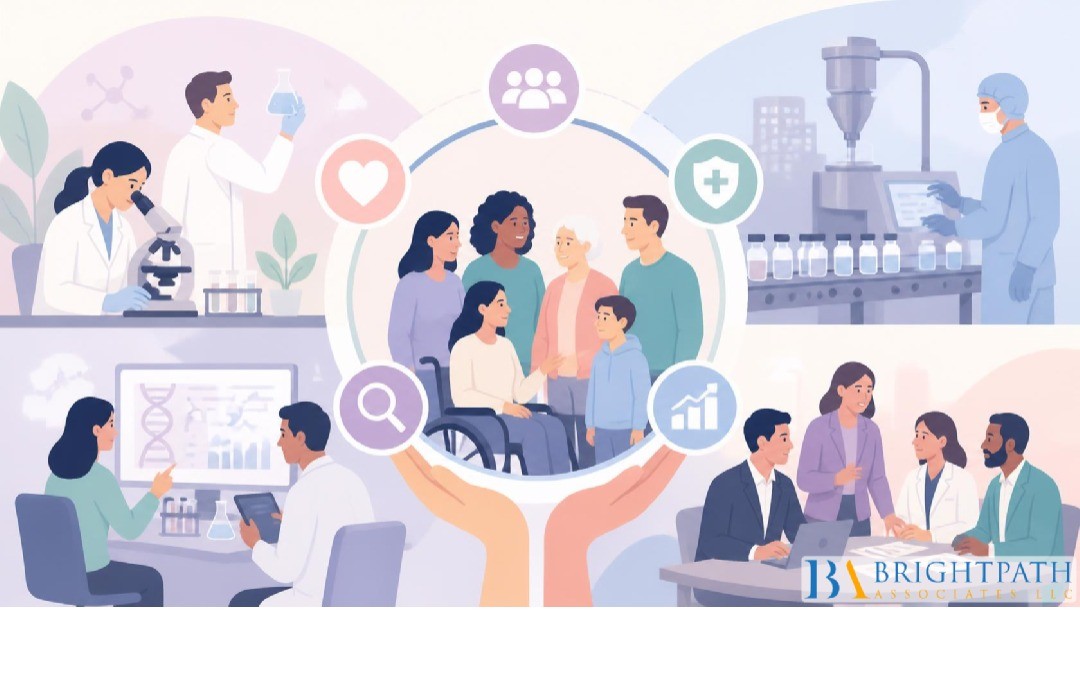
The #PharmaceuticalIndustry has traditionally been driven by scientific discovery, clinical research, regulatory requirements, and commercial objectives. Yet one voice has become increasingly important in determining whether a medicine ultimately delivers meaningful value: the patient. Patient advocacy has evolved from a supporting activity into an influential force capable of shaping research priorities, clinical trial design, drug access, communication strategies, and long-term pharmaceutical development.
Patients experience diseases and treatments in ways that cannot always be captured through laboratory measurements alone. They understand the practical challenges of living with a condition, managing side effects, accessing healthcare, following treatment schedules, and balancing medical decisions with everyday life. When pharmaceutical companies actively incorporate these perspectives into development programs, they can gain insights that improve both scientific decision-making and patient outcomes.
For organizations operating in an increasingly competitive Biopharmaceutical industry, patient advocacy is becoming an important strategic capability. It can influence how companies identify unmet needs, develop therapies, communicate with healthcare professionals, and build trust with the communities they ultimately serve.
Understanding the Evolution of Patient Advocacy
Patient advocacy was once often viewed primarily as an external relationship activity. Today, its role can extend throughout the pharmaceutical development lifecycle. Advocacy organizations and patient communities can provide valuable perspectives during early research, clinical development, regulatory discussions, market access planning, and post-launch monitoring.
This evolution reflects a broader change in healthcare. Patients are increasingly seeking information, participating in treatment decisions, and expecting pharmaceutical companies to understand the realities of living with disease. Digital communities have also made it easier for patients to share experiences and organize around specific conditions.
For pharmaceutical organizations, this creates an opportunity to move beyond developing products for patients toward developing solutions with a deeper understanding of patient needs.
Drug development is a lengthy and complex process involving significant investment and uncertainty. One of the most important questions at the beginning is whether a potential therapy addresses a meaningful unmet need.
Patient advocacy can help companies understand that need more clearly. Researchers may focus on clinical measures, while patients may emphasize symptoms, treatment burden, mobility, fatigue, convenience, quality of life, or other outcomes that directly affect daily living.
Incorporating these perspectives can help pharmaceutical organizations consider whether a potential therapy addresses the problems patients actually experience. Patient input may also contribute to decisions about clinical endpoints, trial procedures, treatment schedules, and methods of communicating study information.
The objective is not to replace scientific evidence with patient opinion. Instead, patient perspectives can complement scientific and clinical expertise.
Patient-Centered Clinical Research
Clinical trials can be challenging for participants. #TravelRequirements, frequent appointments, complicated procedures, long study durations, and uncertainty about outcomes can make participation difficult.
Patient advocacy groups can help researchers understand these barriers. Their input may encourage pharmaceutical companies to examine whether trial protocols can be made more accessible without compromising scientific integrity.
This can become especially important for rare diseases and conditions affecting smaller patient populations. Finding eligible participants can already be difficult, and unnecessary barriers may further reduce participation.
A patient-centered approach can potentially improve recruitment, retention, and the quality of information collected during clinical research.
The Connection Between Advocacy and Market Research
Pharmaceutical industry market research has traditionally examined factors such as market size, physician prescribing behavior, competitor activity, treatment adoption, pricing, and patient demographics. Increasingly, understanding the patient experience is becoming another important dimension.
Patient advocacy can help organizations identify what matters most to different patient populations. For example, patients may value reduced treatment frequency, easier administration, fewer side effects, improved mobility, or greater independence.
These insights can influence product positioning and commercial strategy.
However, pharmaceutical companies need to distinguish between genuine patient needs and commercial assumptions. Effective market research should combine patient perspectives with clinical evidence, healthcare-provider insights, regulatory considerations, and economic realities.
Patient advocacy can also influence Pharmaceutical marketing strategy. Modern patients have access to more medical information than previous generations, although the quality of that information can vary significantly.
Pharmaceutical companies therefore face a responsibility to communicate clearly, accurately, and responsibly.
Patient communities can provide insight into how medical information is understood outside scientific environments. Language that is obvious to researchers or healthcare professionals may be confusing to patients.
A patient-centered Pharmaceutical marketing strategy should consider health literacy, emotional context, treatment concerns, and the questions patients are most likely to ask.
The goal should not simply be to promote a therapy. It should be to provide useful, accurate information that helps patients and healthcare professionals understand treatment options.
Pharma Marketing Is Becoming More Patient-Aware
The growth of digital communication has changed Pharma marketing significantly. Patients can encounter pharmaceutical information through websites, social media, online communities, educational platforms, healthcare organizations, and digital advertising.
This environment creates opportunities but also increases responsibility.
#PharmaceuticalCompanies need to ensure that their communication remains consistent with applicable regulatory and ethical requirements. At the same time, they need to understand how different patient groups consume information.
Patient advocacy organizations can help companies identify communication gaps and better understand the questions and concerns affecting specific communities.
The strongest pharma marketing strategies will increasingly depend on credibility and education rather than simply promotional messaging.
Patient Advocacy and the Biopharmaceutical Industry
The Biopharmaceutical industry is developing increasingly sophisticated therapies, including biologics, gene therapies, cell therapies, targeted treatments, and other advanced approaches. These innovations can provide new possibilities for patients with conditions that previously had limited treatment options.
However, advanced therapies can also create new challenges involving clinical complexity, treatment access, affordability, logistics, and patient education.
Patient advocacy can help companies understand these challenges before and after commercialization. Patients can provide perspectives on treatment administration, healthcare access, expectations, and the practical implications of emerging therapies.
As biotech trends continue to reshape healthcare, companies that maintain meaningful relationships with patient communities may be better positioned to identify emerging needs and develop more patient-centered solutions.
Biotech trends are influencing not only scientific research but also patient expectations. As awareness of precision medicine, genetic testing, personalized therapies, and digital health increases, patients may expect treatments to become more individualized.
This creates pressure for pharmaceutical companies to communicate complex scientific concepts in understandable ways.
Patients may want to know why a particular therapy is appropriate for them, how it works, what evidence supports it, and what risks or limitations exist.
Organizations need professionals capable of translating scientific information into meaningful communication without oversimplifying important medical facts.
This requires collaboration among researchers, medical professionals, regulatory specialists, communications teams, and patient advocates.
The Role of Patient Advocacy in Regulatory Discussions
Regulatory agencies increasingly recognize the value of understanding patient perspectives. Patients can provide information about disease burden, treatment preferences, quality-of-life considerations, and outcomes that matter to them.
For #PharmaceuticalOrganizations, meaningful patient engagement can therefore contribute to a more comprehensive understanding of the value of a therapy.
Patient advocacy does not guarantee regulatory approval, nor should it be used as a substitute for evidence. Instead, it provides additional context around the human impact of a disease and the potential value of treatment.
This perspective can be particularly valuable when traditional clinical measures do not fully capture the experience of living with a condition.
Pharmaceutical Manufacturing Must Support Patient Needs
Patient-centered development does not end when a drug receives approval. Pharmaceutical manufacturing companies must ensure that products can be produced consistently, safely, and at the required scale.
Manufacturing decisions can also influence the patient experience. Packaging, dosage formats, administration methods, storage requirements, and product availability can all affect how easily patients use a treatment.
Pharmaceutical manufacturing companies therefore need to consider patient requirements alongside technical and operational objectives.
For Drug manufacturing companies US, maintaining reliable production and distribution is especially important because supply interruptions can have direct consequences for patients who depend on ongoing treatment.
Manufacturing resilience should consequently be viewed as part of patient-centered pharmaceutical strategy.
Developing an effective therapy is only one part of creating patient value. Patients must also be able to access it.
Cost, insurance coverage, distribution, geographic availability, healthcare infrastructure, and provider awareness can all influence treatment access.
Patient advocacy groups can help pharmaceutical companies understand where access barriers exist. These insights may influence patient-support programs, educational initiatives, distribution strategies, and market-access planning.
For organizations entering competitive therapeutic markets, understanding these barriers can become an important component of Pharmaceutical industry market research.
A therapy cannot create its intended impact if the patients who need it cannot realistically obtain or use it.
The Importance of Talent in Patient-Centered Pharma
#PatientAdvocacy increasingly requires cross-functional expertise. Pharmaceutical organizations need professionals who understand scientific research while also appreciating patient perspectives, regulatory expectations, commercial strategy, and healthcare systems.
This creates new leadership requirements.
Companies may need executives capable of connecting research and development with commercial operations, patient engagement, regulatory affairs, communications, and market access. These leaders must understand that patient-centered strategy is not simply the responsibility of one department.
This is where Pharmaceutical #ExecutiveSearchRecruitment can become strategically important. Identifying senior professionals with experience in patient engagement, drug development, commercialization, regulatory environments, and organizational transformation can help pharmaceutical businesses strengthen their long-term capabilities.
Pharmaceutical industry recruitment also needs to account for changing skill requirements as technology and patient expectations evolve.
The pharmaceutical workforce is becoming increasingly multidisciplinary. Traditional scientific and manufacturing capabilities remain essential, but organizations also require expertise in data analytics, digital health, artificial intelligence, patient engagement, regulatory strategy, market access, and advanced manufacturing.
These changes are influencing Pharma jobs across the sector.
Future pharmaceutical professionals may need to collaborate across disciplines more frequently than previous generations. A successful research leader may need to understand patient engagement. A commercial executive may need greater familiarity with clinical evidence. A manufacturing leader may need to understand digital technologies and supply-chain analytics.
Companies that build multidisciplinary leadership teams may be better equipped to respond to changing market conditions.
Executive Leadership and Patient Advocacy
Patient advocacy becomes most effective when it has support at the executive level. Senior leaders establish organizational priorities and determine whether patient engagement is treated as a strategic function or simply a communications exercise.
Executives can help embed patient perspectives into decision-making by encouraging collaboration between research, clinical development, regulatory affairs, manufacturing, commercial teams, and advocacy professionals.
Leadership also plays an important role in ensuring that patient engagement remains ethical and authentic. Patients should not be viewed merely as sources of promotional support. Their experiences and perspectives should be incorporated responsibly and transparently.
Organizations that approach advocacy with genuine commitment can build stronger relationships with patient communities and potentially improve the relevance of their #DevelopmentPrograms.
Building Trust Through Meaningful Engagement
Trust is one of the most valuable assets in healthcare. Pharmaceutical companies operate in an environment where patients, physicians, regulators, investors, and the public scrutinize their decisions.
Patient advocacy can contribute to trust when engagement is transparent, respectful, and consistent.
Companies need to listen even when patient feedback challenges existing assumptions. Genuine engagement means asking difficult questions, acknowledging limitations, and considering whether changes are necessary.
A company that listens to patients only when the feedback supports its existing strategy is not truly patient-centered.
Meaningful advocacy requires a willingness to learn.
The pharmaceutical industry is moving toward a more connected model of development in which patients play a more visible role in shaping priorities. Advances in biotechnology, digital health, artificial intelligence, clinical research, and personalized medicine will continue to create new possibilities.
At the same time, patients will increasingly expect pharmaceutical organizations to understand the human realities behind diseases and treatments.
Patient advocacy can provide an important bridge between scientific innovation and lived experience. It can help companies understand unmet needs, improve clinical research, communicate more effectively, and identify barriers to access.
For pharmaceutical leaders, the strategic opportunity is to make patient perspectives part of the organization’s decision-making process rather than treating advocacy as an external function.
Conclusion: Putting Patients at the Center of Pharma Strategy
The future of pharmaceutical development will be shaped by scientific innovation, regulatory requirements, technology, market dynamics, and increasingly by patient expectations. Patient advocacy brings an essential perspective to this environment by connecting business and scientific decisions with the realities experienced by people living with disease.
From clinical research and commercialization to manufacturing, market research, and Pharma marketing, patient insights can influence decisions throughout the pharmaceutical value chain.
For pharmaceutical companies, the central question is no longer simply whether they can develop an effective medicine. It is whether they can understand the patient well enough to develop, communicate, manufacture, and deliver solutions that genuinely address patient needs.
As the Biopharmaceutical industry continues to evolve, organizations that combine scientific excellence with meaningful patient engagement may be better positioned to build trust, identify opportunities, attract specialized talent, and create sustainable long-term value.
Ultimately, the most successful pharmaceutical strategies may be those that begin with a simple but powerful question: What does meaningful improvement look like from the patient’s perspective?
Find your next leadership role in Pharmaceutical industry today!
Stay informed with the latest insights on Pharmaceutical industry!