
Introduction
#GreenCertification is becoming an increasingly important consideration for small manufacturers operating within the construction and building-materials sector. Customers, contractors, developers, investors, and procurement teams are placing greater emphasis on the environmental performance of products and manufacturing processes. For smaller companies, achieving a recognized certification can provide an opportunity to demonstrate credibility, differentiate products, and strengthen relationships with commercial buyers.
The process, however, involves more than adopting environmentally friendly materials. Manufacturers must understand certification requirements, assess their existing operations, improve resource efficiency, document processes, and establish systems that can withstand formal evaluation. Companies producing #ConstructionMaterials may need to examine everything from raw-material sourcing and energy consumption to waste management, packaging, transportation, and product lifecycle performance.
For small manufacturers, green certification should therefore be approached as both an environmental initiative and a business strategy. A structured process can help companies reduce unnecessary costs while building a stronger market position.
Understanding What Green Certification Means
Green certification provides an independent framework for evaluating environmental or sustainability-related characteristics of a product, facility, or manufacturing process. Different certifications focus on different areas, including energy efficiency, responsible sourcing, recycled content, emissions, waste reduction, indoor environmental quality, or lifecycle performance.
Small manufacturers should first determine which certification is relevant to their target customers and market. A certification that has strong recognition among architects may have different requirements from one preferred by contractors or building-material distributors.
Understanding the purpose behind certification is therefore the first step. Companies should identify whether they are seeking certification to access new markets, meet customer procurement requirements, support sustainable product claims, or improve internal environmental performance.
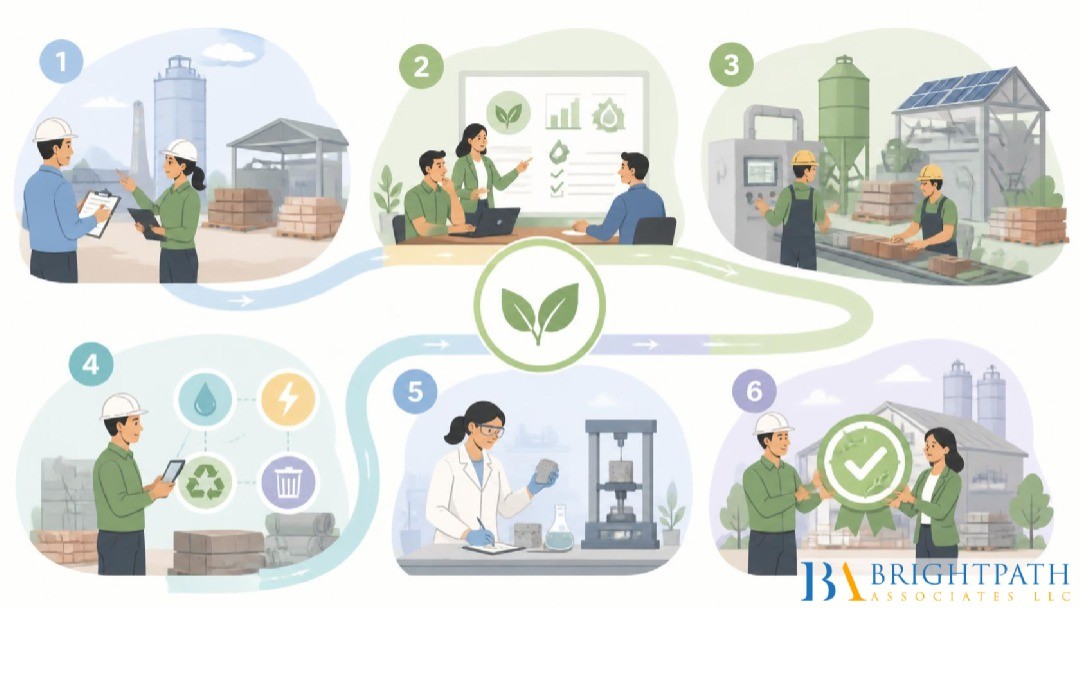
Before making changes, manufacturers should establish a baseline of current operations. This assessment should examine energy consumption, water use, raw materials, production waste, emissions, transportation, packaging, and equipment efficiency.
A manufacturer cannot effectively demonstrate improvement without understanding its starting point. Production records, utility bills, purchasing data, waste documentation, and equipment information can provide valuable evidence.
For companies supplying #BuildingSupplies, this assessment can also reveal operational inefficiencies unrelated directly to certification. Excess material usage, inefficient machinery, unnecessary transportation, and poor waste segregation may represent opportunities for both environmental improvement and cost reduction.
Selecting the Appropriate Certification
Once the baseline is established, the company can evaluate certification options that align with its products and customers. Manufacturers should examine eligibility criteria, documentation requirements, assessment procedures, costs, renewal requirements, and market recognition.
The objective should not be to select the certification with the fewest requirements. Instead, businesses should select a framework that provides meaningful commercial value and supports their long-term sustainability strategy.
For a small manufacturer, certification can become particularly valuable when it supports #SustainableConstruction initiatives and helps customers demonstrate the environmental performance of completed projects.
After selecting the certification framework, management should create a practical roadmap. The roadmap should identify current gaps, required operational improvements, documentation needs, responsible employees, implementation timelines, and expected costs.
A phased approach can make the process more manageable for smaller organizations. Rather than attempting to transform every part of the business simultaneously, manufacturers can prioritize the areas that have the greatest influence on certification performance.
This structured approach also helps leadership understand how sustainability investments connect with broader #BusinessStrategy.
Reviewing Raw Material Sourcing
Raw materials can have a significant influence on the environmental profile of construction products. Manufacturers should evaluate where materials originate, how they are extracted or produced, transportation requirements, recycled content, and supplier environmental practices.
For companies involved in concrete, aggregates, wood products, insulation, or other building materials, responsible sourcing can become an important component of sustainability programs.
Manufacturers operating within the #LumberIndustry, for example, may need to examine sourcing practices, chain-of-custody information, responsible forestry considerations, and documentation from suppliers.
Supplier transparency becomes increasingly important as customers demand greater visibility into product origins.
Energy consumption is another major area of focus for green manufacturing. Production facilities may consume electricity or fuel through kilns, furnaces, mixers, dryers, compressors, material-handling equipment, lighting, heating, and cooling systems.
Small manufacturers can begin by identifying the equipment responsible for the highest energy consumption. Maintenance improvements, process optimization, efficient motors, automated controls, improved insulation, and equipment upgrades can reduce energy demand.
Manufacturers may also consider renewable energy where practical. However, energy efficiency should generally be evaluated as part of the overall #GreenManufacturing strategy rather than treating renewable generation as the only sustainability solution.
Improving Concrete Production
For companies involved in #ConcreteProduction, environmental performance can involve several areas, including cement consumption, aggregate sourcing, water use, energy consumption, transportation, and production waste.
Concrete manufacturers may investigate alternative materials, supplementary cementitious materials, optimized mix designs, improved batching accuracy, and better process controls.
Reducing waste can also improve financial performance. Material that is purchased but never incorporated into saleable products represents both an environmental burden and an economic cost.
The goal is to improve the relationship between material inputs and finished-product performance.
Waste reduction is an important component of most sustainability strategies. Manufacturers should identify where waste occurs and why it occurs.
Offcuts, rejected products, excess packaging, damaged materials, production residues, and defective batches can all contribute to unnecessary resource consumption.
A systematic waste-management program can distinguish between materials that can be reused internally, recycled externally, returned to suppliers, or eliminated through process improvements.
For many businesses, #MaterialRecycling can transform waste from a disposal expense into a potential resource.
Integrating Material Recycling
#MaterialRecycling is particularly relevant to construction-product manufacturers because many materials can potentially be recovered and reintroduced into production.
Concrete waste, wood residues, metals, packaging, aggregates, and other materials may have recycling or reuse opportunities depending on their characteristics and local infrastructure.
Manufacturers should establish clear procedures for collection, segregation, storage, documentation, and processing.
Recycling should not be viewed simply as a certification requirement. When properly managed, it can reduce raw-material purchases, lower disposal costs, and improve resource efficiency.
Advances in #BuildingTechnology are changing the expectations placed on manufacturers. Smart manufacturing, automation, digital quality control, advanced materials, energy monitoring, and connected equipment can improve both operational performance and environmental management.
Digital systems can help companies monitor energy use, production waste, equipment performance, and environmental metrics.
For small manufacturers, adopting every available technology may not be practical. The better approach is to identify technologies that address specific operational problems and generate measurable value.
Maintaining Documentation and Traceability
Documentation is one of the most important parts of certification. Manufacturers may need to demonstrate how materials are sourced, how production is managed, how waste is handled, and how environmental performance is measured.
Companies should establish consistent procedures for maintaining records. This can include supplier certificates, purchase records, utility consumption, waste documentation, production data, maintenance reports, training records, and quality-control information.
Digital documentation systems can make this process easier and reduce the risk of missing information during an assessment.
Strong documentation also improves #OperationalTransparency and makes sustainability performance easier to communicate to customers.
Environmental certification does not replace legal compliance. Manufacturers must continue to meet applicable #BuildingRegulations, environmental requirements, workplace standards, product specifications, and other relevant rules.
In some markets, regulatory requirements may also influence material composition, emissions, waste handling, energy efficiency, and product declarations.
Small manufacturers should therefore treat regulatory compliance and green certification as connected but distinct responsibilities.
Understanding future regulatory developments can also help companies avoid making short-term investments that quickly become outdated.
Calculating the Economics of Certification
Certification involves costs, including assessment fees, consulting support, documentation systems, equipment upgrades, employee training, testing, and ongoing compliance.
However, the financial analysis should also consider potential benefits. These may include access to new customers, improved supplier relationships, reduced energy consumption, lower waste-disposal costs, stronger brand positioning, and eligibility for sustainability-focused procurement opportunities.
This broader #ConstructionEconomics perspective helps manufacturers determine whether certification can create measurable commercial value.
The most effective sustainability investments are those that strengthen both environmental performance and operational economics.
Green certification requires employee participation. Production workers, maintenance teams, procurement staff, quality managers, engineers, and facility personnel all influence environmental performance.
Employees need to understand why new procedures are being introduced and how their responsibilities contribute to certification objectives.
Training may cover waste segregation, energy management, material handling, environmental documentation, equipment operation, quality control, and compliance requirements.
As the industry becomes more technology-driven, demand for skilled #ConstructionJobs and manufacturing professionals with sustainability expertise is likely to increase.
Creating a Culture of Continuous Improvement
Certification should not become a one-time project completed only to receive a certificate. Environmental performance needs to be monitored continuously.
Management should establish measurable objectives and periodically evaluate whether the company is improving energy efficiency, reducing waste, increasing recycled content, optimizing material use, and improving supplier performance.
A continuous-improvement culture helps companies maintain certification requirements while discovering additional opportunities for operational efficiency.
It also ensures that sustainability remains connected to business performance rather than becoming an isolated administrative function.
Successful certification requires leadership commitment. Executives must allocate resources, establish priorities, communicate expectations, and ensure that sustainability initiatives receive appropriate attention.
Small manufacturers may not have dedicated sustainability departments, meaning senior leaders often need to coordinate environmental initiatives alongside production and commercial responsibilities.
Leadership also determines whether employees view certification as an administrative burden or as an opportunity to improve the business.
Strong #ExecutiveLeadership can therefore make the difference between simply achieving certification and building a genuinely sustainable manufacturing organization.
Executive Search Recruitment for Sustainable Manufacturing
As environmental requirements become more complex, manufacturers may require leaders with experience across sustainability, manufacturing, engineering, compliance, supply chains, and technology.
#ExecutiveSearchRecruitment can help small and mid-sized manufacturers identify executives and senior professionals capable of managing these interconnected responsibilities.
The ideal candidate may understand manufacturing economics while also having experience with environmental programs, regulatory requirements, operational improvement, and sustainable product development.
For companies planning long-term transformation, leadership recruitment can become an important part of the sustainability strategy.
Turning Certification Into a Competitive Advantage
Once certification has been achieved, manufacturers should use it strategically. Certification can become part of customer communications, procurement documentation, product marketing, and business-development efforts where appropriate.
However, companies should avoid exaggerated environmental claims. Credibility depends on accurately representing what the certification covers and what environmental improvements have actually been achieved.
Transparent communication can strengthen relationships with architects, contractors, developers, distributors, and other stakeholders within the construction ecosystem.
Conclusion
Green certification can provide small manufacturers with more than environmental recognition. It can encourage companies to examine their raw materials, energy use, waste, production processes, regulatory compliance, technology investments, and workforce capabilities.
For manufacturers operating in the construction materials, building supplies, concrete, lumber, and related sectors, the certification process can become an opportunity to identify inefficiencies and build more resilient operations.
The most successful organizations will approach certification as a long-term business transformation rather than a paperwork exercise. By combining sustainable construction, building technology, material recycling, responsible sourcing, energy efficiency, and effective environmental management, small manufacturers can strengthen their position in an increasingly sustainability-conscious market.
Ultimately, certification is only one component of a larger strategy. The real advantage comes from building an organization capable of continuously improving its environmental performance while maintaining commercial competitiveness. With the right systems, skilled employees, and strategic leadership supported by Executive Search Recruitment, small manufacturers can turn green certification into a foundation for operational improvement, stronger customer relationships, and sustainable long-term growth.
Find your next leadership role in Building Materials Industry today!
Stay informed with the latest insights on Building Materials Industry!