
Introduction
The #LoadingDock is one of the most important control points in the modern supply chain. It connects warehouses, distribution centers, carriers, suppliers, and customers, yet many facilities still depend on paper documents, manual data entry, printed shipping labels, and verbal confirmations to manage freight movement. These traditional processes can create delays, documentation errors, misplaced shipments, and discrepancies between physical freight and digital records.
As supply chains become faster and more complex, companies are increasingly adopting mobile technologies to create paperless loading docks. Smartphones, rugged handheld devices, tablets, barcode scanners, RFID systems, cloud platforms, and mobile warehouse applications can enable workers to capture shipment information at the point of activity and immediately synchronize it with transportation and warehouse systems.
The transition is not simply about removing paper. It represents a broader shift toward real-time freight visibility, automated verification, and data-driven logistics management. For organizations seeking greater accuracy and efficiency, mobile technology can transform the loading dock from a manual checkpoint into an intelligent logistics hub.
Why Loading Dock Accuracy Matters
Freight accuracy has a direct impact on transportation costs, customer satisfaction, inventory management, and operational efficiency. A single incorrect shipment can result in additional transportation expenses, delivery delays, customer complaints, returns, and administrative work.
Traditional loading processes often involve multiple documents containing similar information. Workers may manually compare bills of lading, packing lists, purchase orders, shipment labels, and carrier information. When information is entered repeatedly, errors can occur.
The loading dock also operates under significant time pressure. Trucks may have scheduled departure windows, and delays can disrupt transportation plans throughout the network. A paperless system can reduce the amount of time workers spend searching for documents or entering information manually.
By capturing information digitally at the moment freight is loaded, companies can create a more reliable connection between physical shipments and their digital records.
The Rise of Mobile Technology in Freight Operations
#MobileTechnology has become increasingly practical for industrial environments. Modern handheld devices can scan barcodes, capture images, access cloud applications, communicate with warehouse systems, and operate in demanding environments.
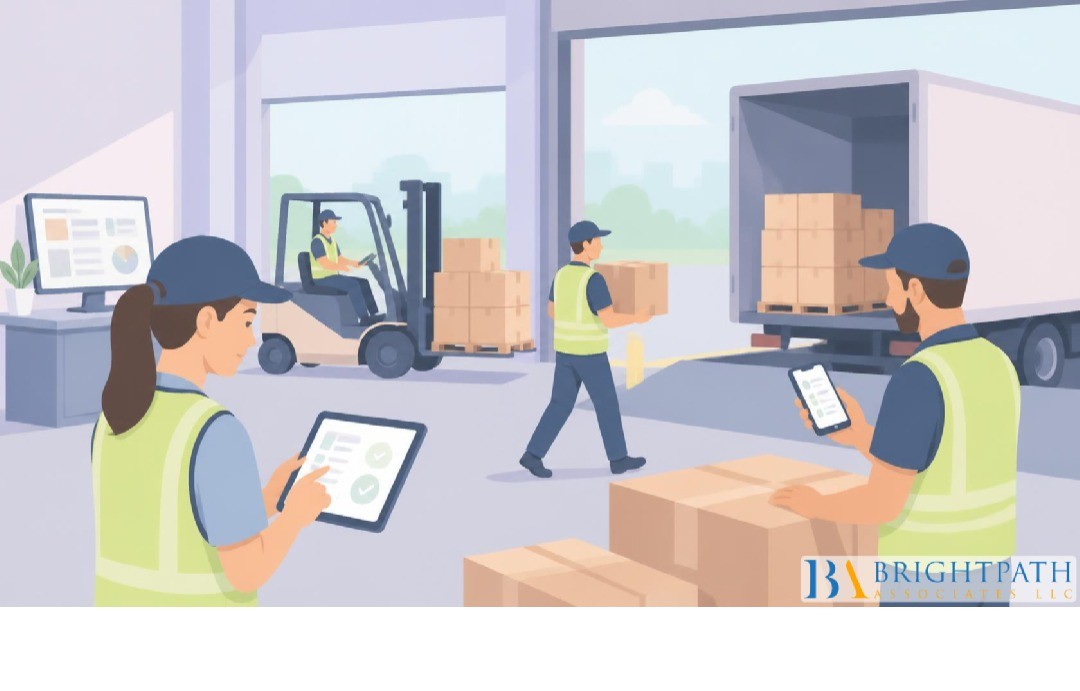
At a paperless loading dock, workers can use mobile devices to verify shipment details before freight enters a trailer. The device can display the expected shipment, confirm product identification, record quantities, and capture exceptions.
This approach creates a digital workflow in which each loading activity becomes part of the shipment’s electronic record. Managers can potentially see what has been loaded, what remains outstanding, and whether discrepancies have been identified.
The result is greater visibility without requiring workers to return to an office terminal after completing a physical task.
Integrating Delivery Technology with Warehouse Operations
Modern Delivery technology is increasingly focused on connecting warehouse activities with transportation execution. The objective is to create continuous information flow from order creation through loading, transportation, delivery, and final confirmation.
Mobile applications can serve as an important bridge between warehouse employees and transportation systems. When a worker scans a shipment, the information can be associated with the correct order and carrier. If the wrong item is identified, the system can generate an alert before the freight leaves the facility.
This early detection is particularly valuable because correcting an error inside the warehouse is usually easier and less expensive than correcting it after a shipment has entered the transportation network.
Integration also helps organizations maintain consistent shipment information across multiple systems. Instead of relying on manually updated paperwork, the same digital record can support warehouse management, transportation planning, billing, and customer communication.
Improving Freight Shipping Accuracy
The objective of #FreightShipping is not simply to move products from one location to another. It requires accurate coordination among shippers, carriers, warehouses, drivers, and customers.
Paperless loading docks can improve this coordination by creating digital verification points. A shipment can be scanned before loading, matched against the expected freight, and digitally confirmed once it enters the appropriate trailer.
Mobile devices can also capture photographs of freight condition, packaging, pallet configuration, or damaged goods. These records can become valuable evidence when disputes arise.
Digital documentation can therefore improve both operational accuracy and accountability. When shipment information is captured consistently, companies can investigate discrepancies using transaction histories rather than relying on handwritten notes or employee recollection.
Supporting Freight Brokerage Services
The benefits of digital freight documentation extend beyond warehouses. Freight brokerage services depend heavily on accurate information because brokers coordinate shipments between shippers and carriers.
When freight information is incomplete or incorrect, brokers may face difficulties assigning loads, communicating requirements, confirming pickup details, or resolving delivery discrepancies.
Paperless systems can provide brokers with more reliable shipment information and faster access to operational updates. Digital records can help establish when freight was loaded, what quantities were confirmed, and whether exceptions were identified.
This creates a more transparent communication environment between shippers, brokers, and carriers. It can also reduce administrative work associated with document handling.
Applying Shipping Optimization to the Loading Dock
#ShippingOptimization is often associated with route planning, carrier selection, and transportation costs, but the loading dock is also an important part of optimization.
A poorly organized loading process can create truck delays, inefficient trailer utilization, incorrect loading sequences, and unnecessary labor costs. Mobile technology can provide workers with information about shipment priorities and loading requirements in real time.
For example, a mobile system can guide employees toward the correct freight, confirm the appropriate trailer, and record loading progress. When integrated with transportation systems, this information can support better departure planning.
The result is a more coordinated operation in which warehouse activity and transportation schedules are closely connected.
E-commerce Logistics and the Pressure for Speed
The growth of E-commerce logistics has increased pressure on distribution centers to process shipments quickly and accurately. Customers increasingly expect shorter delivery windows, accurate tracking, and reliable order fulfillment.
High shipment volumes make manual processes particularly difficult to manage. Even a small error rate can translate into significant numbers of incorrect shipments when thousands of packages move through a facility every day.
Mobile technology can help e-commerce warehouses manage this scale by automating verification and reducing manual data entry. Barcode scanning and digital confirmations can accelerate loading while maintaining greater visibility into individual shipments.
This is particularly important for businesses operating multiple distribution centers. Standardized mobile workflows can help create consistent loading processes across different facilities.
Parcel Delivery and Last-Mile Visibility
Although the loading dock is only one stage of the supply chain, its data can influence the entire #ParcelDelivery process. Accurate information captured at the warehouse can support tracking and delivery communication later in the journey.
When a shipment is digitally confirmed at loading, the transportation system can update its status. This provides customers and logistics teams with more reliable information about when the shipment entered the transportation network.
For parcel operations, accurate status information can be particularly valuable because customers may monitor shipments through multiple stages. A reliable digital event at the loading dock can contribute to better end-to-end visibility.
Connecting with Transportation Industry Trends
Current Transportation industry trends indicate a growing emphasis on automation, real-time visibility, artificial intelligence, connected devices, predictive analytics, and digital documentation.
The paperless loading dock fits naturally into this transformation. It represents a practical use case where digital technology can produce immediate operational benefits without requiring a company to completely redesign its transportation network.
As logistics organizations adopt more connected technologies, loading docks are likely to become increasingly integrated with transportation management platforms. Information captured by workers can feed larger analytical systems that evaluate productivity, carrier performance, loading times, freight accuracy, and operational bottlenecks.
This creates opportunities for continuous improvement rather than one-time process optimization.
One overlooked advantage of mobile loading technology is the ability to document freight condition. Workers can use cameras integrated into mobile devices to photograph damaged packaging, irregular pallet configurations, or other exceptions.
This documentation can help establish responsibility when freight arrives damaged. Instead of relying entirely on paper notes, companies can maintain time-stamped digital records associated with specific shipments.
Such evidence can support claims management, customer service, insurance processes, and internal quality control.
Over time, organizations can also analyze this information to identify recurring problems. If certain packaging types consistently experience damage, for example, management can investigate whether packaging design, handling procedures, or carrier practices need improvement.
Reducing Administrative Work
Paper-based processes create hidden labor costs. Employees may spend time printing documents, filing paperwork, searching for records, correcting handwritten information, and manually transferring data between systems.
A paperless loading dock can reduce these activities. Digital records are easier to search, share, and analyze, while automated data capture reduces repetitive entry.
The savings may be particularly significant in high-volume facilities where employees process large numbers of shipments every day.
#ReducingAdministrative work also allows employees to focus on activities that require judgment and physical coordination rather than repetitive documentation.
Building a Digitally Skilled Logistics Workforce
Technology implementation requires more than purchasing devices. Companies must also develop the workforce needed to operate, manage, and continuously improve digital logistics systems.
The emerging Delivery sector tech talent landscape includes professionals with expertise in warehouse technology, transportation management systems, data analytics, mobile application development, automation, cybersecurity, and supply-chain strategy.
Organizations may need technology leaders who understand both logistics operations and digital transformation. Finding professionals with this combination of expertise can be challenging because traditional logistics knowledge and advanced technology skills do not always exist within the same talent pool.
Companies investing in paperless loading docks should therefore consider workforce development as part of their digital transformation strategy.
Employees accustomed to paper-based processes may initially find mobile systems unfamiliar. Successful implementation requires practical training, clear operating procedures, and strong management support.
Workers need to understand not only how to operate the devices but also why accurate scanning and digital documentation matter. If employees bypass scanning procedures or treat mobile verification as optional, the system cannot deliver its intended benefits.
Change management should therefore accompany technology deployment. Organizations should monitor adoption, identify operational challenges, and continuously refine workflows based on employee feedback.
The Role of Logistics Consulting Services
For organizations unsure how to begin their digital transformation, #LogisticsConsultingServices can provide strategic guidance. Consultants can evaluate current loading processes, identify sources of freight inaccuracies, assess technology options, and develop implementation strategies.
A successful project should begin with the operational problem rather than the technology itself. Companies should first determine where delays and errors occur before selecting mobile devices or software.
Consulting expertise can also help organizations evaluate integration requirements. A mobile loading system must communicate effectively with warehouse management, transportation management, enterprise resource planning, and other operational platforms.
The success of a paperless loading dock should be measured through operational outcomes. Companies can evaluate shipment accuracy, loading times, documentation errors, detention costs, claims, labor productivity, and customer complaints.
These measurements provide a clearer understanding of whether the technology is delivering a meaningful return on investment.
The objective should not be digitalization for its own sake. A successful paperless loading dock should produce measurable improvements in accuracy, efficiency, visibility, and customer service.
Conclusion
The paperless loading dock represents a practical step toward a more connected and intelligent supply chain. By combining mobile devices, barcode scanning, digital documentation, cloud systems, and real-time data, companies can reduce manual errors and create greater visibility into freight movement.
The benefits extend across Freight shipping, Parcel delivery, E-commerce logistics, and broader transportation operations. Digital loading processes can support stronger coordination with carriers and Freight brokerage services, improve Shipping optimization, and provide better information for decision-making.
As the Delivery industry continues to evolve, companies will increasingly compete on speed, accuracy, visibility, and operational flexibility. Technology alone will not determine success. Organizations will also need skilled employees, effective change management, integrated systems, and strategic leadership.
Operational flexibility. Technology alone will not determine success. Organizations will also need skilled employees, effective change management, integrated systems, strategic leadership, and #ExecutiveSearchRecruitment to identify experienced professionals capable of leading digital transformation and optimizing modern logistics operations.
The loading dock may appear to be a simple physical space, but it is becoming an important digital control point. By replacing paper-dependent processes with connected mobile technology, logistics companies can turn freight verification into a source of operational intelligence and build a more accurate, responsive, and resilient supply chain supported by the right technology and leadership talent.
Find your next leadership role in Packaging and Freight Industry today!
Stay informed with the latest insights on Packaging and Freight Industry!