
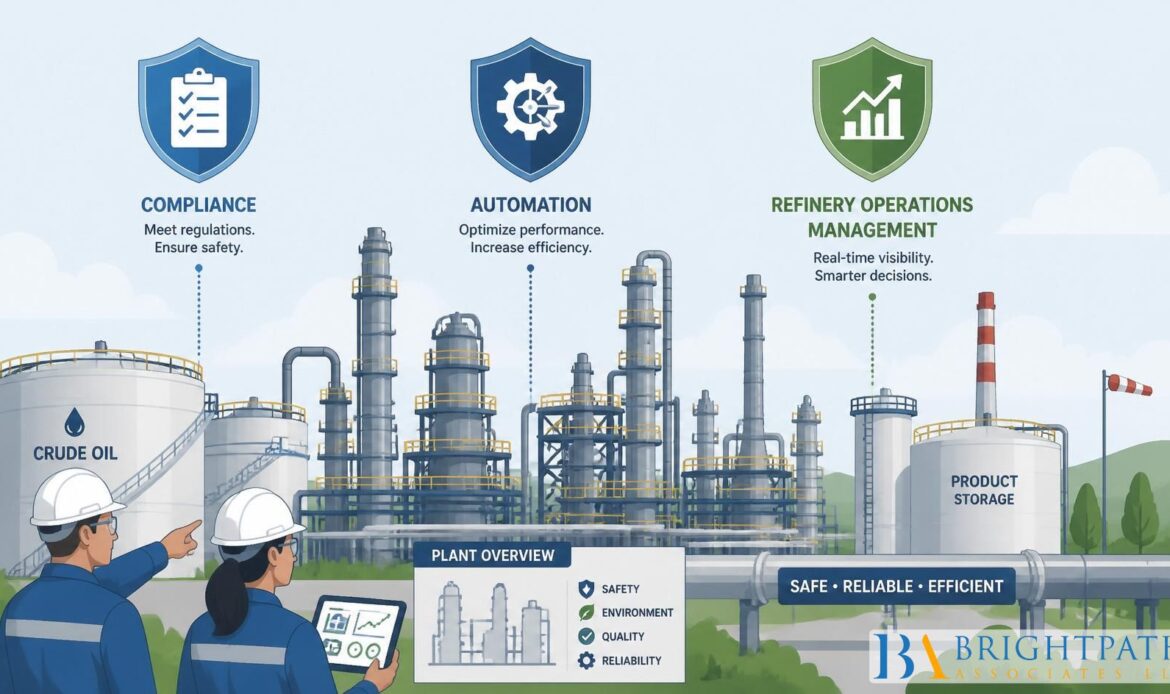
Small-batch refineries work in a highly regulated environment where every inspection, maintenance activity, safety check, and emissions report must be accurate. Many facilities still depend on spreadsheets because they are familiar and inexpensive. However, manual spreadsheets often create problems such as missing records, incorrect data, version confusion, and reporting delays. As Energy industry trends continue to focus on stronger compliance and digital operations, refineries need better ways to manage their reporting. Automation helps teams improve Refinery operations management by making compliance faster, more accurate, and easier to maintain.
Organizations looking to strengthen their operations in the Oil and gas sector can also explore industry workforce and business solutions.
Why Spreadsheets Create Compliance Challenges
Spreadsheets can store information, but they are not designed to manage complex compliance processes. Different employees may edit separate copies of the same file, making it difficult to identify the latest version. Small errors in formulas or manual data entry can remain unnoticed until an inspection or audit. Over time, important records become scattered across emails, folders, and individual computers.
For small-batch refineries, these issues create unnecessary risk. Compliance reporting requires complete and accurate documentation that regulators can review at any time. When information is difficult to find or contains errors, teams spend valuable time correcting problems instead of improving operations.
How Automation Improves Daily Operations
Automation replaces manual reporting with a connected digital system. Information from maintenance activities, inspections, environmental monitoring, and production records is collected automatically and stored in one secure location. This reduces repeated data entry while improving reporting accuracy.
Managers gain better visibility into compliance activities because they can quickly see completed work, upcoming deadlines, and missing information. Automatic reminders help employees complete inspections on time, while digital approval processes improve accountability across departments. These improvements strengthen Refinery operations management and reduce the administrative workload for employees.
Automation also creates a complete history of every report. Teams can easily see who updated a record, when changes were made, and why they were necessary. This improves transparency and makes regulatory audits much easier.
Reducing Risk and Supporting Business Growth
Compliance automation offers benefits beyond faster reporting. Accurate records reduce the risk of missed deadlines, incomplete submissions, and costly corrections. Managers receive better operational visibility, allowing them to identify recurring issues before they become major problems. Reliable reporting also improves confidence during inspections because all supporting documents are available in one place.
The refining industry continues to evolve with advances in Oil drilling technology and increasing Energy sector investment in digital transformation. These changes generate larger volumes of operational data that are difficult to manage using spreadsheets alone. Automation allows refineries to handle this information efficiently while maintaining strong compliance standards.
Although the energy sector continues to explore Sustainable energy, Petroleum remains an essential part of the global economy. Refineries that invest in automated compliance systems are better prepared to meet current regulations while adapting to future industry changes. Similar digital improvements can also be seen in the Railroad manufacturing industry outlook, where manufacturers continue replacing manual processes with automated systems to improve efficiency and compliance.
Conclusion
Spreadsheets have supported refinery operations for many years, but they are no longer enough for today’s compliance requirements. Small-batch refineries need accurate, connected, and reliable reporting systems that reduce manual work while improving operational visibility.
Automation helps organizations strengthen Refinery operations management, improve reporting accuracy, reduce compliance risk, and prepare confidently for audits. As Energy industry trends continue moving toward digital operations, automated compliance reporting is becoming an essential investment for every Oil and gas business. It helps refinery teams work more efficiently today while building a stronger foundation for future growth.
Find your next leadership role in Mining & Metals Industry today!
Stay informed with the latest insights on Mining & Metals Industry!