
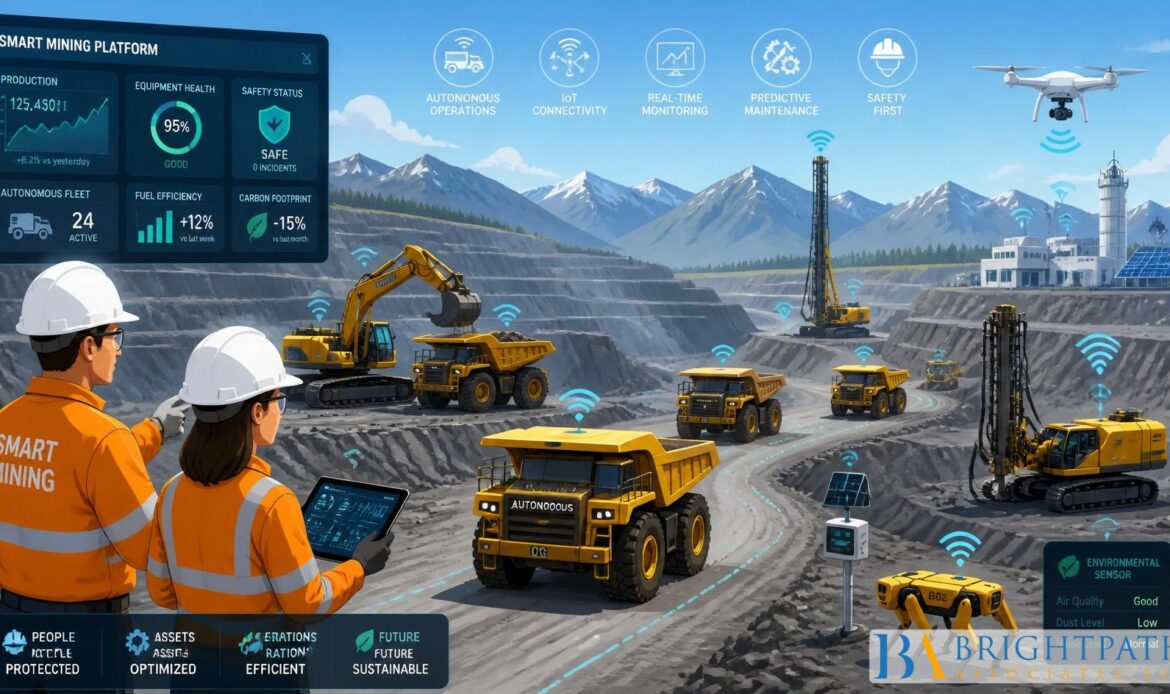
In the rapidly evolving world of #MiningIndustry, where innovation and efficiency are paramount, the integration of the Internet of Things (IoT) has become a game changer. The introduction of smart mine technologies has heralded a new era, offering the potential for increased productivity, improved safety, and sustainable mining practices. However, the key to unlocking these benefits lies in understanding and measuring the return on investment (ROI) from IoT deployments. This framework is essential for mining executives who aim to maintain a competitive edge and stay abreast of metals industry trends.
IoT in mining involves the use of interconnected devices and sensors to collect and analyze data from various operational stages, including ore extraction, metal processing, and metallurgy. These technologies enable real-time monitoring and automation, leading to enhanced decision-making and optimized resource management. For mining and metals recruiters, this shift demands a new set of skills and expertise, emphasizing the need for specialized executive search recruitment to identify leaders who can drive technological innovation.
Key Components of the Smart Mine ROI Framework
One of the pivotal aspects of the smart mine ROI framework is effective data collection and analysis. Advanced sensors and devices are deployed across mining sites to gather vast amounts of data. This data is then processed using sophisticated analytics tools, generating actionable insights. The focus on big data and analytics allows for predictive maintenance, reduced downtime, and enhanced operational efficiency. Consequently, mining executives must prioritize investments in data infrastructure and analytics capabilities to harness the full potential of IoT.
#Operationalefficiency is a critical component of the smart mine ROI framework. IoT deployments streamline processes across the mining value chain, from ore extraction to metal processing. Automated systems and real-time monitoring help minimize human intervention, reducing the likelihood of errors and accidents. Moreover, efficient resource utilization leads to cost savings and increased profitability. As a result, mining executive search efforts must focus on finding leaders with a keen understanding of mining technology and its applications.
Safety and Risk Management
Safety is paramount in the mining industry, and IoT technologies play a crucial role in enhancing risk management. Real-time monitoring of equipment and #EnvironmentalConditions allows for early detection of potential hazards, enabling proactive measures to mitigate risks. IoT solutions also facilitate remote operations, minimizing the need for personnel to work in high-risk areas. This not only improves safety but also aligns with sustainable mining practices by reducing the industry’s environmental footprint.
Sustainability is a growing concern in the #Mining sector, and IoT deployments offer significant opportunities to promote environmentally friendly practices. Smart mines can optimize energy consumption, reduce waste, and monitor emissions in real-time. By using IoT data, mining companies can implement strategies to minimize their impact on the environment while complying with mining policy regulations. This commitment to sustainability is increasingly important for attracting investors and staying competitive in the metals industry.
Measuring ROI in Smart Mine Deployments
The #EconomicBenefits of IoT in mining are multifaceted. From cost savings through increased efficiency to revenue growth from enhanced productivity, the financial impact is significant. Mining companies must develop robust metrics to measure these gains accurately. Key performance indicators (KPIs) such as cost per ton, equipment uptime, and energy consumption are crucial for evaluating the economic returns of IoT investments.
While tangible gains are essential, intangible benefits of IoT deployments should not be overlooked. These include improved employee satisfaction, better stakeholder relations, and enhanced company reputation. By showcasing commitment to safety, sustainability, and innovation, mining companies can strengthen their brand image and attract top talent through executive search recruitment efforts.
Despite the clear advantages, measuring ROI in IoT deployments poses challenges. The complexity of mining operations, coupled with the long-term nature of some benefits, makes it difficult to quantify precise returns. Moreover, the rapid pace of technological advancement means that mining executives must constantly adapt their strategies to stay ahead of the curve. A flexible and dynamic ROI framework is essential for navigating these challenges and making informed investment decisions.
The Role of Leadership in IoT Adoption
Leadership is a crucial factor in the successful adoption of IoT in mining. #ExecutiveSearchRrecuitment possess a strategic vision that aligns with industry trends and technological advancements. By understanding the potential of IoT and its impact on metallurgy and metal processing, leaders can drive innovation and transformation within their organizations. This requires mining and metals recruiters to focus on identifying candidates with a forward-thinking mindset and a strong grasp of mining technology.
The transition to smart mines necessitates effective change management to ensure a smooth and successful implementation. Leaders must engage and empower employees, fostering a culture of innovation and continuous improvement. Training programs and communication strategies are essential for overcoming resistance and facilitating the adoption of new technologies. As such, executive search recruitment should prioritize candidates with experience in managing large-scale change initiatives.
Conclusion
The smart mine ROI framework provides a comprehensive approach to measuring the tangible gains from IoT deployments in the mining industry. By focusing on data collection and analysis, enhancing operational efficiency, and prioritizing safety and sustainability, mining companies can unlock significant economic and intangible benefits. However, achieving these gains requires strong leadership, strategic vision, and effective change management. As the industry continues to evolve, mining executives must remain agile and forward-thinking, leveraging IoT technologies to drive growth and competitiveness. Embracing these innovations will not only position companies at the forefront of the metals industry trends but also contribute to a more sustainable and responsible future for mining.
Find your next leadership role in Mining & Metals Industry today!
Stay informed with the latest insights on Mining & Metals Industry!