
Introduction
#MachineryManufacturing is experiencing a striking paradox. Demand for output, quality, and innovation continues to rise, yet many manufacturers cannot fill critical roles fast enough to meet schedule, quality, and cost targets. This persistent skills gap is most visible on production floors and in maintenance bays, where complex industrial machinery runs 24/7 and uptime is king. As machinery manufacturers push the boundaries of precision machining, industrial automation, and data-driven operations, the talent equation has become a strategic bottleneck. This essay explains the nature of the skills gap in manufacturing jobs, examines its operational and financial consequences, and outlines industrial-strength strategies to attract, develop, and retain the workforce required to restore flow, elevate quality, and improve manufacturing efficiency.
Defining the Skills Gap in Modern Manufacturing
The skills gap in manufacturing is a mismatch between what employers need and what the labor market currently provides at the necessary scale and cost. It involves traditional technical trades, advanced digital skills, and frontline leadership capabilities. Plants that once depended primarily on mechanical aptitude now require hybrid competence in CNC machining, PLC logic, robotics integration, industrial automation, and quality analytics. At the same time, human factors such as problem-solving, disciplined adherence to standard work, and team leadership are essential to stabilize processes and prevent variability. The convergence of these needs is particularly acute in sectors operating complex industrial machinery, where precise tolerances, regulated environments, and high-volume throughput demand a workforce capable of rapid root-cause analysis, meticulous setup, and consistent execution.
Why the Gap Persists
Several structural forces keep the gap open. Demographic shifts are pivotal, as experienced technicians and leads retire faster than employers can replace or backfill them. The technology curve is equally decisive. Industrial automation, sensor-rich equipment, and digital work instructions require a workforce as comfortable with data and diagnostics as with wrenches and micrometers. #EducationPathways have not uniformly kept pace with the daily realities of modern cells, and credential preferences in hiring can inadvertently screen out capable candidates who lack degrees but possess adjacent skills and learnability. In some regions, the location of plants and the required shift patterns create a geographic and temporal mismatch with available labor. Cyclicality in capital investment and staffing can also disrupt apprenticeship and training programs, eroding organizational memory and supervision quality. Finally, wage compression in local labor markets and insufficient clarity on career progression make it harder to win talent against competing sectors.
Operational Consequences of the Shortage
The skills gap does not only show up as unfilled requisitions in the HR system; it shows up on the line every day. Unstable staffing increases changeover times and delays, reduces first-pass yield, and raises scrap and rework. In environments dominated by precision machining and CNC machining, the absence of competent setup and metrology specialists degrades quality and undermines on-time delivery. In maintenance, insufficient bench strength in mechatronics and controls forces plants into reactive mode, with avoidable downtime cutting into throughput and revenue. For operators, the lack of robust onboarding and coaching compromises safety and morale, which in turn accelerates attrition. The compound effect is lower manufacturing efficiency, tighter capacity constraints, and higher unit costs just when customers expect shorter lead times and tighter tolerances.
The Roles in Highest Demand
While needs vary by subsector, several roles are universally constrained. #CNCMachinists and programmers who can handle complex, multi-axis work are in short supply, especially in shops balancing short-run customization with exacting tolerances. Industrial maintenance technicians who combine mechanical, electrical, hydraulic, and PLC troubleshooting skills are pivotal to uptime yet remain scarce. Quality technicians and engineers with strong metrology and statistical process control capabilities are essential to managing variation and preventing escapes. Process engineers and data-savvy industrial technologists who bridge operations technology and information technology are needed to translate machine data into practical improvements. First-line leaders capable of teaching standard work, managing variation, and sustaining daily accountability are the keystone of stable performance.
Implications for Industrial Machinery and Automation
As plants deploy advanced industrial machinery and expand industrial automation, the skill requirements rise accordingly. Machine commissioning, software updates, sensor calibration, and cobot integration all demand cross-disciplinary knowledge. Even decisions about used machinery acquisition require technicians and engineers who can evaluate condition, compatibility, and retrofit costs with an eye to long-term total cost of ownership. In many cases, used machinery can be a practical way to expand capacity when combined with disciplined refurbishment, digital retrofit kits, and rigorous training. However, without a capable internal maintenance function and clear standards, the hoped-for savings may vanish in unplanned downtime and quality drift. The future belongs to sites that can pair the right equipment with talent that understands both the physics of the process and the logic of the control system.
Financing, Investment, and the Human Capital Multiplier
#MachineryFinancing often focuses on interest rates, depreciation schedules, and ROI measured purely by cycle time improvements. Yet the true return on automation and precision machining assets depends on the workforce entrusted to set up, run, and maintain them. Capital investments should therefore be accompanied by human capital investments in apprenticeships, upskilling programs, and supervisor development. When a plant builds capability concurrently with equipment upgrades, the multiplier effect is clear: faster time-to-competency, higher first-pass yield, safer operations, and more reliable delivery performance. In contrast, a plant that finances equipment but underinvests in people frequently experiences longer ramp-up periods, inconsistent quality, and diminished financial returns.
Strategies for Closing the Gap: From Hiring to Capability Building
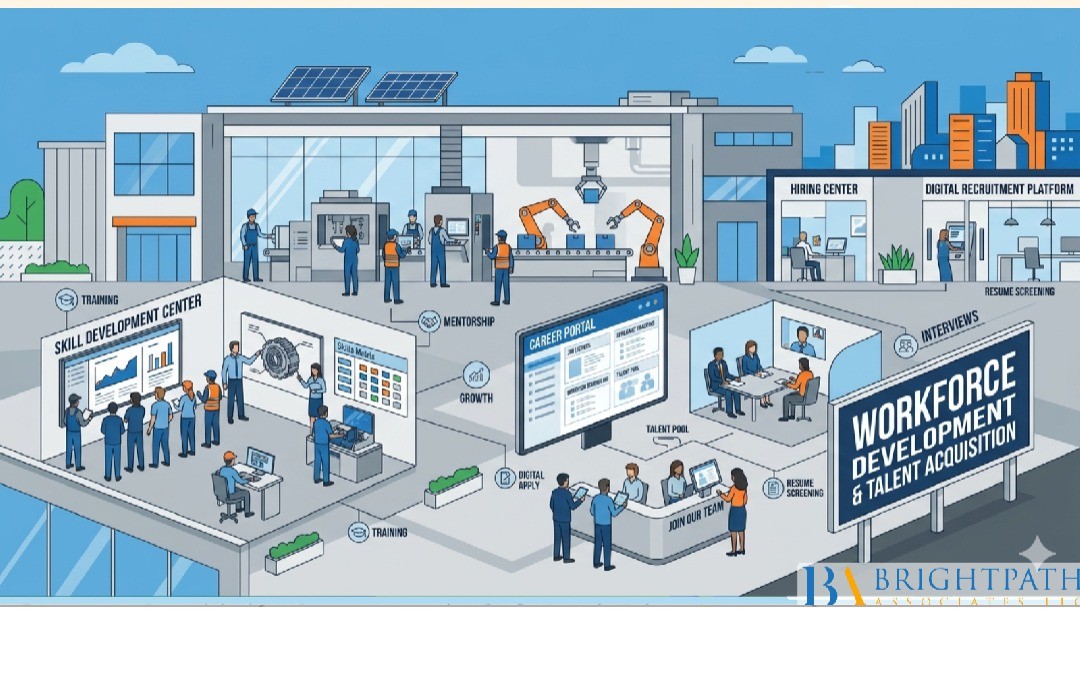
Addressing the gap requires a shift from passive recruiting to proactive capability building. The first lever is to adopt skills-based hiring. Rather than screening primarily on degrees or job titles, employers should validate applicants through job-relevant simulations, structured problem-solving, and work samples. This approach captures talent from adjacent fields and emphasizes what candidates can do now and how quickly they can learn. It widens the funnel without relaxing standards.
The second lever is earn-and-learn pathways such as registered apprenticeships. Apprenticeships allow employers to map role-specific competencies to structured on-the-job training and related instruction. They improve retention by paying candidates while they learn, establishing clear milestones, and providing mentorship. Importantly, these programs can be structured so that apprentices contribute value early, especially in production support roles, material flow, basic setups, and preventive maintenance. When well-designed, apprenticeships deliver measurable productivity gains well before completion.
A third lever is strategic partnerships with technical high schools, community colleges, and workforce boards. Rather than relying on generic curricula, employers can co-develop modules specific to their equipment and standards. Donating used machinery that matches plant assets, lending expert instructors for capstone labs, and guaranteeing interviews to successful completers align incentives and reduce misalignment between classroom and cell.
A fourth lever is the transparent articulation of career paths. Publishing skill matrices and pay progression tied to validated competencies helps candidates see themselves in the work and understand how to advance from operator to setup technician to process technician, or from helper to maintenance tech to controls specialist. Clarity on progression, paired with micro-credentials and regular skills validation, sustains engagement and reduces turnover.
Fifth, the employer value proposition must match the realities of modern life. Stable schedules, predictable overtime, safe working conditions, high-quality personal protective equipment, tool stipends, and access to transportation or childcare support can tip the decision for candidates comparing offers. Manufacturing jobs compete not just on wages but on stability, dignity, and growth.
Finally, front-line leadership is the retention fulcrum. Even the best hiring and training systems fail without supervisors skilled in coaching, conflict resolution, safety leadership, and daily management. A supervisor academy that equips leads with practical tools—tiered meetings, visual controls, problem-solving methods, and constructive feedback—will stabilize standard work and accelerate skill acquisition on the floor.
The Role of Executive Search Recruitment
There is a parallel need to fill complex leadership and technical specialist roles—plant managers, maintenance leaders, automation engineers, quality directors, and process excellence heads—who can architect the talent and technology strategy. #ExecutiveSearchRecruitment partners can be effective when they understand the nuances of industrial machinery, precision machining operations, and the economics of uptime. The most valuable partners source candidates who have delivered results in environments with similar equipment, regulatory constraints, and volume-mix profiles. They also help assess leadership capabilities related to building people systems, not just managing P&L. A targeted executive search can compress time-to-fill for critical roles, especially in competitive clusters where passive candidates are the norm.
Implementation Blueprint for a Mid-Sized Manufacturer
A practical rollout begins with a diagnostic. Map open roles and attrition patterns to operational impacts, identifying the cost of downtime, scrap, and expedite fees linked to skill shortages. Use this as a baseline for investment decisions. Redesign selection for top roles by introducing job simulations and structured interviews that focus on real tasks, such as interpreting prints, setting tool offsets, or troubleshooting a PLC fault. Parallel to selection reform, launch an apprenticeship for maintenance or machining, with a clear twelve to twenty-four month structure, defined competencies, and assigned mentors.
Onboarding should be standardized with digital work instructions, checklists, and weekly skill validations to ensure consistent training across shifts. Publish career ladders and compensation bands tied to skill verification to create transparency and momentum. Build a supervisor academy focused on safety leadership, coaching skills, and daily performance management, linking supervisor incentives to retention and skill progression outcomes. Finally, refresh the employer brand through authentic plant tours, realistic job previews, and community outreach that demonstrates clean, tech-forward cells and the tangible career growth possible in modern manufacturing.
Measuring What Matters
Measurement ensures that talent strategies translate into performance gains. Time-to-fill and quality-of-hire should be tracked alongside 90, 180, and 365-day retention to detect early attrition risks. #ApprenticeEnrollment, on-time module completion, and post-graduation retention indicate whether earn-and-learn models are working. From an operations perspective, time-to-competency by role, first-pass yield, scrap and rework rates, changeover times, and equipment uptime provide a direct view of the skills program’s impact on flow and quality. Financially, improvements in contribution margin per labor hour and reduced premium freight or outsourcing can be attributed to stabilized staffing and better process control. Plants that manage this dashboard with the same discipline they apply to OEE find it easier to sustain investment in people and equipment alike.
Used Machinery as a Strategic Lever
In some situations, used machinery can accelerate capacity additions if treated as a strategic lever rather than a stopgap. Successful integrations start with rigorous technical due diligence, including geometric accuracy checks, control system compatibility, and maintenance history. Refurbishment plans should pair component replacement with digital retrofit opportunities, such as upgraded controls or condition monitoring sensors, to bring the asset in line with plant standards. Training plans must be synchronized with commissioning so that operators and maintenance staff are fully prepared to run and service the equipment. Securing favorable machinery financing aligned with the asset’s remaining useful life can make the economics compelling, particularly when paired with productivity improvements from process optimization and cross-training.
Sustaining Manufacturing Efficiency Through Culture
Long-term manufacturing efficiency emerges from culture as much as from equipment or staffing. A culture that prizes standard work, disciplined problem-solving, and learning from defects will absorb new technology and talent more effectively. Continuous improvement routines—daily huddles, #VisualManagement, and structured root-cause analysis—create the scaffolding for skill development and empower teams to stabilize and elevate performance. When industrial automation projects are led with respect for people, transparency, and training, they enhance job quality rather than threaten it, reinforcing retention. Over time, the plant becomes a magnet for talent precisely because it is a place where people can master complex work, grow their careers, and contribute to tangible results.
Conclusion
The skills gap in manufacturing is real, but it is not destiny. It reflects a temporary imbalance between the complexity of modern industrial machinery and the available workforce prepared to run and maintain it. The remedy is strategic and practical: adopt skills-based hiring to widen the funnel, expand apprenticeships and earn-and-learn pathways to accelerate readiness, partner deeply with educators to align curricula with shop-floor reality, professionalize frontline leadership, and articulate transparent career paths that reward competency. Embed these people systems alongside investments in precision machining, CNC machining, and industrial automation, and complement them with smart decisions on used machinery and machinery financing. Manufacturers that execute this integrated strategy will convert talent into a durable competitive advantage, improving uptime, quality, and delivery while making manufacturing jobs a compelling, high-opportunity choice for the next generation.
Find your next leadership role in Machinery Industry today!
Stay informed with the latest insights on Machinery Industry!