
Introduction
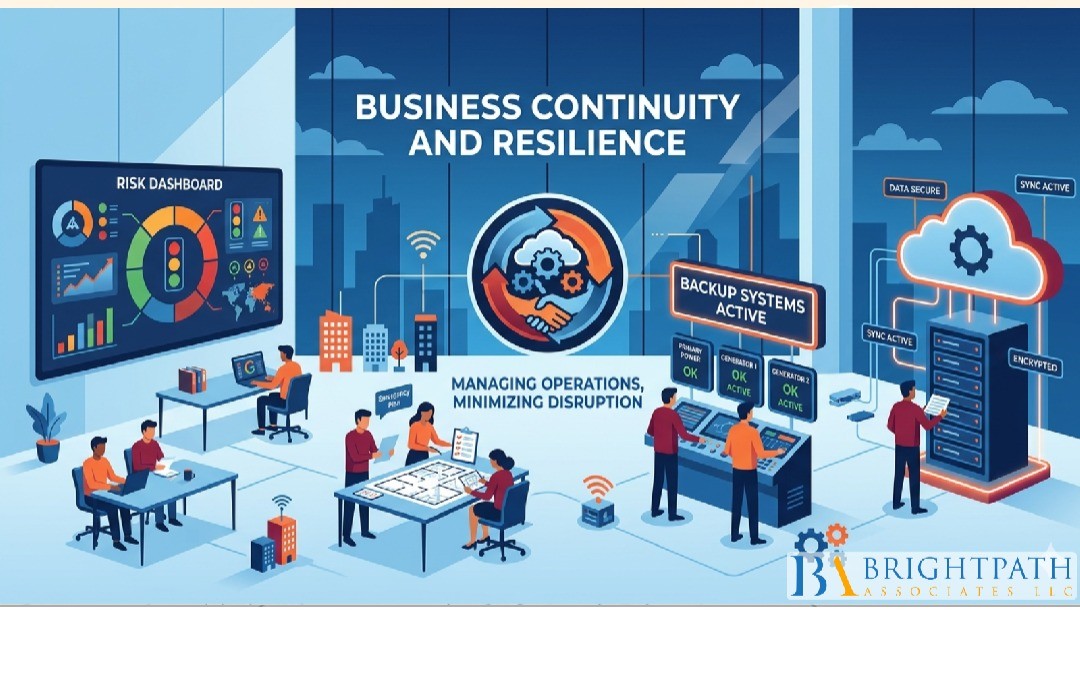
In a world defined by geopolitical shocks, cyber escalation, extreme weather, and interdependent markets, uninterrupted operations are a strategic necessity rather than an optional advantage. #BusinessContinuityPlanning is the architecture that sustains critical services through disruption by integrating governance, risk analysis, resilient design, and disciplined execution. In industrial contexts, continuity extends from the data center to the factory floor, from office supplies and business equipment to complex global logistics. It encompasses the everyday realities of procurement and supply chain management, the modernization required by digital transformation in office environments, and the human capital dimensions of talent acquisition strategies and executive search recruitment. This essay presents a comprehensive, industrial-grade blueprint for continuity that is structured, actionable, and aligned to contemporary operating risks.
From Continuity to Operational Resilience
Traditional continuity emphasized recovery after an event, but the modern ambition is operational resilience, the sustained ability to deliver essential outcomes despite shocks. This reframing elevates continuity from a technical function to an enterprise capability with board oversight and executive sponsorship. It aligns with recognized standards and embeds clear objectives, including protection of life and safety, preservation of customer trust, adherence to regulatory obligations, and containment of financial and reputational damage. In practical terms, resilience means designing processes, technology, people, and partnerships to anticipate failure modes and maintain service within defined tolerances. It is the difference between ad hoc heroics and a repeatable operating system for stability.
Governance and Operating Model for Industrial Strength
Continuity requires a clear operating model supported by unambiguous accountability. Boards set risk appetite for downtime and data loss, approve continuity objectives, and monitor performance metrics. #ExecutivesSponsor the program to ensure cross-functional integration, sustained investment, and rapid decision-making under pressure. A central resilience or business continuity team defines standards and maintains the management system, while process and technology owners retain responsibility for execution. True maturity comes when continuity requirements are embedded in everyday change: architecture reviews assess recovery time objectives, procurement integrates resilience criteria for office supply vendors and strategic partners, and project gates verify that both commercial office furniture layouts and critical business equipment placements support evacuation routes, power redundancy, and rapid reconfiguration. The result is resilience by design rather than retrofit.
Risk Assessment and Business Impact Analysis
Risk assessment and business impact analysis together create the foundation for prioritization. The risk assessment identifies threat vectors spanning natural hazards, cyber intrusions, utility failures, equipment breakdown, labor actions, and single points of failure in the supply chain. It evaluates control effectiveness and informs mitigation investments across physical security, cyber controls, and facility hardening. The business impact analysis maps services and processes to assets, dependencies, and tolerances. It defines maximum acceptable outages and establishes recovery objectives for time and data. Crucially, it clarifies which offices, plants, applications, data sets, and suppliers are mission critical. This is where office technology trends meet continuity design: systems that support digital collaboration, inventory visibility, and customer communications must be tiered by criticality so that recovery sequencing is unambiguous. The analysis also extends to the mundane but essential—ensuring that office supplies, parts kits, and maintenance consumables for production and office equipment are pre-positioned or rapidly accessible during a disruption.
Resilience Strategies for People, Facilities, and Technology
Resilience is executed across people, places, and platforms. On the people side, cross-training, documented procedures, and succession planning reduce key-person risk. Talent acquisition strategies and executive search recruitment must emphasize leaders and specialists who are fluent in crisis management, data-driven decision-making, and cross-functional coordination. During incidents, organizations that maintain psychological safety and role clarity recover faster because teams escalate early and act decisively.
#FacilitiesResilience depends on redundancy and environmental controls. Industrial sites should implement power continuity through uninterruptible power supplies and generators, validate life-safety systems, and secure climate controls that protect both server rooms and commercial office furniture layouts designed for safe egress and reconfiguration. Recovery plans should include office equipment maintenance routines that support rapid restart of copiers, printers, conference systems, and networking hardware. Even small failures in business equipment can cascade into meaningful downtime if spare parts and on-call technicians are unavailable.
Technology and data require architectures that assume failure. High-availability designs, multi-zone and multi-region deployments, and automated failover reduce recovery times for critical applications. Backup strategies should be immutable and frequently tested to ensure data integrity. Current office technology trends—from cloud productivity suites and endpoint management to collaboration platforms—should be leveraged to support digital transformation in office operations with secure remote access, offline work modes, and rapid reauthentication capabilities. In parallel, operational technology in plants must be segmented and protected to prevent cyber incidents from impacting safety or production quality.
Supply Chain Continuity and Intelligent Procurement
Continuity cannot be achieved without a resilient supply chain. Disruptions in transport, single-source dependencies, and visibility gaps can halt operations even if internal systems are robust. Enterprises should diversify critical suppliers, negotiate continuity provisions, and maintain alternate logistics routes. Procurement plays a pivotal role by codifying resilience requirements into contracts, scoring prospective partners on recovery capabilities, and maintaining transparent inventories and reorder points. This extends to categories sometimes overlooked in continuity strategies: office supplies, consumables for office equipment maintenance, and standardized business equipment configurations that facilitate rapid swap-outs. Strategic relationships with office supply vendors should include escalation paths, prioritized allocations during regional shocks, and pre-approved substitutions to prevent trivial shortages from impeding critical workflows. Thoughtful procurement also ensures that commercial office furniture is modular, enabling quick reconfiguration for distancing, alternate team hubs, or temporary incident command spaces during crises.
Crisis Management, Decision-Making, and Communication
A plan is only as effective as the leadership that activates it. #CrisisManagement frameworks define triggers, escalation paths, and decision cycles so that activation happens early rather than after confusion spreads. Roles are predefined to coordinate operations, planning, logistics, finance, and communications. Effective communication balances transparency with legal obligations and ensures that employees, customers, regulators, and suppliers receive timely, consistent updates even when primary channels fail. Digital transformation in office communication—utilizing secure messaging, redundant notification systems, and pre-approved templates—reduces ambiguity and accelerates coordinated action. Decision logs and time-stamped situation reports maintain tempo and create the audit trail necessary for post-incident learning and regulatory assurance.
Documentation and Runbooks That Work Under Stress
Continuity documentation must be concise, current, and immediately usable. Policies establish governance and scope, while plan documents describe activation criteria, minimal viable operations, and manual workarounds. Technical runbooks provide step-by-step recovery sequences, configuration baselines, and verification checks. Contact directories, vendor service levels, and escalation trees should be synchronized with human resources and procurement systems to remain accurate during personnel or supplier changes. The usability of documentation is enhanced when it reflects real office workflows and plant realities, including the availability of spare business equipment, the locations of emergency supplies, and the procedures for office equipment maintenance following a power event. Clarity and brevity are virtues; plans should be designed for decision-making under high cognitive load.
Testing, Exercising, and Independent Assurance
Exercises transform plans into capability. Tabletop exercises validate leadership decisions and communication pathways. #TechnicalDrills verify that recovery time and recovery point objectives are achievable in practice, including data restoration and application failover. Live simulations, from plant restart rehearsals to office evacuation and reentry, ensure that choreography is known before an emergency unfolds. Supplier participation is critical; joint drills expose cross-boundary failure modes such as transport bottlenecks or messaging incompatibilities. Independent assurance through audits and control attestations strengthens governance. Performance indicators should track the currency of analyses and plans, the success rate and duration of restores, the remediation of single points of failure, and the continuity posture of strategic suppliers. Improvement actions must be assigned, time-bound, and re-tested to close the loop.
Sector-Specific Nuances and Office-Centric Considerations
Different industries prioritize different failure modes, but each must translate sector nuance into specific continuity controls. Manufacturing emphasizes equipment criticality, operational technology segmentation, and safe shutdown and startup sequences to protect quality and safety. Financial services focus on transaction integrity and low-latency recovery for payment systems under strict regulatory oversight. Healthcare prioritizes patient safety, clinical system uptime, and cold-chain integrity. Across sectors, offices remain the connective tissue for coordination, customer support, and knowledge work. Continuity for offices includes ensuring that commercial office furniture supports ergonomic resilience for extended incident operations, that office supplies and consumables are stocked for longer on-site periods, and that business equipment is standardized to simplify support and replacement. Office technology trends, such as intelligent room systems and device telemetry, provide early indicators of degradation and enable predictive maintenance as part of a comprehensive program.
Culture, Capability, and the People Advantage
Resilience is as much cultural as it is technical. Organizations that recover rapidly foster shared ownership of continuity, empower escalation without blame, and drill regularly so that responses are muscle memory rather than improvisation. Talent acquisition strategies should prioritize candidates with systems thinking, incident leadership experience, and cross-functional collaboration skills. #ExecutiveSearchRecruitment can raise the bar by seeking leaders who have navigated severe but plausible scenarios and can align technology, operations, procurement, and finance around a unified resilience agenda. Investment in training for managers and frontline staff—covering crisis communication, safety, and problem-solving under pressure—creates a workforce capable of stabilizing operations quickly and safely.
Technology Modernization and Digital Transformation in Office Operations
Digital transformation in office environments is a force multiplier for continuity when executed with discipline. Cloud-native services, infrastructure as code, and automated configuration baselines accelerate recovery and reduce configuration drift. Zero trust identity models protect recovery pathways with strong authentication and just-in-time access, including break-glass controls for emergencies. Observability platforms correlate signals from applications, networks, and devices to shorten detection-to-recovery cycles. Artificial intelligence can prioritize incidents and recommend playbook steps based on telemetry patterns. At the human interface, office technology trends support hybrid work patterns that preserve operational tempo during site disruptions, while standardized device images and remote remediation reduce mean time to repair. None of these capabilities matter, however, without routine restore testing and clean-room recovery practices that ensure systems can be rebuilt from trusted baselines.
Procurement as an Engine of Continuity
Procurement sits at the nexus of resilience, translating continuity requirements into commercial terms. Contracts should define recovery time and data objectives for third parties, include audit and testing rights, and describe allocation priorities during regional disruptions. For essential categories—ranging from network hardware and spare business equipment to office supplies and maintenance parts—framework agreements should pre-negotiate surge capacity, alternate products, and expedited logistics. Strong relationships with office supply vendors are a practical advantage, not an administrative detail; during disruptions, quick access to consumables, replacement devices, and commercial office furniture components can prevent minor issues from becoming operational stoppages. #ProcurementAnalytics enhance visibility, enabling proactive restocking of critical items and early detection of supply chain stress before it manifests as downtime.
Continuous Improvement and a Pragmatic Roadmap
Continuity capability matures through structured learning. Organizations should codify a roadmap that begins with governance mobilization and baselining of current posture, then progresses to risk and impact analyses for the most critical services. Design and remediation work should tackle high-value gaps first, such as backup integrity, identity resilience, and supplier diversification. Exercises validate the design and generate corrective actions. Finally, resilience is embedded into daily operations by integrating continuity criteria into project approvals, architectural reviews, and procurement standards. As new threats and office technology trends emerge, metrics steer investment toward the most consequential improvements, ensuring that continuity remains current rather than static.
Conclusion: Continuity as Core Industrial Competence
Essential business continuity planning transforms volatility from existential risk into managed variance. It unites strategy and execution, spanning people, processes, facilities, technology, and suppliers. It attends to the seemingly small—such as reliable office supplies, timely office equipment maintenance, and the ergonomics of commercial office furniture—while mastering the complex, including #GlobalSupplyChain resilience, cloud architectures, and crisis leadership. It leverages procurement discipline, talent acquisition strategies, and executive search recruitment to build a workforce and ecosystem capable of decisive action under pressure. Above all, continuity is the enterprise’s quiet operating system: safeguarding stakeholder value, protecting lives, and ensuring that critical outcomes are delivered consistently, even when conditions are anything but.
Find your next leadership role in Business Supplies Industry today!
Stay informed with the latest insights on Business Supplies Industry!