
Introduction
#WasteManagement is undergoing a fundamental transformation. For decades, many organizations treated waste as an unavoidable byproduct of production that needed to be collected, transported, processed, and ultimately disposed of. That model is increasingly being challenged by rising resource costs, environmental expectations, regulatory requirements, and the growing importance of operational efficiency.
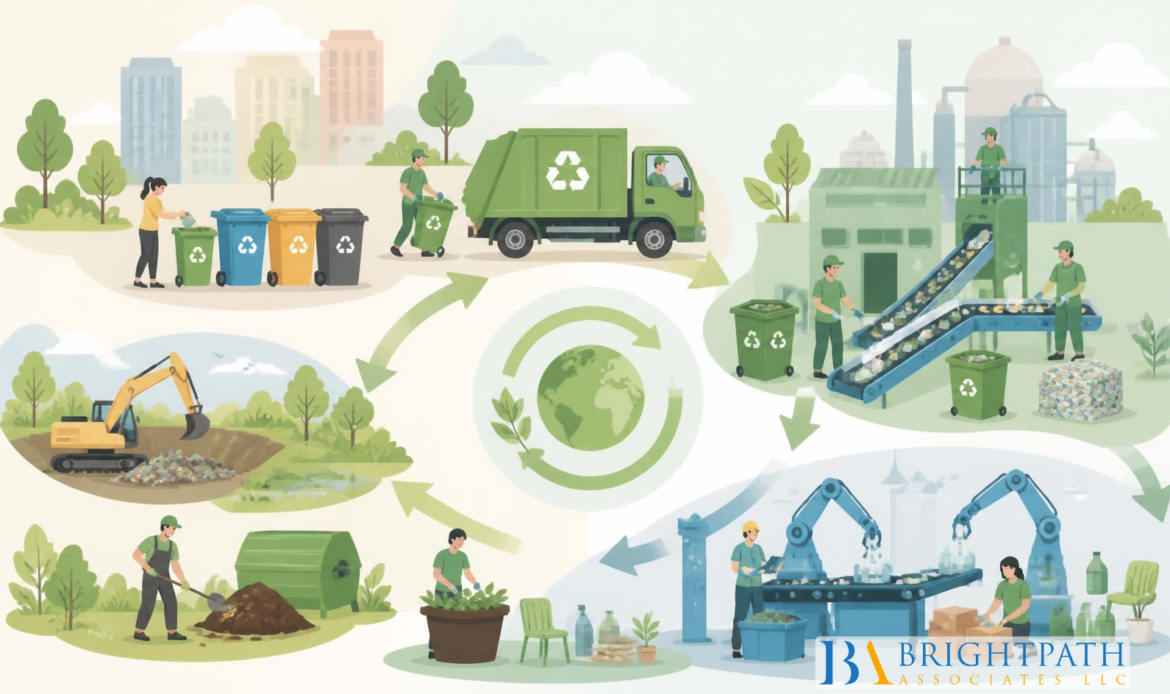
A closed-loop waste management ecosystem takes a different approach. Instead of viewing waste as the end of a production cycle, it treats discarded materials, wastewater, organic residues, packaging, and industrial byproducts as potential inputs for another process. This requires organizations to connect waste collection, sorting, recovery, recycling, treatment, energy generation, and resource reuse into a coordinated system.
For the modern Environmental industry, the opportunity is not simply to manage more waste. It is to create systems that keep materials in productive use for as long as practical while reducing environmental impact. Research into circular waste management has increasingly emphasized the importance of integrated systems, resource recovery, recycling, and reduced residual waste rather than isolated disposal activities.
The Evolution of Total Waste Management
The traditional waste model follows a relatively simple sequence: resources are extracted, products are manufactured, goods are consumed, and waste is discarded. While recycling can be added to this system, recycling alone does not necessarily create a fully circular operation.
Total waste management ecosystems aim to connect multiple stages. Materials can be identified at their source, separated according to value and contamination, directed toward appropriate recovery processes, and ultimately returned to manufacturing or other productive applications.
This approach changes the strategic question from “How do we dispose of this waste?” to “What resource value remains in this material?”
Different waste streams require different treatment strategies. Organic waste, metals, plastics, hazardous materials, wastewater, construction debris, and electronic waste cannot be managed effectively through a single process.
A closed-loop operation therefore depends on waste-stream visibility. Organizations need to understand what materials they generate, where those materials originate, how they are handled, and what recovery options exist.
This creates an important role for Environmental services providers. Instead of offering isolated collection or disposal services, advanced providers can help organizations design integrated systems that connect waste generation with recovery, compliance, technology, and resource optimization.
One of the most important changes in waste management is the growing use of digital technology. Sensors, connected equipment, analytics platforms, artificial intelligence, automated sorting systems, and digital tracking tools can provide organizations with greater visibility into material flows.
Environmental innovation is increasingly focused on making waste systems more measurable and responsive. Data can reveal where excessive waste is being generated, which materials have recovery potential, and where transportation or processing inefficiencies exist.
This information can support better operational decisions. A manufacturer, for example, may discover that a significant amount of reusable material is being mixed with general waste. Improving segregation at the source could then increase recovery while reducing disposal costs.
Automation can also improve the consistency of sorting and processing operations. Advanced identification technologies can distinguish materials based on physical or chemical characteristics, while automated systems can support higher-throughput recovery processes.
However, technology should be selected according to the economics and characteristics of the waste stream. Not every material requires advanced automation. The objective is to create an efficient system in which technology supports measurable resource recovery and environmental performance.
Environmental Sustainability Becomes an Operational Strategy
#EnvironmentalSustainability is often associated with recycling, but closed-loop operations require a broader perspective. Waste prevention, product design, material efficiency, reuse, recovery, energy consumption, transportation, emissions, and water management all influence the overall environmental footprint.
A company can improve recycling rates while still generating excessive waste or using inefficient processes. Therefore, organizations increasingly need to evaluate the entire material lifecycle rather than focusing on a single sustainability metric.
The most effective closed-loop strategies connect waste reduction with production efficiency. If a manufacturing process can reduce scrap at the source, that may be more valuable than simply improving the downstream treatment of scrap.
Closed-loop systems also require meaningful performance indicators. Companies may monitor material recovery rates, waste intensity, landfill diversion, water reuse, energy consumption, emissions, transportation requirements, and recovered-material utilization.
These measurements can help leadership understand whether circular initiatives are producing operational value rather than functioning only as sustainability programs.
Clean technology is becoming increasingly relevant to closed-loop waste systems because modern recovery processes can transform waste streams into usable resources. Technologies for material recovery, wastewater treatment, energy generation, and emissions management can reduce reliance on disposal.
The most effective systems consider the relationship between these technologies rather than deploying them independently.
For example, organic waste may be processed to produce useful energy or soil amendments, while industrial wastewater may be treated for reuse. Materials previously considered waste can therefore become inputs into other operational processes.
Clean technology investments need to make commercial sense. Organizations must evaluate capital requirements, operating costs, maintenance requirements, material volumes, regulatory conditions, and the availability of markets for recovered resources.
A closed-loop system becomes stronger when the recovered material has a reliable destination. Without a viable end market, recovery can become another storage or disposal challenge.
Air Pollution Control Must Be Part of the Loop
#WasteProcessing can create air emissions depending on the material and treatment method. Combustion, industrial processing, transportation, decomposition, and certain chemical treatment processes can all create environmental considerations.
Air pollution control therefore needs to be integrated into the broader waste ecosystem. Organizations should consider emissions during facility design, equipment selection, process optimization, and regulatory planning.
Modern monitoring technologies can provide more continuous information about emissions performance. This allows operators to identify deviations earlier and take corrective action before environmental problems become larger operational or compliance issues.
The goal should not be to maximize recovery at the expense of environmental performance. A genuinely sustainable system must evaluate both resource recovery and environmental impacts.
This is why closed-loop design needs a systems perspective. Material recovery, energy recovery, air emissions, wastewater, transportation, and residual waste should be evaluated together.
Water is often overlooked in discussions about total waste management, even though wastewater can represent a significant opportunity for resource recovery and reuse.
Water treatment technologies can enable organizations to reduce freshwater consumption by treating wastewater for appropriate reuse applications. Depending on the industrial process, treated water may support cooling, cleaning, irrigation, process operations, or other non-potable applications.
This changes the role of wastewater from a disposal problem to a potential resource-management opportunity.
A truly integrated ecosystem connects water management with other environmental systems. Sludge, organic material, nutrients, energy consumption, and treated water can all be considered within the broader operational model.
This type of integration can help companies identify opportunities that would remain invisible when waste and water are managed by separate departments.
Environmental Compliance Becomes Part of System Design
Environmental compliance is essential to closed-loop operations because waste recovery and treatment activities must operate within applicable regulatory requirements. Organizations need appropriate controls for handling, storage, transportation, treatment, emissions, discharge, and disposal.
Rather than treating compliance as paperwork after a system is built, organizations can incorporate regulatory requirements into the original design.
This approach reduces the risk that an otherwise promising recovery process will encounter unexpected operational restrictions.
Digital systems can also improve environmental compliance by creating records of waste movement, treatment, recovery, and disposal. Better traceability can make it easier to demonstrate that materials were handled according to required procedures.
For organizations operating complex supply chains or multiple facilities, centralized environmental data can provide leadership with greater visibility into performance and compliance risks.
The Environmental industry is expanding beyond traditional waste collection and disposal services. Providers increasingly need to understand technology, industrial operations, regulatory requirements, resource recovery, data, and sustainability strategy.
This creates opportunities for environmental service companies to become strategic partners rather than transactional vendors.
A provider that can help a manufacturer redesign its waste flows, improve material recovery, reduce disposal costs, manage compliance, and identify resource-reuse opportunities can contribute directly to business performance.
Closed-loop thinking can also extend beyond individual organizations. One company’s waste stream may become another company’s input. Industrial ecosystems can therefore create opportunities for resource exchange between businesses.
This requires coordination, consistent material quality, logistics, commercial agreements, and regulatory oversight. When those conditions exist, waste can move through a network rather than ending at a disposal facility.
Talent Is Becoming a Critical Part of Environmental Transformation
Technology and infrastructure alone cannot create an effective closed-loop ecosystem. Organizations need professionals who understand environmental science, engineering, operations, data, compliance, sustainability, and commercial strategy.
This is creating demand for multidisciplinary talent. Environmental professionals increasingly need to understand how technical decisions affect operational costs, supply chains, production systems, and business objectives.
The shift is particularly important as environmental functions become more closely connected with executive decision-making.
Environmental executive search can support organizations that need leaders capable of managing this increasingly complex environment. Leadership positions may require experience across environmental compliance, sustainability programs, industrial operations, technology implementation, resource recovery, or corporate strategy.
The challenge is finding executives who can connect these disciplines rather than managing each one independently.
#ExecutiveSearchRecruitment can help organizations identify leadership talent with the combination of technical knowledge, strategic thinking, operational experience, and organizational leadership required to build integrated environmental systems.
Building a Closed-Loop Operating Model
Organizations seeking to develop closed-loop operations should begin by understanding their current material flows. This includes identifying major waste sources, quantities, contamination levels, disposal costs, recovery opportunities, and environmental impacts.
Once the baseline is understood, leadership can identify the areas where circular interventions are most practical.
Closed-loop operations cannot remain isolated within an environmental department. Procurement, engineering, manufacturing, facilities, finance, logistics, and executive leadership may all influence the system.
Creating shared data and common performance objectives can help these departments work toward the same resource-efficiency goals.
Organizations should also avoid treating circularity as a single large transformation project. Pilot programs can help determine whether specific recovery, reuse, or treatment initiatives deliver measurable benefits.
Successful approaches can then be expanded across additional facilities, product lines, or waste streams.
Conclusion
Total waste management ecosystems represent a fundamental shift in how organizations think about waste. Instead of treating waste as the final stage of production, closed-loop operations seek to retain material value, reduce resource consumption, improve environmental performance, and create connections between different operational systems.
#EnvironmentalInnovation, Clean technology, Air pollution control, and Water treatment are becoming interconnected components of this transformation. At the same time, Environmental compliance and Environmental sustainability are moving closer to core business strategy.
For organizations operating within the Environmental services sector, this creates an opportunity to move beyond conventional waste management toward integrated resource-management solutions. For businesses across the broader Environmental industry, it creates a new model in which environmental performance and operational efficiency can reinforce each other.
Ultimately, successful closed-loop operations will depend on more than technology. They will require reliable data, thoughtful system design, cross-functional collaboration, regulatory awareness, and strong leadership. As these ecosystems become more sophisticated, the organizations that invest in the right capabilities and talent will be better positioned to turn waste from an operational liability into a strategic resource.
Find your next leadership role in Environmental Services Industry today!
Stay informed with the latest insights on Environmental Services Industry!