
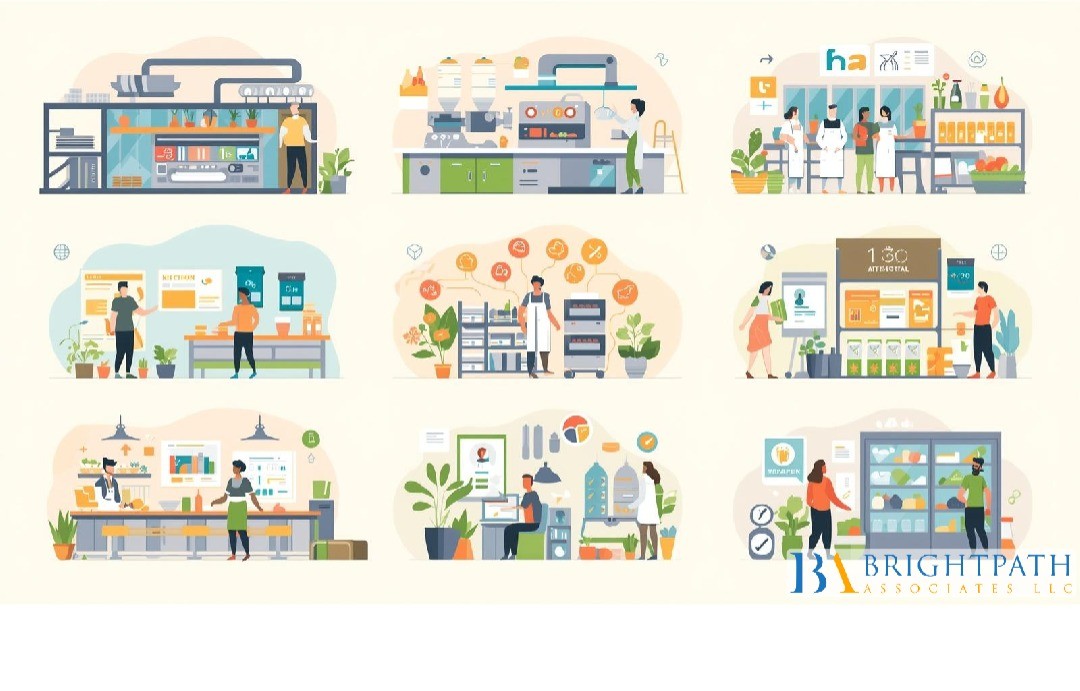
The Food Production Industry at a Strategic Crossroads
The global #FoodProductionIndustry is undergoing one of the most transformative periods in its history. Rising consumer demand, regulatory scrutiny, supply chain volatility, and rapid technological advancement have reshaped how food production businesses operate and compete. While innovation in processing equipment, automation, and safety systems continues to accelerate, leadership capacity has emerged as a critical constraint to sustainable growth. Top food companies are increasingly defined not only by their products or scale, but by their ability to attract and retain executive talent capable of navigating complex industrial trends in food production.
Industry Growth, Complexity, and Leadership Pressure
The food production industry continues to show steady growth, driven by population expansion, evolving dietary preferences, and global urbanization. Industry data indicates that food production output has grown consistently year over year, with technology in food production playing a central role in improving efficiency, traceability, and compliance. However, growth has also introduced greater operational complexity. Food production management today requires a deep understanding of supply chain resilience, safety certification standards, sustainability mandates, and capital-intensive processing equipment investments. As a result, leadership roles have expanded far beyond traditional operational oversight, placing unprecedented pressure on executive teams.
Talent Shortages at the Executive Level
One of the most pressing challenges facing food production companies the shortage of experienced leadership talent. Industry surveys consistently show that senior-level roles in operations, quality assurance, #SupplyChainManagement, and plant leadership remain among the hardest to fill. Retirements of long-tenured executives, combined with a limited pipeline of leaders who possess both technical expertise and strategic vision, have created a widening gap. This shortage is particularly acute in small to mid-sized organizations, where growth ambitions often outpace internal leadership development capabilities.
Shifting Expectations for Food Production Executives
Executive roles in food production have evolved significantly in recent years. Today’s leaders are expected to drive food production growth strategy while simultaneously managing risk, compliance, and innovation. Familiarity with food production safety certification frameworks, digital quality systems, and automated processing environments has become essential. In addition, executives must demonstrate the ability to lead cross-functional teams, manage global or multi-site supply chains, and respond quickly to market disruptions. These expanded expectations have narrowed the pool of qualified candidates and raised the stakes of executive hiring decisions.
Technology as a Catalyst for Leadership Transformation
Technology in food production has become both an opportunity and a talent challenge. Advanced processing equipment, data-driven production planning, and AI-enabled quality control systems are now common among top #FoodCompanies. However, technology adoption requires leaders who can align operational capabilities with long-term business strategy. Executives must understand how digital investments impact margins, compliance, workforce productivity, and scalability. This convergence of technical knowledge and strategic leadership has redefined what effective food production consultants and executives look like in modern organizations.
Supply Chain Volatility and Strategic Decision-Making
Food production supply chain disruptions over the past several years have reinforced the importance of agile, experienced leadership. From raw material shortages to transportation delays and geopolitical risks, executives are expected to anticipate and mitigate challenges that directly affect profitability and customer trust. Strategic decision-making now requires real-time data interpretation, supplier diversification strategies, and close coordination with regulatory and quality teams. Companies with strong leadership benches have demonstrated greater resilience, while those without have faced prolonged operational and financial setbacks.
The Competitive Advantage of Strong Executive Hiring
Top food companies increasingly recognize that executive hiring is not a transactional activity but a core component of business strategy. Effective food production business strategy depends on leaders who can integrate operations, safety, technology, and growth initiatives into a cohesive vision. Poor executive hires can result in compliance failures, stalled innovation, and cultural misalignment, while strong hires accelerate transformation and create long-term value. This realization has prompted many organizations to rethink how they approach #LeadershipRecruitment.
The Strategic Evolution of Recruitment Practices
Recruitment practices within the food production industry have shifted toward more specialized and consultative models. Generic hiring approaches are proving insufficient for senior-level roles that demand industry-specific expertise and leadership maturity. Executive search recruitment has emerged as a vital solution, offering targeted access to passive, high-caliber candidates who are not actively seeking new roles but possess the exact skills required. This approach enables companies to align leadership acquisition with long-term operational and growth objectives rather than short-term staffing needs.
Executive Search as a Growth Enabler
#ExecutiveSearchRecruitment provides food production companies with a structured, data-driven approach to leadership hiring. By leveraging deep industry networks, market intelligence, and rigorous candidate assessment, executive search partners help organizations identify leaders who can drive innovation, manage risk, and execute complex growth strategies. For small to mid-sized food production companies, this level of precision is particularly valuable, as each executive hire has a disproportionate impact on performance, culture, and scalability.
Building Future-Ready Leadership Teams
As industrial trends in food production continue to evolve, building future-ready leadership teams has become a top priority. Companies that proactively invest in executive talent are better positioned to adopt new technologies, meet regulatory requirements, and respond to market shifts. Strategic partnerships with executive search specialists allow organizations to anticipate talent needs, reduce hiring risk, and secure leaders who align with both current operations and future ambitions. In an industry where margins are tight and expectations are high, leadership quality often determines whether growth initiatives succeed or stall.
Conclusion: Leadership as the Defining Differentiator
Innovation in food production is no longer limited to products or processing equipment; it extends to how companies attract, develop, and retain executive talent. Leadership shortages, shifting role expectations, and operational complexity have elevated executive hiring to a board-level concern. Top food companies understand that #SustainableGrowth depends on aligning food production management, technology adoption, and supply chain strategy under capable leadership. Executive search recruitment has become an essential tool in this effort, enabling organizations to secure the talent required to lead with confidence in an increasingly competitive and regulated industry.
Find your next leadership role in Food Production Industry today!
Stay informed with the latest insights on Food Production Industry!