
Introduction
#FleetMaintenance has traditionally been governed by fixed schedules. Vehicles are serviced after a predetermined number of miles, months, or operating hours, regardless of how they have actually been used. While this approach provides a simple framework for maintaining commercial vehicles, it does not account for differences in driving conditions, vehicle utilization, load patterns, engine performance, or component wear.
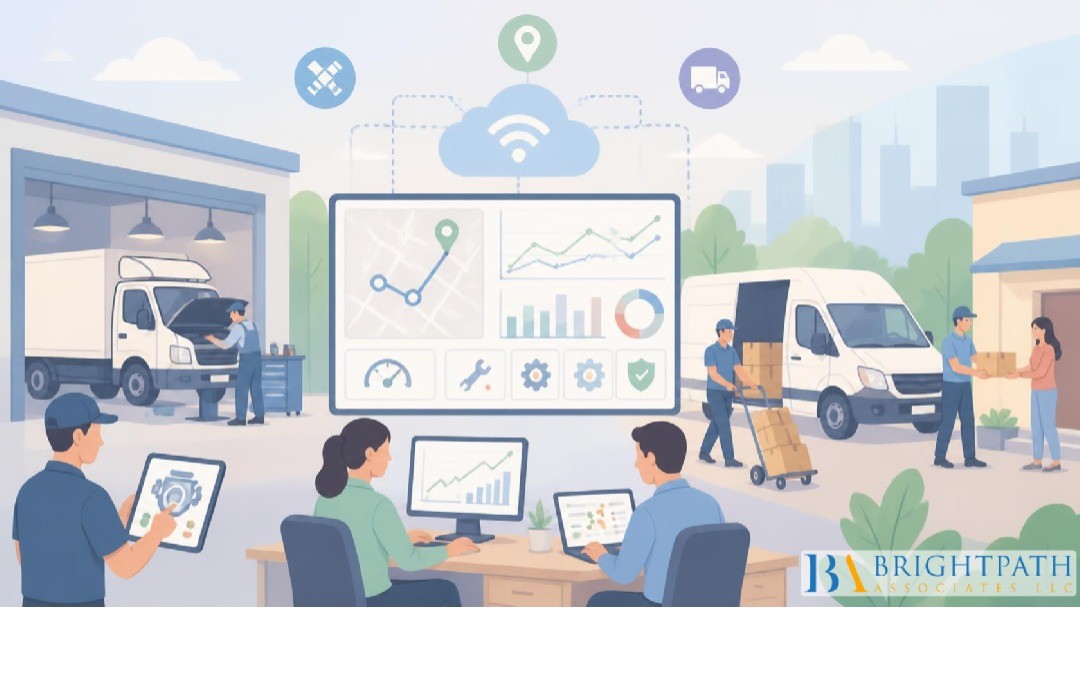
Telematics is changing that model. By continuously collecting information from vehicles and transmitting it to fleet management platforms, telematics enables operators to understand what is happening inside their fleets in near real time. Engine diagnostics, mileage, fuel consumption, operating temperatures, braking behavior, idle time, and fault codes can all contribute to a more detailed understanding of vehicle health.
For proprietors managing transportation businesses, this shift can have significant financial and operational implications. Data-driven maintenance can reduce unexpected breakdowns, improve vehicle availability, control repair costs, and create more predictable fleet operations. As logistics networks become more technology-driven, telematics is moving from an optional fleet-management capability toward an increasingly important operational tool.
The Limitations of Schedule-Based Maintenance
Schedule-based maintenance operates on assumptions rather than actual vehicle conditions. A truck may receive servicing every specified number of miles even if it has experienced unusually heavy loads, extensive idling, difficult terrain, or severe operating conditions. Conversely, a vehicle experiencing accelerated component wear may require attention before its scheduled maintenance date.
This creates two potential problems. Servicing vehicles too frequently can increase maintenance expenses and unnecessary downtime, while waiting for a predetermined interval can allow developing mechanical problems to become more serious.
For smaller transportation businesses, these inefficiencies can be particularly costly. A single vehicle breakdown can disrupt delivery schedules, create emergency repair expenses, affect customer relationships, and require replacement capacity.
Telematics provides a way to move from a calendar-driven model toward condition-based maintenance, where service decisions are increasingly informed by actual vehicle performance.
Modern telematics systems can collect information from vehicle sensors and onboard diagnostic systems. Depending on the equipment and configuration, fleet operators can monitor engine fault codes, battery conditions, fuel consumption, engine temperature, mileage, vehicle utilization, and other operational indicators.
This information can be transmitted to centralized fleet-management platforms where managers can identify abnormal patterns. Instead of discovering a problem when a vehicle stops operating, managers may receive an indication that a component or system requires inspection.
The advantage is visibility. Fleet proprietors no longer need to depend exclusively on driver observations or periodic inspections to understand vehicle conditions. Data provides another layer of information that can support maintenance decisions.
This approach is especially valuable for companies operating multiple vehicles across different routes because managers can compare vehicle performance and identify patterns that would otherwise remain difficult to detect.
Predictive Maintenance and the Economics of Fleet Ownership
Predictive maintenance aims to identify potential failures before they result in major breakdowns. Telematics data can support this process by identifying changes in vehicle behavior that may indicate developing #MechanicalIssues.
The financial benefits can extend beyond avoiding repair bills. Unexpected breakdowns can create missed deliveries, driver downtime, roadside assistance costs, customer penalties, and lost revenue. When vehicles are maintained proactively, businesses can schedule maintenance during periods that have the least operational impact.
This becomes increasingly important as Freight shipping operations face pressure to improve efficiency while managing fuel, labor, equipment, and insurance expenses.
For proprietors, the central benefit is greater predictability. Maintenance becomes a planned operational expense rather than an unpredictable emergency.
Connecting Telematics with Logistics Consulting Services
Businesses seeking to modernize fleet operations may benefit from integrating telematics into broader logistics strategies. Logistics consulting services can help organizations evaluate fleet utilization, route efficiency, maintenance processes, fuel consumption, and technology investments.
Telematics data becomes particularly valuable when it is interpreted in the context of overall logistics performance. For example, a company may discover that certain routes generate significantly more vehicle wear than others. Another business may find that excessive idle time is increasing fuel costs and accelerating maintenance requirements.
By connecting vehicle-level data with broader logistics planning, companies can make decisions based on actual operating conditions rather than assumptions.
The objective should not simply be collecting more data. The objective is converting that data into actionable decisions that improve fleet economics.
Freight brokerage services depend heavily on reliable transportation capacity and predictable delivery performance. Although brokers may not directly own every vehicle involved in a shipment, telematics-enabled fleets can provide greater visibility into transportation operations.
For fleet-owning businesses, telematics can strengthen their ability to meet broker expectations by improving vehicle reliability and reducing unexpected service interruptions. A healthier fleet is more capable of accepting loads, maintaining schedules, and responding to changing shipment requirements.
In competitive freight markets, reliability can become a commercial advantage. Companies that consistently maintain equipment and deliver on schedule can strengthen relationships with brokers, shippers, and logistics partners.
Delivery Technology and the Modern Fleet
#DeliveryTechnology has expanded beyond navigation and electronic proof of delivery. Modern transportation platforms increasingly connect vehicles, drivers, warehouses, dispatchers, customers, and maintenance teams.
Telematics can serve as a central data source within this ecosystem. Vehicle information can potentially be integrated with dispatch systems, maintenance platforms, routing software, fuel-management tools, and fleet dashboards.
For Parcel delivery operations, this integration can be particularly useful because vehicles may complete numerous stops each day. High utilization means that even small improvements in vehicle availability or route efficiency can generate significant operational benefits.
When maintenance information is integrated with delivery planning, managers can schedule service around route commitments rather than discovering maintenance needs after a vehicle has already been assigned to a critical delivery schedule.
Improving Parcel Delivery Reliability
Parcel delivery networks operate under intense time pressure. Customers increasingly expect accurate delivery windows, rapid fulfillment, and reliable service. Vehicle downtime can immediately affect these expectations.
Telematics can help parcel operators identify vehicles that require attention before they become unavailable. Maintenance teams can use vehicle data to prioritize inspections and repairs based on actual operating conditions.
This can improve fleet availability and reduce the disruption caused by unexpected mechanical failures. It can also help organizations understand which vehicles are consistently performing below expected standards.
Over time, these insights can influence replacement decisions. A vehicle with repeated maintenance problems may cost significantly more to operate than its purchase price initially suggests.
Shipping optimization is often associated with route planning and load consolidation, but vehicle health is another important factor. A theoretically efficient route provides little value if the assigned vehicle experiences a mechanical failure during the journey.
Telematics allows fleet managers to incorporate vehicle condition into operational planning. Vehicles with strong performance indicators can be prioritized for demanding routes, while vehicles requiring inspection or maintenance can be scheduled for service.
This creates a closer connection between fleet maintenance and transportation planning. Instead of operating these functions independently, companies can use shared information to improve overall network performance.
For businesses involved in Freight shipping, this integrated approach can contribute to more reliable capacity planning and better utilization of expensive transportation assets.
The Impact of E-Commerce Logistics
The expansion of E-commerce logistics has increased pressure on transportation networks. Consumers expect faster delivery, flexible fulfillment options, and consistent tracking information. Businesses must therefore maintain sufficient vehicle capacity while controlling operational costs.
Telematics can support these requirements by improving fleet availability and helping managers understand how vehicles are being utilized.
As #DeliveryNetworks become more decentralized, fleet operators may need to manage vehicles across multiple facilities and geographic areas. Centralized telematics platforms can provide management teams with a common view of vehicle performance.
This can make it easier to identify underutilized vehicles, excessive maintenance requirements, unusual fuel consumption, or recurring mechanical issues across different locations.
Transportation Industry Trends Favoring Data-Driven Maintenance
Several Transportation industry trends are encouraging the adoption of telematics-based maintenance. Electrification is introducing new vehicle architectures and battery-management requirements. Connected vehicles are generating larger volumes of operational data, while artificial intelligence is making it easier to analyze that information.
At the same time, customers expect greater transparency and reliability from transportation providers. Rising operating costs are also increasing pressure on proprietors to maximize asset utilization.
These developments are making data-driven decision-making increasingly important. Fleet operators that continue relying entirely on fixed maintenance schedules may miss opportunities to improve vehicle utilization and reduce avoidable costs.
The transition does not require abandoning preventive maintenance. Instead, organizations can combine established maintenance schedules with real-time vehicle information to create a more sophisticated maintenance strategy.
Building a Data-Driven Maintenance Culture
Technology alone cannot deliver better maintenance outcomes. Employees must understand how telematics information should influence decisions.
Maintenance teams need processes for responding to alerts, validating diagnostic information, documenting repairs, and feeding maintenance results back into the fleet-management system. Drivers can also contribute by reporting unusual vehicle behavior and responding appropriately to system warnings.
Management should establish clear priorities around safety, reliability, cost control, and vehicle availability. Telematics should support those priorities rather than becoming another disconnected technology platform.
Data quality is equally important. Incorrect vehicle information, poorly configured alerts, or excessive notifications can reduce trust in the system. Successful implementation requires careful configuration and continuous refinement.
Technology-driven fleet management is changing the skills required across the Delivery industry. Transportation organizations increasingly need professionals who understand fleet operations while also being comfortable with analytics, connected vehicle technology, maintenance systems, and digital transformation.
The challenge becomes more significant as companies adopt increasingly sophisticated platforms. Proprietors may need managers who can interpret telematics data, translate insights into operational improvements, and coordinate maintenance with dispatch and customer-service functions.
This is where #ExecutiveSearchRecruitment can become strategically valuable. Recruiting leaders with experience across transportation technology, fleet management, logistics analytics, and operational transformation can help companies maximize the value of their technology investments.
Strong leadership ensures that telematics becomes embedded within business processes rather than remaining an underused software subscription.
The effectiveness of telematics should ultimately be evaluated through business outcomes. Fleet operators can examine changes in unexpected breakdowns, maintenance expenses, vehicle utilization, downtime, fuel consumption, repair frequency, and delivery performance.
A successful program should demonstrate measurable improvements over time. If maintenance alerts increase but breakdowns and costs remain unchanged, the organization may need to refine its processes or data strategy.
The greatest value comes when telematics data becomes part of continuous improvement. Historical information can reveal recurring problems, help evaluate vehicle models, improve replacement planning, and inform future purchasing decisions.
This transforms maintenance data into a strategic business resource.
Conclusion: Why Data Outperforms the Calendar
Schedule-based maintenance remains useful because routine inspections and servicing provide an important foundation for fleet reliability. However, fixed intervals cannot fully account for the constantly changing conditions under which commercial vehicles operate.
Telematics provides a more dynamic approach by connecting maintenance decisions with real-world vehicle performance. It allows proprietors to identify emerging problems, schedule repairs more strategically, improve asset utilization, and reduce the operational disruption associated with unexpected failures.
As Transportation industry trends continue toward connected vehicles, automation, analytics, and integrated Delivery technology, data-driven maintenance will become increasingly important. The benefits extend across Freight shipping, Parcel delivery, E-commerce logistics, and the broader Delivery sector.
For proprietors, the strategic opportunity is clear: maintenance should no longer be viewed solely as a recurring calendar event. It should become an intelligent, data-driven component of fleet management. By combining telematics with logistics consulting services, Shipping optimization, modern fleet systems, and capable leadership supported by Executive Search Recruitment, transportation businesses can build fleets that are more reliable, responsive, and economically efficient.
:::
Find your next leadership role in Packaging and Freight Industry today!
Stay informed with the latest insights on Packaging and Freight Industry!