
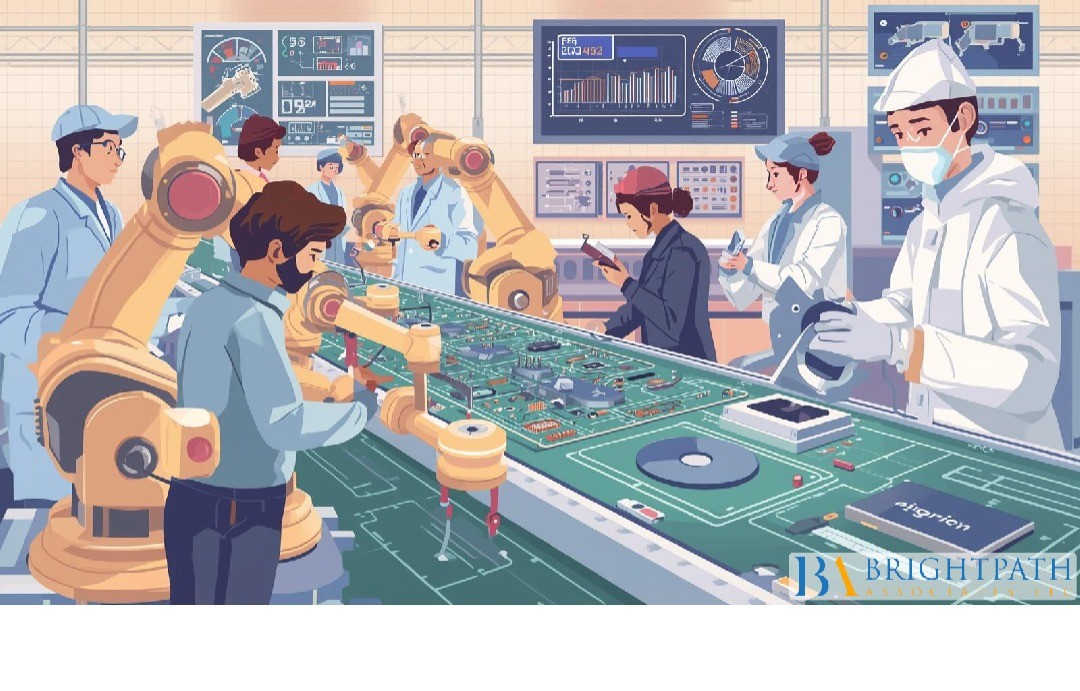
The #ElectronicsAssemblySector is undergoing a profound transformation driven by accelerating technological advancement, supply chain volatility, and rising customer expectations. For C-suite executives and founders of small to mid-sized electrical manufacturing companies, streamlining the electronics assembly process has evolved from an operational objective into a strategic imperative. As product lifecycles shrink and competition intensifies, operational efficiency, supply chain resilience, and leadership capability must align seamlessly to sustain profitability and long-term growth.
The Rising Complexity of Electronics Assembly
Modern electronics manufacturing extends far beyond traditional circuit board assembly. Today’s products integrate advanced microprocessors, IoT connectivity, embedded software, and precision miniaturized components. Electronics manufacturing services providers must navigate intricate design specifications while maintaining strict quality and compliance standards.
The electronics industry supply chain has become increasingly global and interconnected. Semiconductor availability, specialized components, and rare materials often depend on international sourcing networks. Even minor disruptions can cascade across production schedules, impacting delivery commitments and customer relationships.
At the same time, clients demand faster turnaround times and higher customization. Electronic design cycles are shortening, requiring agile engineering solutions and rapid prototyping capabilities. Companies that fail to streamline workflows risk bottlenecks in procurement, assembly, and quality assurance.
Streamlining, therefore, is not simply about lean processes—it involves integrated strategy across procurement, engineering, operations, and executive leadership.
Digital Transformation and Manufacturing Innovation
#DigitalTransformation manufacturing initiatives are redefining how electronics assembly plants operate. Automation, robotics, and AI-driven inspection systems enhance precision while reducing manual errors. Smart factory environments provide real-time production monitoring, predictive maintenance, and data-driven decision-making.
Manufacturing innovation is particularly evident in surface-mount technology lines, automated optical inspection systems, and digital twin simulations that model production scenarios before physical deployment. These tools significantly reduce defect rates and improve throughput efficiency.
However, the integration of advanced engineering solutions requires strategic oversight. Executives must understand how electrical engineering principles intersect with digital infrastructure investments. Leaders who lack technological fluency may underutilize automation capabilities or fail to align digital investments with revenue objectives.
For mid-sized electronics manufacturing services firms, capital allocation decisions related to automation and digitalization can determine competitive positioning for years. Leadership capability becomes the bridge between technological potential and measurable operational outcomes.
Supply Chain Resilience and Industrial Manufacturing Agility
Industrial manufacturing within the electronics sector remains vulnerable to component shortages and logistical disruptions. The reliance on specialized semiconductors and precision components makes risk management a core executive responsibility.
Forward-thinking electrical manufacturing companies are diversifying suppliers, nearshoring critical operations, and leveraging advanced analytics to forecast material demand. Real-time visibility into supplier performance enhances agility and reduces downtime.
At the same time, cost pressures remain intense. Margin compression driven by fluctuating raw material prices and energy costs requires meticulous financial oversight. Executives must balance efficiency with resilience—lean inventory strategies cannot compromise production continuity.
Companies that streamline electronics assembly effectively combine robust electronics industry supply chain strategies with operational discipline. Yet achieving this balance demands leaders with both operational expertise and strategic foresight.
The Escalating Leadership Talent Shortage
While technological complexity grows, the pool of experienced executive talent within electrical engineering and electronic engineering remains limited. Many seasoned operations leaders are approaching retirement, and the next generation often lacks exposure to large-scale manufacturing environments.
Modern executive roles demand a broader skill set than ever before. Today’s chief operations officers and plant directors must understand digital transformation manufacturing, supply chain risk modeling, sustainability compliance, and cross-functional integration. They must also manage increasingly diverse and technical teams across engineering, procurement, and quality control.
Competition for qualified leaders is intense. Larger multinational corporations frequently attract top-tier talent with expansive compensation structures and global career pathways. Small to mid-sized companies often struggle to access leaders who possess both manufacturing depth and digital agility.
Without strategic #ExecutiveHiring, organizations risk stagnation. Inefficient electronics assembly processes often reflect not a lack of equipment, but a lack of visionary leadership capable of orchestrating process integration.
Shifting Executive Role Expectations
Executive expectations in electronics manufacturing have evolved significantly. Boards and founders now prioritize leaders who can drive manufacturing innovation while maintaining strict cost discipline. The integration of electronic design, supply chain management, and digital analytics requires cross-functional mastery.
Additionally, executives must cultivate cultures of continuous improvement. Lean manufacturing principles remain foundational, but they must coexist with rapid experimentation and agile engineering solutions. Leaders who resist change or lack technological awareness may impede progress rather than accelerate it.
As responsibilities expand, so does the complexity of identifying the right candidate. Traditional hiring practices—relying on job postings or limited professional networks—often fail to uncover individuals with the hybrid expertise required in today’s environment.
The Strategic Evolution of Executive Hiring
#ExecutiveSearchRecruitment has become increasingly central to addressing leadership gaps in the electronics sector. Rather than reacting to vacancies, forward-looking organizations proactively map talent markets and assess leadership capabilities aligned with long-term strategic goals.
A structured executive search process evaluates not only technical credentials but also digital fluency, operational leadership, and cultural alignment. Competency-based assessments ensure that candidates can navigate the intricacies of electronics manufacturing services, industrial manufacturing strategy, and digital transformation manufacturing initiatives.
This evolution reflects a broader recognition that executive hiring directly influences operational efficiency. A well-selected chief operations officer can reduce defect rates, improve cycle times, and strengthen supplier relationships. Conversely, a misaligned hire can disrupt workflows and erode morale.
For small to mid-sized electrical manufacturing companies, executive search recruitment offers access to passive candidates who may not actively seek new roles but possess transformative expertise.
Executive Search Recruitment as a Competitive Lever
In a sector defined by rapid innovation and tight margins, leadership becomes the ultimate differentiator. Companies that streamline electronics assembly processes effectively are typically those guided by executives who combine engineering depth with strategic agility.
Executive search recruitment firms specializing in industrial sectors provide the industry insight necessary to identify such leaders. They understand the nuances of electronics industry supply chain dynamics, manufacturing innovation trends, and the operational demands of electrical engineering environments.
Brightpath Associates serves as a strategic partner in this landscape. Through its focused executive search recruitment capabilities, it supports electrical and electronics organizations in securing high-impact leaders who can optimize assembly processes, strengthen supply chain resilience, and accelerate digital transformation.
For C-suite executives and founders, investing in specialized executive hiring is not an administrative function—it is a growth strategy. Leadership capability determines whether automation investments yield measurable returns, whether supply chains withstand disruption, and whether innovation initiatives translate into market leadership.
The electronics assembly process will continue to evolve as engineering solutions become more sophisticated and customer expectations rise. Organizations that align operational excellence with proactive executive talent strategy position themselves to thrive in an increasingly complex industrial environment.
Streamlining electronics assembly is ultimately about integration—of technology, supply chains, engineering expertise, and leadership vision. Companies that recognize this interconnected reality and invest accordingly will define the future of electrical and electronics manufacturing.
Find your next leadership role in Electrical and Electronics Industry today!
Stay informed with the latest insights on Electrical and Electronics Industry!